

Good posture is often described as if it were a matter of manners.
Stand up straight. Pull your shoulders back. Stop slouching. Sit properly.
The advice is familiar, but it is not especially helpful. Most people do not have poor posture because they forgot to care. They have poor posture because modern life asks the body to spend long hours in positions it was not designed to hold forever: seated at desks, bent over phones, driving, carrying bags on one shoulder, moving too little, then occasionally asking stiff muscles to perform at full speed.
Posture is not simply how you look when standing still. It is how your body organizes itself under gravity. Balance is not just the ability to stand on one foot. It is the ability to control your body as you move through the world. Confidence is not only mental. Sometimes it begins with feeling physically steady.
A stronger, more balanced body changes the way you carry yourself. You stand taller because your back and core can support you. You move more freely because your hips and shoulders are not fighting every step. You feel more confident because daily tasks — stairs, lifting, walking, bending, reaching — feel less like negotiations.
You do not need a complicated routine to begin. These six exercises can help improve posture, balance, and everyday confidence by strengthening the muscles that support better movement.
1. Glute Bridge
The glute bridge looks simple, almost too simple.
You lie on your back, bend your knees, plant your feet, and lift your hips. There are no machines, no dramatic setup, no heavy equipment. But for many people, especially those who sit for long stretches, the glute bridge is one of the most useful exercises they can do.
Sitting often leaves the hips stiff and the glutes underused. When the glutes are not doing their job well, other areas tend to compensate. The lower back may work harder. The hamstrings may take over. The pelvis may tilt forward. Over time, posture can feel less stable and movement less efficient.
The glute bridge helps remind the body how to use the muscles at the back of the hips.
To do it, lie on your back with your knees bent and feet flat on the floor, about hip-width apart. Keep your arms by your sides. Press through your heels and lift your hips until your body forms a straight line from shoulders to knees. Pause at the top. Lower slowly.
The goal is not to arch your back as high as possible. The goal is to squeeze the glutes and extend the hips with control.
If you feel the movement mostly in your lower back, reduce the height of the lift and focus on tucking your pelvis slightly before raising your hips. If your hamstrings cramp, bring your feet a little closer to your body or slow the movement down.
Start with two or three sets of 10 to 15 repetitions.
As you get stronger, you can progress to single-leg glute bridges, weighted glute bridges, or hip thrusts. But the basic version is enough to begin.
Why does it matter for posture and confidence? Because strong glutes help support the pelvis, hips, and lower back. They give the body a more stable base. When your hips work better, standing, walking, climbing stairs, and lifting all become easier.
A confident posture does not begin at the shoulders. Often, it begins at the hips.
2. Wall Angels
If the glute bridge wakes up the hips, wall angels wake up the upper back.
Many people spend hours with their shoulders rounded forward: typing, texting, driving, eating, reading, scrolling. Over time, the chest can feel tight, the upper back can feel weak, and the head may drift forward. This does not only affect appearance. It can contribute to neck tension, shoulder discomfort, and a general sense of collapse through the upper body.
Wall angels are a gentle but revealing exercise.
Stand with your back against a wall. Place your feet a few inches away from the wall and soften your knees. Try to keep your lower back, upper back, and head close to the wall without forcing anything. Raise your arms so your elbows are bent, like a goalpost. Slowly slide your arms upward, then back down.
The movement should feel controlled, not forced.
If your wrists cannot touch the wall, that is fine. If your lower back wants to arch dramatically, reduce the range of motion. If your shoulders feel pinched, stop before discomfort and move more gently.
The point is not to win a flexibility contest. The point is to improve awareness and strength through the upper back and shoulders.
Wall angels train the muscles that help hold the shoulder blades in a better position. They also encourage the chest to open and the spine to extend. For people who spend much of the day leaning forward, this can feel like a reset.
Try two sets of eight to 12 slow repetitions.
Move slowly enough that you notice where your body resists. That information is useful. Tightness and weakness often hide until a simple exercise exposes them.
Wall angels may not feel like traditional strength training. But posture is not built only by heavy lifting. It is also built by restoring positions the body has forgotten how to access.
When your upper back becomes stronger and more mobile, standing tall feels less like a command and more like a natural option.
3. Bird Dog
The bird dog is one of those exercises that looks easy until you do it well.
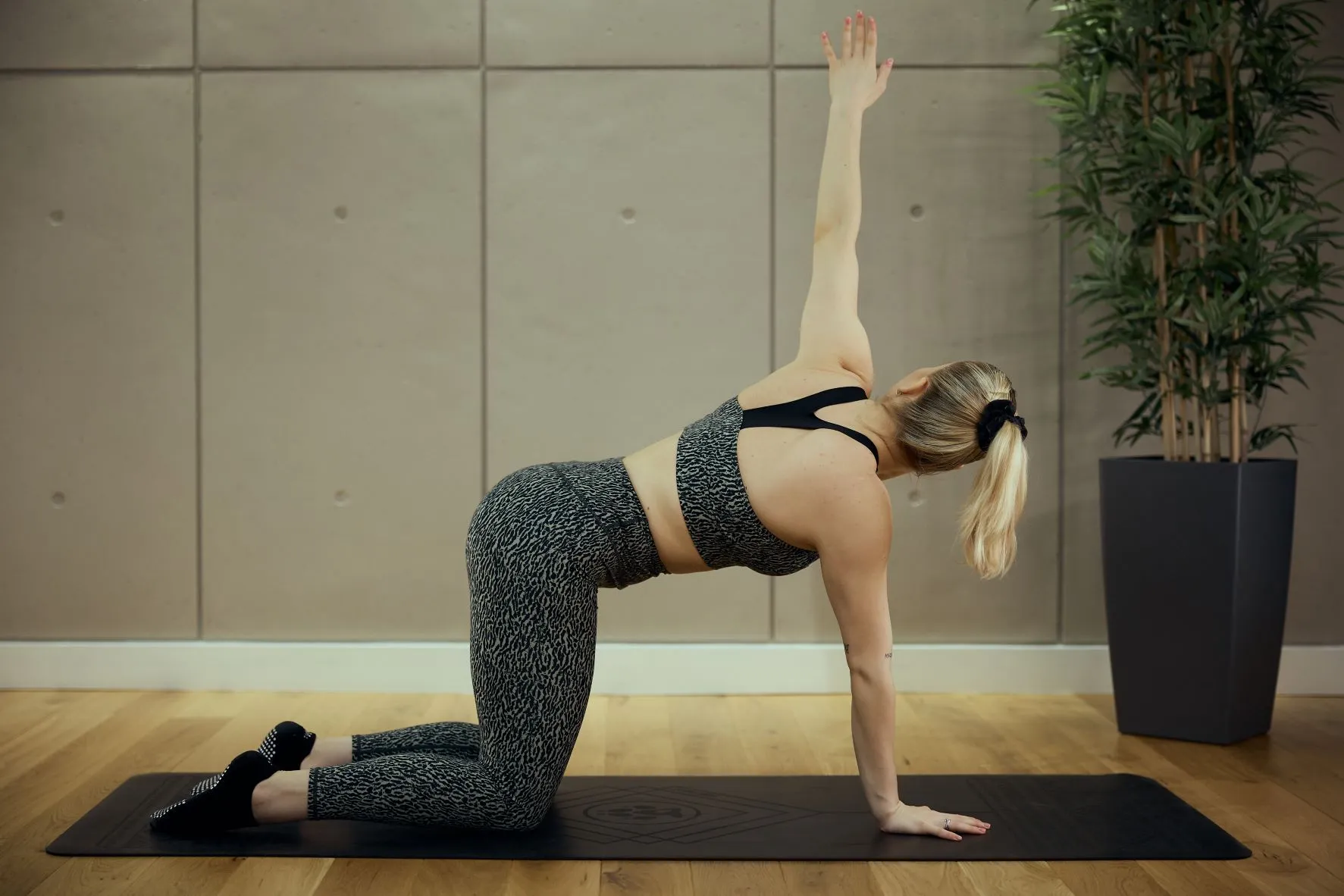
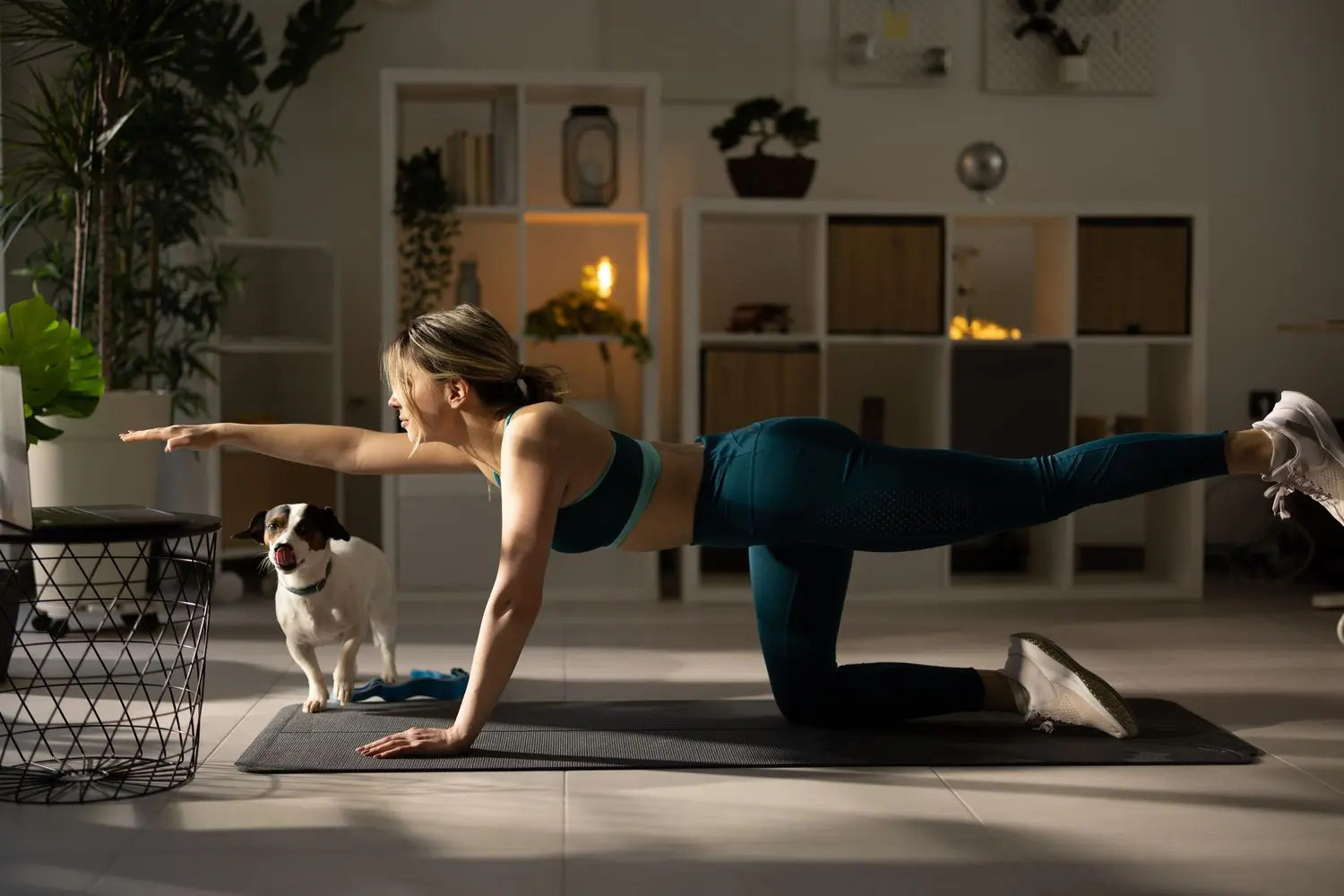
Begin on your hands and knees. Extend one arm forward and the opposite leg backward. Pause. Return to the starting position. Switch sides.
That is the exercise. But the real work is not in lifting the arm and leg. The real work is in keeping the body stable while the limbs move.
This is why the bird dog is so valuable. It trains balance, core stability, coordination, and control through the spine and hips. It teaches your body to move without collapsing, twisting, or overusing the lower back.
For people who want better posture, the bird dog is especially useful because it strengthens the muscles that help support the spine in a neutral position. It also trains the glutes, shoulders, and deep core muscles to work together.
Start on all fours, with your hands under your shoulders and knees under your hips. Keep your neck long and your gaze toward the floor. Brace gently through your midsection. Extend your right arm and left leg until both are straight. Reach long, not high. Pause for one or two seconds. Return with control. Repeat on the other side.
Your hips should stay level. Your lower back should not sag. Your body should not rock from side to side.
If the full movement feels too difficult, begin by extending only one leg at a time. Then try only the arms. Once you can control those movements, combine them.
Do two or three sets of eight to 10 repetitions per side.
The bird dog rewards patience. Rushing through it turns it into a meaningless limb swing. Slowing it down turns it into a serious stability exercise.
Balance is not only something you practice standing up. It is also the ability to keep your center steady while the body moves around it. That skill carries into walking, lifting, climbing, reaching, and recovering when you stumble.
A body that can stabilize itself feels more trustworthy. That trust is part of confidence.
4. Farmer’s Carry
The farmer’s carry may be the most practical exercise on this list.
Pick up something heavy in each hand. Stand tall. Walk.
That is it.
But simple does not mean easy. A properly loaded farmer’s carry trains the grip, shoulders, upper back, core, hips, and legs. It also teaches posture under real-world stress. You are not lying on a mat imagining strength. You are carrying weight, the way you do in life.
Groceries. Luggage. Laundry baskets. Children. Work bags. Boxes. Everyday life is full of carries.
Most people do not think of carrying as posture training, but it is. When the weight is heavy enough, you cannot afford to slump. Your shoulders must stay organized. Your core must stabilize your torso. Your feet must land with control. Your head has to stay stacked over your body.
To perform the farmer’s carry, hold a dumbbell, kettlebell, or heavy object in each hand. Stand tall. Keep your shoulders relaxed but firm, your chest open, and your ribs stacked over your hips. Walk slowly for 20 to 45 seconds.
Do not rush. Do not lean backward. Do not let the weights swing wildly.
If you only have one weight, do a suitcase carry. Hold the weight in one hand and walk without leaning to that side. Then switch hands. This version is excellent for training the core and improving balance from side to side.
Start with two or three rounds.
Choose a weight that feels challenging but does not pull you out of position. The goal is not to drag yourself across the room. The goal is to carry well.
The farmer’s carry builds a kind of confidence that is hard to fake. It makes you feel capable because it trains capability directly. You learn to hold weight, move with it, and stay composed.
There is no complicated choreography. No mirror muscle illusion. Just posture, strength, and control.
Sometimes confidence is simply the feeling that you can carry what needs carrying.
5. Split Squat
The split squat is a powerful exercise for balance because it reveals what each leg can do on its own.
Many lower-body exercises use both legs at the same time. That is useful, but it can hide imbalances. One side may quietly do more work. One hip may feel less stable. One ankle may move differently. The split squat brings those differences into the open.
It also trains strength in a position that resembles real movement. Walking, climbing stairs, lunging to pick something up, stepping forward to catch your balance — these are all single-leg or split-stance actions.
To do a split squat, stand with one foot forward and one foot back, as if you are in a long stride. Keep your torso tall. Bend both knees and lower your body toward the floor. Press through the front foot to return to standing.
The front heel should stay grounded. The front knee should track roughly in line with the toes. The back knee moves toward the floor, but it does not need to touch. Keep the movement smooth and controlled.
If balance is difficult, hold onto a wall, chair, or rail. This is not cheating. It is smart progression.
Start with body weight. Do two or three sets of eight to 10 repetitions per side.
As you improve, you can hold dumbbells, slow the lowering phase, or elevate the back foot for a more advanced version. But there is no need to rush. A controlled bodyweight split squat can be challenging enough.
The split squat strengthens the quadriceps, glutes, hamstrings, calves, and core. It also improves hip stability and balance. Because each side works separately, it helps build more even strength.
For posture, stronger legs and hips matter more than people realize. A tall upper body needs a stable lower body beneath it. If the base is weak, everything above it has to compensate.
For confidence, the effect is obvious. When your legs feel strong and steady, you move differently. Stairs feel less intimidating. Uneven ground feels less threatening. Getting up and down from the floor feels less like an event.
Balance is not just a fitness skill. It is freedom.
6. Dead Bug
The dead bug has an unfortunate name and a serious purpose.
It is one of the best beginner-friendly core exercises for improving posture and control without putting excessive strain on the neck or lower back. Unlike crunches, which focus on bending the spine, the dead bug teaches the core to stabilize the spine while the arms and legs move.
That is exactly what the core has to do in real life.
You walk, reach, twist, lift, carry, climb, and bend. Your limbs move constantly. Your center has to stay organized while all of that happens.
To perform the dead bug, lie on your back with your arms reaching toward the ceiling and your knees bent over your hips. Gently press your lower back toward the floor. Slowly lower one arm and the opposite leg away from each other. Pause. Return to the starting position. Switch sides.
Move slowly. Exhale as you lower the arm and leg. Keep your ribs from flaring. Do not let your lower back arch away from the floor.
If the full movement feels too difficult, lower only one leg at a time while keeping your arms still. Or tap one heel to the floor instead of extending the leg fully.
Do two or three sets of eight to 10 repetitions per side.
The dead bug improves posture by teaching the core to support the spine and pelvis. It also helps with breathing and body awareness. You learn how to create tension without becoming rigid. You learn how to move without losing alignment.
This exercise is not impressive to watch. That is one reason it is valuable. It removes performance from the equation. The only thing that matters is control.
And control is at the heart of both balance and confidence.
How to Put These Exercises Together
You do not need to do all six exercises every day.
A simple routine two or three times per week is enough to start. Move slowly. Focus on form. Rest when needed.
Try this structure:
Glute bridge: 2 sets of 12 repetitions
Wall angels: 2 sets of 8 to 10 repetitions
Bird dog: 2 sets of 8 repetitions per side
Split squat: 2 sets of 8 repetitions per side
Dead bug: 2 sets of 8 repetitions per side
Farmer’s carry: 2 or 3 rounds of 30 seconds
This routine can be done in about 25 to 35 minutes. If you are short on time, split it into two smaller sessions. Do glute bridges, wall angels, and dead bugs one day. Do split squats, bird dogs, and carries another day.
The key is consistency.
Posture does not improve because you reminded yourself once to stand tall. Balance does not improve because you practiced it once. Confidence does not arrive from one workout. These qualities develop through repeated signals to the body: support yourself, control yourself, trust yourself.
Why These Exercises Work Together
Each exercise trains a different piece of the same larger puzzle.
The glute bridge strengthens the hips. Wall angels improve upper-back awareness and shoulder position. Bird dogs train stability across the spine and pelvis. Farmer’s carries build posture under load. Split squats improve single-leg strength and balance. Dead bugs teach core control.
Together, they help the body do what good posture actually requires: stack, stabilize, move, and adapt.
Posture is not about freezing yourself in one perfect position. No one should sit or stand rigidly all day. The best posture is often the next posture — the ability to move, reset, and return to alignment without strain.
Balance is similar. It is not only standing still on one foot. It is your body’s ability to respond when life shifts under you: a curb, a slippery floor, a crowded sidewalk, a heavy bag, a sudden turn.
And confidence is not just how you feel in your mind. It is also the quiet assurance that your body can handle ordinary demands.
That is what these exercises build.
Not perfection.
Capacity.
A Note on Safety
These exercises should feel challenging, but not painful.
Muscle effort is normal. Mild fatigue is normal. Shaking during balance work can be normal. Sharp pain, joint pain, dizziness, numbness, or pain that changes how you move is not something to push through.
Modify when needed. Use support for balance. Reduce range of motion. Choose lighter weights. Move slower. If pain persists or you have a medical condition, recent injury, or major balance problems, speak with a qualified health professional before beginning a new exercise routine.
The goal is not to force your body into better posture.
The goal is to teach it, gradually, how to support you better.
The Bottom Line
Posture, balance, and confidence are connected.
When your hips are stronger, your spine has more support. When your upper back is more active, your shoulders sit more naturally. When your core is steadier, your movement feels more controlled. When your legs are stronger one side at a time, the ground feels less uncertain. When you can carry weight with good posture, daily life feels easier.
The exercises are not complicated: glute bridges, wall angels, bird dogs, farmer’s carries, split squats, and dead bugs.
They are simple because the body often needs simple things done well.
Start with control. Repeat the work. Let the changes accumulate quietly.
One day, you may notice that you are standing taller without reminding yourself. Walking more steadily without thinking about it. Carrying groceries, climbing stairs, or moving through a room with a little more ease.
That is not just fitness.
That is confidence made physical.
Important notice: this content is educational and does not replace an individual evaluation. If you have a history of eating disorders, diabetes, pregnancy, or a medical condition, consult a healthcare professional before making dietary or exercise changes.

 Sign In