

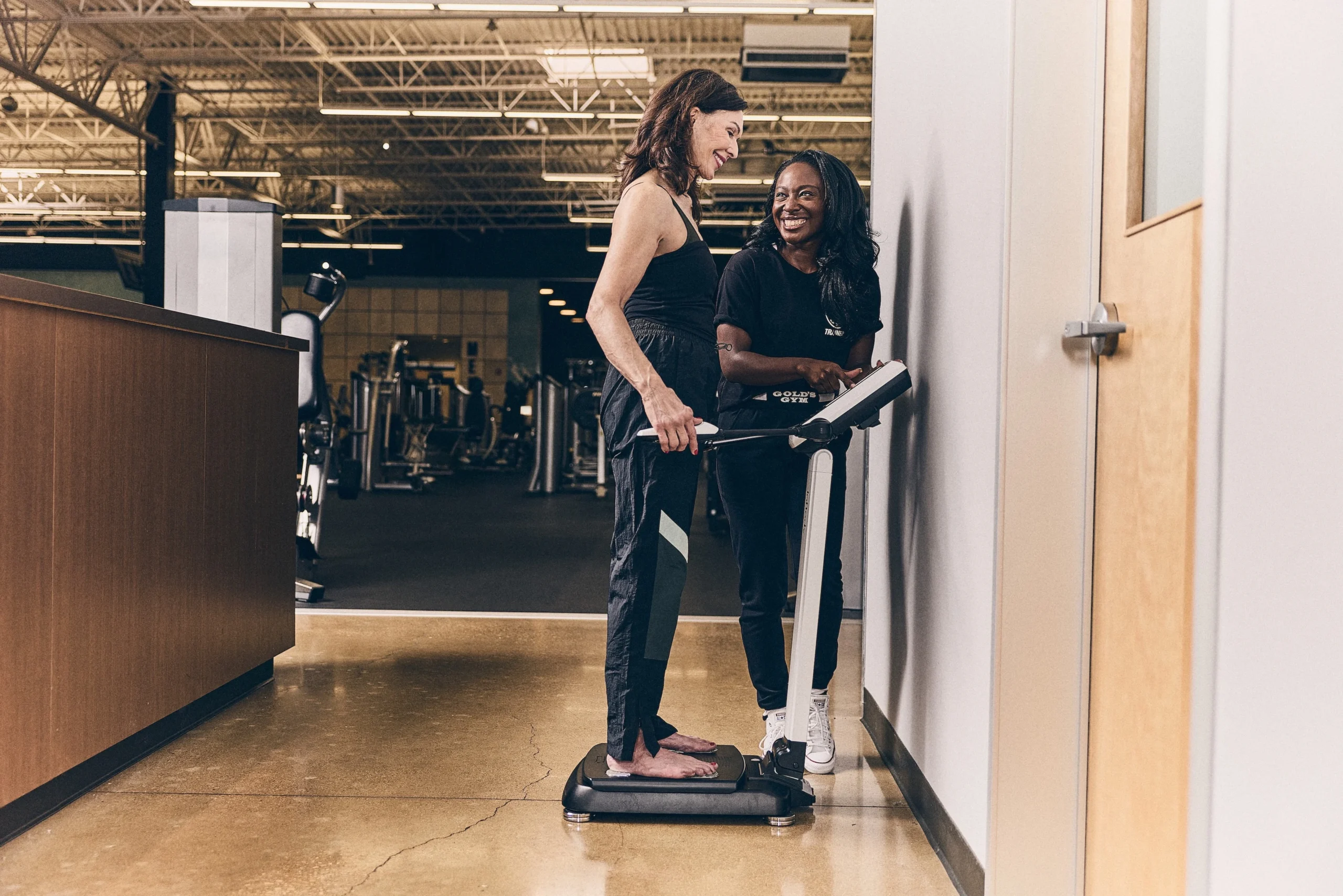

The phrase “fat-burning exercise” has been stretched so far by fitness marketing that it can start to sound almost meaningless.
There is no single move that melts fat from your belly, no magical sequence that turns your body into a furnace overnight, and no exercise that can outwork every part of your lifestyle. Fat loss is simpler than the industry often makes it sound, but not always easy: it comes from using more energy than you take in over time, while preserving enough muscle to look and feel strong.
Exercise helps with that. Not because it is magic, but because it gives your body a reason to move, work, adapt and burn calories. The best fat-burning exercises do more than make you sweat. They recruit large muscle groups. They raise your heart rate. They build strength and endurance. And, perhaps most important, they can be repeated consistently without making you dread your next workout.
The goal is not to punish yourself. The goal is to choose movements that give you a good return on effort.
Here are 10 exercises worth adding to your routine if you want to burn calories, improve conditioning and build a body that moves better — not just one that looks better in the mirror.
1. Squats
The squat is one of the most useful exercises in fitness because it trains a pattern you use constantly: sitting down, standing up, getting low and driving through the legs.
It works the quads, glutes, hamstrings and core, which makes it a strong calorie-burning exercise when performed with enough volume and control. But its real value is broader than that. Squats build lower-body strength that carries into daily life.
Start with body-weight squats if you are new. Stand with your feet about shoulder-width apart, toes slightly turned out. Push your hips back, bend your knees and lower your body as if sitting into a chair. Keep your chest lifted and your heels grounded. Stand back up by pressing through your feet and squeezing your glutes at the top.
Once body-weight squats feel solid, you can progress to goblet squats, dumbbell squats or barbell squats. The added load increases the demand, but only if your form stays clean.
For fat loss, squats work well in circuits, strength workouts or interval sessions. They do not need to be rushed. In fact, slower, better squats often do more for you than fast, sloppy ones.
Try: 3 sets of 10 to 15 reps.
Make it harder: Hold a dumbbell or kettlebell at chest height.
Common mistake: Letting the knees collapse inward. Keep them tracking in the same direction as your toes.
2. Kettlebell Swings
Few exercises combine power, cardio and strength as efficiently as the kettlebell swing.
A proper swing is not a squat with a weight in your hands. It is a hip-hinge movement. The hips drive back, then snap forward, sending the kettlebell upward through momentum created by the glutes and hamstrings. The arms guide the weight, but they should not be doing the heavy lifting.
This makes the swing especially effective because it trains the posterior chain — glutes, hamstrings, back and core — while quickly elevating the heart rate. A short set of swings can feel like both strength training and cardio at once.
Stand with your feet slightly wider than hip-width apart. Place the kettlebell a foot or so in front of you. Hinge at the hips, grip the handle and hike the bell back between your legs. Drive your hips forward to swing it to chest height. Let it fall naturally, hinge again and repeat.
The movement should feel crisp, not chaotic. Your back should stay long. Your core should stay braced. The kettlebell should float because your hips created power, not because your shoulders muscled it up.
Try: 10 rounds of 15 swings, resting 30 to 45 seconds between rounds.
Make it easier: Practice hip hinges and deadlifts before adding speed.
Common mistake: Squatting too much. The swing is about hips back and hips forward, not down and up.
3. Walking Lunges
Walking lunges are deceptively demanding. They look simple, but they challenge balance, coordination, leg strength and cardiovascular fitness all at once.
Because they train one leg at a time, lunges also reveal imbalances that squats may hide. The glutes, quads, hamstrings and calves all contribute, while the core works to keep the torso stable.
Step forward with one foot and lower your back knee toward the floor. Push through the front foot to stand and bring the back leg forward into the next step. Continue alternating legs.
The stride matters. Too short, and the knee may feel crowded. Too long, and the movement may become unstable. Aim for a step that allows both knees to bend comfortably while keeping your front heel grounded.
Walking lunges can be used as a finisher at the end of a workout or as part of a circuit. Add dumbbells when the body-weight version becomes too easy.
Try: 3 sets of 10 to 12 reps per leg.
Make it harder: Hold dumbbells at your sides.
Common mistake: Pushing off the back foot too much. Let the front leg do most of the work.
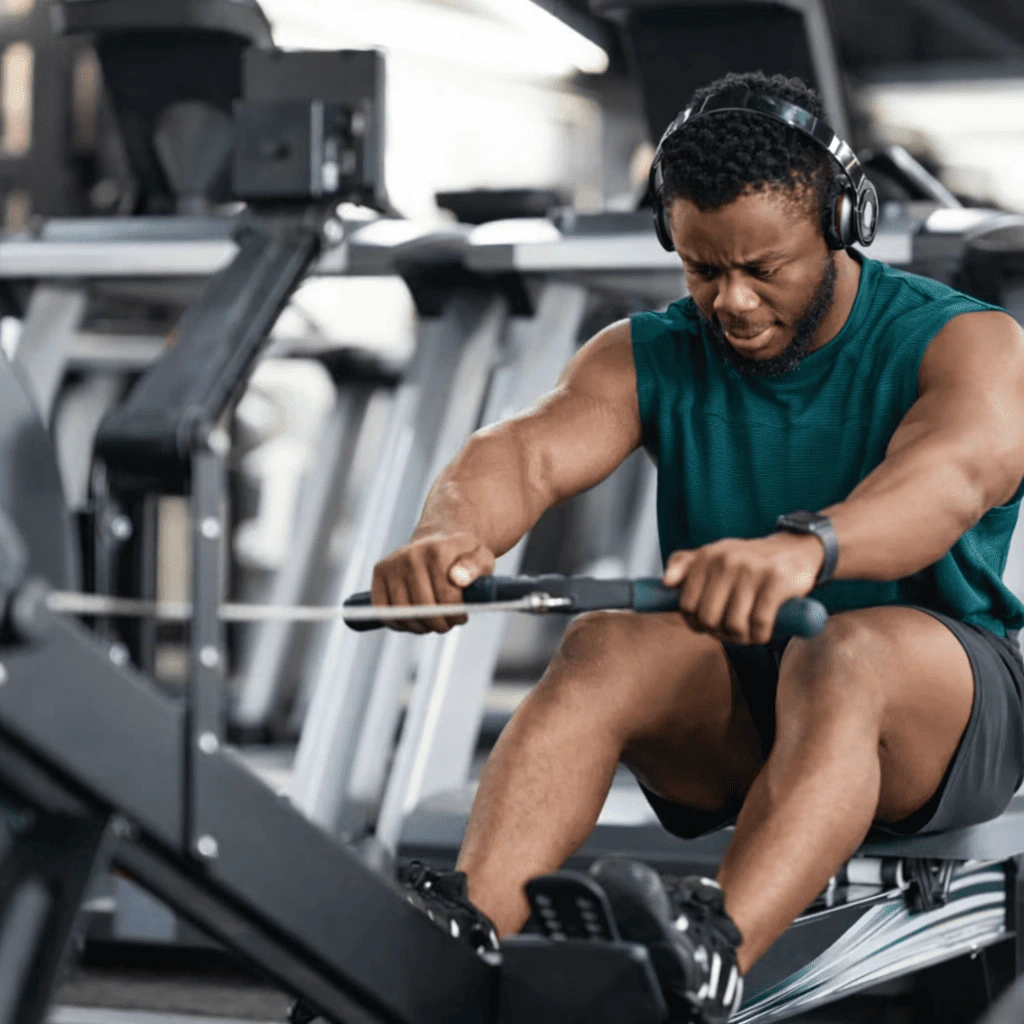
4. Rowing Machine Intervals
The rowing machine is one of the most efficient tools in the gym, but only when used well.
Unlike running, rowing is low impact. But it still trains the legs, glutes, back, arms and core. That combination makes it excellent for calorie-burning workouts, especially when done in intervals.
The proper rowing sequence is legs, body, arms — then arms, body, legs on the return. Push with your legs first, lean back slightly, then pull the handle toward your lower ribs. Reverse the motion with control.
Many people make rowing too frantic. They pull with their arms, round their backs and slide forward too quickly. A better row is powerful but smooth. Each stroke should feel connected.
Intervals work beautifully here because the rower responds to effort. The harder you push, the more resistance you create. That means you can get a serious workout in a short amount of time without pounding your joints.
Try: 8 rounds of 45 seconds hard, followed by 75 seconds easy.
Make it easier: Start with 10 to 15 minutes at a steady pace.
Common mistake: Treating it like an arm exercise. The legs should drive the stroke.
5. Mountain Climbers
Mountain climbers are popular for a reason: they raise the heart rate quickly, require no equipment and train the core, shoulders and hip flexors.
Start in a high plank position with your hands under your shoulders. Bring one knee toward your chest, then switch legs. You can move slowly with control or increase speed for a cardio challenge.
The key is keeping the plank strong. Your hips should not bounce wildly, and your shoulders should not drift far behind your hands. Think of the movement as running from a stable plank rather than flailing on the floor.
Mountain climbers are especially useful in body-weight circuits. They pair well with squats, push-ups, lunges and planks. Because they can be intense, they are best used in short bursts.
If the standard version bothers your wrists or lower back, elevate your hands on a bench. This reduces the load and makes the movement easier to control.
Try: 4 rounds of 30 to 45 seconds.
Make it harder: Drive the knees faster while keeping the hips steady.
Common mistake: Letting the lower back sag. Brace your core and keep your body long.
6. Step-Ups
Step-ups are practical, joint-friendly and surprisingly effective.
They train the same basic pattern you use when climbing stairs, hiking, getting into a truck or stepping onto a curb. The glutes and quads do most of the work, while the core helps stabilize the body.
Choose a box, bench or step that allows your knee to bend comfortably. Place one foot fully on the surface. Press through that foot to stand tall, then lower yourself with control. Repeat on one side or alternate legs.
The height should match your current ability. A higher box is not always better. If you have to push off aggressively with the back foot or twist your body to get up, the step is too high.
Step-ups are excellent for fat-burning circuits because they use large muscles without requiring jumping. Add dumbbells when you are ready for more intensity.
Try: 3 sets of 10 reps per leg.
Make it harder: Hold dumbbells or slow down the lowering phase.
Common mistake: Letting the back leg do too much. The foot on the step should be the main driver.
7. Burpees — Modified or Full
Burpees are famous, or infamous, because they are hard. They combine a squat, plank, push-up and jump into one movement, which is why they burn energy quickly.
But not everyone needs the full version.
For many people, modified burpees are the smarter choice. You can remove the push-up, step back instead of jumping back, or skip the final jump. These adjustments reduce impact while keeping the exercise effective.
To do a basic burpee, stand tall, place your hands on the floor, jump or step your feet back into a plank, return your feet forward and stand up. Add a jump at the top if appropriate.
The mistake is treating burpees like a punishment. When fatigue takes over, form often collapses. The lower back sags. The landing gets loud. The movement becomes survival. That is not the goal.
Use burpees in small doses. They are best as short, intense intervals, not endless tests of misery.
Try: 6 to 10 rounds of 20 seconds of work, followed by 40 seconds of rest.
Make it easier: Step back one foot at a time and remove the jump.
Common mistake: Moving too fast too soon. Earn the speed with good form.
8. Jump Rope
Jump rope looks playful until you do it for two minutes.
It is one of the most efficient cardio exercises available. It improves coordination, footwork, rhythm and endurance while burning calories quickly. It also requires very little space, which makes it useful for home workouts.
That said, jump rope is not the best choice for everyone. It is higher impact than cycling, rowing or swimming. If your knees, ankles or feet are sensitive, start carefully or choose a lower-impact option.
The goal is light, quiet contacts with the floor. Keep your elbows close to your body and turn the rope with your wrists, not your shoulders. Stay tall. Jump only high enough for the rope to pass under your feet.
Beginners should avoid long, exhausting sets. Short intervals are more effective and easier on the joints.
Try: 10 rounds of 30 seconds jumping, followed by 30 seconds rest.
Make it easier: Practice without the rope first, using small pogo-style hops.
Common mistake: Jumping too high. Smaller jumps are faster, smoother and less stressful.
9. Dumbbell Thrusters
The dumbbell thruster is a full-body exercise that combines a front squat with an overhead press. It is demanding because the legs, core, shoulders and arms all contribute.
Hold a dumbbell in each hand at shoulder height. Squat down with control. As you stand, use the power from your legs to help press the dumbbells overhead. Lower the weights back to your shoulders and repeat.
Thrusters are effective because they move weight through a large range of motion. More muscle involvement usually means a higher energy demand. They also build strength and conditioning at the same time.
But they should not be rushed. A thruster done badly can stress the lower back and shoulders. Keep your ribs down, brace your core and use a weight you can control.
This exercise works well in moderate-rep sets or short circuits. It is not necessary to go extremely heavy. The combination of movement and pace is already challenging.
Try: 3 sets of 8 to 12 reps.
Make it easier: Use one dumbbell held at chest height and press with both hands.
Common mistake: Arching the lower back during the press. Keep the core tight as the weights go overhead.
10. Sled Pushes
If your gym has a sled, use it.
The sled push is one of the most honest conditioning exercises. You load the sled, lean forward, grip the handles and drive through the legs. There is no complicated technique, no eccentric lowering phase and very little impact. You simply push.
That simplicity is part of what makes it so effective. The legs, glutes, core and lungs all work hard. The heart rate climbs quickly. And because there is less muscle damage than many traditional strength exercises, sled pushes can often be recovered from more easily.
Start with a light to moderate load. Keep your body angled forward, arms strong and steps powerful. Push for distance or time, then rest and repeat.
The sled can be used for short sprints, longer pushes or finishers after a strength session. It is especially useful for people who want high effort without jumping or running.
Try: 6 to 10 pushes of 15 to 25 meters, resting 60 to 90 seconds between rounds.
Make it harder: Add weight or increase distance.
Common mistake: Loading the sled too heavily. If you can barely move it, you are training grinding strength more than conditioning.
How to Add These Exercises to Your Routine
You do not need to do all 10 exercises in one workout. In fact, you probably should not.
A good fat-burning routine balances effort and recovery. It includes strength exercises, conditioning work and enough rest to let your body adapt. More is not always better. Better is better.
Here is a simple way to structure your week:
Workout A: Strength and Conditioning
- Squats: 3 sets of 10 to 12 reps
- Walking lunges: 3 sets of 10 reps per leg
- Dumbbell thrusters: 3 sets of 8 to 10 reps
- Mountain climbers: 4 rounds of 30 seconds
Workout B: Low-Impact Cardio
- Rowing intervals: 8 rounds of 45 seconds hard, 75 seconds easy
- Step-ups: 3 sets of 10 reps per leg
- Sled pushes: 6 rounds
Workout C: Full-Body Circuit
- Kettlebell swings: 15 reps
- Squats: 12 reps
- Step-ups: 10 reps per leg
- Mountain climbers: 30 seconds
- Modified burpees: 8 reps
Repeat the circuit 3 to 5 times, resting as needed.
The right intensity should feel challenging but sustainable. You should finish feeling like you worked, not like you barely survived.
The Truth About Fat Burning
Exercise can help you burn calories, but it is only one part of fat loss.
Nutrition matters. Sleep matters. Stress matters. Daily movement matters. A person who exercises hard three times a week but sits all day, sleeps poorly and eats far beyond their needs may struggle to lose fat. Another person who trains moderately, walks often, eats enough protein and sleeps well may see steadier progress.
This is not meant to discourage you. It is meant to free you from the idea that every workout has to be extreme.
Fat loss is built through repeated decisions. A workout. A walk. A protein-rich meal. A reasonable bedtime. A day where you do not quit because yesterday was imperfect.
The best exercise routine is the one you can keep doing long enough for it to matter.
What Makes an Exercise Worth It?
A worthwhile fat-burning exercise does not just exhaust you. It gives something back.
Squats and lunges build useful strength. Rowing and jump rope improve conditioning. Step-ups and sled pushes carry over to real movement. Kettlebell swings train power. Mountain climbers and burpees challenge the core and lungs. Thrusters bring the whole body into one demanding pattern.
Together, these exercises help you become more capable.
That is the larger point. Burning calories is useful, but it is not the only goal. You also want to protect muscle, improve stamina, move better and feel more confident in your body.
A routine built only around suffering rarely lasts. A routine built around progress has a better chance.
Final Thoughts
The best fat-burning exercises are not always the flashiest ones. They are the movements that use large muscle groups, raise your heart rate and fit into a routine you can repeat.
Start with three or four exercises from this list. Learn the form. Keep the effort honest. Add volume slowly. When something feels too easy, increase the challenge. When something hurts, adjust.
Fitness does not reward panic. It rewards consistency.
A good workout should ask something of you. It should make you breathe harder, move with purpose and leave with the quiet satisfaction that you did something useful for your body.
That is enough.
Do it again next week. Then the week after that. That is where fat loss — and real fitness — begins.
Important notice: this content is educational and does not replace an individual evaluation. If you have a history of eating disorders, diabetes, pregnancy, or a medical condition, consult a healthcare professional before making dietary or exercise changes.







 Sign In