

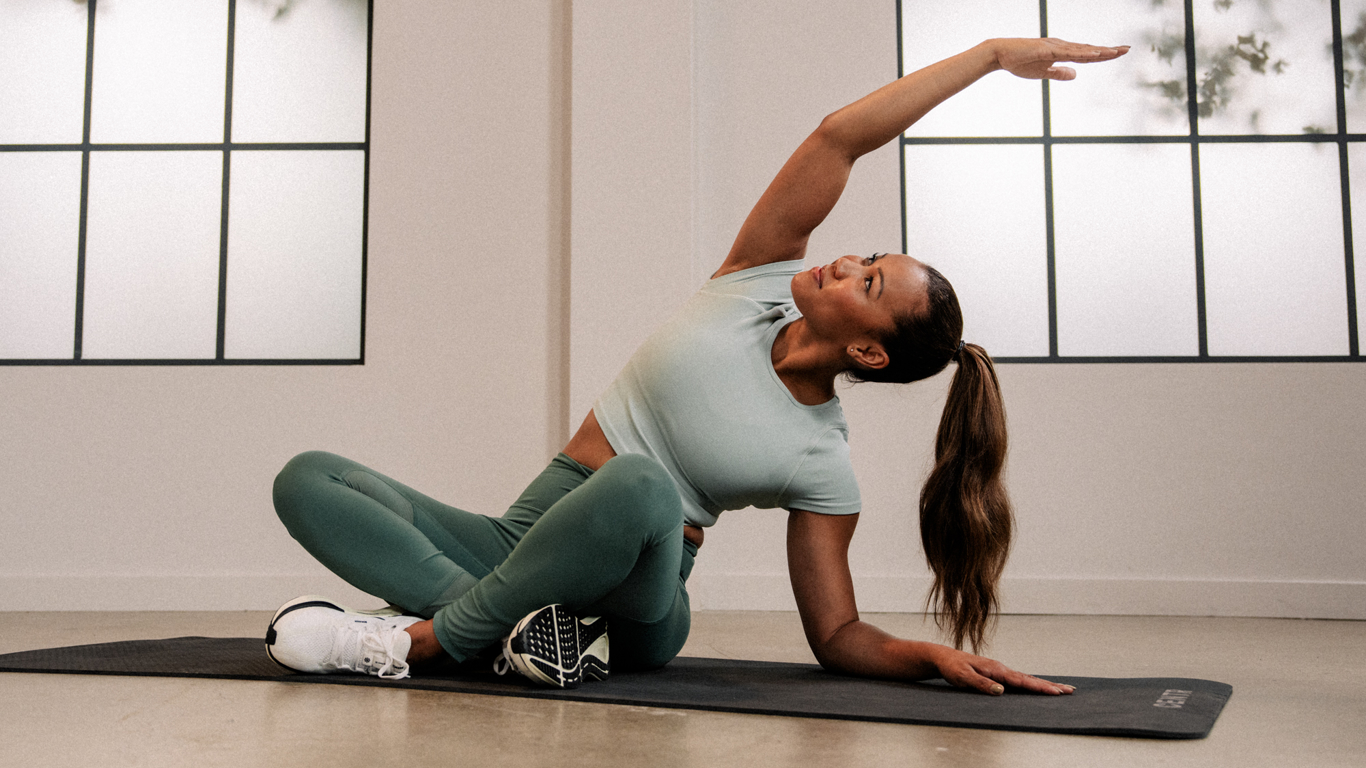

Most people do not think about mobility until they lose it.
It happens quietly. You bend down and notice your hips feel stiff. You turn your neck while driving and realize the movement is not as easy as it used to be. You sit for a long workday and stand up feeling as if your body has been folded into the wrong shape. Nothing is necessarily injured. Nothing is dramatic. But movement starts to feel smaller.
Mobility work is often misunderstood. It is not just stretching. It is not just yoga. And it is not only for athletes, dancers or people recovering from injury. Mobility is the ability to move your joints through a useful range of motion with control. In simpler terms, it is what helps your body feel capable in daily life.
You use mobility when you reach overhead for a shelf, squat to tie your shoes, rotate to pick something up from the back seat, or walk up stairs without feeling tight through the hips and ankles. It is not glamorous, but it matters.
The modern body spends a lot of time still. We sit in chairs, stare at screens, drive in cars and repeat the same limited positions day after day. Over time, the joints and muscles adapt. Hips tighten. Ankles stiffen. Shoulders round forward. The spine loses some of its easy rotation. Then we ask the body to move — at the gym, on a hike, during a weekend project — and wonder why everything feels restricted.
The answer is not to force deeper stretches or chase extreme flexibility. The better approach is simple: practice movements that restore range, improve control and remind the body how it is meant to move.
Here are seven mobility exercises that can help you move better every day.
1. Cat-Cow
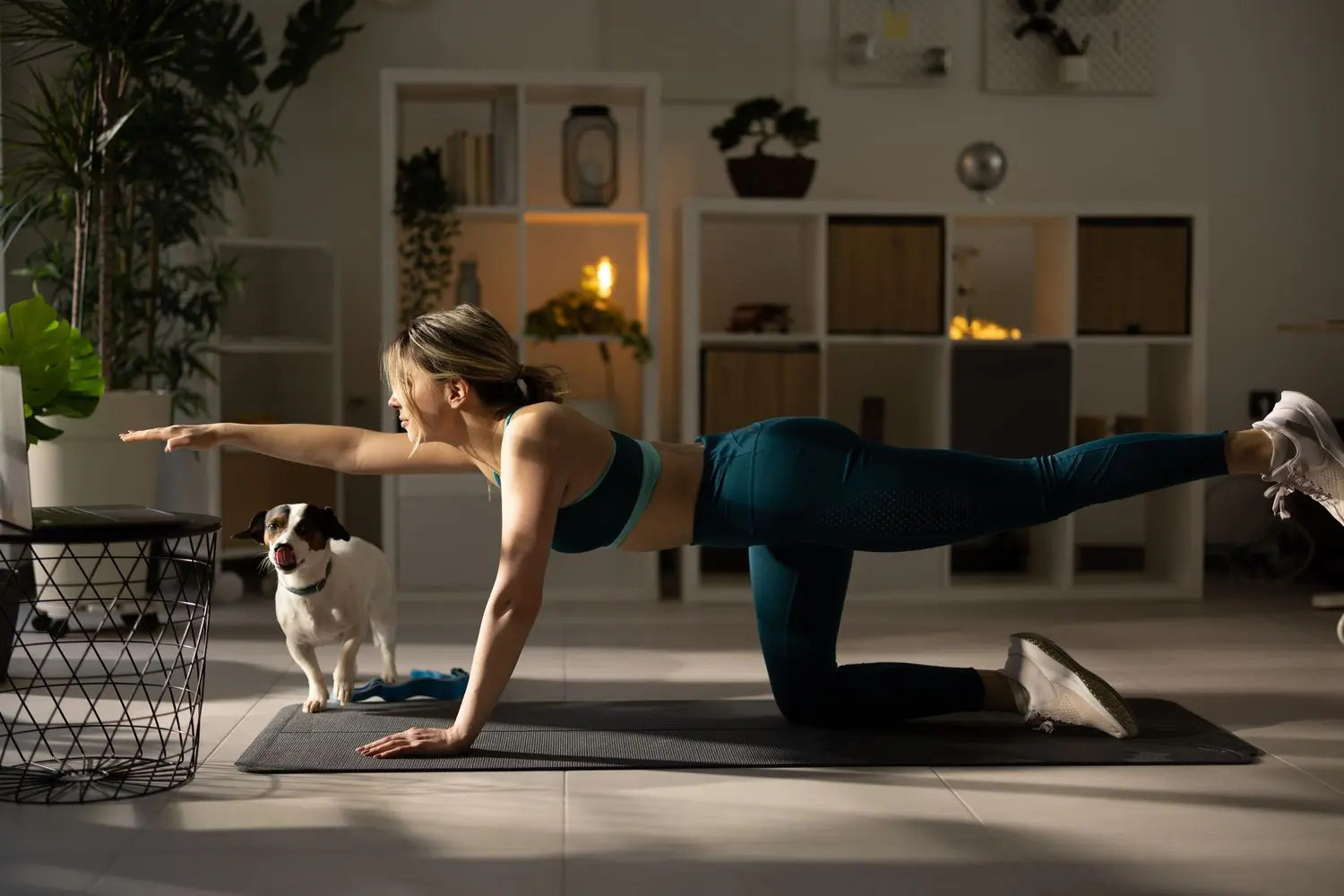
The cat-cow is one of the simplest ways to bring movement back into the spine. It is often used as a warm-up, but it deserves more credit than that. Done slowly, it helps you notice how your back moves, where it feels stiff and whether your spine can flex and extend without strain.
Start on your hands and knees, with your hands under your shoulders and your knees under your hips. As you inhale, gently arch your back, lift your chest and let your belly move toward the floor. This is the “cow” position. As you exhale, round your spine, tuck your chin slightly and press the floor away. This is the “cat” position.
Move slowly. The goal is not to force a dramatic shape. The goal is to move each section of the spine with awareness. Many people rush through this exercise as if they are checking a box. Slow it down and it becomes far more useful.
Cat-cow can be especially helpful in the morning or after long periods of sitting. It brings gentle motion into the neck, upper back, lower back and pelvis without requiring much effort or equipment.
Try: 8 to 12 slow repetitions.
Helpful cue: Imagine your spine moving like a wave, not a single stiff board.
2. World’s Greatest Stretch
The name sounds exaggerated, but the world’s greatest stretch earns its reputation. It combines a lunge, hip opener and spinal rotation in one movement. That makes it especially useful for people who sit often, train hard or feel tight through the hips and upper back.
Start in a high plank position. Step your right foot outside your right hand. Keep your left leg extended behind you, with your left knee either lifted or resting on the floor. Let your hips sink slightly without collapsing. From there, rotate your right arm toward the ceiling, opening your chest toward the front leg. Return your hand to the floor and switch sides.
This movement works because it asks several areas of the body to cooperate. The hips open. The back leg lengthens. The spine rotates. The shoulders move. It is not just a stretch; it is a rehearsal for real movement.
If the full version feels too intense, place your hands on yoga blocks, a bench or a sturdy chair. Elevating the hands gives you more room and makes the exercise easier to control.
Try: 5 to 6 repetitions per side.
Helpful cue: Keep the front foot flat and rotate from the upper back, not just the neck.
3. 90/90 Hip Switch
Hips are designed to move in several directions, but daily life often asks them to do very little. Sitting keeps the hips flexed. Walking mostly moves them forward and back. Over time, rotation can become limited.
The 90/90 hip switch helps restore that missing rotation. It trains both internal and external hip mobility, which are important for squatting, lunging, running, climbing stairs and simply getting up and down from the floor.
Sit on the floor with one leg in front of you bent at roughly 90 degrees and the other leg behind you, also bent at about 90 degrees. Keep your torso tall. Without using your hands if possible, slowly rotate your knees from one side to the other, switching which leg is in front.
At first, this may feel awkward. That is normal. The hips are not always used to moving this way. Move through a range you can control. If you need to place your hands behind you for support, do it. Over time, try to rely less on your hands and more on your hips.
The point is not to look graceful. The point is to regain movement that many adults gradually lose.
Try: 8 to 10 controlled switches.
Helpful cue: Keep the movement smooth. Avoid throwing your knees from side to side.
4. Thoracic Rotation
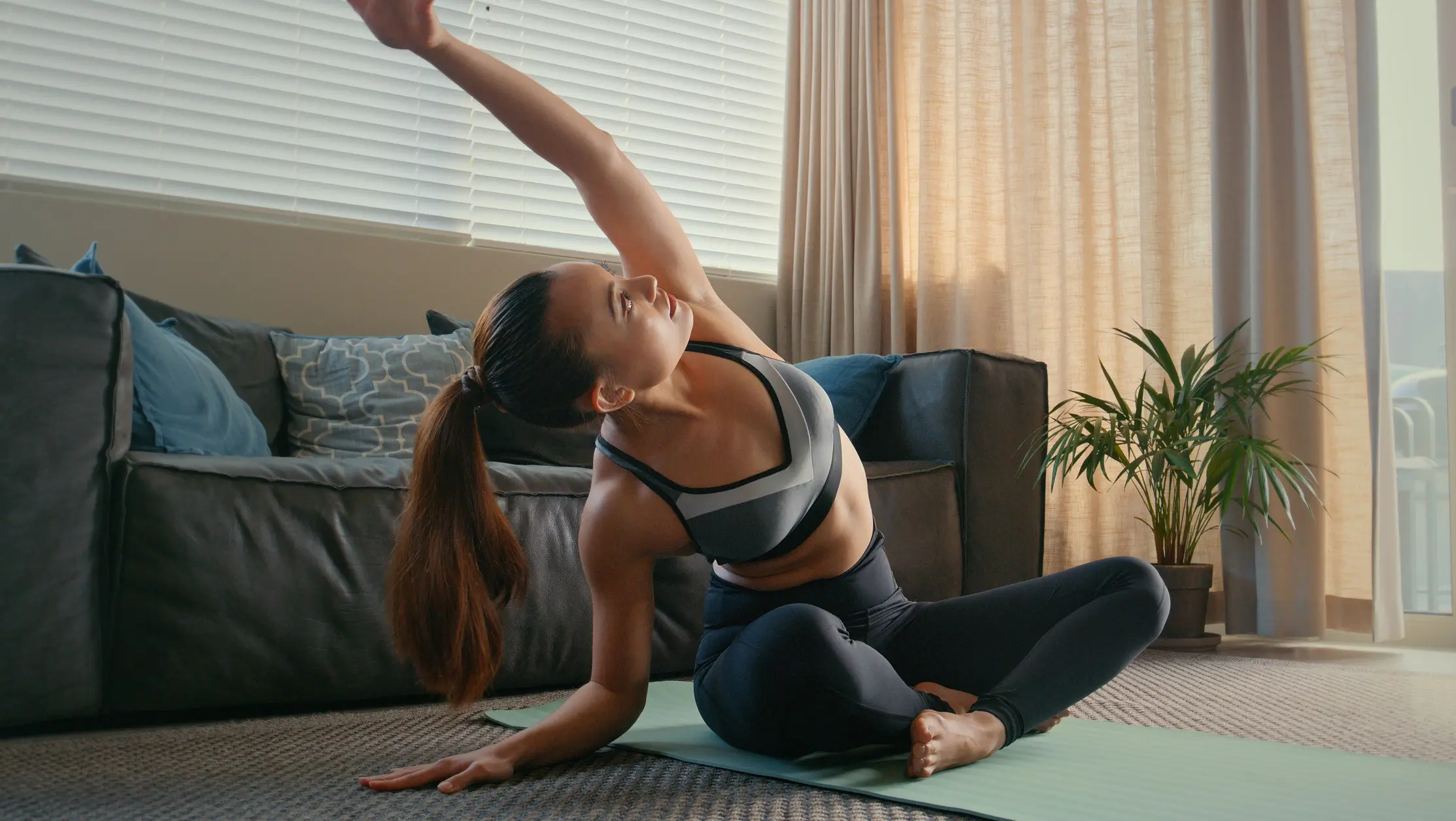
The thoracic spine — the upper and mid-back — is built to rotate. But many people lose some of that rotation because of long hours spent sitting, typing or looking down at phones. When the upper back does not rotate well, other areas often compensate, including the neck, shoulders and lower back.
A simple thoracic rotation drill can help.
Start on your hands and knees. Place your right hand behind your head, with your elbow pointing out to the side. Rotate your right elbow down toward your left wrist, then open the elbow toward the ceiling as far as comfortable. Keep your hips relatively still as you rotate through the upper back. Repeat, then switch sides.
This exercise is useful because it isolates the area many people need most. Instead of twisting through the lower back or simply moving the head, you are asking the upper back to do its job.
You may notice one side feels more restricted than the other. That is common. Move with patience. Mobility improves through consistent exposure, not force.
Try: 6 to 8 repetitions per side.
Helpful cue: Follow your elbow with your eyes, but do not crank your neck to fake more rotation.
5. Ankle Rocks
Ankle mobility does not get much attention until it becomes a problem. Stiff ankles can affect how you squat, walk, run and climb stairs. When the ankles do not move well, the knees, hips and lower back often have to make up the difference.
Ankle rocks are simple, but they can be surprisingly effective.
Start in a half-kneeling position, with one foot forward and the opposite knee on the floor. Keep the front foot flat. Slowly drive the front knee forward over the toes, then return to the starting position. The heel should stay down the entire time. Move gently in and out of the position.
You should feel the ankle working, not the foot collapsing. Try moving the knee slightly toward the big toe, then slightly toward the outer toes, exploring different angles while keeping the heel grounded.
This exercise is particularly useful before squats, lunges, running or long walks. It helps prepare the lower body for movement by giving the ankle a chance to open and respond.
Try: 10 to 12 repetitions per side.
Helpful cue: Keep the heel heavy. If it lifts, reduce the range.
6. Deep Squat Hold
The deep squat is a natural resting position in many parts of the world, but for people who spend most of the day in chairs, it can feel surprisingly difficult. That does not mean everyone needs to sit in a deep squat for long periods. But practicing the position can help improve mobility through the ankles, knees, hips and spine.
Stand with your feet about shoulder-width apart. Turn your toes slightly outward. Lower into a squat as far as you comfortably can while keeping your heels on the floor. Bring your hands together in front of your chest and use your elbows to gently press your knees outward. Keep your chest lifted and breathe.
If you cannot reach a deep squat without rounding heavily or lifting your heels, hold onto a door frame, pole or sturdy support. You can also place a rolled towel or small wedge under your heels. The goal is not to force the perfect squat. The goal is to spend time in a position that asks the lower body to open.
The deep squat hold can feel intense at first. Start with short holds and build gradually. With practice, it often becomes more comfortable.
Try: 20 to 45 seconds.
Helpful cue: Breathe into the position. Do not hold your breath or tense your jaw.
7. Wall Slides
Shoulder mobility is about more than being able to reach overhead. It also depends on the shoulder blades, upper back and rib cage working together. Wall slides help train that coordination.
Stand with your back against a wall, feet a few inches away from it. Try to keep your lower back, upper back and head gently connected to the wall without forcing an exaggerated posture. Bring your arms up so your elbows are bent, as if making a goalpost shape. Slowly slide your arms upward, then back down, keeping as much contact with the wall as you can.
This may sound easy. For many people, it is not. Tight chest muscles, stiff shoulders and limited upper-back mobility can make the movement challenging. Do not force your arms into the wall. Move only through the range you can control.
Wall slides are especially helpful for people who spend hours at a desk. They encourage the shoulders to move overhead without shrugging and help the upper back contribute to the movement.
Try: 8 to 12 slow repetitions.
Helpful cue: Keep the ribs from flaring. If your lower back arches, reduce the range.
How to Use These Mobility Exercises
You do not need to turn mobility into a full workout. In fact, the best mobility routine is often the one you can actually do consistently.
A simple daily routine might look like this:
- Cat-cow: 10 reps
- World’s greatest stretch: 5 reps per side
- 90/90 hip switch: 8 reps
- Thoracic rotation: 6 reps per side
- Ankle rocks: 10 reps per side
- Deep squat hold: 30 seconds
- Wall slides: 10 reps
That entire sequence can take less than 15 minutes.
You can also use these exercises as a warm-up before strength training, running or sports. For example, ankle rocks and deep squat holds pair well with lower-body workouts. Wall slides and thoracic rotations work well before upper-body training. Cat-cow and 90/90 switches are useful almost any time.
The key is to move slowly enough to notice what is happening. Mobility work loses value when it becomes rushed. Think of it less as exercise and more as a conversation with the body.
Mobility vs. Flexibility
Flexibility and mobility are related, but they are not the same.
Flexibility is the ability of a muscle to lengthen. Mobility is the ability of a joint to move through a range of motion with control. You can be flexible but lack control. You can also be strong but move poorly through certain ranges.
Good mobility includes strength, coordination and awareness. That is why active exercises are often more useful than passive stretching alone. Sitting in a stretch may feel good, but learning to control a position tends to carry over better to real life.
This is especially important as we age. The goal is not to become unusually bendy. The goal is to keep moving with confidence.
What Mobility Work Should Feel Like
Mobility exercises should feel like gentle effort, not punishment. You may feel tightness, mild discomfort or a sense of challenge. You should not feel sharp pain, numbness or pinching. If a movement causes pain, reduce the range, slow down or skip it.
Progress is usually gradual. One day, your squat feels a little easier. Your shoulders move overhead with less resistance. Your hips feel less locked after sitting. These changes may not be dramatic, but they matter.
The body responds to what it does often. If you spend most of the day still, it adapts to stillness. If you give it regular, thoughtful movement, it begins to adapt to that too.
The Everyday Payoff
The real benefit of mobility work is not that you become better at mobility drills. It is that ordinary movement becomes easier.
You reach for something without strain. You turn your torso instead of twisting awkwardly through your lower back. You squat down without feeling trapped. You walk with a longer, smoother stride. You finish the day feeling less compressed.
That is the quiet promise of mobility training. It does not need to be dramatic to be valuable. It just needs to be consistent.
In a fitness culture often obsessed with intensity, mobility asks for something different: attention. It asks you to slow down, explore your range and build control where you may have been avoiding movement.
Start with a few exercises. Do them most days. Keep the effort moderate. Let the body learn.
Better movement is not built in one heroic session. It is built in small, repeated reminders that your body is capable of more than sitting, standing and rushing from one task to the next.
And that may be the most practical form of fitness there is.
Important notice: this content is educational and does not replace an individual evaluation. If you have a history of eating disorders, diabetes, pregnancy, or a medical condition, consult a healthcare professional before making dietary or exercise changes.



 Sign In