



A strong back is not just something you build for the gym mirror. It is something you use every time you carry groceries, pick up a child, sit at a desk, climb stairs, swing a tennis racket, or reach for a suitcase in the overhead bin.
And yet, for many people, back training is treated as an afterthought. Chest day gets attention. Arms get attention. Abs get endless attention. The back, by comparison, often waits quietly in the background until something starts to ache.
That is a mistake.
Your back is one of the body’s great support systems. It helps hold you upright, keeps your shoulders from rounding forward, protects the spine, and gives your arms a stable base from which to pull, lift and reach. When the muscles of the back are weak or neglected, the effects often show up in subtle ways: slumped posture, tight shoulders, low-grade stiffness, poor lifting mechanics and that familiar feeling of being “older” than you actually are when you stand up after a long day at a desk.
The good news is that you do not need an elaborate training plan to make meaningful progress. A handful of well-chosen back exercises can improve strength, posture and everyday movement when performed consistently and with control.
Below are six back exercises worth building into your routine. Together, they train the upper back, lats, spinal stabilizers, rear shoulders and posterior chain — the muscles that help you stand taller, move better and feel stronger in daily life.
Why Back Strength Matters More Than You Think
The back is not a single muscle. It is a wide network of muscles that run from the base of the skull down to the pelvis and across the shoulders. The latissimus dorsi, trapezius, rhomboids, erector spinae and rear deltoids all play important roles. Some help pull your arms toward your body. Others stabilize your shoulder blades. Some help extend the spine. Others keep you from collapsing forward when you sit, stand or lift.
Modern life does not make this easy.
Many people spend hours with their shoulders rounded, neck craned forward and hips folded into a chair. Over time, the muscles on the front of the body can become tight, while the muscles of the upper and mid-back become underused. This does not mean posture is simply a matter of “standing up straight.” Posture is not a pose. It is a reflection of strength, mobility, awareness and endurance.
A stronger back gives the body more options. It helps you carry weight without straining. It supports better shoulder mechanics. It makes pulling movements easier. It can reduce the sense of fatigue that comes from sitting all day. And, when trained properly, it can make the body feel more balanced.
The goal is not to punish the back with heavy weights or complicated exercises. The goal is to train it intelligently.
1. Bent-Over Row
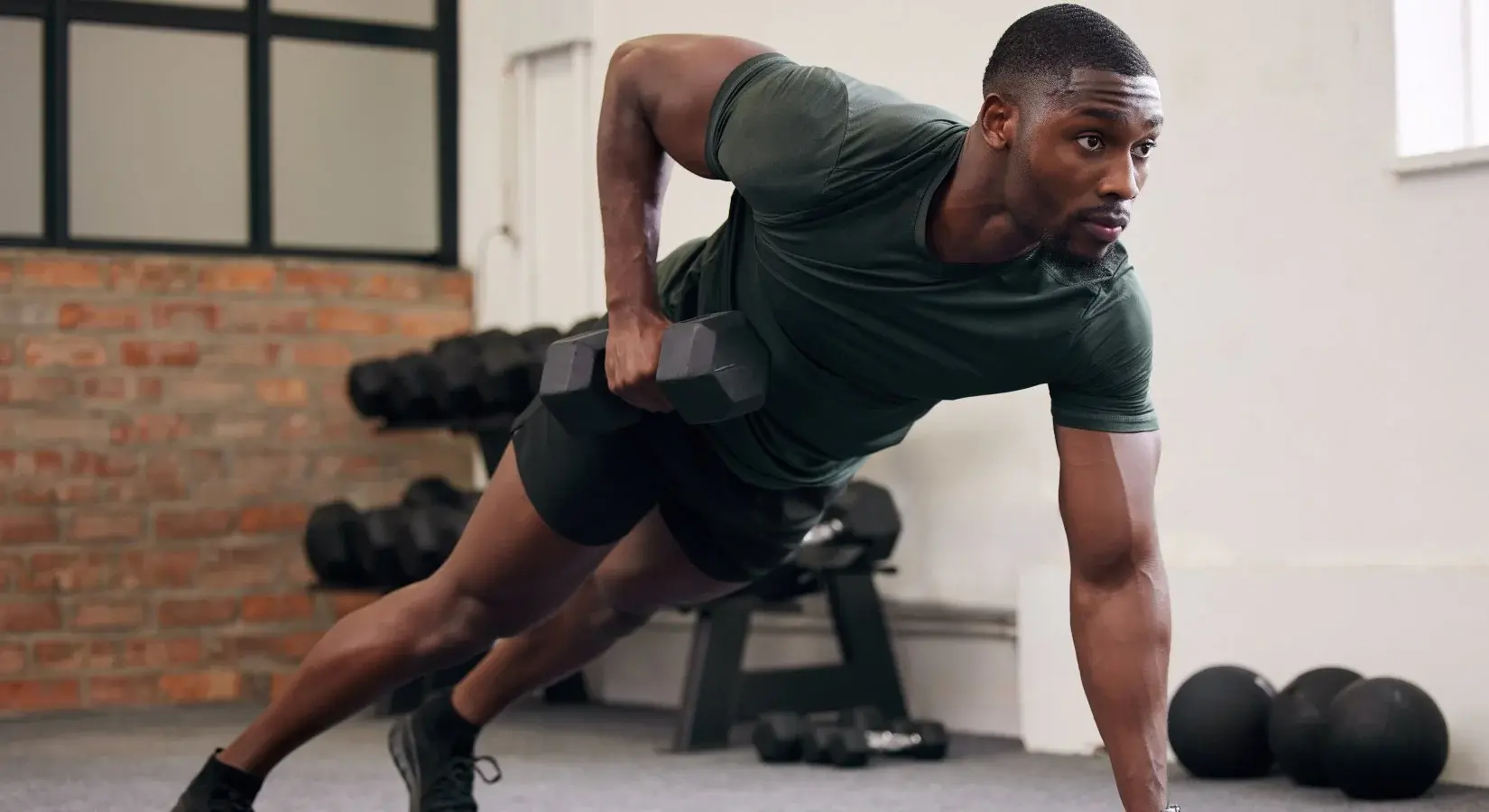
The bent-over row is one of the most useful exercises for building a stronger back because it teaches the body to pull while maintaining a stable torso. It targets the lats, rhomboids, traps and rear shoulders, while also asking the core and hips to help keep the body steady.
This is the kind of movement that carries over to real life. Every time you pull something toward you — a heavy door, a bag from the car, a box across the floor — you are using many of the same muscles.
To perform it, stand with your feet about hip-width apart, holding a pair of dumbbells or a barbell. Hinge at your hips, keeping your back long rather than rounded. Your torso does not need to be perfectly parallel to the floor; what matters most is that your spine stays neutral and your ribs do not flare. Let the weights hang beneath your shoulders, then pull your elbows back toward your hips. Pause briefly at the top, then lower with control.
Think about driving the elbows back, not yanking the hands upward. The difference matters. When the movement starts from the elbows and shoulder blades, the back does the work. When it starts from the hands, people often shrug, twist or use momentum.
For beginners, the dumbbell version is usually more forgiving than the barbell version. It allows each side of the body to work independently and makes it easier to find a comfortable range of motion.
Try: 3 sets of 8 to 12 reps.
Common mistake: Turning the exercise into a lower-back endurance test. If your lower back is doing all the work, lighten the weight, raise your torso slightly or try a chest-supported row instead.
2. Lat Pulldown
The lat pulldown is one of the best back exercises for developing the latissimus dorsi, the large muscles that run along the sides of the back. Strong lats help with pulling strength, shoulder stability and the broad, athletic shape many people associate with a well-trained back.
But the value of the lat pulldown is not just cosmetic. The movement helps train the shoulders to move through a strong, controlled range of motion. It can also serve as a stepping stone toward pull-ups, which require more total-body strength.
Sit at a lat pulldown machine with your thighs secured under the pads. Grip the bar slightly wider than shoulder-width. Start with your arms extended overhead and your chest lifted. Pull the bar down toward the upper chest by bringing your elbows down and slightly back. Pause, then return the bar slowly to the starting position.
The key is to avoid leaning too far back. A slight lean is fine, but if the exercise starts to resemble a row, you are changing the target. Keep the movement smooth. Let the shoulder blades move naturally as the arms rise and fall.
If you do not have access to a pulldown machine, a resistance band anchored overhead can work well. The band version may not feel as heavy, but it can be excellent for learning control.
Try: 3 sets of 10 to 12 reps.
Common mistake: Pulling the bar behind the neck. For most people, pulling to the chest is safer and more effective.
3. Face Pull
The face pull is not glamorous, but it is one of the most valuable exercises for posture and shoulder health. It targets the rear deltoids, rotator cuff muscles, mid-traps and rhomboids — the muscles that help pull the shoulders back and keep the upper body from folding forward.
This makes it especially useful for people who spend much of the day at a computer. Long hours of sitting can encourage the shoulders to round and the head to drift forward. Face pulls will not magically undo every effect of desk life, but they can help strengthen the muscles that support a more open, upright position.
Set a cable machine or resistance band at about upper-chest or face height. Hold the rope or band with both hands, palms facing each other. Step back until there is tension. Pull the rope toward your face, keeping your elbows high and wide. At the end of the movement, your hands should be near your temples or ears. Squeeze the upper back briefly, then return slowly.
This is not an exercise for ego lifting. The weight should be light enough that you can control every inch of the movement. If you have to lean back or jerk the cable, it is too heavy.
Think of the face pull as maintenance work for the upper body. It may not impress anyone across the gym, but your shoulders will notice.
Try: 2 to 4 sets of 12 to 15 reps.
Common mistake: Pulling too low, which turns the exercise into something closer to a row. Aim toward the face, not the chest.
4. Romanian Deadlift
The Romanian deadlift is often thought of as a hamstring exercise, but it is also one of the most important movements for building the back side of the body. It trains the erector spinae, glutes and hamstrings while teaching the hip hinge — a movement pattern that matters far beyond the gym.
Learning to hinge at the hips is one of the most practical skills in strength training. It is the difference between bending over with a rounded spine and folding from the hips with control. Whether you are picking up a laundry basket or lifting a suitcase, this pattern matters.
To perform a Romanian deadlift, stand with your feet hip-width apart, holding dumbbells or a barbell in front of your thighs. Keep your knees slightly bent. Push your hips back as the weights slide down along the front of your legs. Stop when you feel a strong stretch in the hamstrings or when your torso can no longer lower without the back rounding. Drive through your heels and squeeze your glutes to stand tall again.
The weights should stay close to the body throughout the movement. If they drift forward, the lower back takes on unnecessary stress. Your spine should remain long and neutral, with your chest open and your shoulders pulled gently back.
Start light. The Romanian deadlift rewards patience. Done well, it builds durable strength. Done carelessly, it becomes a fast way to irritate the lower back.
Try: 3 sets of 8 to 10 reps.
Common mistake: Squatting instead of hinging. The hips should move backward, not straight down.
5. Bird Dog
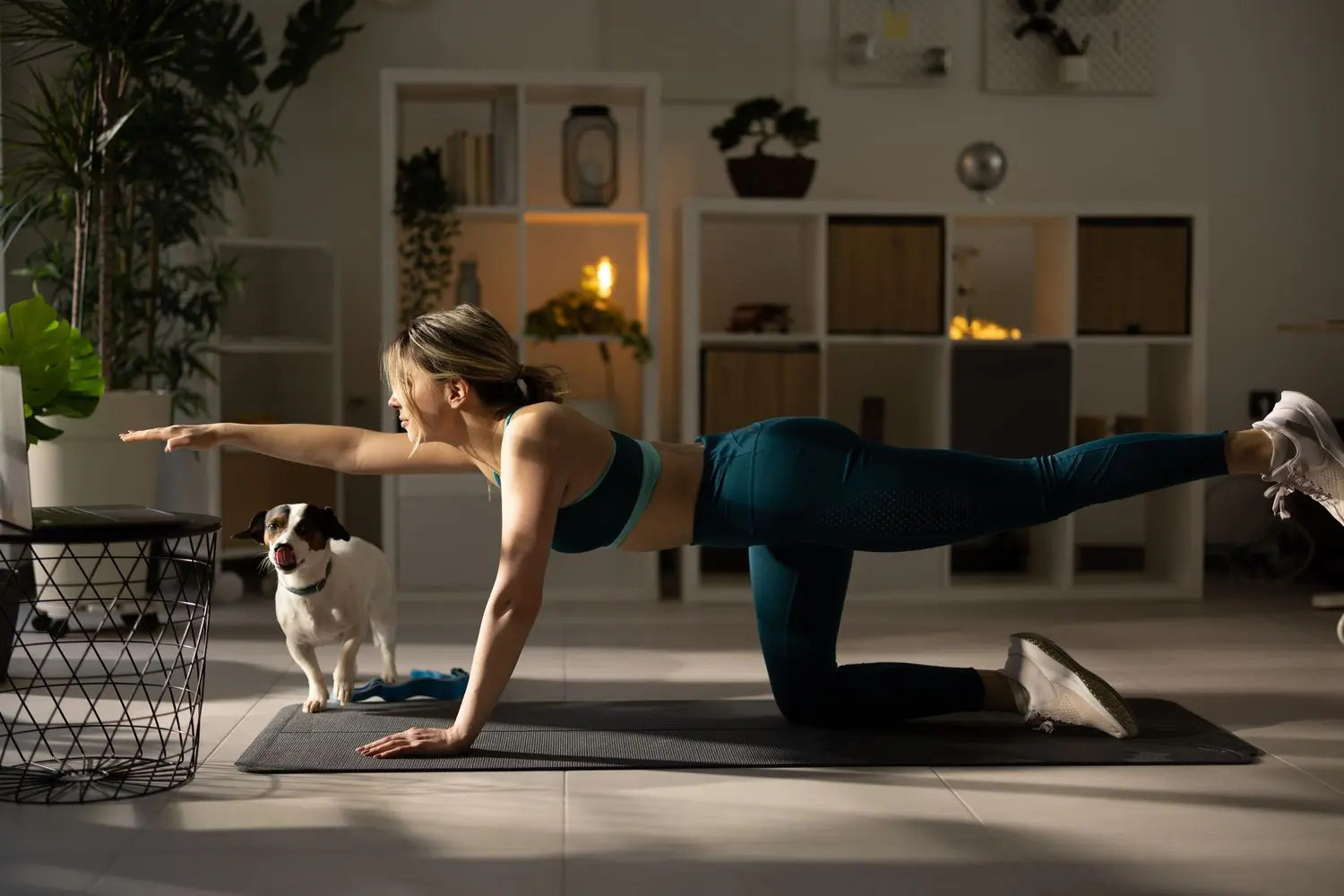
Not every effective back exercise requires heavy weight. The bird dog is a simple floor movement that trains spinal stability, coordination and control. It is often used in physical therapy and performance training because it teaches the body to resist unwanted movement through the trunk.
In plain terms, it helps your back and core work together.
Start on your hands and knees, with your hands under your shoulders and knees under your hips. Brace your midsection gently, as if preparing for someone to tap your stomach. Extend your right arm forward and your left leg backward at the same time. Keep your hips level and your lower back still. Pause for a moment, then return to the starting position and switch sides.
The bird dog looks easy until it is done correctly. The goal is not to lift the arm and leg as high as possible. The goal is to move without twisting, sagging or shifting your weight dramatically from side to side.
Imagine balancing a glass of water on your lower back. That is the level of control you want.
This exercise is particularly useful as part of a warm-up, a mobility routine or a core session. It can also be helpful on days when you want to train movement quality without loading the spine heavily.
Try: 2 to 3 sets of 8 to 12 reps per side.
Common mistake: Arching the lower back to lift the leg higher. Keep the movement long, not high.
6. Chest-Supported Dumbbell Row
The chest-supported dumbbell row offers many of the benefits of a traditional row without placing as much demand on the lower back. For people who struggle to maintain a good hinge position, or who want to focus more directly on the upper and mid-back, this exercise is an excellent choice.
Set an adjustable bench at a low incline, usually around 30 to 45 degrees. Lie chest-down on the bench with a dumbbell in each hand. Let your arms hang toward the floor. Pull the dumbbells toward your ribs, squeezing your shoulder blades together at the top. Lower slowly.
Because your chest is supported, it is harder to cheat with momentum. This makes the exercise especially good for building awareness. You can feel the shoulder blades moving. You can notice whether one side is stronger than the other. You can slow down and make the back do the work.
The chest-supported row is also useful for anyone who already trains deadlifts or other hip-hinge movements and wants to add back volume without overloading the lower back.
Keep your neck neutral. Do not crane your head upward. Your body should feel stable, your breathing steady, and your reps controlled.
Try: 3 sets of 10 to 12 reps.
Common mistake: Shrugging the shoulders toward the ears. Keep the shoulders down and think about pulling the elbows toward the back pockets.
How to Build These Exercises Into a Routine
You do not need to perform all six back exercises in one workout. In fact, most people will do better by spreading them throughout the week.
A simple back-focused routine might look like this:
Workout A
- Bent-over row: 3 sets of 8 to 12 reps
- Lat pulldown: 3 sets of 10 to 12 reps
- Face pull: 3 sets of 12 to 15 reps
Workout B
- Romanian deadlift: 3 sets of 8 to 10 reps
- Chest-supported dumbbell row: 3 sets of 10 to 12 reps
- Bird dog: 2 sets of 8 to 12 reps per side
For general fitness, training your back two times per week is a practical starting point. If you are new to strength training, begin with lighter weights and focus on technique. If you are more experienced, increase the load gradually while keeping the quality of movement high.
The back responds well to consistency. It does not need to be destroyed in a single workout. It needs to be challenged, recovered and trained again.
What Good Back Training Should Feel Like
A good back workout should feel controlled, not chaotic. You should feel the muscles working across the upper and mid-back, along the sides of the torso, and sometimes through the glutes and hamstrings depending on the exercise. You should not feel sharp pain, pinching or a sense that your spine is taking the full force of the movement.
Some muscle fatigue is normal. A deep working sensation is normal. Mild soreness the next day can happen, especially if you are trying new exercises. But pain is information. If an exercise consistently bothers your lower back, shoulders or neck, adjust the weight, range of motion or variation.
Back training is often improved by slowing down. Many people rush pulling exercises, using momentum to move weight rather than muscle to control it. A slower lowering phase, a brief pause at the top and a lighter load can make an exercise much more effective.
Strength is not just about moving more weight. It is about moving well.
The Posture Connection
It is tempting to think better posture comes from reminders: sit up straight, pull your shoulders back, stop slouching. But reminders fade. Muscles endure.
Back exercises help because they strengthen the tissues that support an upright torso and stable shoulders. Face pulls and rows train the muscles between and behind the shoulder blades. Lat pulldowns strengthen the large pulling muscles. Romanian deadlifts train the hinge pattern and posterior chain. Bird dogs teach the spine and core to cooperate.
Together, these exercises create a body that is better prepared to hold itself well.
That does not mean you need to walk around rigidly with your chest puffed out. Good posture should not feel stiff. It should feel available. You should be able to sit, stand, reach, bend and rotate without feeling trapped in one position.
The aim is not perfection. It is capacity.
Everyday Movement Is the Real Test
The gym is useful because it gives you a controlled place to practice strength. But the real value of back training shows up outside the gym.
It shows up when you carry heavy bags without feeling lopsided. When you sit through a long workday without your shoulders creeping toward your ears. When you lift something from the floor and know how to brace. When your arms feel stronger during a hike, swim, climb or weekend project around the house.
A strong back makes the body feel more capable. Not flashy. Capable.
That may be the most underrated benefit of all. Fitness is often sold as transformation, but much of its value is restoration. You are restoring movements your body was designed to perform. You are giving your spine support, your shoulders room and your daily life a little less friction.
Final Thoughts
The best back exercises are not necessarily the most complicated ones. Rows, pulldowns, face pulls, Romanian deadlifts, bird dogs and chest-supported rows cover a lot of ground. They build strength. They support better posture. They improve the way the body handles ordinary tasks.
Start with two or three of them. Learn the form. Use a weight you can control. Add more over time.
A stronger back will not announce itself all at once. It will show up gradually — in the way you stand, the way you move, the way you carry things, and the way your body feels at the end of the day.
That is the kind of progress worth training for.
Important notice: this content is educational and does not replace an individual evaluation. If you have a history of eating disorders, diabetes, pregnancy, or a medical condition, consult a healthcare professional before making dietary or exercise changes.








 Sign In