

The core is one of the most talked-about parts of the body and one of the most misunderstood.
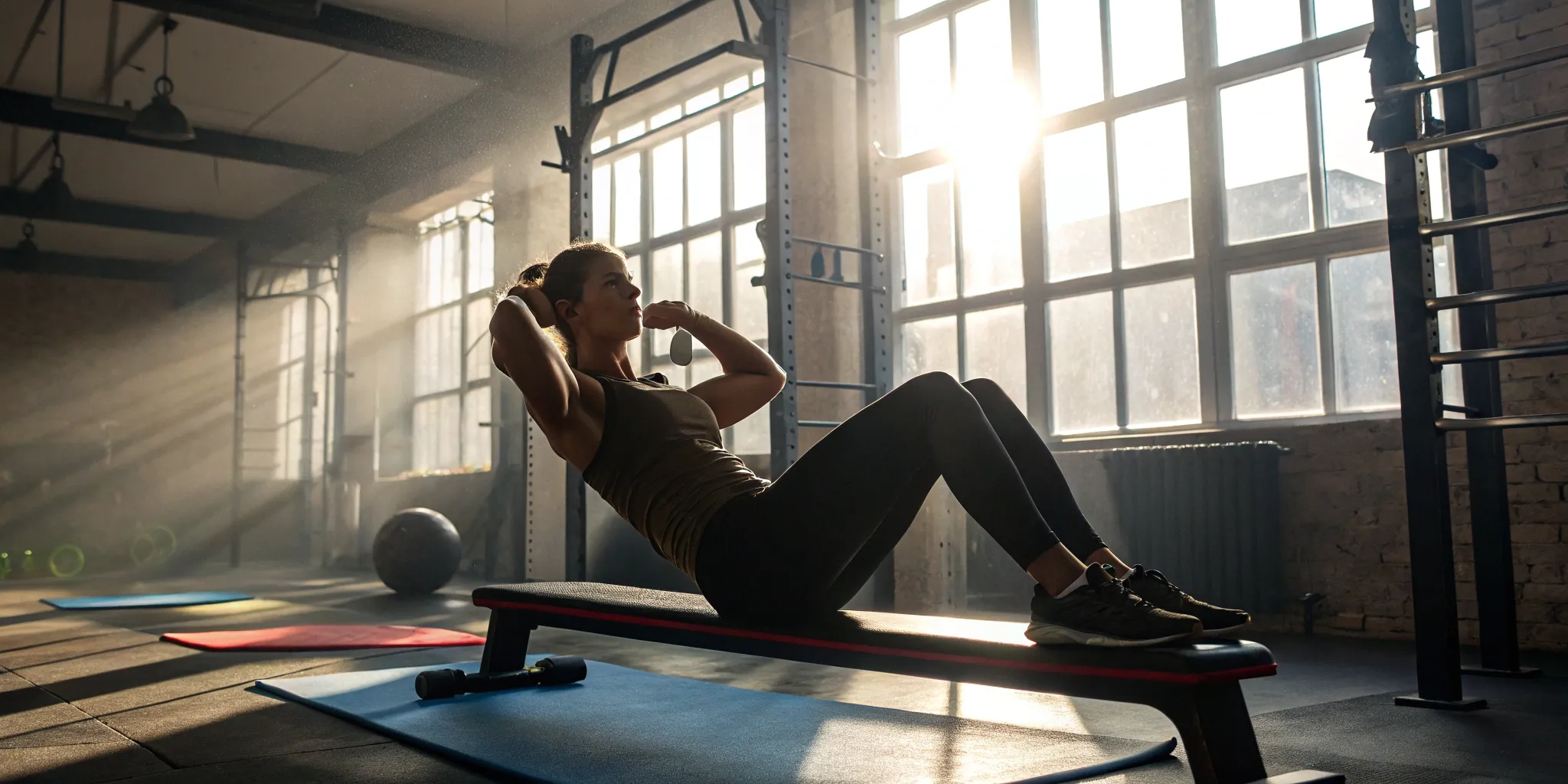
For many people, core training still means chasing visible abs. Crunches, sit-ups, planks held for as long as possible, a burning sensation that feels like proof. The goal is often aesthetic: a flatter stomach, a tighter waist, a more defined midsection.
There is nothing wrong with wanting to look stronger. But reducing the core to appearance misses the point.
Your core is not just the front of your stomach. It is the system of muscles that helps you stand, breathe, twist, lift, carry, walk, run, and stay balanced. It supports your spine. It connects your upper body to your lower body. It helps transfer force when you move. It protects you when life asks you to pick something up from the floor, carry groceries up the stairs, or catch yourself when you trip on a curb.
A strong core is not only about looking fit.
It is about feeling capable.
The best core exercises do more than create a temporary burn. They teach the body to stabilize, resist unwanted movement, coordinate the arms and legs, and stay strong under real pressure. They make other workouts better. They make daily life easier. They help your body move with more confidence.
Here are five core exercises that strengthen more than just your abs.
1. Dead Bug
The dead bug does not sound impressive. It does not look especially athletic. It is not the kind of exercise that makes people stop and stare in the gym.
That is part of its value.
The dead bug is quiet, controlled, and surprisingly effective. It teaches one of the most important jobs of the core: keeping the spine stable while the arms and legs move.
To do it, lie on your back with your arms reaching toward the ceiling and your knees bent over your hips. Gently press your lower back toward the floor. Slowly lower one arm and the opposite leg away from each other. Pause. Return to the starting position. Repeat on the other side.
The movement is simple. Doing it well is not.
The challenge is to keep your ribs from flaring and your lower back from arching as your arm and leg move. If your back lifts off the floor, shorten the range of motion. If you feel the exercise mostly in your hip flexors or neck, slow down and reset.
The dead bug is especially useful because it trains control without asking the spine to bend repeatedly. Many traditional ab exercises rely on flexion — curling the torso forward. That can be fine for some people, but the dead bug offers a different and often more beginner-friendly approach.
It is also practical. In real life, your core rarely works alone. It works while your limbs are moving. You walk, reach, carry, climb, throw, lift, and turn. Your center has to stay organized while everything else is in motion.
That is exactly what the dead bug teaches.
Start with two or three sets of eight to 10 slow repetitions per side. Do not rush. Exhale as you lower the arm and leg. Think less about finishing the set and more about owning each repetition.
A good dead bug does not feel frantic. It feels precise.
And precision is one of the most underrated forms of strength.
2. Plank
The plank is familiar enough to be overlooked.
Almost everyone has tried it. Many people have suffered through it. Some have turned it into a test of endurance, holding the position until their shoulders shake and their lower back begins to sag.
But the plank is not supposed to be a contest of how long you can tolerate poor form.
A good plank is a lesson in full-body tension. It trains the core to resist extension, which means it helps prevent the lower back from collapsing into an exaggerated arch. That skill matters far beyond the exercise mat.
When you carry something heavy, lift weights, push a stroller, stand for a long time, or perform almost any athletic movement, your body has to keep the spine stable under pressure. The plank builds that ability.
To perform it, place your forearms on the floor with your elbows beneath your shoulders. Extend your legs behind you. Press the floor away. Squeeze your glutes lightly. Draw your ribs down. Keep your body in a long line from head to heels.
Your neck should stay neutral. Your hips should not drop. Your shoulders should not creep toward your ears.
Hold for 20 to 40 seconds with excellent form. Rest. Repeat.
For many people, this is more effective than holding a sloppy plank for two minutes. Quality matters more than duration.
If a standard plank feels too difficult, start with your knees on the floor or place your hands on an elevated surface. If it feels too easy, make it harder before making it longer. Try shoulder taps, long-lever planks, plank reaches, or slow mountain climbers.
The plank strengthens the abs, yes. But it also asks the shoulders, glutes, legs, and back to participate. It teaches your body how to create tension from head to toe.
That is why it remains useful.
Not because it is trendy. Not because it is complicated. But because it trains a basic human skill: staying strong in one piece.
3. Bird Dog
The bird dog is often prescribed in physical therapy, beginner fitness routines, and warm-ups. Because of that, some people assume it is too easy to be worth their time.
Usually, they are doing it too fast.
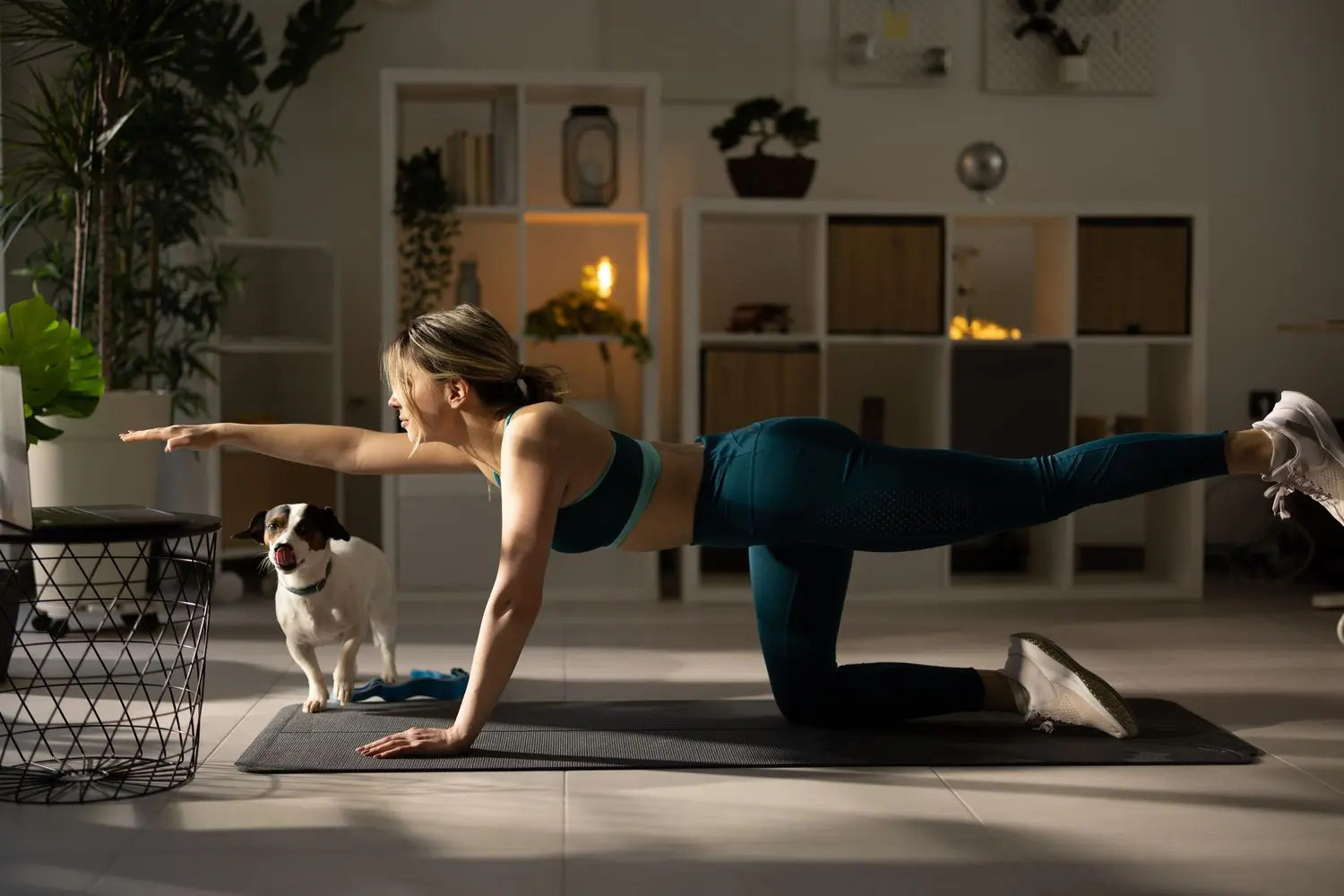
The bird dog begins on hands and knees. From there, you extend one arm forward and the opposite leg backward. You pause. You return. Then you switch sides.
Like the dead bug, the bird dog trains the core to stabilize the spine while the limbs move. But because it is performed face down, it introduces a different challenge: balance, gravity, and control through the hips and shoulders.
Start on all fours with your hands under your shoulders and knees under your hips. Keep your gaze toward the floor. Brace gently through your midsection. Extend your right arm and left leg, reaching long rather than high. Pause for a second or two. Return slowly. Repeat on the other side.
Your hips should stay level. Your lower back should not sag. Your body should not rock dramatically from side to side.
If it feels easy, slow down.
The bird dog is not about lifting your arm and leg as high as possible. It is about keeping the rest of the body still while movement happens around it. That stillness is the work.
This exercise strengthens the deep core muscles, glutes, shoulders, and back extensors. It also improves coordination. For people who sit for long hours, it can help reconnect the hips and core in a way that many modern routines neglect.
It also has a quiet benefit: it teaches patience.
In fitness, speed often disguises weakness. Momentum can hide poor control. The bird dog removes that escape. You either control the movement or you do not.
Start with two or three sets of eight repetitions per side. If you struggle with balance, extend only the leg at first. Then only the arm. Then combine them.
A good bird dog is slow, steady, and almost boring to watch.
But inside the body, it is doing important work.
4. Farmer’s Carry
If the dead bug and bird dog teach control on the floor, the farmer’s carry teaches control in the real world.
It is one of the simplest exercises available: pick up something heavy in each hand and walk.
That is all.
And yet, few exercises are more practical.
The farmer’s carry trains the grip, shoulders, upper back, legs, and core. It challenges posture. It teaches your body to stabilize while moving under load. It resembles ordinary life more than many gym exercises do.
You carry groceries. Luggage. Laundry baskets. Children. Boxes. Work bags. Life is full of loaded carries, whether you train for them or not.
To perform a farmer’s carry, hold a dumbbell, kettlebell, or heavy object in each hand. Stand tall. Keep your shoulders firm but not shrugged. Let your arms hang naturally. Brace through your core. Walk slowly and deliberately for 20 to 45 seconds.
Do not rush. Do not let the weights swing. Do not lean backward or collapse forward.
The goal is not simply to move from one side of the room to the other. The goal is to move well while carrying weight.
If you only have one weight, perform a suitcase carry. Hold the weight in one hand and walk without leaning to that side. Then switch hands. This version is especially good for training the obliques and deep stabilizers because your body has to resist bending sideways.
The carry is a core exercise because your midsection has to work constantly to keep you upright. It is also a posture exercise because the weight demands organization. You cannot carry heavy objects well while slumping.
That is what makes it powerful.
Many core exercises isolate the midsection. The farmer’s carry integrates it. It teaches the core to do what it was designed to do: support movement, protect position, and transfer force.
It also builds a kind of confidence that is hard to fake. There is something honest about carrying weight. You feel stronger because you are practicing strength directly.
Start with two or three rounds. Choose a load that feels challenging but allows clean posture.
The farmer’s carry does not look fancy.
It just works.
5. Pallof Press
The Pallof press is one of the best core exercises many people have never heard of.
It is usually done with a resistance band or cable machine. You stand sideways to the anchor point, hold the band or handle at your chest, and press your arms straight out in front of you. As you press, the band tries to pull you into rotation. Your job is to resist.
That resistance is the point.
Many ab exercises involve creating movement: crunching, twisting, bending. The Pallof press trains the opposite skill. It teaches your core to prevent unwanted movement.
This is called anti-rotation, and it matters.
When you run, swing a racket, throw a ball, carry a heavy bag on one side, lift uneven objects, or simply move through daily life, your body has to manage rotational forces. If your core cannot control those forces, other areas may compensate — often the lower back, hips, or shoulders.
The Pallof press helps train that control.
To do it, attach a resistance band at chest height. Stand sideways to the anchor point. Hold the band with both hands against your chest. Step away until there is tension. Stand with your feet about hip-width apart and your knees slightly bent. Press your hands straight forward. Pause. Bring them back with control.
You should feel your core working to keep your torso from turning toward the anchor.
Do not let your hips rotate. Do not lean. Do not turn it into an arm exercise. Use enough resistance to feel challenged, but not so much that you lose position.
Perform two or three sets of eight to 12 repetitions per side.
The Pallof press can be done standing, half-kneeling, or in a split stance. Each version changes the challenge slightly. The half-kneeling version, for example, can help people focus on pelvic position and core control without relying too much on the legs.
What makes the Pallof press valuable is that it trains a core skill people actually need: resisting force.
Not every movement in life is symmetrical. Not every load is balanced. Not every step is predictable. A strong core helps you remain steady when the world is not.
Why These Exercises Work Better Together
Each of these exercises trains a different core function.
The dead bug teaches spinal control while the limbs move.
The plank builds full-body tension and anti-extension strength.
The bird dog improves coordination and stability through the spine and hips.
The farmer’s carry trains posture and core strength under load.
The Pallof press teaches the body to resist rotation.
Together, they create a more complete approach to core training.
This matters because the core is not one muscle. It is a system. It includes the rectus abdominis, the visible “six-pack” muscle, but also the obliques, transverse abdominis, spinal stabilizers, diaphragm, pelvic floor, glutes, and muscles around the hips.
A useful core routine should not only ask, “Can I feel my abs burning?”
It should ask better questions.
Can I keep my spine stable?
Can I move my arms and legs without losing control?
Can I resist rotation?
Can I carry weight with good posture?
Can I breathe while bracing?
Can I move through life with more strength and less strain?
That is the difference between training abs and training the core.
One is mostly about appearance.
The other is about function.
A Simple Core Routine to Try
You do not need to train your core for an hour. You also do not need to do these exercises every day.
Two or three focused sessions per week can be enough for many people, especially if you are also doing strength training, walking, running, cycling, or other forms of exercise.
Try this simple routine:
Dead bug: 2 sets of 8 to 10 reps per side
Plank: 3 rounds of 20 to 40 seconds
Bird dog: 2 sets of 8 reps per side
Pallof press: 2 sets of 10 reps per side
Farmer’s carry: 3 rounds of 30 seconds
Move slowly. Rest as needed. Stop when form breaks down.
This routine can be done after a strength workout or as a short standalone session. If you are new to exercise, begin with fewer sets and easier variations. If you are more advanced, increase resistance, time, or difficulty gradually.
The goal is not to leave your core destroyed.
The goal is to teach it to work better.
The Bottom Line
A strong core is not just about abs.
It is about how your body holds itself together.
It helps you lift, carry, walk, twist, reach, climb, and recover your balance. It supports your spine and improves the way force moves through your body. It can make workouts safer, posture steadier, and everyday movement easier.
The best core exercises are not always the flashiest. They are often the ones that teach control: dead bugs, planks, bird dogs, farmer’s carries, and Pallof presses.
They may not promise overnight transformation. They do something better.
They build a foundation.
And in fitness, the foundation is rarely the most glamorous part.
It is simply the part everything else depends on.
Important notice: this content is educational and does not replace an individual evaluation. If you have a history of eating disorders, diabetes, pregnancy, or a medical condition, consult a healthcare professional before making dietary or exercise changes.


 Sign In