

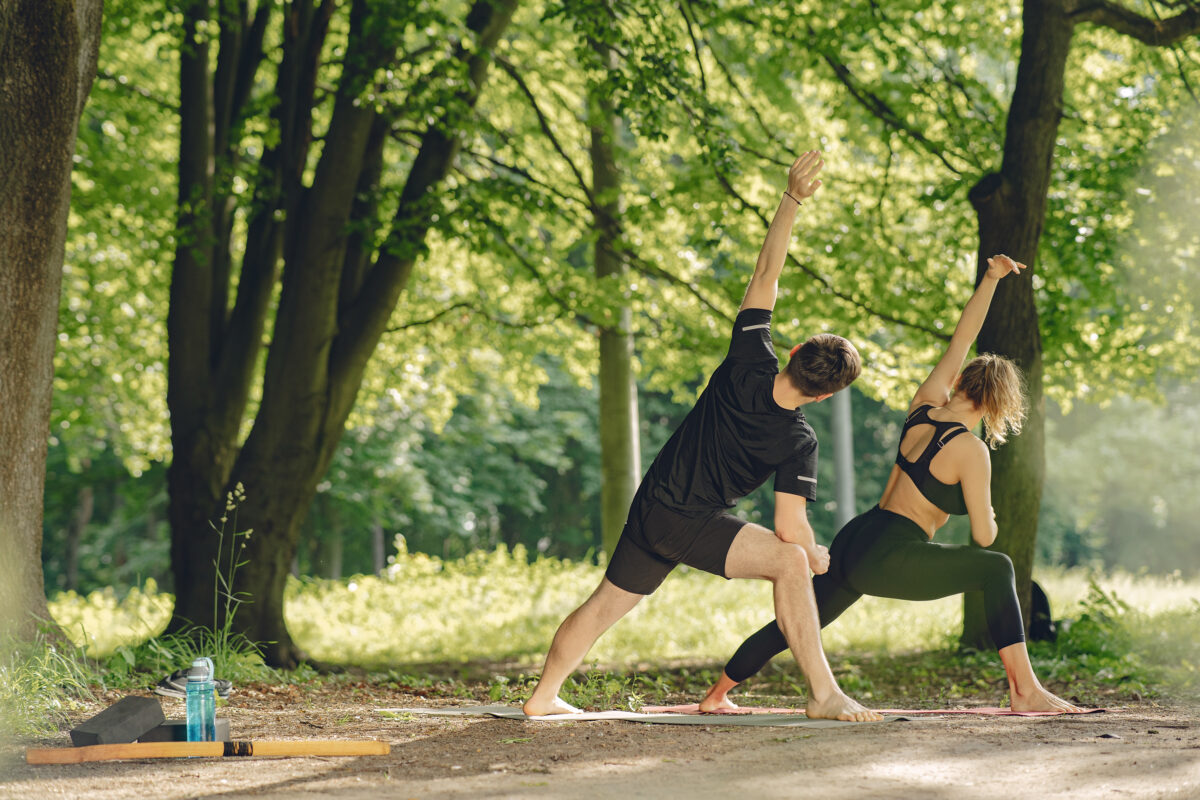

Cardio has a reputation problem.
For many people, the word still brings to mind pounding pavement, gasping through burpees, or punishing the knees on a treadmill in the name of “getting in shape.” It is treated as something you endure, not something you build a relationship with.
But good cardio does not have to feel like a negotiation with pain.
The best cardio workouts raise your heart rate, challenge your lungs and help you burn calories without leaving your knees, hips, ankles or lower back feeling worse than when you started. That matters because the most effective workout is rarely the one that looks the hardest. It is the one you can recover from, repeat and gradually improve.
Low-impact cardio is not easy cardio. It simply means there is less repetitive force crashing through your joints. You can still work hard. You can still sweat. You can still train your heart, build endurance and support fat loss. You are just choosing methods that respect the body instead of trying to defeat it.
For beginners, people returning after injury, older adults, heavier exercisers or anyone whose joints complain after running and jumping, this approach can be the difference between consistency and quitting.
Here are eight joint-friendly cardio workouts that can help you burn calories, improve conditioning and move better — without treating your body like disposable equipment.
1. Brisk Walking Intervals
Walking is often dismissed because it looks too ordinary. That is part of its power.
A brisk walk is one of the most underrated cardio workouts available. It requires no special equipment, scales to nearly every fitness level and places far less stress on the joints than running. When done with intention, walking can become a serious conditioning tool.
The key is to stop treating it like a casual stroll.
Try intervals. Walk at an easy pace for two minutes, then increase to a fast, purposeful pace for one minute. During the harder interval, your arms should swing naturally, your breathing should become deeper and conversation should feel possible but slightly interrupted. Repeat the cycle for 20 to 40 minutes.
This approach works because it gives you enough intensity to challenge the cardiovascular system without the impact of jogging. It is also easy to adjust. If one-minute pushes feel too hard, start with 30 seconds. If they feel too easy, extend them to two or three minutes.
Walking also has the rare advantage of being emotionally sustainable. You can do it outside. You can do it after dinner. You can do it while listening to music or a podcast. It does not require a dramatic change of identity.
For many people, the path to better fitness begins with walking faster, more often.
Try this workout:
Warm up for 5 minutes at an easy pace. Then alternate 1 minute of fast walking with 2 minutes of relaxed walking for 8 to 10 rounds. Cool down for 5 minutes.
Joint-friendly tip: Keep your stride natural. Overstriding can increase stress on the knees and hips. Think quick steps, not giant steps.
2. Cycling
Cycling is one of the classic low-impact cardio workouts for a reason. Whether you use a stationary bike, road bike or indoor cycling class, it lets you train hard without repeatedly striking the ground.
Because your body weight is supported by the seat, cycling can be especially useful for people with knee, hip or ankle sensitivity. It also allows for precise control. You can adjust resistance, cadence and duration without needing to change the basic movement.
A steady ride can build endurance. Intervals can build power. Longer moderate sessions can help burn calories while keeping the joints relatively calm.
The mistake many beginners make is setting the resistance too high too soon. Heavy resistance can turn cycling into a grind and may irritate the knees if your setup is poor. Instead, aim for smooth pedaling. Your legs should move in circles, not choppy pushes.
Bike fit matters more than people think. If the seat is too low, the knees stay too bent and may feel crowded. If it is too high, the hips can rock side to side. A good starting point: when your foot is near the bottom of the pedal stroke, your knee should still have a slight bend.
Try this workout:
Ride easy for 5 minutes. Then do 10 rounds of 30 seconds hard and 90 seconds easy. Finish with 5 minutes at a relaxed pace.
Joint-friendly tip: If your knees hurt during cycling, check seat height before blaming the exercise.
3. Swimming
Swimming may be the closest thing fitness has to a full-body, joint-friendly cardio workout.
The water supports your body, reducing impact while adding resistance in every direction. Your arms, legs, core and back all contribute. Your breathing is challenged. Your heart rate rises. And unlike many forms of cardio, swimming can leave you feeling refreshed rather than beaten up.
It is especially useful for people who struggle with land-based exercise because of joint discomfort. In the pool, the body moves differently. The spine decompresses. The knees and ankles are spared the constant demand of absorbing impact. Even a moderate swim can feel surprisingly demanding because the whole body is working.
You do not need to swim like a competitive athlete to benefit. Freestyle, breaststroke, kickboard laps and even structured water jogging can all be effective. The important thing is to keep moving with enough effort to elevate your breathing.
If swimming laps feels intimidating, start with intervals. Swim one length of the pool, rest briefly, then repeat. Over time, reduce the rest periods or add more laps.
The pool is not just for recovery days. It can be a serious training environment.
Try this workout:
Warm up with 5 easy minutes. Swim 25 to 50 meters at a steady effort, then rest for 20 to 40 seconds. Repeat for 15 to 25 minutes.
Joint-friendly tip: Keep the neck relaxed. Many swimmers strain the neck by lifting the head too high to breathe.
4. Rowing Machine
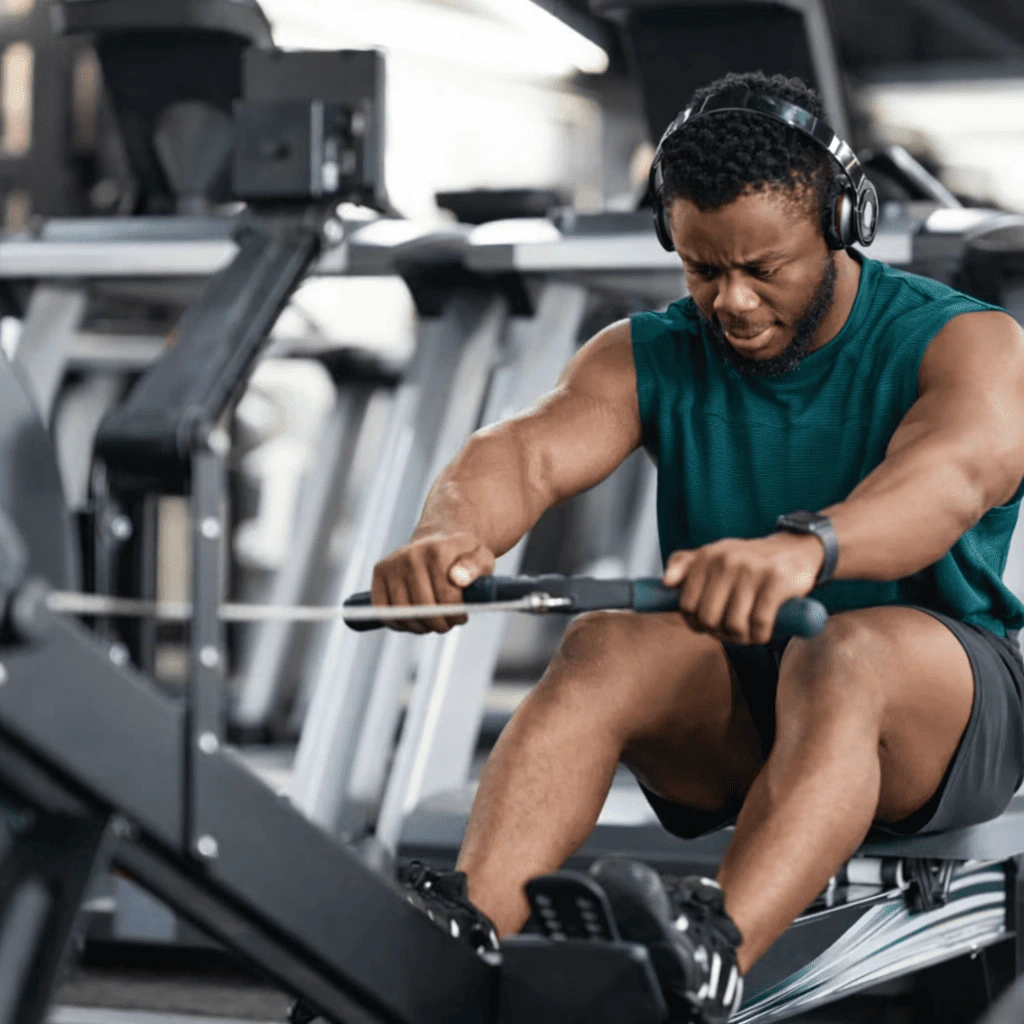
The rowing machine is often misunderstood. Done poorly, it looks like a frantic arm exercise. Done well, it is one of the best low-impact cardio workouts for the entire body.
Rowing trains the legs, glutes, back, arms and core in one smooth sequence. Because you are seated, there is no jumping or pounding. But the effort can be intense. A few minutes on a rower can humble even fit people.
The movement has four parts: push with the legs, lean slightly back, pull with the arms, then reverse the sequence. Arms extend, torso comes forward, knees bend. The legs should do most of the work. The handle is not something you yank; it is something you guide.
For people with sensitive joints, rowing can be excellent, but form is important. Rounding the lower back or pulling too aggressively with the arms can turn a useful workout into an uncomfortable one. Keep the spine long and the stroke controlled.
Start with short sessions. Rowing does not need much time to be effective.
Try this workout:
Row easy for 5 minutes. Then complete 8 rounds of 45 seconds at a strong pace followed by 75 seconds easy. Cool down for 3 to 5 minutes.
Joint-friendly tip: Think “legs first.” If your arms are tired before your legs, your sequence is probably off.
5. Elliptical Training
The elliptical machine is easy to mock and easy to misuse. But when used properly, it offers one of the most accessible forms of low-impact cardio.
The feet stay in contact with the pedals, which reduces impact compared with running. The handles can bring the upper body into the movement. The resistance and incline settings allow you to shift the challenge. For people who want the rhythm of running without the pounding, the elliptical can be a smart option.
The main danger is zoning out. Many people step onto the machine, move passively for 20 minutes and wonder why nothing changes. To make the elliptical effective, use resistance. Push and pull the handles. Keep your posture tall. Avoid leaning your full weight onto the rails.
Intervals work especially well. Increase resistance or speed for a short burst, then return to a moderate pace. The movement remains smooth, but the effort rises quickly.
The elliptical is also useful for active recovery. On days when the body feels stiff but not injured, a moderate session can increase circulation without adding much joint stress.
Try this workout:
Warm up for 5 minutes. Then alternate 2 minutes at a challenging resistance with 2 minutes easy for 6 to 8 rounds. Cool down for 5 minutes.
Joint-friendly tip: Keep your knees tracking in line with your toes. Do not let them collapse inward.
6. Incline Treadmill Walking
If running bothers your joints but flat walking no longer feels challenging enough, incline walking is a powerful middle ground.
Walking uphill raises the heart rate quickly without requiring you to run. It also increases the demand on the glutes, hamstrings and calves, making it feel more muscular than flat walking. For many people, this is one of the best cardio workouts for burning calories with less joint impact.
The incline allows intensity without speed. That is useful because high speed often brings sloppy mechanics. A moderate pace on a steep incline can be more productive — and more joint-friendly — than jogging when tired.
Start conservatively. A treadmill incline of 5 to 8 percent may be enough at first. More advanced exercisers may work between 10 and 15 percent, but steeper is not always better. If you need to cling to the handles, the incline is probably too high or the pace too fast.
Holding the rails reduces the workload and can change your posture. Use them briefly for balance if needed, but try not to hang on.
Try this workout:
Walk for 5 minutes on a flat treadmill. Increase the incline to 6 to 10 percent and walk for 20 minutes at a pace that feels challenging but controlled. Finish with 5 easy minutes.
Joint-friendly tip: Shorten your stride slightly as the incline increases. Long steps uphill can strain the hips and lower back.
7. Low-Impact Circuit Training
Not all cardio needs to happen on a machine. A well-designed low-impact circuit can raise your heart rate, build strength and burn calories without jumping.
The key is choosing movements that are smooth, controlled and joint-friendly. Think step-ups, body-weight squats to a box, marching high knees, kettlebell deadlifts, modified mountain climbers, resistance band rows and farmer’s carries. You move from one exercise to the next with limited rest, keeping the heart rate elevated while avoiding the pounding of traditional high-intensity workouts.
This kind of training is especially valuable because daily life is not performed on a machine. You bend, carry, step, reach and brace. Low-impact circuits train cardio in a way that feels practical.
The mistake is turning every circuit into chaos. More sweat does not always mean better training. Keep the exercises simple. Use a pace you can control. The goal is steady work, not survival.
Try this workout:
Perform each exercise for 40 seconds, then rest for 20 seconds. Complete 3 to 5 rounds.
- Step-ups
- Body-weight squats to a bench
- Resistance band rows
- Marching high knees
- Farmer’s carry
- Glute bridges
Joint-friendly tip: Use a lower step for step-ups if your knees feel irritated. Control the lowering phase.
8. Water Aerobics or Aqua Jogging
Water aerobics has long been underestimated, partly because it does not look as intense from the outside. Anyone who has done it seriously knows better.
Moving through water creates constant resistance. The faster you move, the harder it gets. At the same time, buoyancy reduces the load on the joints, making aqua workouts especially useful for people with arthritis, joint pain, larger bodies or those returning to exercise after time away.
Aqua jogging is another excellent option. With or without a flotation belt, you mimic a running motion in deep or shallow water. Your heart rate climbs, your legs work, and your joints avoid the repetitive impact of running on land.
Water workouts can also improve confidence. People who feel uncomfortable in a gym often find the pool more forgiving. The water slows movement down and reduces fear of falling. That can make it easier to work hard.
Do not mistake gentle on the joints for gentle on the lungs. A focused water workout can be demanding.
Try this workout:
After a 5-minute easy warm-up, alternate 1 minute of fast aqua jogging with 1 minute of easy movement for 15 to 25 minutes.
Joint-friendly tip: Stay tall in the water. Avoid leaning forward excessively, which can strain the lower back.
How to Choose the Right Low-Impact Cardio Workout
The best cardio workout depends on your body, your goals and what you can do consistently.
If you enjoy being outdoors, walking intervals or incline walking may be ideal. If you like structure, cycling or rowing intervals can be efficient. If your joints are especially sensitive, swimming or water aerobics may feel best. If you get bored easily, low-impact circuits offer variety.
The right workout should challenge you without punishing you. After a good session, you may feel tired, sweaty and satisfied. You should not feel sharp pain or joint irritation that lingers for days.
A simple weekly plan might look like this:
- Monday: Brisk walking intervals
- Wednesday: Cycling or elliptical intervals
- Friday: Low-impact circuit training
- Saturday: Swimming or incline walking
That is enough for many people to improve endurance, support calorie burning and build a habit that lasts.
How Hard Should Cardio Feel?
You do not need to destroy yourself to make cardio effective.
Most sessions should live in a moderate zone, where breathing is elevated but controlled. You can speak in short sentences, but you would not want to hold a long conversation. Once or twice a week, you can add harder intervals, where talking becomes difficult for short periods.
This mix works well because it balances intensity and recovery. Too much hard cardio can leave you sore, tired and hungry. Too little intensity may not create enough stimulus. The middle ground is where many people thrive.
Calorie burn depends on body size, effort, duration and fitness level. No workout burns the same number of calories for everyone. But the larger principle is clear: workouts that you can repeat consistently will usually do more for your health and body composition than brutal sessions you dread.
Protecting Your Joints While Doing Cardio
Joint-friendly cardio is not just about choosing the right exercise. It is also about how you perform it.
Warm up for a few minutes before increasing intensity. Progress gradually. Change one variable at a time — duration, resistance, speed or incline — rather than all of them at once. Wear supportive shoes when appropriate. Pay attention to form when using machines.
Most important, listen to pain. Muscle fatigue is normal. Heavy breathing is normal. Mild soreness can happen. Sharp pain, swelling or discomfort that changes the way you move is different. That is a signal to adjust, not push through blindly.
For people with existing injuries or medical conditions, it is worth getting guidance from a qualified health professional. Exercise should be challenging, but it should not feel like a gamble.
The Real Goal: Cardio You Can Keep Doing
The fitness world often celebrates intensity. The harder the workout looks, the more respect it gets. But longevity requires a different kind of intelligence.
There is nothing impressive about a workout that leaves you unable to train for a week. There is nothing weak about choosing the bike instead of running, or the pool instead of plyometrics, or a brisk walk instead of a punishing boot camp class.
Cardio should build your life, not borrow from it.
The best low-impact cardio workouts help you burn calories, improve heart health, build stamina and protect your joints at the same time. They let you work hard without confusing pain for progress.
Start with one or two options from this list. Keep the sessions manageable. Add intensity slowly. Notice how your body responds.
Fitness does not have to be loud to be effective. Sometimes it looks like a steady walk up a hill, a quiet swim before work, or 30 minutes on a bike that leaves you tired but intact.
That is not a compromise. That is training you can live with.
Important notice: this content is educational and does not replace an individual evaluation. If you have a history of eating disorders, diabetes, pregnancy, or a medical condition, consult a healthcare professional before making dietary or exercise changes.







 Sign In