

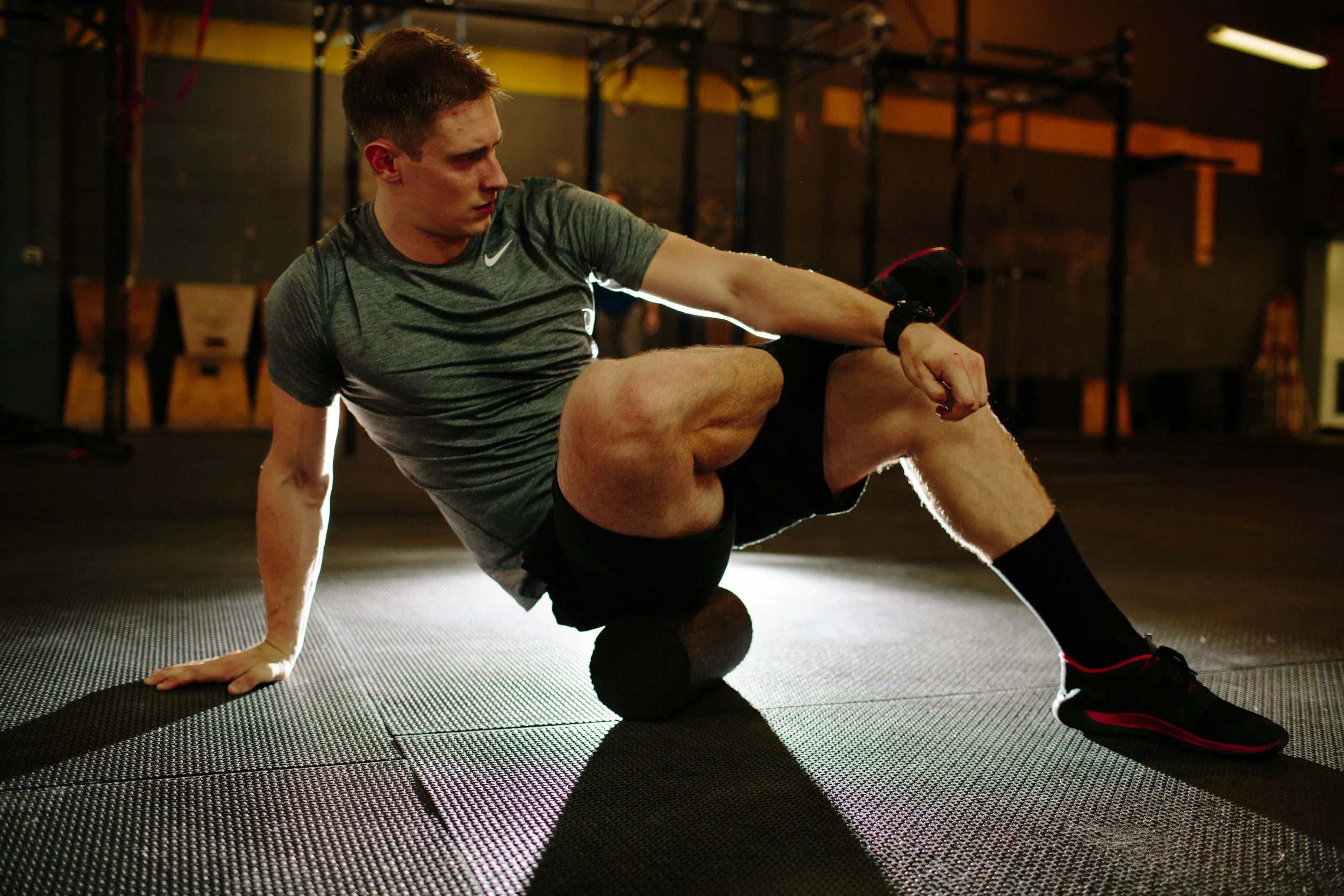

Most people think the workout is where progress happens.
It is an easy mistake to make. The workout is visible. It has movement, effort, sweat, numbers, and the satisfying feeling of having done something difficult. You can measure the weight on the bar, the miles on the watch, the calories on the screen, the minutes on the mat.
Recovery is quieter.
It happens after the workout, when no one is watching. It happens when you sleep, eat, hydrate, walk, stretch, rest, and decide not to push harder just because you can. Recovery does not always feel productive. Sometimes it feels like patience. Sometimes it feels like restraint. Sometimes it feels like doing less than your ambition wants.
But training is only the signal.
Recovery is where your body adapts.
A workout creates stress. The right amount of stress tells your body to get stronger, faster, more efficient, or more resilient. But if stress keeps piling up without enough recovery, progress slows. Muscles stay sore. Energy drops. Sleep suffers. Motivation fades. Small aches become familiar. The same workout that once felt challenging begins to feel punishing.
Better recovery does not mean avoiding hard work. It means making hard work useful.
Here are five recovery habits that can make your workouts more effective.
1. Sleep Like It Is Part of Your Training Plan
Sleep is the recovery habit people praise most and protect least.
It is often the first thing sacrificed when life gets crowded. Work runs late. Screens stay bright. Stress keeps the mind busy. One more episode becomes two. The alarm still rings at the same time, and the workout still goes on the calendar.
For a while, you can get away with it. Then the signs appear.
Weights feel heavier than they should. Your pace slows. Your patience thins. You feel hungrier, especially for quick energy. Warm-ups feel like workouts. Exercises that once felt smooth become awkward. You are not necessarily less disciplined. You are under-recovered.
Sleep is not just rest from training. It is part of training.
During sleep, the body repairs tissue, regulates hormones, restores energy, and gives the nervous system a chance to settle. If you are trying to build muscle, improve endurance, lose fat, or simply feel better during exercise, sleep is not optional background noise. It is one of the foundations.
That does not mean every night has to be perfect. No one lives that cleanly. Children wake up. Deadlines happen. Travel disrupts routines. Stress has its own schedule.
The goal is not perfection. The goal is consistency.
Start with the obvious things that actually work. Keep a regular bedtime when possible. Make your room cool, dark, and quiet. Stop treating your phone like a sleep aid. Move caffeine earlier in the day if it affects you at night. Give yourself a short evening routine that tells your body the day is ending.
It can be simple: dim the lights, wash your face, stretch for five minutes, read a few pages, charge your phone away from the bed.
A good night of sleep will not turn one workout into a transformation. But repeated over weeks and months, sleep changes the quality of your training. You recover faster. You think more clearly. You are less likely to confuse exhaustion with laziness.
A tired body often asks for more motivation.
Very often, what it really needs is bed.
2. Eat Enough to Recover, Not Just Enough to Diet
Many people train hard and eat as if the goal is to survive on as little as possible.
They cut meals, fear carbohydrates, under-eat protein, and treat hunger as proof of discipline. This may feel virtuous for a short time, especially in fitness cultures obsessed with shrinking. But the body is not impressed by moral drama. It needs materials.
Recovery requires fuel.
Muscles need protein to repair. Carbohydrates help replenish energy stores, especially after hard lifting, running, cycling, swimming, or high-intensity training. Healthy fats support hormones and overall health. Vitamins, minerals, and fluids help keep the system running.
If you train regularly but do not eat enough, your body eventually notices. You may feel flat during workouts. Soreness may linger. Your mood may dip. Your sleep may worsen. You may crave snacks at night because your body is trying to collect what it was denied all day.
This does not mean everyone needs to eat more all the time. Goals differ. Some people are trying to lose weight. Some are trying to build muscle. Some are training for performance. Some are exercising for health.
But whatever the goal, your eating should support the work you are asking your body to do.
A recovery-friendly meal does not need to be complicated. Think protein, carbohydrates, color, and fluids.
That could be eggs, toast, and fruit. Greek yogurt with berries and granola. Chicken, rice, and vegetables. Beans, avocado, and whole grains. Salmon with potatoes and salad. A smoothie with protein, banana, and milk. Simple food works.
Protein deserves attention because it is central to muscle repair. Try to include a protein source with each meal: eggs, fish, chicken, tofu, yogurt, lentils, beans, lean meat, cottage cheese, or protein powder if that is convenient.
Carbohydrates deserve a better reputation than they often get. If you train hard, they are not the enemy. They are energy. Oats, rice, potatoes, fruit, whole-grain bread, pasta, beans, and vegetables can all support better workouts and smoother recovery.
The best nutrition plan is not the one that looks most extreme. It is the one that helps you train well, recover well, and continue living like a person.
Food should not feel like punishment for wanting results.
It should feel like support.
3. Use Easy Movement on Rest Days
Recovery does not always mean lying still.
Sometimes that is exactly what you need. There are days when the best choice is a true rest day: no workout, no guilt, no attempt to turn recovery into another achievement. But often, easy movement helps the body feel better than doing nothing at all.
A walk. A gentle bike ride. Light mobility work. A relaxed swim. A slow yoga session. A few minutes of stretching. These can increase circulation, reduce stiffness, calm the nervous system, and help you return to training with more ease.
The key word is easy.
Active recovery is not a secret hard workout. It should not leave you drained. It should not become a competition with yesterday’s version of yourself. It should feel like maintenance, not performance.
Walking is one of the best recovery tools because it is simple and forgiving. A 20-minute walk after a hard training day can loosen the hips, move blood through sore muscles, and clear the mind. It also helps break up long periods of sitting, which can make soreness and stiffness feel worse.
Mobility work can help too, especially if your training repeats the same movements. Lifters may benefit from hip, ankle, shoulder, and thoracic spine mobility. Runners may need calf, hip flexor, and glute work. Desk workers may need almost everything.
But recovery movement should be honest.
If your “easy ride” turns into intervals, it is not recovery. If your walk becomes a weighted march up hills because you felt guilty, it is not recovery. If your stretching session becomes aggressive enough to make you sore, it is probably not helping.
The purpose is to leave your body feeling better than when you started.
One way to think about it: your hard workouts build capacity. Your easy movement helps you keep access to that capacity.
It keeps the body fluid. It keeps the habit alive. It lets you move without asking for maximum effort.
Not every session needs to prove something.
Some should simply help you return.
4. Plan Rest Before You Are Forced to Take It
A rest day works best when it is planned.
Too often, people only rest when their body finally refuses to cooperate. They wait until they are exhausted, unusually sore, irritated, injured, or completely unmotivated. At that point, rest becomes a rescue mission.
Smart recovery is different. It makes space for rest before the body has to demand it.
This is especially important if you train hard, lift heavy, run often, take intense classes, or are trying to make fast progress. Enthusiasm can rise quickly. Tendons, joints, and connective tissues often adapt more slowly. Just because your mind is ready to push does not always mean your body has caught up.
A good training week has rhythm.
Hard days. Easier days. Rest days. Maybe a long walk. Maybe a mobility session. Maybe nothing at all. This rhythm is not a weakness in the plan. It is what makes the plan sustainable.
For many people, one or two rest days per week is a good starting point. Beginners may need more. People under high stress may need more. Older adults may need more time between intense sessions. Anyone returning from injury should be especially careful with volume and intensity.
Your body does not separate workout stress from life stress as neatly as your calendar does.
A hard training block, poor sleep, work pressure, emotional strain, travel, and family responsibilities all draw from the same recovery account. If life is demanding, your workouts may need to be adjusted. That is not failure. That is intelligent training.
Pay attention to patterns. One bad workout is normal. A week of bad workouts is information. Persistent soreness, poor sleep, declining performance, irritability, nagging pain, and a sudden lack of motivation can all be signs that recovery is lagging behind effort.
Planning rest also helps reduce guilt.
When rest is part of the program, you are not skipping. You are following instructions. You are giving the body time to respond to the work you have already done.
That mental shift matters.
People who only value effort often struggle to rest. People who understand progress learn to value adaptation.
Rest is not the opposite of training.
It is what makes training work.
5. Treat Pain as Information, Not an Obstacle to Ignore
Soreness is common. Pain is a message.
Learning the difference is one of the most important recovery habits you can build.
Soreness usually feels dull, general, and muscular. It often appears a day or two after a hard workout, especially after new exercises or more volume than usual. It may improve as you move. It fades with time.
Pain is different. It may feel sharp, sudden, stabbing, pinching, burning, or unusually localized. It may appear in a joint or tendon rather than the muscle. It may change your form. It may worsen as you continue. It may return every time you perform the same movement.
Pain does not always mean something serious is wrong. But it does mean you should pay attention.
Many injuries begin as small warnings that were dismissed for too long. A shoulder pinch during presses. A knee ache during lunges. A lower back that tightens after deadlifts. A foot pain that shows up halfway through every run.
The body often whispers before it shouts.
Recovery means listening before the shout.
Sometimes the solution is simple. Reduce the weight. Shorten the range of motion. Improve your form. Change the exercise. Take an extra rest day. Warm up more carefully. Switch from running to cycling for a week. Choose dumbbells instead of a barbell. Stop doing the movement that causes pain and train around it.
There is almost always more than one way to build strength and fitness.
If a movement repeatedly hurts, you do not have to prove loyalty to it. You can choose another route. A body that keeps training safely will make more progress than one that keeps forcing the same irritated pattern.
This is not an argument for fear. Exercise involves discomfort. Muscles burn. Breathing gets hard. Fatigue builds. Some sessions require grit.
But grit is not the same as denial.
A useful question is: Does this feel like effort, or does this feel like damage?
Effort belongs in training.
Damage needs attention.
If pain persists, worsens, affects daily life, or makes you change how you move, get help from a qualified professional. A physical therapist, sports medicine clinician, or experienced coach can often identify problems that are hard to see on your own.
The goal is not to avoid every ache forever.
The goal is to stay in the game long enough for consistency to matter.
Why Recovery Makes Workouts More Effective
Recovery improves training because the body adapts between sessions.
A workout alone does not guarantee progress. It creates the opportunity for progress. What happens afterward determines whether that opportunity becomes strength, endurance, muscle, better movement, or simply more fatigue.
This is why two people can follow the same workout program and get very different results. One sleeps well, eats enough, manages stress, takes rest days, and adjusts when pain appears. The other trains hard, sleeps poorly, under-eats, skips recovery, and pushes through warning signs.
On paper, the workouts may look similar.
In reality, they are not living the same program.
Your body responds to the full environment: training, food, sleep, stress, movement, and recovery. You cannot isolate one from the others. A perfect workout routine will struggle inside a poorly recovered life.
The good news is that recovery does not need to be elaborate.
You do not need expensive gadgets, complicated supplements, or a recovery routine that takes longer than your workout. Some tools may help, but the foundation is plain: sleep enough, eat enough, move gently, rest deliberately, and listen when something hurts.
The basics are not flashy.
They are just powerful.
A Simple Recovery Routine to Start Today
After your next workout, do not rush straight into the rest of your day if you can help it. Walk for a few minutes. Let your breathing settle. Give your body a transition.
Within a few hours, eat a balanced meal with protein and carbohydrates. Drink water. If you sweat heavily or train in heat, consider electrolytes.
Later in the day, move lightly. Take a walk. Stretch gently. Stand up between long periods of sitting.
That night, protect your sleep as if it belongs to your training plan, because it does.
The next day, check in honestly. Are you sore but moving well? Train as planned. Are you unusually tired or stiff? Make the session easier. Do you feel pain? Modify the movement or stop it.
This is not complicated. But it does require attention.
Recovery is not one grand act. It is a series of small decisions that make your body more willing to adapt.
The Bottom Line
If you want better workouts, do not only ask how to train harder.
Ask how to recover better.
Sleep like it matters. Eat enough to support the work. Use easy movement to stay loose. Plan rest before exhaustion forces it. Treat pain as information, not an inconvenience.
These recovery habits may not look dramatic. They may not produce the instant satisfaction of adding weight to the bar or finishing a hard run. But they are what allow those moments to keep happening.
Training breaks the body down just enough to ask a question.
Recovery is the answer.
And if you take that answer seriously, your workouts become more than effort.
They become progress.
Important notice: this content is educational and does not replace an individual evaluation. If you have a history of eating disorders, diabetes, pregnancy, or a medical condition, consult a healthcare professional before making dietary or exercise changes.











 Sign In