

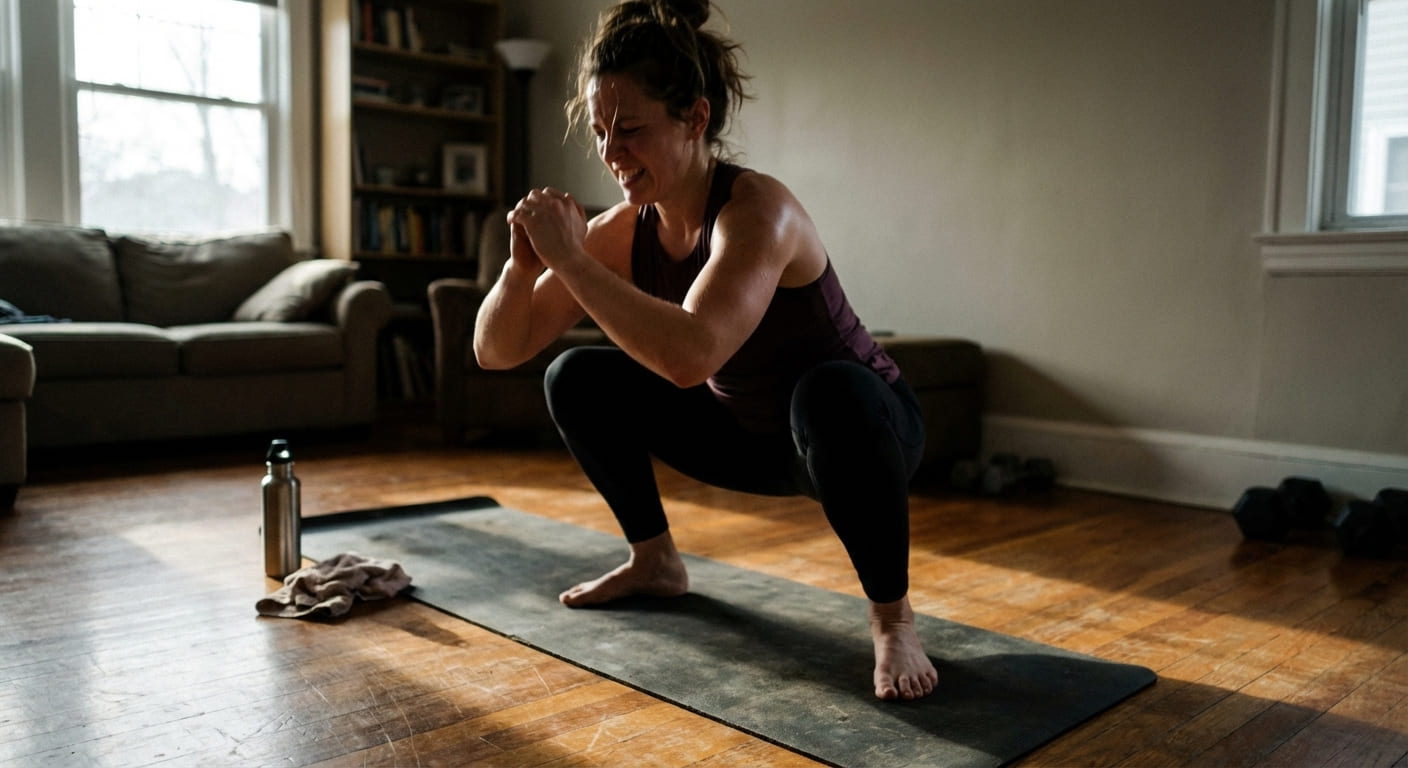

For beginners, the modern fitness world can feel less like an invitation and more like a test.
Everywhere you look, someone is offering a better split, a smarter protocol, a more punishing finisher. Social media has made exercise look either absurdly complicated or brutally intense, as if the only two options are to train like a professional athlete or not bother at all. That is one reason so many people quit before anything meaningful happens. They mistake noise for wisdom. They confuse effort with progress. They begin with the wrong plan, then blame themselves when it fails.
The truth is plainer, and far more useful. Beginners do not need extreme workouts. They need repeatable ones. They need routines that build strength, coordination, endurance and confidence without demanding an advanced understanding of biomechanics or a nervous system built by years under a barbell. They need workouts that leave enough room for life, because a plan that collapses under the first stressful week was never much of a plan to begin with.
Real results do not come from doing everything. They come from doing the right things long enough for the body to respond.
For a beginner, that usually means a few fundamentals: compound exercises, sensible progression, enough recovery, and a structure simple enough to follow when motivation fades. Because it will fade. Motivation is a weather pattern. Routine is architecture.
What follows are five workout routines that work precisely because they are not theatrical. Each one is designed for beginners, each one can produce visible and measurable progress, and each one asks the same thing in return: consistency.
1. The Three-Day Full-Body Routine
If there is a gold standard for beginners, this is probably it.
A three-day full-body plan is efficient, balanced and forgiving. It allows a new lifter to practice the main movement patterns several times a week without drowning in volume. That matters because beginners improve quickly, but not only because their muscles grow. They also become more coordinated. They learn how to squat without folding, how to push without shrugging, how to hinge without turning every deadlift into an argument with the lower back.
Training the whole body three times a week gives you more opportunities to improve those patterns. It also means that if you miss a session, your week is not ruined. You simply continue.
A good version looks like this:
Day 1
- Goblet Squat: 3 sets of 8 to 10
- Push-Ups or Dumbbell Bench Press: 3 sets of 8 to 12
- Dumbbell Row: 3 sets of 10 per side
- Romanian Deadlift: 3 sets of 8 to 10
- Plank: 3 rounds of 30 to 45 seconds
Day 2
- Leg Press or Bodyweight Squat: 3 sets of 10 to 12
- Overhead Dumbbell Press: 3 sets of 8 to 10
- Lat Pulldown or Assisted Pull-Up: 3 sets of 8 to 12
- Glute Bridge: 3 sets of 12
- Dead Bug: 3 sets of 10 per side
Day 3
- Split Squat or Reverse Lunge: 3 sets of 8 per leg
- Incline Dumbbell Press: 3 sets of 8 to 10
- Seated Cable Row: 3 sets of 10 to 12
- Dumbbell Deadlift: 3 sets of 8 to 10
- Farmer’s Carry: 3 rounds of 30 seconds
There is nothing exotic here. That is the point. The routine covers the major categories: squat, hinge, push, pull and core. It can be done on Monday, Wednesday and Friday, leaving enough recovery between sessions. And because each workout includes the whole body, progress tends to feel tangible rather quickly. Strength improves. Posture changes. Everyday tasks begin to feel less heavy than before.
This routine is ideal for the beginner who wants the broadest return on investment. If you have three days a week and want the highest chance of success, start here.
2. The Upper-Lower Split
Once a beginner is comfortable in the gym, an upper-lower split offers a natural next step.
It separates the body into two categories: upper body one day, lower body the next. Done four times a week, it provides slightly more training volume than a three-day full-body plan while still giving each muscle group enough recovery time. It is structured without being rigid, and challenging without being excessive.
This is the routine for people who want a little more gym time and a little more focus. It allows you to train hard without cramming too many movements into a single session.
A basic version might look like this:
Day 1: Upper Body
- Dumbbell Bench Press: 3 sets of 8 to 10
- Seated Row: 3 sets of 10
- Shoulder Press: 3 sets of 8 to 10
- Lat Pulldown: 3 sets of 10
- Dumbbell Curl: 2 sets of 12
- Triceps Pushdown: 2 sets of 12
Day 2: Lower Body
- Goblet Squat or Barbell Back Squat: 3 sets of 8 to 10
- Romanian Deadlift: 3 sets of 8
- Walking Lunge: 3 sets of 10 per leg
- Leg Curl: 3 sets of 12
- Standing Calf Raise: 3 sets of 15
- Plank: 3 rounds
Day 3: Rest
Day 4: Upper Body
- Incline Dumbbell Press: 3 sets of 8 to 10
- One-Arm Dumbbell Row: 3 sets of 10 per side
- Lateral Raise: 3 sets of 12
- Assisted Pull-Up or Pulldown: 3 sets of 8 to 10
- Hammer Curl: 2 sets of 12
- Overhead Triceps Extension: 2 sets of 12
Day 5: Lower Body
- Leg Press: 3 sets of 10
- Dumbbell Deadlift or Trap-Bar Deadlift: 3 sets of 8
- Bulgarian Split Squat: 3 sets of 8 per leg
- Leg Extension: 2 to 3 sets of 12
- Seated Calf Raise: 3 sets of 15
- Hanging Knee Raise or Dead Bug: 3 sets
There is something psychologically satisfying about this split. Upper days feel purposeful. Lower days feel grounded. The body begins to make sense as a system rather than a collection of insecurities.
For beginners, that matters more than people admit. A good routine does not merely change the body. It teaches the person living in it how to use it better.
The upper-lower split is best for someone who can commit to four sessions a week and wants a stronger blend of muscle gain and structure.
3. The Walking and Strength Routine
Not every beginner needs to begin with barbells and benches.
Some need something less intimidating, less performative and more sustainable. They need a routine that improves fitness without asking them to become a gym person overnight. For that population, and it is larger than the internet likes to admit, the combination of walking and basic strength training is hard to beat.
Walking is deeply underrated because it is ordinary. It does not leave you collapsed on the floor. It does not produce dramatic before-and-after videos. But it improves cardiovascular health, builds consistency, supports recovery, reduces the friction of getting started and, for many beginners, creates the first believable sense that they are becoming active again.
Pair it with two or three short strength sessions each week, and you have something far more potent than it sounds.
Here is one version:
Three to Five Days Per Week
- Brisk Walk: 25 to 45 minutes
Two to Three Days Per Week
- Bodyweight Squat or Chair Squat: 3 sets of 10
- Incline Push-Up: 3 sets of 8 to 10
- Dumbbell or Band Row: 3 sets of 10
- Glute Bridge: 3 sets of 12
- Standing Dumbbell Press: 3 sets of 8
- Bird Dog: 3 sets of 8 per side
This kind of routine has a quiet dignity to it. It does not promise transformation in 21 days. It does not flatter the ego. It simply works, especially for beginners returning to exercise after a long absence, carrying extra weight, or trying to rebuild trust in their body.
There is also a practical wisdom here. Walking is easy to recover from. Strength training preserves and builds muscle. Together, they improve body composition, energy and daily function without imposing the kind of soreness that makes a beginner dread the next workout.
That dread is not a trivial matter. Enjoyment is often treated as soft, secondary, almost unserious in fitness culture. But a routine that is tolerable, even pleasant, is the routine a person will keep. And the routine a person keeps is usually the one that changes them.
This is the best option for the beginner who feels overwhelmed by traditional gym culture, or who wants results without an all-or-nothing approach.
4. The Beginner Push-Pull-Legs Routine
Few workout structures are more famous than push-pull-legs, and for good reason. It organizes training by movement pattern: pushing exercises one day, pulling exercises another, legs on a third. For experienced lifters, it can expand into a six-day program. For beginners, it works beautifully as a three-day routine.
Its appeal is obvious. The categories are intuitive. The sessions feel distinct. And because similar muscles are grouped together, there is a sense of focus that many beginners enjoy once they have some basic gym confidence.
A beginner version should remain controlled, not overbuilt.
Day 1: Push
- Dumbbell Bench Press or Machine Chest Press: 3 sets of 8 to 10
- Seated Shoulder Press: 3 sets of 8 to 10
- Incline Push-Up: 3 sets of 10
- Lateral Raise: 3 sets of 12
- Triceps Pushdown: 3 sets of 12
Day 2: Pull
- Lat Pulldown: 3 sets of 8 to 10
- Seated Cable Row: 3 sets of 10
- Face Pull: 3 sets of 12
- Dumbbell Hammer Curl: 3 sets of 12
- Back Extension or Hip Hinge Drill: 2 to 3 sets of 10
Day 3: Legs
- Goblet Squat: 3 sets of 8 to 10
- Romanian Deadlift: 3 sets of 8
- Step-Up or Split Squat: 3 sets of 8 per leg
- Leg Curl: 3 sets of 12
- Calf Raise: 3 sets of 15
- Plank: 3 rounds
The beauty of this routine is that it makes the gym feel legible. Beginners often struggle not because the exercises are impossible, but because the whole enterprise feels chaotic. Push-pull-legs reduces that chaos. Monday is push. Wednesday is pull. Friday is legs. The body learns the rhythm.
There is, however, a cautionary note. Beginners sometimes borrow advanced programs and assume more is better. It rarely is. Five chest exercises in one session are not a badge of seriousness. They are usually a sign that someone has confused fatigue with quality. Keep the sessions disciplined. End with a little left in reserve. Let improvement, not annihilation, be the objective.
Push-pull-legs is ideal for the beginner who likes the logic of training by body function and wants workouts that feel focused without becoming overly technical.
5. The Minimalist Two-Day Routine
There are people who want real results and have, in practical terms, very little time.
Not no time. Everyone says that. But some truly do have schedules that make four or five weekly workouts unrealistic. New parents. Shift workers. Professionals in seasons of relentless travel. Students buried under deadlines. For them, the most dangerous mistake is believing that anything less than a perfect routine is not worth doing.
The two-day minimalist routine is an answer to that lie.
Two well-designed workouts per week can absolutely produce results for a beginner, especially when paired with more daily movement, such as walking, taking the stairs or short mobility work at home. The progress may be slower than with four sessions. But slower than ideal is still much faster than never.
A simple version might look like this:
Day 1
- Squat Variation: 3 sets of 8 to 10
- Dumbbell Bench Press or Push-Up: 3 sets of 8 to 12
- Seated Row or Dumbbell Row: 3 sets of 10
- Romanian Deadlift: 3 sets of 8
- Shoulder Press: 2 to 3 sets of 10
- Plank or Dead Bug: 3 rounds
Day 2
- Reverse Lunge or Leg Press: 3 sets of 8 per leg
- Incline Dumbbell Press: 3 sets of 8 to 10
- Lat Pulldown: 3 sets of 10
- Glute Bridge or Hip Thrust: 3 sets of 12
- Dumbbell Curl: 2 sets of 12
- Triceps Pushdown: 2 sets of 12
- Farmer’s Carry: 3 rounds
These workouts are not glamorous. They are compact, pragmatic and effective. They ask you to train the whole body twice, recover, and come back again next week. That may not be enough to satisfy the internet’s appetite for optimization, but it is enough to change a beginner’s body and baseline health in meaningful ways.
There is also something refreshing about the honesty of a two-day plan. It does not pretend life is simple. It does not require a personality transplant. It meets the person where they are and insists, quietly, that where they are is still enough to begin.
And beginning, in fitness as in most things, is often the hardest part.
How Beginners Actually Get Results
The routine matters. But the principles behind it matter more.
The first is progressive overload, a phrase that sounds more complicated than it is. It simply means asking the body to do a little more over time. Add a rep. Add five pounds. Improve the range of motion. Use better control. The muscles do not care about your ambitions; they respond to demands.
The second is consistency. A decent routine followed for six months will outperform a brilliant one abandoned after three weeks. Most beginners do not fail because their program was imperfect. They fail because they kept changing it, searching for novelty when what they needed was repetition.
The third is recovery. Sleep is not decorative. Protein is not optional. Rest days are not evidence of laziness. The body adapts outside the workout, not during it.
And the fourth is patience, which is perhaps the least fashionable virtue in fitness and the most important. Real results do come, but they come at a human pace. Strength arrives first, often quietly. Then energy improves. Then movement feels easier. Then the mirror changes. Usually not all at once. Usually not on command. But gradually, unmistakably, if the work continues.
Choosing the Right Routine
So which of these routines should a beginner choose?
If you want the simplest and most universally effective option, choose the three-day full-body routine.
If you can train four days a week and want more structure, choose the upper-lower split.
If the gym feels overwhelming or you are rebuilding your fitness from a low base, choose the walking and strength routine.
If you enjoy organizing workouts by category and want something focused, choose push-pull-legs.
If your schedule is chaotic but you are determined to do something real, choose the two-day minimalist plan.
The important thing is not choosing the perfect routine. It is choosing one you can follow without turning your life into a logistics problem.
That is the part people often miss. Fitness is not won by fascination alone. It is won by making training ordinary enough to survive ordinary life.
And perhaps that is the most encouraging thing a beginner can hear. You do not need elite discipline. You do not need perfect genetics. You do not need to suffer theatrically to earn change. You need a plan that makes sense, a willingness to repeat it, and enough humility to let simple things work.
In a culture that prefers spectacle, that may sound almost radical.
It is also, more often than not, the truth.
Important notice: this content is educational and does not replace an individual evaluation. If you have a history of eating disorders, diabetes, pregnancy, or a medical condition, consult a healthcare professional before making dietary or exercise changes.










 Sign In