

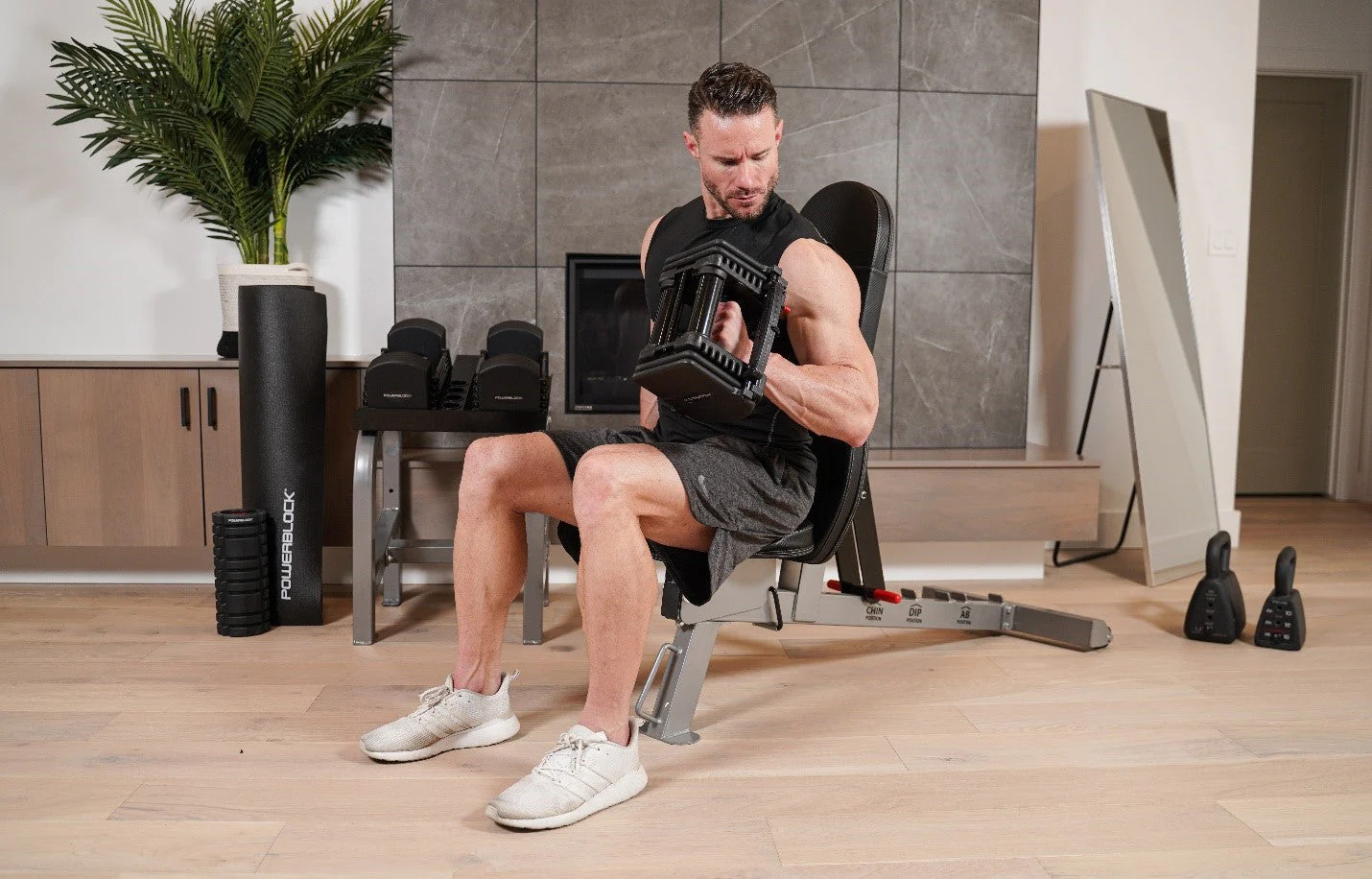

There is a reason the arms get all the attention.
Before the heroic back width, before the carved chest, before the hard-earned sweep of the quadriceps, there is the simpler ambition most people recognize immediately: sleeves that fit tighter, forearms that look capable, triceps that turn a T-shirt into a statement. Bigger arms are not only a gym goal. They are, in a way, a shorthand for strength itself.
But arm training is also where many lifters lose the plot. They chase novelty instead of tension, weight instead of form, exhaustion instead of progression. They do too much, too sloppily, and then wonder why their arms refuse to grow. The truth is less glamorous and more useful: bigger arms are built through repeated, disciplined work on a small number of movements done very well.
The arms, after all, are not one muscle. The biceps, brachialis, brachioradialis and triceps all contribute to what most people simply call “arm size.” If you want results fast, you need to train both sides of the upper arm, attack the muscles from more than one angle, and respect the basics—control, range of motion, and progressive overload.
What follows are 10 exercises that do exactly that. Not gimmicks. Not circus lifts. Just a sharp, effective lineup for building bigger arms as quickly as your body will allow.
1. Barbell Curl
If arm training has a founding father, it is the barbell curl.
It remains the best place to start because it lets you use meaningful load while training the biceps through a simple, stable movement pattern. A straight bar works. An EZ-bar can be kinder to the wrists. Either way, the principle is the same: stand tall, brace the torso, keep the elbows close to the body, and curl without turning the movement into a full-body negotiation.
The mistake people make is trying to impress the room. The hips lurch forward, the lower back arches, the shoulders roll, and suddenly the bar is moving but the biceps are barely working. A good curl looks almost restrained. The weight rises because the elbows flex, not because the spine takes over.
The barbell curl is so effective because it gives you what muscle growth demands: tension you can measure and gradually increase over time. Add a little weight. Add a rep. Clean up the form. Repeat for months. The arms notice.
Best use: early in the workout, 3 to 4 sets of 6 to 10 reps.
2. Incline Dumbbell Curl
The incline dumbbell curl is where the ego gets humbled and the biceps get honest work.
Set a bench to a modest incline, sit back, let the arms hang, and curl from a stretched position. That stretch is the whole story. It lengthens the biceps at the bottom and removes the easy cheating options available when standing. You cannot swing much. You cannot hide. You simply lift, lower, and feel the muscle do what it is supposed to do.
This exercise often feels harder with much less weight, which is precisely why it deserves respect. It biases the long head of the biceps and exposes weakness in the bottom half of the movement, where many lifters lose tension.
Done properly, it produces the kind of deep, precise fatigue that heavier curls often miss. Think less about heaving the dumbbells up and more about drawing the forearm through space. Lower them slowly. Own the bottom. Let the stretch work for you, not against you.
Best use: after heavier curls, 3 sets of 8 to 12 reps.
3. Hammer Curl
If you want arms that look substantial from every angle, you cannot live on traditional curls alone.
Hammer curls train the brachialis and brachioradialis—the muscles that thicken the upper arm and give the forearm a more powerful look. In practical terms, they add density. They make the arm look less like a line drawing and more like architecture.
Use a neutral grip, palms facing each other, and curl the dumbbells without letting the elbows drift too far forward. The path should be deliberate, not sloppy. You can do them standing, seated, alternating or both arms at once. What matters is that the neutral grip shifts the work and gives the elbows a slightly different, often friendlier pattern.
Many lifters underestimate how much hammer curls contribute to overall arm size. They should not. Bigger biceps are useful. Thicker arms are better.
Best use: mid-workout, 3 to 4 sets of 8 to 12 reps.
4. Preacher Curl
The preacher curl is an exercise of accountability.
With the upper arms pinned against the pad, momentum is reduced and the biceps must produce the movement without much help from the rest of the body. That makes it brutally effective, especially in the middle and shortened portions of the curl.
There is a psychological benefit here, too. The preacher curl teaches patience. It forces you to slow down, control the descent, and accept that muscle-building often feels less dramatic than people want it to. There is no swagger in a real preacher curl. There is only tension.
Use a bar, EZ-bar, dumbbells or a machine if your gym has one. Just avoid locking out aggressively at the bottom, where the elbow can feel vulnerable. Keep constant pressure on the muscle, and think of the last few inches at the top as a chance to squeeze rather than swing.
Best use: 3 sets of 10 to 12 reps with strict form.
5. Chin-Up
Some of the best arm builders do not look like arm exercises at all.
The chin-up—using an underhand grip—belongs on this list because it loads the biceps with your body weight while also training the back. It is compound training with a cosmetic dividend. And for many people, it does more for arm development than endless light curls ever will.
The key is intention. Do not think only about getting your chin above the bar. Think about pulling with the elbows, driving them down and back, and allowing the biceps to assist that motion powerfully. Full extension at the bottom matters. So does control at the top.
If body-weight chin-ups are too hard, use an assisted machine or bands. If they are too easy, add weight. The chin-up rewards strength, and strength often precedes size.
There is something satisfyingly old-fashioned about it as well. No pads, no cables, no mirrors needed. Just you and gravity, having a direct conversation.
Best use: early in the workout, 3 to 4 sets of 6 to 10 reps.
6. Close-Grip Bench Press
If your goal is bigger arms fast, you need to make peace with an important fact: most of your upper-arm mass comes from the triceps.
That is why the close-grip bench press deserves a central place in your program. It allows heavy loading, trains all three heads of the triceps, and carries over to pressing strength in general. More than that, it builds the back of the arm—the part that, from the side and rear, creates thickness that curls alone cannot provide.
Bring the hands in slightly narrower than shoulder-width, not absurdly close. Lower the bar under control, keep the elbows from flaring excessively, and press with authority. This is not a chest movement with a token triceps bonus; it is a triceps-focused press that just happens to involve the chest and shoulders.
Because it is a compound lift, it also lets you handle more load than isolation work. That matters. Muscles grow when they are asked to do more than they have done before.
Best use: at the start of triceps work, 3 to 4 sets of 6 to 8 reps.
7. Dips
Few body-weight exercises build pressing muscles quite like dips.
Lean too far forward and they become chest-dominant. Stay more upright, control the descent, and they become a formidable triceps builder. The long head of the triceps in particular gets meaningful work, and the overall demand on the upper body is high enough that progress tends to show itself quickly.
Dips also carry a certain seriousness. You cannot fake your way through them for long. They require stability at the shoulders, coordination through the torso, and enough strength to move your body cleanly through space. Start with assisted dips if necessary. There is no shame in building capacity first.
What matters most is depth and control. Go low enough to create a real stretch, but not so low that the shoulders feel compromised. Then press back up with intent. Body weight is often enough. Weighted dips, for those ready, can be transformative.
Best use: 3 sets of 8 to 12 reps.
8. Overhead Dumbbell Triceps Extension
Most triceps work happens with the arms by the sides. This is different, and that difference is valuable.
The overhead dumbbell extension places the long head of the triceps in a stretched position, which many lifters neglect. Since the long head contributes significantly to the overall look of a full upper arm, ignoring it is like renovating a house and forgetting the front door.
Use one dumbbell held with both hands or a pair of dumbbells if you are skilled enough to manage them. Keep the elbows pointed mostly forward, lower the weight behind the head under control, and extend without letting the rib cage flare or the lower back do the work.
This lift has a way of exposing tight shoulders, weak control and poor patience. It also has a way of rewarding those who stay with it. There is a distinct, loaded stretch at the bottom that can feel almost punishing. It is also exactly where growth often begins.
Best use: 3 sets of 10 to 15 reps.
9. Cable Triceps Pushdown
Reliable, adjustable and hard to do truly wrong, the cable pushdown is one of the most efficient triceps movements in any gym.
It works because the cable provides consistent tension, the setup is simple, and the movement can be repeated with enough precision to make progression obvious. Use a rope, straight bar or angled attachment depending on what feels best on the wrists and elbows. Keep the upper arms pinned near the ribs and extend fully without allowing the shoulders to roll forward.
The pushdown is not flashy. That is part of its charm. It is a workhorse, the kind of exercise that accumulates results quietly. It also gives you a chance to chase a strong contraction safely, making it ideal for moderate to high reps.
At the bottom of each rep, pause for a heartbeat. Let the triceps finish the job. Then return with control. The lowering phase counts. The muscle does not know or care that the stack is labeled in pounds. It only knows resistance and time under tension.
Best use: 3 to 4 sets of 10 to 15 reps.
10. Reverse Curl
The reverse curl is often treated as an accessory to the accessory work. It deserves better.
Using an overhand grip, you shift emphasis toward the brachioradialis and forearm extensors, which help create that rugged, complete look from elbow to wrist. Bigger forearms do not merely complement upper-arm growth. They make it believable.
They also improve grip and elbow resilience for many lifters, which can indirectly support progress on heavier pulling and curling work. An EZ-bar usually feels better than a straight bar here, though either can work.
Do not expect heroic poundages. Reverse curls are humbling in the best way. Keep the wrists steady, elbows close, and reps controlled. You are not trying to move the gym. You are trying to build arms that look like they belong to someone who trains.
Best use: near the end of the workout, 2 to 3 sets of 12 to 15 reps.
How to Put These Exercises Together
A great arm workout does not need to be endless. In fact, shorter and sharper is often better.
Here is one effective structure:
Biceps
- Barbell Curl: 4 sets of 6 to 10
- Incline Dumbbell Curl: 3 sets of 8 to 12
- Hammer Curl: 3 sets of 10 to 12
- Preacher Curl or Reverse Curl: 2 to 3 sets of 12 to 15
Triceps
- Close-Grip Bench Press: 4 sets of 6 to 8
- Dips: 3 sets of 8 to 12
- Overhead Dumbbell Triceps Extension: 3 sets of 10 to 15
- Cable Pushdown: 3 sets of 12 to 15
Add chin-ups on a back or upper-body day, and your arms will receive even more productive volume without needing a separate circus act of curls.
Train arms directly 1 to 2 times per week. That is enough for most people, especially if compound pulling and pressing are already part of the program.
The Rules That Make It Work Fast
“Fast” is always a dangerous word in fitness. Muscles grow on biological time, not emotional urgency. Still, there are ways to make progress happen as quickly as possible.
First, progress the load or reps. If you are using the same weights for the same sloppy 10 reps every week, you are practicing maintenance, not growth.
Second, control the eccentric, the lowering phase. Most lifters waste it. The muscles do not.
Third, eat enough protein and enough total calories to support growth. Arms are not built by training alone. They are built by training plus recovery plus food.
Fourth, sleep like it matters, because it does.
And finally, stop changing your routine every six days because a stranger online discovered a resistance band attached to a door hinge and called it revolutionary. Consistency has built more impressive physiques than innovation ever has.
The Real Secret
There is no real secret, which may be the most useful thing anyone can tell you.
Bigger arms come from repeating effective exercises long enough to become good at them, strong at them, and eventually stronger than you were prepared to be. The body responds to that kind of insistence. It has no choice.
The fantasy is that one perfect movement will unlock sudden growth. The reality is better, if less cinematic: a handful of excellent exercises, done with discipline, can change the way your arms look in a matter of months.
Not overnight. Not by magic. But fast enough to notice. Fast enough that your shirts begin to fit differently. Fast enough that the mirror becomes less of a question and more of an answer.
And in the gym, that is usually enough to keep going.
Important notice: this content is educational and does not replace an individual evaluation. If you have a history of eating disorders, diabetes, pregnancy, or a medical condition, consult a healthcare professional before making dietary or exercise changes.






 Sign In