



At first, fitness can feel like a small revolution.
You buy the shoes. You choose the playlist. You imagine a better version of your life, one workout at a time. For a few days or weeks, the routine has energy. It feels new enough to be interesting and difficult enough to feel meaningful.
Then, quietly, boredom arrives.
The same exercises. The same gym. The same route. The same instructor saying the same encouraging things through your headphones. What once felt like discipline begins to feel like repetition. You are not injured. You are not necessarily exhausted. You are simply tired of doing the same thing again.
This is where many fitness plans fail — not because they are too hard, but because they become too dull.
Boredom is not a character flaw. It is a signal. Sometimes it means your routine needs variety. Sometimes it means your goals are too vague. Sometimes it means you have been treating exercise like a chore instead of a practice that can evolve with your life.
Motivation is rarely something you either have or do not have. It is something you can design for. The right environment, the right goals, the right amount of novelty, and the right sense of progress can make movement feel possible again.
Here are 10 ways to stay motivated when your fitness routine feels boring.
1. Change the Goal, Not Just the Workout
When exercise becomes boring, many people immediately look for a new workout. That can help. But sometimes the deeper problem is not the routine. It is the goal behind it.
“Get fit” is not a goal. It is a foggy ambition. “Lose weight” may be clear, but it can become emotionally exhausting if every workout feels like a judgment on your body. “Build muscle” is useful, but it can feel distant if you do not know what progress looks like week to week.
A better goal gives your workouts a reason to exist beyond simply checking a box.
Try shifting from appearance-based goals to performance-based ones. Instead of “I want to look better,” consider “I want to do 10 full push-ups,” “I want to walk three miles without feeling tired,” “I want to deadlift my body weight,” or “I want to complete a 30-minute workout three times a week for a month.”
Performance goals create a story. You are not just exercising. You are practicing for something. You are becoming capable of something you could not do before.
That sense of direction matters. Boredom often grows in routines that have no visible destination. A clear goal gives your effort shape.
The goal does not have to impress anyone. It only needs to matter enough to you that showing up feels connected to something larger than repetition.
2. Make Your Routine Slightly New, Not Completely Different
There is a tempting mistake people make when they get bored: they throw everything away.
They abandon strength training and start running. They stop running and try boxing. They quit the gym and join a hot yoga studio. Novelty can be useful, but constant reinvention often prevents progress. You spend your energy starting over instead of building on what you already have.
The better approach is to change one or two variables at a time.
Keep the structure, but refresh the experience. If you usually walk on a treadmill, take your walk outside. If you lift weights alone, try a class once a week. If you always train in the morning, experiment with an evening session. If you do the same exercises, change the order, tempo, reps, or equipment.
Small changes can make a familiar workout feel alive again without destroying consistency.
For example, a basic strength routine can be adjusted in many ways. You can slow down each rep. Add a pause at the hardest point. Use dumbbells instead of machines. Train with supersets. Increase the weight. Reduce the rest time. Change the music. Move from the gym floor to an outdoor space when possible.
The goal is not chaos. The goal is freshness.
Your body benefits from consistency. Your mind benefits from variety. A good fitness routine respects both.
3. Track Progress You Can Actually See
One reason workouts become boring is that progress is often invisible in the moment.
You may be getting stronger, but not dramatically. You may be improving your endurance, but gradually. You may be healthier, but the mirror may not announce it every morning. Without evidence, the routine can begin to feel pointless.
Tracking gives you evidence.
This does not mean obsessing over every calorie, step, rep, and ounce of body weight. In fact, too much tracking can drain the joy out of exercise. But a simple record can remind you that your effort is accumulating.
Write down your workouts. Note the exercises, weights, reps, distance, time, or how you felt. Take a monthly photo if that feels healthy for you. Track how many workouts you complete in a month. Notice when a weight feels easier, when your walk gets faster, when your resting heart rate improves, or when stairs no longer leave you winded.
Progress is motivating because it makes the invisible visible.
There is also a quiet satisfaction in seeing a record of your consistency. A calendar with workouts marked off is not just data. It is proof that you kept promises to yourself.
On boring days, that proof can matter more than inspiration.
4. Stop Expecting Every Workout to Feel Exciting
A fitness routine does not need to thrill you every day.
This is an unpopular truth in a culture that tries to sell exercise as entertainment. We are told to find workouts we love, and that advice is useful up to a point. Enjoyment matters. But love is a lot to demand from squats, lunges, intervals, and mobility drills at 7 a.m. on a Tuesday.
Some workouts will feel good. Some will feel ordinary. Some will feel like brushing your teeth: not exciting, not terrible, simply part of caring for yourself.
That is not failure. That is adulthood.
Motivation becomes more stable when you stop requiring emotional fireworks before you move. You do not need to feel inspired to begin. You only need a routine that is reasonable enough to start even when inspiration is absent.
This is where the idea of a “minimum workout” helps.
Decide in advance what counts on a low-motivation day. Maybe it is 10 minutes of walking. Maybe it is one set of each exercise. Maybe it is stretching on the floor while your coffee brews. The minimum workout keeps the habit alive without asking for heroics.
Often, once you begin, you will do more than the minimum. But even when you do not, you have still protected the routine.
Consistency is not built only on great workouts. It is built on the days when you did something instead of nothing.
5. Add a Skill You Can Improve
Exercise becomes more interesting when there is something to learn.
Many routines become boring because they are purely repetitive. You walk, lift, pedal, or follow instructions without much sense of discovery. Skill changes that. It gives the brain something to engage with.
This could mean learning proper kettlebell technique, improving your swimming stroke, practicing jump rope, working toward a pull-up, trying Pilates, taking dance classes, learning Olympic lifting basics, or improving your running form.
Skill-based training creates a different kind of motivation. You are not just burning calories. You are getting better at something.
That shift can be powerful. A person who hates “cardio” may enjoy learning to box. Someone bored by basic strength training may become fascinated by handstands or barbell technique. Someone tired of walking may enjoy hiking because the terrain adds challenge and attention.
Skill also gives you milestones. The first time you hold a plank with perfect form. The first time you row smoothly. The first time you perform a clean push-up. These moments are small, but they create momentum.
The body likes adaptation. The mind likes mastery. A good routine gives both something to do.
6. Use Music, Podcasts, or Audiobooks Strategically
Sometimes the workout is not the problem. The atmosphere is.
A dull routine can feel different with the right sound in your ears. Music can add rhythm and intensity. Podcasts can make a long walk feel like a conversation. Audiobooks can turn steady-state cardio into something you look forward to.
The key is to use sound intentionally.
Save a favorite podcast only for walks. Reserve a specific playlist for strength training. Listen to an audiobook only while cycling or doing mobility work. This creates a simple reward loop: the workout becomes the doorway to something enjoyable.
Music can also shape effort. Faster songs can help with intervals. Slower, steadier music can support longer workouts. Quiet can be useful too, especially if your life is already noisy. The point is to choose the environment that makes the habit easier to repeat.
There is nothing shallow about needing a good playlist. Humans are sensory creatures. We respond to rhythm, mood, and anticipation.
If a song helps you start, use the song.
7. Train With Someone, Even Occasionally
Fitness boredom often grows in isolation.
You do the same routine alone, with no one to notice whether you showed up, improved, skipped, or struggled. For some people, solitude is peaceful. For others, it slowly drains motivation.
Training with another person can change the emotional texture of exercise.
This does not mean you need a full-time workout partner. It may be enough to take one class a week, meet a friend for a weekend walk, join a running group, hire a coach for a few sessions, or check in with someone who has similar goals.
Other people add accountability, but they also add energy. A workout can feel less like an obligation when it becomes a shared appointment. Conversation makes time move differently. Friendly competition can lift effort. A coach can correct your form and give the routine purpose.
The right person matters. Choose someone who makes exercise feel more possible, not more punishing. Avoid partners who turn every session into a comparison or a performance.
You are not looking for judgment. You are looking for momentum.
Even one social workout each week can make the rest of your routine feel less stale.
8. Change Your Environment
Environment has a strong influence on motivation, often more than we admit.
The same room, the same gym corner, the same treadmill, the same route around the block — eventually, the surroundings can become part of the boredom. Changing location can refresh your attention without requiring a dramatic change in your actual training.
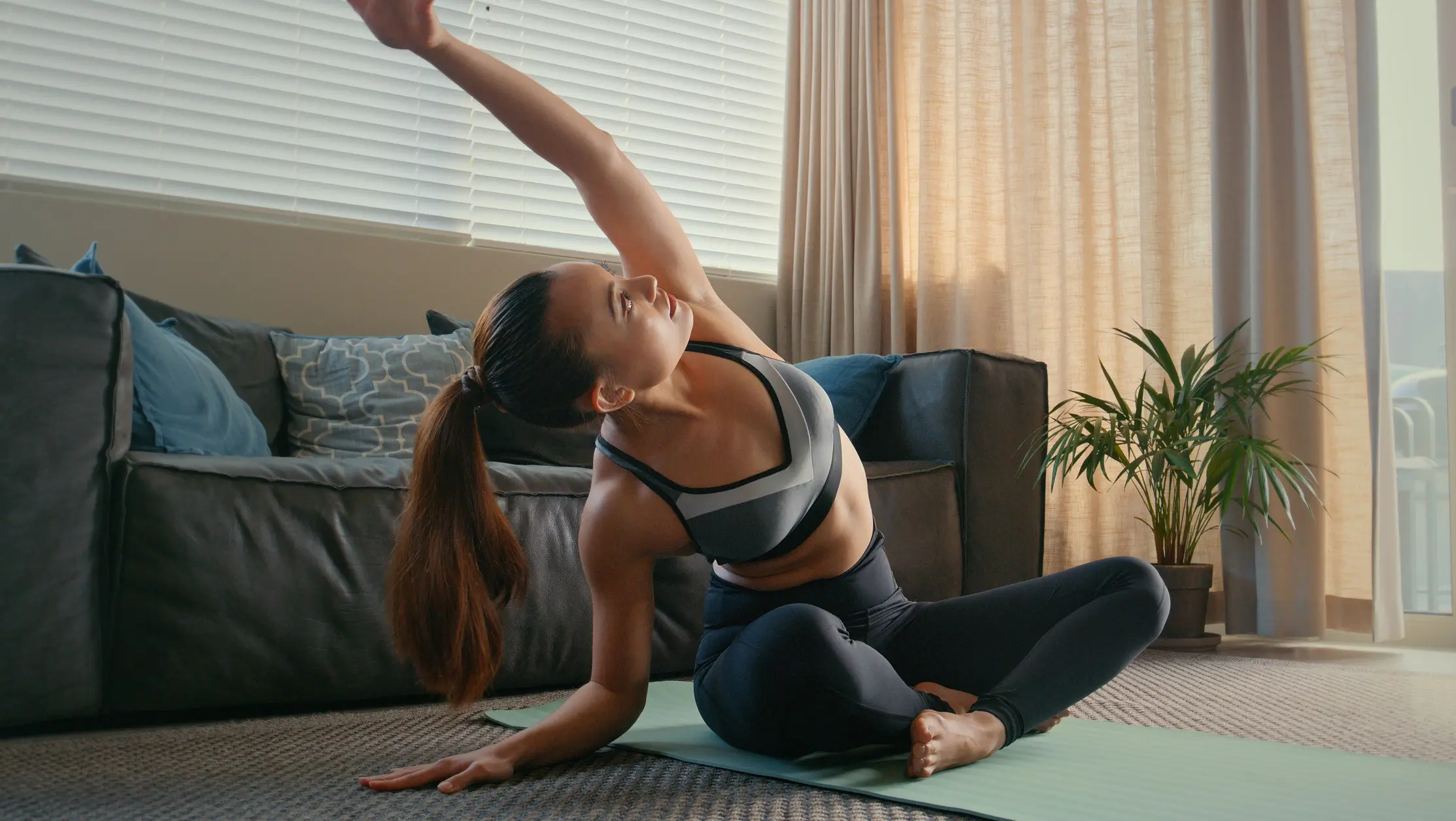
Take your workout outside. Try a different gym location. Walk in a new neighborhood. Use a park bench for step-ups and incline push-ups. Move your yoga mat near a window. Try stairs instead of the elliptical. Visit a local track. Hike a trail instead of doing another indoor cardio session.
A new environment gives the brain more to notice. Light, air, sound, space, scenery — these things affect how movement feels.
Outdoor exercise can be especially useful because it combines physical effort with a sense of escape. A walk under trees does not feel the same as a walk under fluorescent lights. A hill in the real world feels different from an incline button on a machine.
The best environment is the one that reduces resistance. For some people, that is a gym with equipment and structure. For others, it is a quiet living room. For others, it is anywhere outdoors.
When motivation drops, ask whether your surroundings are helping or hurting the habit.
Sometimes the body does not need a new plan. It needs a new view.
9. Build in Deload Weeks and Recovery
Boredom is not always boredom. Sometimes it is fatigue wearing a disguise.
If every workout feels dull, heavy, or irritating, your body may be asking for recovery. This is especially true if you have been training hard for weeks without easing up. Motivation often declines when the body is under-recovered.
A deload week is a planned period of easier training. You might reduce the weight, cut the volume, shorten sessions, or choose lower-intensity movement. The purpose is not to quit. It is to absorb the work you have already done.
This can be difficult for people who equate progress with constant effort. But recovery is not a pause in progress. It is part of progress.
Without recovery, training becomes a debt. At first, you can ignore it. Eventually, the body collects.
A smart routine includes hard days, easy days, and rest days. It also respects sleep, nutrition, stress, and life outside the gym. If you are sleeping poorly, working long hours, or dealing with emotional stress, your workout motivation may not be a discipline problem. It may be a capacity problem.
On those weeks, lower the pressure. Walk instead of sprinting. Stretch instead of lifting heavy. Do technique work instead of chasing personal records.
You may find that motivation returns when your body no longer feels like it is being dragged through the routine.
10. Remember Why You Started — Then Update It
The reason you started exercising may not be the reason that keeps you going.
At first, maybe you wanted to lose weight. Then you discovered you liked feeling stronger. Maybe you began because a doctor warned you about your health. Then you realized exercise helped your mood. Maybe you started because you disliked your body. Over time, perhaps you want to continue because you respect it more.
Motivation changes because people change.
It is worth asking, every so often: Why am I doing this now?
Not last year. Not when you began. Now.
Maybe the answer is energy. Maybe it is confidence. Maybe it is longevity. Maybe it is stress relief. Maybe it is being able to play with your children without getting tired. Maybe it is protecting your back, sleeping better, hiking on vacation, or aging with more independence.
A meaningful reason can carry you through boring stretches. But it has to be honest.
Borrowed motivation rarely lasts. Exercising because social media says you should look a certain way is fragile. Exercising because you want to feel capable in your own life is sturdier.
Write your reason down if it helps. Put it somewhere visible. Let it be simple.
“I want to feel strong.”
“I want more energy.”
“I want to take care of my future self.”
“I want to trust my body again.”
The routine may still feel boring sometimes. But boredom is easier to tolerate when the purpose is clear.
A Simple Way to Refresh a Boring Fitness Routine
If your current routine feels stale, do not overhaul everything at once. Try a four-week reset.
In the first week, keep your workouts the same, but track them. Notice what feels too easy, too hard, or too repetitive.
In the second week, change one variable. Add a new route, a new playlist, a new class, or a different exercise variation.
In the third week, introduce a small performance goal. Add five minutes to your walk, increase one lift slightly, complete one more rep, or improve your form on a specific movement.
In the fourth week, make recovery intentional. Take an easier session, stretch, sleep more, or replace one hard workout with a long walk.
At the end of the month, ask what actually helped.
Not what looked impressive. Not what sounded ambitious. What made you more likely to show up?
That is the information that matters.
The Bottom Line
Every fitness routine gets boring eventually. That does not mean it has stopped working. It may simply mean it needs attention.
Motivation is not a permanent mood. It rises and falls. The goal is not to feel excited every day. The goal is to build a routine with enough structure, variety, progress, and meaning that you can continue through the ordinary days.
Change the goal. Refresh the routine. Track progress. Learn a skill. Adjust the environment. Train with others. Use music. Recover when needed. Revisit your reason.
Fitness does not have to feel thrilling to be valuable. Some days, it will feel like a breakthrough. Other days, it will feel like maintenance. Both count.
The truth is that most lasting fitness is built in the middle — not in dramatic transformations, but in quiet returns.
You get bored. You adjust. You begin again.
That is not a failure of motivation. That is what consistency actually looks like.
Important notice: this content is educational and does not replace an individual evaluation. If you have a history of eating disorders, diabetes, pregnancy, or a medical condition, consult a healthcare professional before making dietary or exercise changes.











 Sign In