


The first set is where the gym tells the truth.
It’s the moment you discover whether you slept enough, whether your stress followed you through the door, whether yesterday’s workout is still sitting in your hips like an unpaid bill. It’s also where most people decide — quietly, without saying it out loud — what kind of session they’re going to have. If the first set feels heavy, the rest of the workout often becomes a negotiation.
Warm-ups are supposed to prevent that negotiation. But in practice, they’re misunderstood. Some people treat the warm-up like a chore they must “get through” before the real work. Others treat it like a separate workout: 20 minutes of sweat, dozens of random stretches, a little bit of everything — and then they wonder why they feel tired before they even touch the bar.
A good warm-up is simpler and more specific. It’s not there to punish you. It’s there to make you ready.
Think of it the way you think of turning on a car in winter. You don’t floor the gas pedal and hope the engine forgives you. You give it a minute. You let things circulate. You warm up the system so it responds the way you expect.
The best warm-ups do three things:
- Raise temperature (you become more pliable, more alert).
- Open the ranges of motion you need today (hips, shoulders, ankles, thoracic spine).
- Prime the exact pattern you’re about to load (squat, hinge, press, pull).
When those boxes are checked, your first set can feel — not magically easy, but more cooperative. Like the weight is the same, but your body is finally in the room with you.
Below are nine warm-ups that do that job well. They’re designed to be repeatable, not dramatic. Pick one based on what you’re training, and keep it short: 5 to 10 minutes, plus ramp-up sets on your main lift.
Because the truth is: the warm-up isn’t separate from training. It’s the first part of it.
A Quick Guide: How to Choose the Right Warm-Up
- Heavy lower body day (squats, deadlifts, lunges): Warm-ups #1, #2, #3, #4
- Upper body pressing (bench, overhead press, push-ups, dips): Warm-ups #5, #6, #7
- Pulling + posture (rows, pull-ups, back work): Warm-ups #6, #8
- Full body / uncertain day: Warm-ups #9 or a hybrid of your favorites
And one essential rule: after your general warm-up, do ramp sets for your main lift. No warm-up replaces practice reps with lighter weight.
1) The “Two-Minute Engine Start” (When You Feel Stiff, Not Unmotivated)
This is the warm-up for days when you feel like a slightly creaky version of yourself. Nothing hurts; everything just resists.
Do this for 5 minutes:
- 2 minutes brisk walk, bike, or row — enough to raise your temperature.
- 10 bodyweight squats (slow, comfortable depth).
- 10 hip hinges (hands on hips, push them back like closing a car door).
- 10 arm circles each direction (small to medium, controlled).
- 5 deep breaths (inhale through nose, long exhale).
It’s deceptively basic. That’s why it works.
Why it makes your first set feel lighter: You’ve raised your heart rate, lubricated joints, and told your nervous system, “We’re doing this now.” It replaces the shock of loading cold tissue with the calm of gradually turning on.
Best for: Any day, especially mornings or after long sitting.
2) The “Hips and Ankles for Squats” Sequence (For a Better Bottom Position)
When squats feel heavy early, it’s often not leg strength. It’s the feeling of being “stuck” — hips tight, ankles stiff, torso pitching forward. The bar hasn’t changed. Your positions have.
Do this for 6–8 minutes:
- Ankle rocks (knee over toes) — 10 each side
- Cossack squat to a comfortable depth — 6 each side
- 90/90 hip switches — 8 total (slow, controlled)
- Goblet squat hold (light weight or no weight) — 20–30 seconds
- 3 slow bodyweight squats with a pause at the bottom
If you don’t have a dumbbell for the goblet hold, hold onto a doorframe or a stable post and sit into the squat as deeply as you can control.
Why it helps: It restores the mechanics of the squat: ankles allow depth, hips allow rotation, and your torso can stay stacked. When your squat position is better, your first loaded set doesn’t feel like an argument.
Best for: Back squats, front squats, goblet squats, leg days.
3) The “Deadlift Hinge Primer” (For When Your Hamstrings Feel Like Guitar Strings)
The deadlift is not a warm, friendly lift. It asks you to pick up weight from a dead stop, which is why it’s called that. If your hinge pattern is off — if your lower back takes over, or your hips don’t move well — your first set feels heavy and awkward even at modest weights.
Do this for 7 minutes:
- Cat-cow — 6 slow reps (find spinal movement)
- Hip hinge drill — 10 reps (hands on hips, push hips back)
- Glute bridge — 10 reps (squeeze at top)
- Hamstring walkouts — 6 reps (slow; stop before cramps)
- 3 practice hinges in your deadlift stance, hands sliding down thighs, then reset
If you can, add one light kettlebell or dumbbell RDL set — but you don’t have to. A broomstick works. So does imagination, if it’s disciplined.
Why it helps: You’re teaching your body the hinge again — glutes engaged, hamstrings active, spine neutral. Your first deadlift set stops feeling like your back is doing a solo performance.
Best for: Deadlifts, Romanian deadlifts, hip thrusts, posterior-chain days.
4) The “Lunge-Day Wake-Up” (For Knees That Hate Surprises)
Lunges and split squats are honest exercises. They expose balance, hip stability, and the way one side quietly does more work than the other. The warm-up for them shouldn’t be complicated; it should just remind your body how to stabilize.
Do this for 6–8 minutes:
- Marching in place — 60 seconds (drive knees, swing arms)
- World’s greatest stretch (lunge + rotation) — 4 each side
- Reverse lunge — 6 each side (bodyweight, slow)
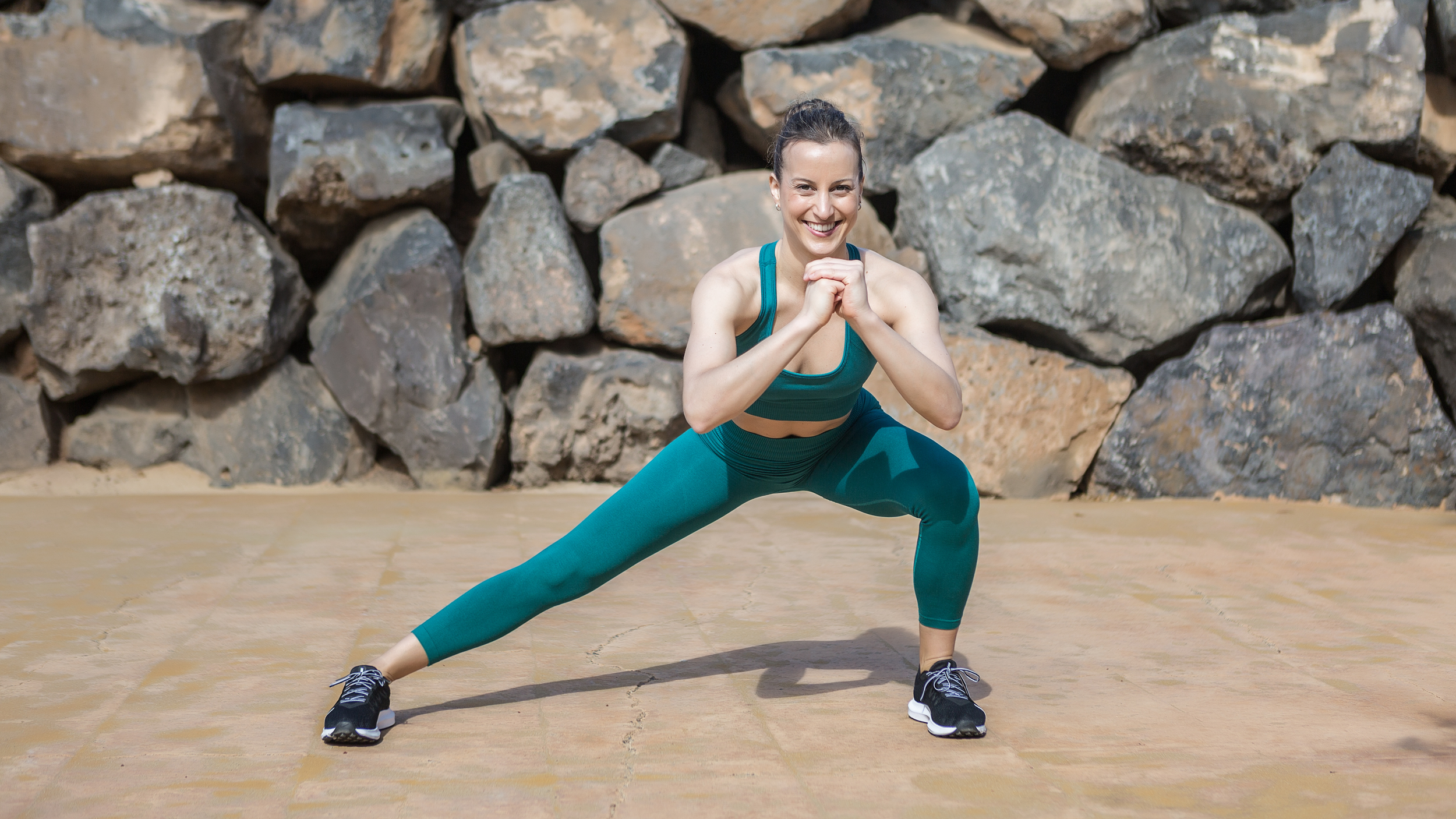
- Side lunge — 6 each side
- Single-leg balance — 20 seconds each side (eyes forward, calm breathing)
Why it helps: It primes glutes and hips, wakes up the stabilizers around the knee, and makes your first working set feel like a continuation of movement rather than a sudden demand.
Best for: Split squats, lunges, step-ups, leg days where balance matters.
5) The “Shoulders for Pressing” Routine (For Bench and Overhead Days)
Pressing heavy with cold shoulders is one of the easiest ways to make your joints grumpy. The goal is not to stretch your shoulders aggressively. The goal is to position the shoulder blade and prime the rotator cuff so the joint feels centered and stable.
Do this for 6–8 minutes:
- Scapular push-ups — 10 reps (arms straight, shoulder blades move)
- Wall slides — 8 reps (slow, ribs down)
- Band pull-aparts — 15 reps (if no band, do “T” squeezes)
- External rotation — 10 each side (band if available; or side-lying with no weight, slow)
- 2 sets of light push-ups — 6 reps (practice tightness)
No band? Do isometric squeezes: arms out like a “T,” pinch shoulder blades together for 2 seconds, repeat for 10 reps.
Why it helps: A stable shoulder makes force transfer clean. Your first press set stops feeling like your shoulders are “searching” for the right groove.
Best for: Bench press, overhead press, dips, push-ups.
6) The “Upper Back Switch-On” (For People Who Sit for a Living)
If you spend your day at a desk, your upper back often arrives at the gym folded like a question mark. Then you ask it to pull, press, or stabilize heavy weight, and it answers with stiffness.
This warm-up is the antidote: a few minutes of posture restoration, not as aesthetics, but as mechanics.
Do this for 5–7 minutes:
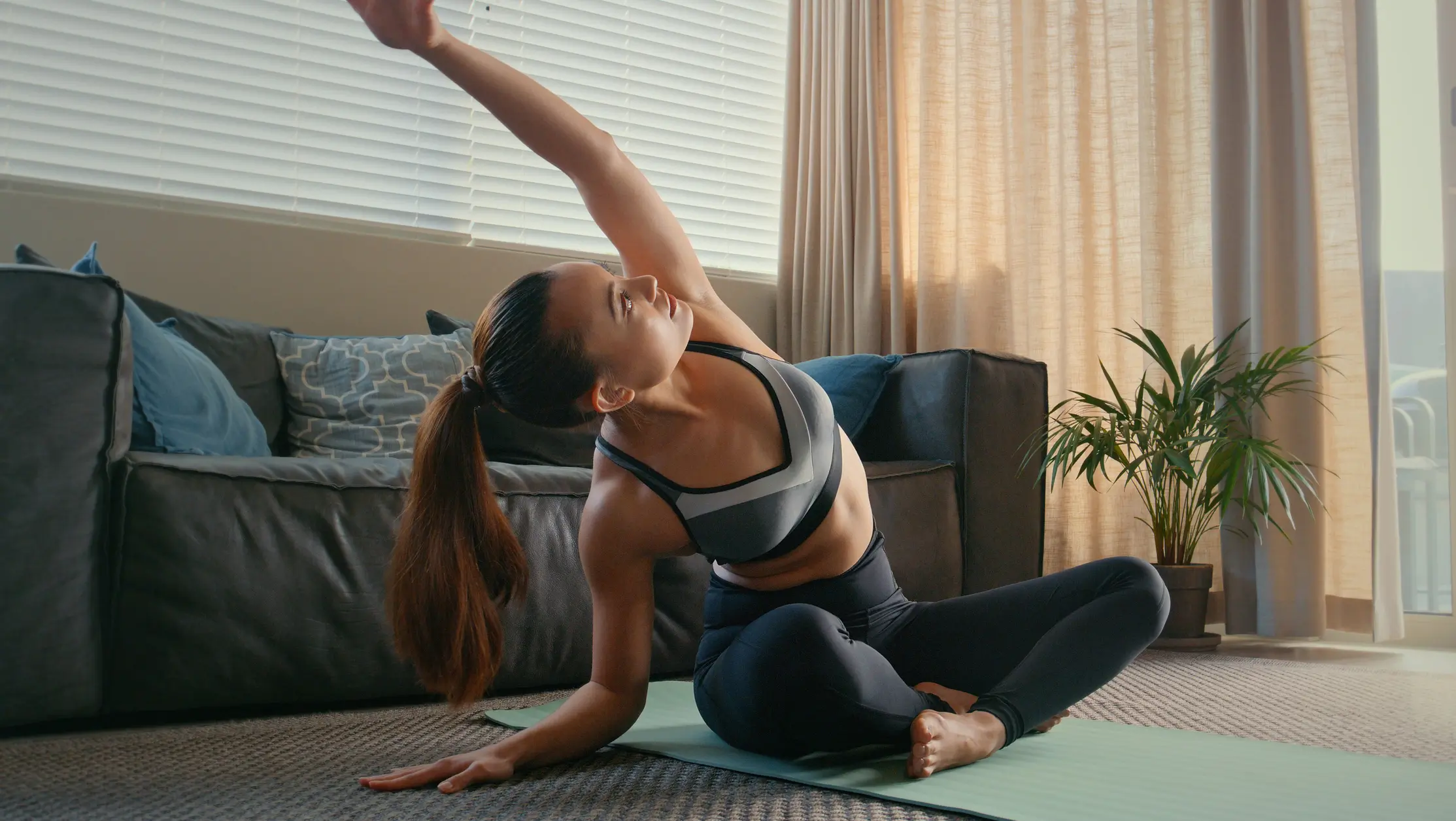
- Thoracic rotations (open books) — 6 each side
- Band rows — 15 reps (or towel rows: pull a towel apart)
- Face pulls — 12 reps (band if possible)
- Dead hang — 20–30 seconds (if bar available; otherwise skip)
Why it helps: It puts your shoulder blades back where they belong. When your upper back is engaged, your first set on rows, bench, or pull-ups feels steadier — like you’re pushing and pulling from a solid platform.
Best for: Rows, pull-ups, bench days, full-body days.
7) The “Wrists and Elbows for Push-Ups, Dips, Handstands” (For Joint Peace)
Calisthenics and pressing work can make wrists and elbows feel like they’re constantly being asked to sign new contracts. Warm them up and they tend to cooperate.
Do this for 6 minutes:
- Wrist circles — 20 seconds each direction
- Palm pulses (hands on floor, gently shift forward/back) — 10 reps
- Knuckle rocks (on fists, gentle) — 8 reps
- Forearm flexor stretch — 20 seconds each side
- Triceps extensions with slow tempo — 10 reps (bodyweight “bench triceps stretch” or light band)
- 2 easy sets of your main movement (incline push-ups, assisted dips)
Why it helps: Warm wrists and elbows reduce friction — literal and metaphorical. You’re not “protecting” your joints by avoiding load; you’re preparing them to accept it well.
Best for: Push-ups, dips, handstand practice, any pressing-heavy session.
8) The “Pull-Day Groove” (For Pull-Ups and Rows That Don’t Feel Like a Fight)
On pull days, the first set often fails because people start from a dead hang with shoulders floating up near their ears. That position is unstable and inefficient. The warm-up is about finding the correct starting posture — shoulders set, lats engaged — before you ask for strength.
Do this for 7–9 minutes:
- Scapular pull-ups — 8 reps (small range, arms straight)
- Assisted pull-up holds — 3 x 10 seconds (use a box or band if possible)
- Slow negatives — 3 reps (3–5 seconds down)
- Bodyweight rows — 10 reps (easy angle)
If you can’t hang from a bar, do the same concept on a row: hold the top position for a few seconds and feel the back muscles working, not the biceps alone.
Why it helps: You’re teaching the body how to pull with the back, not just the arms. When the pattern is clean, the weight feels lighter because the right muscles are doing the work.
Best for: Pull-ups, lat pulldowns, rows, any back-focused workout.
9) The “The 6-Minute Full-Body Reset” (For When You Don’t Know What You Need)
Some days you arrive at the gym not in pain, not stiff, just… scattered. It’s been a day. Your mind is elsewhere. Your body feels like it’s still in the car.
This warm-up is a reset — short, general, and surprisingly effective.
Do this for 6 minutes:
- 1 minute easy cardio (walk, bike)
- 10 inchworms (or 6 if slow; focus on hamstrings and shoulders)
- 10 bodyweight squats
- 10 push-ups (incline if needed, strict form)
- 20-second dead hang (optional)
- 10 controlled hip hinges
It’s not perfect. It’s reliable.
Why it helps: It wakes up major movement patterns — squat, hinge, push, pull — and raises your temperature. Your first set feels less like an ambush.
Best for: Full-body training, uncertain programming, busy days.
The Part Everyone Skips: Ramp-Up Sets That Actually Change the Day
Warm-ups on the floor are helpful. But the secret to making your first working set feel lighter is ramp-up sets — practice reps with lighter weight in the exact lift you’re about to train.
If you’re benching 185, for example, you might do:
- Bar x 10
- 95 x 5
- 135 x 3
- 155 x 1–2
- 185 working sets
Not because you’re burning calories, but because you’re teaching your nervous system the groove and preparing the tissues in the exact positions they’re about to bear load.
Ramp sets are often where the “ten pounds lighter” feeling actually appears. Your body remembers. The lift becomes familiar again.
Rule of thumb: the heavier the day, the more ramp sets you need — but keep them low-rep so you don’t tire yourself out.
What Makes a Warm-Up “Too Much”?
You’ll know you’ve over-warmed up if you:
- Feel sweaty and tired before your first working set,
- Start your workout already short of breath,
- Notice your strength is worse, not better.
Warm-ups are not auditions. They are preparation.
If you only have five minutes, do five minutes. If you have ten, do ten. The goal is to arrive at the first set feeling ready, not depleted.
A Few Small Fixes That Matter More Than People Admit
Warm Up the Way You Train
If you plan to squat with control, warm up with control. If you plan to deadlift with intention, practice hinges with intention. Randomness in the warm-up often produces randomness in the workout.
Don’t Stretch Aggressively When Cold
If you love stretching, do it after you’ve raised your temperature. Cold, aggressive stretching can make joints feel looser without making them stable, which is not what you want under load.
Breathe Like a Person Who Wants to Lift Well
A few slow exhales can shift you out of stress mode and into performance mode. It’s not mystical. It’s physiology. Your body lifts better when it feels safe.
So, Which One Should You Do Tomorrow?
If you want a simple answer:
- Squat day: #2 + ramp sets
- Deadlift day: #3 + ramp sets
- Bench/press day: #5 + ramp sets
- Pull day: #8 + ramp sets
- Anything else: #1 or #9 + ramp sets
The warm-up that works best is the one you will actually repeat. Consistency is what makes it quietly powerful.
Because the real prize isn’t just a first set that feels lighter. It’s a training life with fewer interruptions: fewer aches, fewer false starts, fewer sessions lost to stiffness you could have softened in six minutes.
And if you’ve ever walked out of the gym after a strong day — not euphoric, just steady — you know that feeling. The bar didn’t change. You did.
The warm-up is how you make that version of yourself more common.











 Sign In