


The word “core” has been marketed into meaninglessness.
For years, it’s been sold as shorthand for visible abs — the kind that show up in bright lighting and disappear the moment you eat lunch. But your core is not a photo opportunity. It’s infrastructure. It’s the system of muscles that helps you stand tall, breathe well, lift safely, and move through the day with less strain in your back, hips and neck.
That’s why core training can help posture — not because it forces you into a military stance, but because it gives your body options. When the muscles around your trunk can stabilize and transfer force, you’re less likely to “hang” on your joints, slump into your spine, or compensate with your shoulders.
And if better abs happen along the way, fine. But think of that as a side effect. The real payoff is feeling more supported in your body — especially if you spend much of your life sitting, staring down at a screen, or bracing through stress without realizing it.
The core is not one muscle. It’s a team. It includes the deep abdominals (like the transverse abdominis), the obliques, the rectus abdominis, the muscles of the back, the diaphragm, the pelvic floor and even the glutes. A good core routine trains the team to do its real job: resist unwanted motion, stabilize the spine, and coordinate movement.
Below are nine moves that do exactly that — without the theatrics. You won’t need a gym. You don’t need to do 200 crunches. You do need to move slowly enough to feel what’s actually working.
Before you start: what “good posture” really is
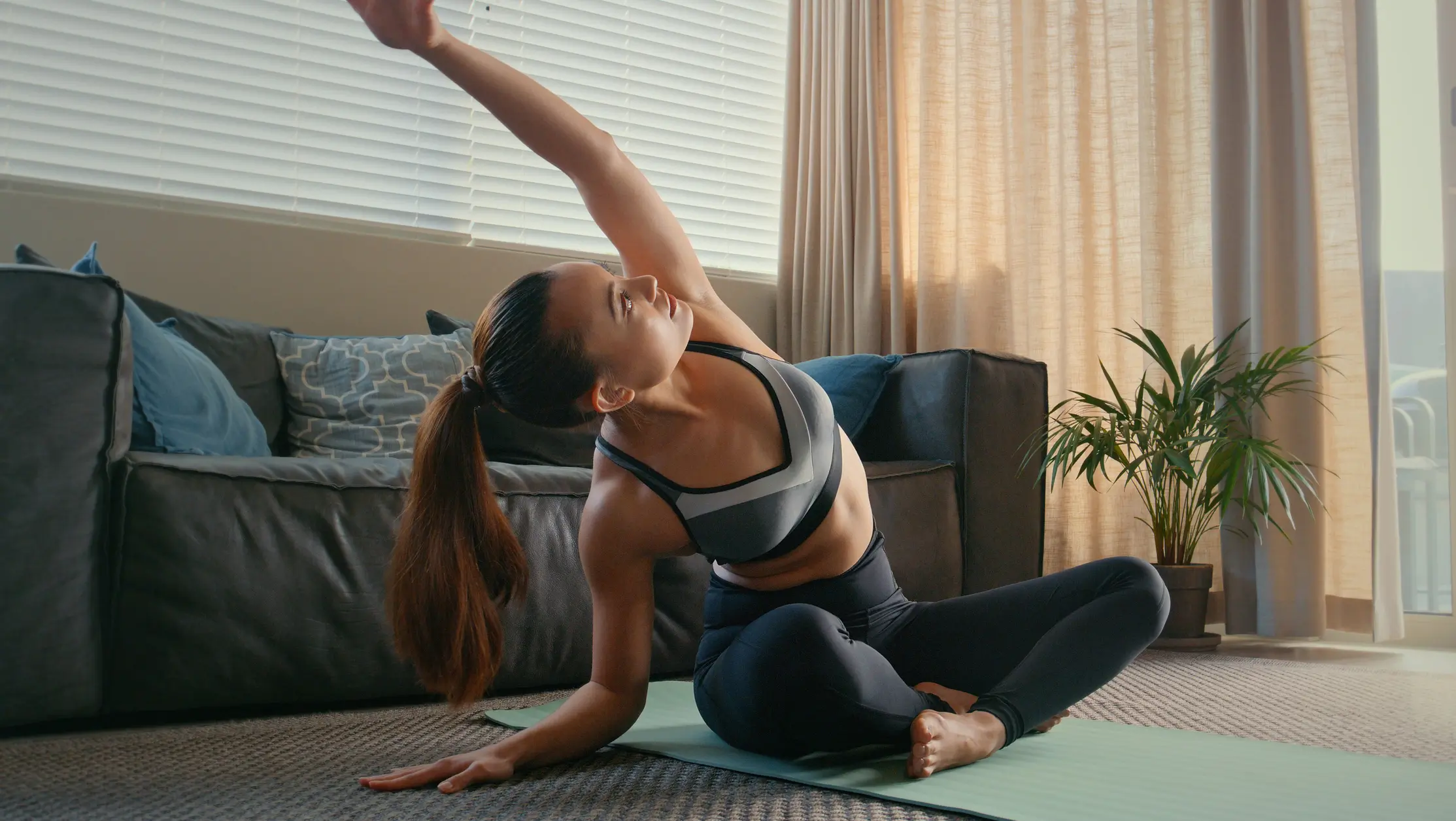
Posture is not a single “correct” position you must hold all day. Good posture is variety — the ability to shift positions without discomfort. Core work helps because it builds endurance in the muscles that keep you upright, especially when fatigue tries to pull you into whatever shape your chair suggests.
A quick test: can you sit or stand and take a full breath without your shoulders lifting and your rib cage flaring? If not, your core training should start with breathing and control, not intensity.
How to use these moves
Pick 6 of the 9 moves and do them 2–4 times a week. The routine should take 12–18 minutes.
- Move slowly.
- Stop if you feel sharp pain.
- If you feel it mostly in your neck or hip flexors, scale down.
- Think “brace” — like you’re about to cough — rather than “suck in.”
1) Dead Bug (the quiet cornerstone)
Why it works: It trains the deep core to stabilize the spine while arms and legs move — which is basically life.
How to do it:
- Lie on your back, knees bent at 90 degrees, arms up.
- Press your lower back gently into the floor (not a hard smash).
- Slowly extend one leg and the opposite arm away from you.
- Return and switch sides.
Do: 6–10 slow reps per side
Common mistake: Letting your back arch. If that happens, shorten the range.
Posture payoff: Better ribcage-to-pelvis alignment — the foundation of standing tall.
2) Forearm Plank (but done like a professional)
Why it works: Planks are posture training in disguise — they teach your trunk to resist sagging or over-arching.
How to do it:
- Forearms on the floor, elbows under shoulders.
- Legs straight (or knees down to modify).
- Think of gently tucking your ribs down toward your pelvis.
- Squeeze glutes lightly and breathe.
Do: 3 holds of 20–40 seconds
Common mistake: Holding your breath. If you can’t breathe, it’s too hard.
Posture payoff: Builds endurance for the muscles that keep you from “hanging” into your low back.
3) Side Plank (the obliques’ best argument)
Why it works: Side planks train lateral stability — crucial for posture, balance, and preventing the “one hip hike” stance people adopt when tired.
How to do it:
- Elbow under shoulder, body in a straight line.
- Modify by bending the bottom knee.
- Keep chest open, hips stacked.
Do: 2–3 holds per side, 15–30 seconds
Common mistake: Letting hips drift back or forward.
Posture payoff: Helps keep the ribcage from collapsing and shoulders from rounding.
4) Glute Bridge (because your core includes your hips)
Why it works: Many posture problems are not just “weak abs.” Often it’s sleepy glutes and overworked low-back muscles.
How to do it:
- Lie on your back, knees bent, feet flat.
- Exhale, brace, then lift hips until you form a line from shoulders to knees.
- Pause, then lower slowly.
Do: 10–15 reps, 2–3 sets
Common mistake: Overextending at the top (arching your back). Keep ribs down.
Posture payoff: Better pelvic control, which helps your spine stack more comfortably.
5) Bird Dog (stability with a spine-friendly feel)
Why it works: Like the dead bug, but on hands and knees. It builds cross-body control — and teaches you not to twist when you move.
How to do it:
- Hands under shoulders, knees under hips.
- Extend one leg back and the opposite arm forward.
- Keep hips level; imagine balancing a glass of water on your back.
Do: 6–10 reps per side (pause 2 seconds each rep)
Common mistake: Rotating the hips or letting the low back dip.
Posture payoff: Stronger back line and better coordination between trunk and limbs.
6) Pallof Press (anti-rotation, the grown-up core skill)
Why it works: Your core’s job is often to resist movement, not create it. The Pallof press teaches you to resist twisting — which protects your back and improves stability.
What you need: A resistance band anchored to something sturdy.
How to do it:
- Stand sideways to the anchor, band at chest height.
- Hold the band at your chest, step out until there’s tension.
- Press arms straight out; resist rotation.
- Bring back in.
Do: 8–12 reps per side, 2 sets
Common mistake: Letting the band pull you into a twist.
Posture payoff: More stable torso in daily movements — carrying bags, lifting, turning.
7) Suitcase Carry (the simplest posture drill you’ll actually use)
Why it works: Carrying weight on one side forces your core to keep you upright. It’s practical and strangely humbling.
What you need: A dumbbell, kettlebell, or heavy bag.
How to do it:
- Hold weight at your side like a suitcase.
- Stand tall: ribs stacked, shoulders level.
- Walk slowly and steadily.
Do: 30–60 seconds per side, 2–3 rounds
Common mistake: Leaning away from the weight or shrugging the shoulder up.
Posture payoff: Stronger lateral core and more symmetrical shoulder positioning.
8) Hollow Hold (a safe version, not a gymnastics audition)
Why it works: It trains deep abdominal tension — especially useful for posture and spine control. But beginners should start with a modified version.
How to do it (beginner):
- Lie on your back, knees bent.
- Brace and lift shoulders slightly off the floor.
- Extend one leg at a time (or keep knees bent).
- Keep lower back gently pressed down.
Do: 3 holds of 10–20 seconds
Common mistake: Arching the back. Keep it small and controlled.
Posture payoff: Better control of rib flare and anterior pelvic tilt tendencies.
9) Wall Slides with a Rib “Lock” (because posture includes your upper trunk)
Why it works: Many people think posture is a “core-only” problem, when it’s also shoulder blades, ribs, and breathing mechanics. Wall slides train the upper back to support an open chest without over-arching the low back.
How to do it:
- Stand with your back against a wall, elbows bent like a goalpost.
- Gently tuck ribs down (avoid flaring).
- Slide arms up and down the wall slowly.
Do: 8–12 reps, 2 sets
Common mistake: Compensating by arching the low back.
Posture payoff: Better shoulder positioning — less rounding, less neck strain.
Put it together: a 15-minute core routine
Here’s a simple sequence you can repeat:
- Dead Bug — 8 reps per side
- Glute Bridge — 12 reps
- Side Plank — 20 seconds per side
- Bird Dog — 8 reps per side (2-second pause)
- Pallof Press — 10 reps per side
- Suitcase Carry — 45 seconds per side
If you have time, add:
- Hollow Hold — 15 seconds x 2
- Wall Slides — 10 reps
Do this 2–4 times per week. If you’re pressed for time, do it twice. Twice is enough to matter.
How to make core work show up in your posture
A strong core doesn’t automatically give you perfect posture, because posture isn’t a single destination. It’s what your body chooses when it’s tired. So you also need two small habits that sound too simple to matter — but do.
1) Take posture breaks, not posture vows
Set a timer for every 45–60 minutes. Stand up. Take 5 slow breaths. Reset. The body doesn’t need one perfect position; it needs movement.
2) Practice stacked breathing
Once a day, stand tall with your ribs over your pelvis and inhale into your lower rib cage. Exhale long, like fogging a mirror. That teaches your trunk to brace without stiffening and your shoulders to stop doing your breathing for you.
What you should feel (and what you shouldn’t)
You should feel:
- abdominal tension without neck strain
- steady work in the sides of your torso during side planks and carries
- glutes working during bridges
- a sense of control, not chaos
You should not feel:
- sharp low back pain
- pinching in the hip flexors that dominates every move
- headaches from holding your breath
- a need to “yank” your neck forward during core exercises
If you do, scale down. Bend knees. Shorten range. Use a lighter weight. Core training is not a contest.
The best part about core work is that it’s boring
That’s not an insult — it’s a feature.
The core gets stronger through repeated, controlled practice. The reward is not the rush of a hard cardio session; it’s the quiet surprise of realizing your back feels better after a long day, or that you’re no longer collapsing into your chair like a coat thrown over a hook.
It’s carrying groceries without twisting awkwardly. It’s reaching overhead without your lower back protesting. It’s walking into a room feeling a little more upright — not because you forced yourself into position, but because your body can support that position without effort.
And if that also makes your abs look a little sharper, well. That’s fine. But posture is the real upgrade: the kind you feel every day, whether anyone notices or not.
Important notice: this content is educational and does not replace an individual evaluation. If you have a history of eating disorders, diabetes, pregnancy, or a medical condition, consult a healthcare professional before making dietary or exercise changes.








 Sign In