

On a certain kind of morning — the kind that arrives with a thin, apologetic light — the most convincing gym is the one you can’t avoid: the floor, the doorway, the park bench, the pull-up bar that someone welded to a playground decades ago and forgot to remove.
Calisthenics lives there. Not as a lifestyle brand or a dare, but as a simple proposition: your body is both the tool and the test.
This idea can feel suspiciously minimal in a culture that equates progress with equipment. But strength has never required chrome. Strength requires tension, consistency, and a willingness to practice movements long enough to get better at them.
The problem is that most people approach calisthenics like a highlight reel. They chase a pull-up, a handstand, a muscle-up — the iconic moves — without building the quiet scaffolding underneath. Then they wonder why their elbows ache, why their shoulders feel unstable, why the progress stalls.
Progressions are the antidote. They are the unglamorous steps that make the impressive steps possible. They’re also how you build meaningful strength without a single dumbbell — not by doing “bodyweight workouts” until you’re sweaty, but by making the movements harder in deliberate ways.
Below are nine progressions that build strength, joint resilience, and control. Each one has a clear path from “I can’t do that” to “I can,” and each one can be trained with little more than a floor, a wall, and something sturdy enough to hang from or elevate your feet.
A note before we begin: calisthenics rewards patience. If you want to keep your shoulders and wrists happy, think in months, not days. The goal is not to rush toward a trick. The goal is to become the kind of person for whom the trick is inevitable.
How to Use These Progressions (Without Turning Your Week Into a Military Schedule)
Pick three to five progressions and train them two to four times per week. Treat each session like practice, not punishment:
- Stop most sets with 1–2 good reps in reserve.
- Rest enough to keep form sharp (60–120 seconds for most sets).
- Add difficulty slowly: one rep, one second, a slightly harder variation.
- Quality beats quantity. A clean rep is worth more than three ugly ones.
For most people, a simple structure works:
- Skill/strength focus (10–20 minutes): 2–3 progressions
- Assistance (10–15 minutes): 1–2 progressions
- Core/conditioning (5–10 minutes): optional
And now, the movements.
1) Push-Up Progression: From the Floor to Real Upper-Body Strength
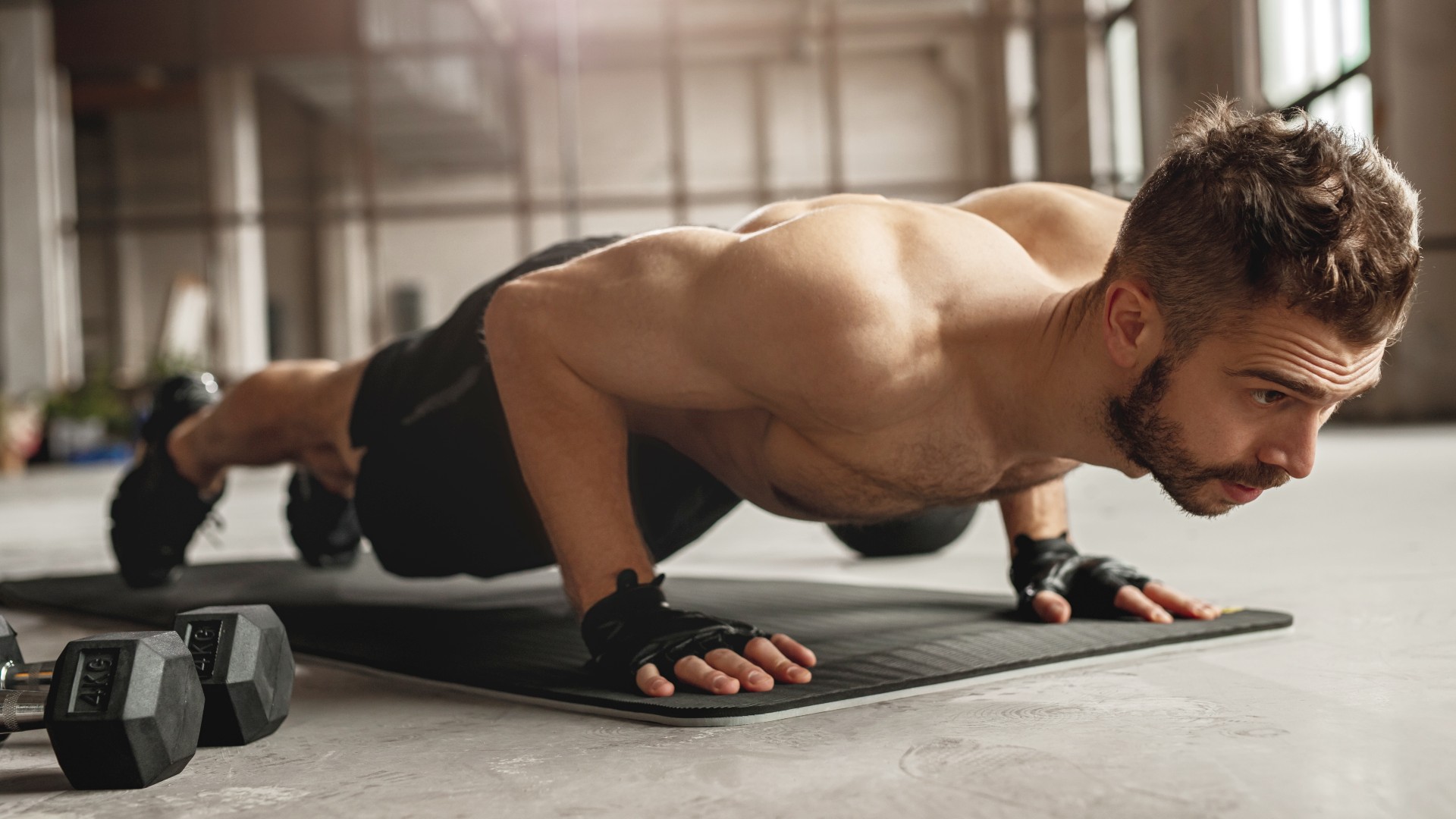
Push-ups are often dismissed as “basic.” That’s usually said by people who haven’t tried strict, deep push-ups with a controlled tempo and a true pause at the bottom.
The push-up is more than chest and triceps. Done well, it’s a full-body plank that teaches you to create tension from shoulders to ankles — the same tension you need for harder pressing skills later.
Step Ladder
- Wall push-up (hands on wall, body straight)
- Incline push-up (hands on bench/couch/table)
- Knee push-up (use only if incline is still too hard)
- Standard push-up
- Tempo push-up (3 seconds down, 1 second pause, up)
- Feet-elevated push-up
- Pseudo planche push-up (hands lower near hips, lean forward)
What to Focus On
- Hands slightly wider than shoulders
- Elbows at a comfortable angle (not flared like wings)
- Ribs down, glutes tight, body in one line
- Chest touches the floor (or comes close) without hips sagging
Programming
- 3–5 sets of 6–12 reps, 2–4x/week
- When you can do 12 clean reps, raise the difficulty (lower the incline, elevate feet, slow tempo).
Why it works: It builds pressing strength and trunk stiffness — two qualities that show up everywhere, including handstands and dips.
2) Dip Progression: The Quiet Shortcut to Strong Shoulders and Triceps
If pull-ups are the calisthenics status symbol, dips are the underrated workhorse. They build triceps, chest, and shoulder stability in a way that carries over to nearly everything else.
You can do them between sturdy chairs, on parallel bars in a park, or on dip bars if you have access. The key is to progress carefully; shoulders can be unforgiving if you drop too deep too soon.
Step Ladder
- Bench dip (bent knees) — use sparingly; keep shoulders safe
- Bench dip (straight legs)
- Assisted dip (feet on ground or band support)
- Full dip (parallel bars)
- Tempo dip (slow down, pause)
- Korean dip / straight-bar dip (advanced, optional)
What to Focus On
- Shoulders “down and back” (avoid shrugging)
- Control the bottom position; don’t bounce
- Stop depth where shoulders feel stable (often upper arms roughly parallel)
Programming
- 3–4 sets of 4–10 reps, 1–3x/week
- Add reps before adding range. Add range before adding speed.
Why it works: Dips build pressing strength at a deeper shoulder angle than push-ups. That strength shows up in handstand push-up progressions and muscle-up readiness.
3) Pull-Up Progression: The Doorway to a Strong Back
Pull-ups have a way of making adults feel young again — partly because they’re simple, partly because they’re hard, and partly because you can measure progress with humiliating clarity.
The mistake is treating pull-ups as an all-or-nothing event. Most people can’t do one, then they try to “just do one,” and their body responds by inventing new forms of swinging.
Progressions make pull-ups honest.
Step Ladder
- Dead hang (build grip, shoulder comfort)
- Scapular pull-up (small shoulder-blade movement)
- Isometric holds (chin over bar, or mid-range)
- Negative pull-up (slow lowering)
- Band-assisted pull-up (if available)
- Full pull-up
- Chest-to-bar pull-up (advanced)
What to Focus On
- Start with shoulders set (not dangling like laundry)
- Pull elbows down, not back
- Keep ribs from flaring; avoid turning it into a backbend
- Control the descent — that’s where strength is built
Programming
- 2–4 sessions/week, small volume each time
- Example: 5–8 total negatives, or 20–40 seconds total holds, spread across sets.
Why it works: Strong lats and scapular control protect shoulders and improve posture. Pull-ups also teach the kind of full-body tension that makes calisthenics feel less like exercise and more like engineering.
4) Row Progression: The Missing Ingredient for Shoulder Health
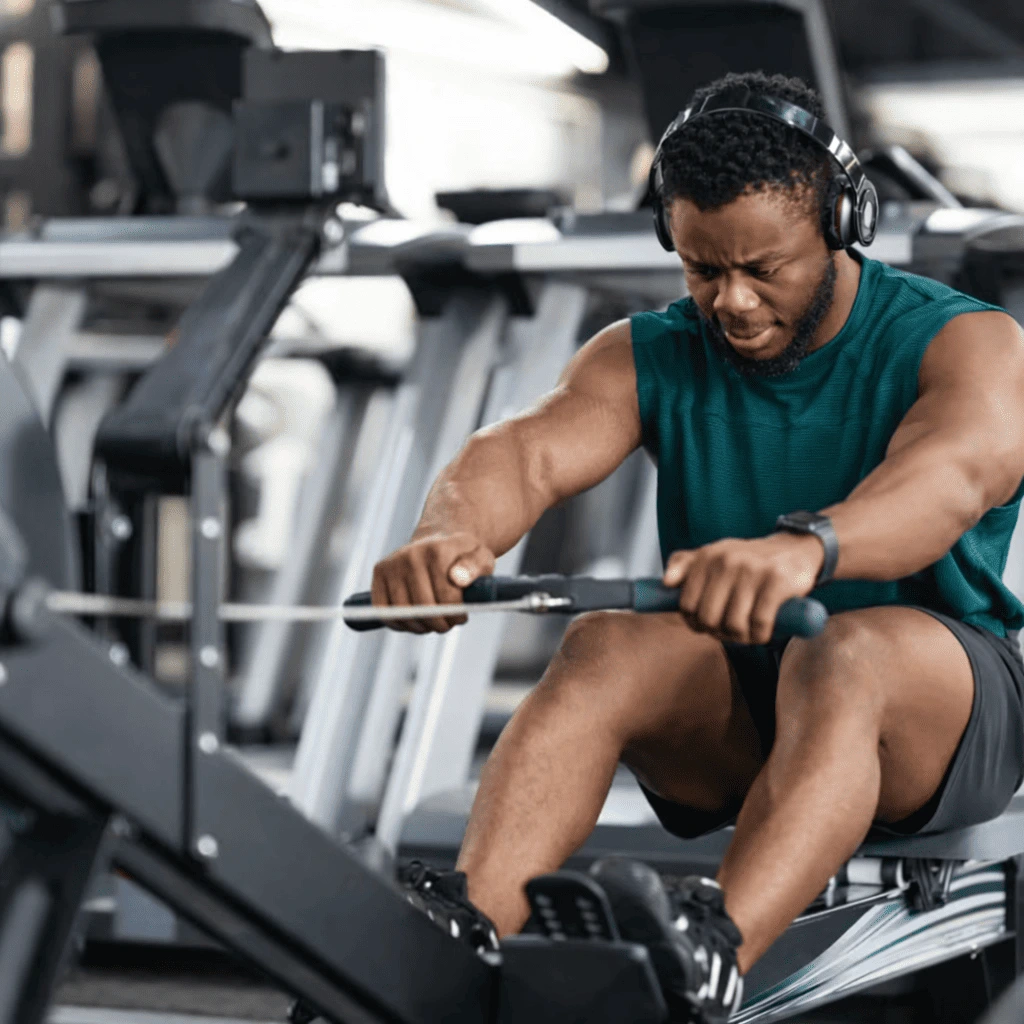
If you only push and pull vertically, your shoulders eventually complain. Rows — horizontal pulling — are the antidote. They build the mid-back muscles that help keep the shoulder joint stable.
You don’t need cables or dumbbells. A sturdy table, a railing, rings, or a low bar at a park will do.
Step Ladder
- High incline row (body more upright)
- Mid incline row
- Low incline row (body more horizontal)
- Feet-elevated row
- Slow tempo / pause rows
- Archer row (one side works harder)
What to Focus On
- Body stays straight like a plank
- Pull chest toward the bar/edge, not chin
- Pause briefly at the top to avoid cheating
Programming
- 3–5 sets of 8–15 reps, 2–4x/week
- Make it harder by lowering the bar or elevating feet.
Why it works: Rows balance the pressing you do and reduce shoulder irritation. They also build the “upper back thickness” many people chase with weights.
5) Squat Progression: Leg Strength Without a Barbell (Yes, Really)
Calisthenics legs are a point of debate — mostly because the strongest leg exercises are hard and humbling. But you can build serious leg strength with bodyweight by using single-leg variations and tempo.
The goal isn’t to replicate a back squat. The goal is to load your legs in a way that forces adaptation.
Step Ladder
- Box squat (to a chair, controlled)
- Tempo squat (3 seconds down, pause, up)
- Split squat
- Bulgarian split squat (rear foot elevated)
- Assisted pistol squat (hold a doorway)
- Pistol squat (full single-leg squat)
- Shrimp squat (another single-leg option)
What to Focus On
- Knee tracks over toes (not collapsing inward)
- Heel stays planted when possible
- Keep the descent controlled; own the bottom position
Programming
- 3–5 sets of 6–12 per leg, 2–3x/week
- Add depth, then reps, then tempo, then move to harder variation.
Why it works: Single-leg work increases the effective load dramatically. Your lungs will notice. Your legs will too.
6) Hinge Progression: Posterior Chain Strength Without Weights
Most bodyweight routines neglect the hinge — the movement pattern that trains hamstrings and glutes. Without it, you get strong in the front and fragile in the back.
You can hinge without weights by using leverage, single-leg work, sliders, and hamstring curls.
Step Ladder
- Glute bridge (two legs)
- Hip thrust (shoulders elevated on couch/bench)
- Single-leg glute bridge
- Hamstring walkouts (bridge position, slowly walk heels out and in)
- Sliding leg curl (heels on towel on smooth floor)
- Nordic curl negative (knees anchored, slow lowering) — advanced
What to Focus On
- Glutes do the work, not your lower back
- Keep ribs down; avoid arching to “find” the movement
- Move slowly; hamstrings respond to controlled loading
Programming
- 3–4 sets, 2–3x/week
- For sliders/walkouts: 6–12 reps or 20–40 seconds of controlled work.
Why it works: Strong hamstrings and glutes improve sprinting, jumping, posture, and knee resilience. They also make your lower body look athletic, not just tired.
7) Core Progression: Anti-Extension Strength That Makes Everything Else Stronger
“Core” is not a synonym for “abs.” In calisthenics, your trunk is the transmission that moves force between limbs. A weak core leaks power.
One of the most useful core qualities is anti-extension: the ability to resist arching your lower back when you’re under load — like during push-ups, pull-ups, handstands, and leg raises.
Step Ladder
- Dead bug (slow, controlled)
- Plank (strict, short sets)
- Hollow body hold
- Hollow body rocks
- Hanging knee raise
- Hanging leg raise
- Toes-to-bar (advanced)
What to Focus On
- Lower back gently pressed into the floor during hollow work
- Slow, steady breathing
- Avoid swinging on hanging raises; control is the point
Programming
- 3–5 sets of 15–40 seconds holds, or 6–12 controlled reps
- 2–4x/week, often at the end of a session.
Why it works: This core strength makes push-ups cleaner, pull-ups more stable, and handstand work safer. It’s a quiet multiplier.
8) Handstand Progression: Strength Disguised as Skill
Handstands are often framed as a circus trick. They are also one of the most efficient ways to build shoulder strength, coordination, and confidence — without equipment.
You don’t have to free-balance to benefit. A wall is enough.
Step Ladder
- Pike hold (hips high, hands on floor)
- Downward dog shoulder taps (slow, controlled)
- Wall walk (partial)
- Chest-to-wall handstand hold
- Wall shoulder shrugs (small range)
- Pike push-up
- Elevated pike push-up
- Handstand push-up negative (advanced)
What to Focus On
- Hands spread, grip the floor
- Ribs in, glutes tight (avoid banana-back)
- Build time upside down before building reps pressing
Programming
- Practice 10–20 minutes, 2–4x/week
- Holds: accumulate 30–90 seconds total in good shape.
Why it works: It builds shoulder endurance and strength in a line that many gym programs ignore. It also teaches body control — the real currency of calisthenics.
9) Muscle-Up Preparation Progression: Power Without the Shortcut
The muscle-up is the move people want because it looks like freedom: a clean rise from hanging to above the bar. But it’s not a single movement. It’s a blend of pulling strength, timing, and pushing strength.
The worst way to chase it is by kipping wildly until it happens by accident. The better way is to build the components so the movement becomes smooth.
Step Ladder
- Explosive pull-ups (pull higher than usual)
- Chest-to-bar pull-ups
- Transition drills (on low bar or rings, if available)
- Straight-bar dips (pressing over bar)
- Negative muscle-up (slow transition down)
- Full muscle-up (eventually)
If you don’t have rings or a suitable bar for transition drills, don’t worry. The simplest foundation is this:
- Get strong at pull-ups (multiple clean reps).
- Get strong at dips (multiple clean reps).
- Practice pulling higher and controlling negatives.
What to Focus On
- A powerful pull that brings the chest toward the bar
- Strong wrists and grip
- Solid dip strength once you’re above the bar
Programming
- 1–2x/week as a focused practice block
- Keep volume low; these are demanding.
Why it works: It transforms the muscle-up from a gamble into a skill you earn.
A Sample Week (Simple, Repeatable, Not Dramatic)
Day A (Push + Legs)
- Push-up progression: 4 sets
- Dip progression: 3 sets
- Split squat/Bulgarian split squat: 4 sets
- Hollow hold: 3 sets
Day B (Pull + Hinge)
- Pull-up progression: practice (holds/negatives)
- Row progression: 4 sets
- Hip thrust or hamstring walkouts: 4 sets
- Hanging knee raises: 3 sets
Day C (Skill + Balance)
- Handstand progression: 15 minutes
- Squat progression (lighter/tempo): 3 sets
- Row or push-up (easy): 3 sets
- Mobility cooldown: 5–10 minutes
You can run A/B twice weekly (four sessions), or A/B/C once weekly (three sessions). The key isn’t the perfect schedule. It’s showing up and progressing one small notch at a time.
The Quiet Rules That Keep You Progressing
1) Make the Movement Harder Before You Make It Longer
If your push-ups become sloppy at 25 reps, you’re not building strength — you’re building tolerance for mess. It’s often better to do 8–12 pristine reps at a harder variation.
2) Use Tempo Like a Free Weight
Slowing the lowering phase is a way of increasing difficulty without changing equipment.
3) Respect Your Joints
Wrists and shoulders are often the limiting factor early on. Warm up:
- Wrist circles, gentle stretches
- Scapular control (scapular push-ups, scapular pull-ups)
- A few easy sets before heavy work
4) Track One Metric
Choose a simple measure:
- Total clean pull-ups
- Longest hollow hold
- Lowest incline row you can do cleanly
- Deepest pistol squat you can control
Write it down. Calisthenics progress can be subtle unless you document it.
5) Don’t Confuse “Sweaty” With “Stronger”
Conditioning has its place. But if you want strength, treat these progressions like strength training: quality sets, adequate rest, gradual overload.
What This Builds (Besides Strength)
Calisthenics doesn’t just build muscle. It builds a particular kind of competence — the feeling that your body is not merely something you carry around, but something you can operate.
Over time, you may notice changes that aren’t strictly aesthetic:
- You stand differently.
- Your shoulders feel more stable.
- Your grip becomes firm.
- Your movements become quieter, less clumsy.
- You develop the confidence that comes from earning control.
It is hard to overstate how much that matters, especially as life gets more sedentary and the body becomes something we manage rather than use.
And yes, it changes how you look — often in a way that reads as “athletic” rather than “inflated.” Calisthenics tends to build shoulders, back, arms, and trunk in a balanced way because the movements demand balance.
But the deeper change is internal: you become harder to knock off your own center.
If You Start This Week, Start Here
If you’re overwhelmed, simplify. Pick these four:
- Push-up progression
- Pull-up progression (or row progression if you can’t hang)
- Split squat progression
- Hollow body progression
Train them three times per week. Keep the reps clean. Add a small improvement each week.
In a month, you will feel different. In three months, other people might notice. In six months, you may look back at where you started and feel, briefly, like you were a different person.
Not because you bought new equipment. Not because you found a secret.
Because you practiced the basics long enough for your body to take you seriously.
That’s the quiet promise of calisthenics: strength without excuses — and strength that stays with you, because you built it with yourself.








 Sign In