

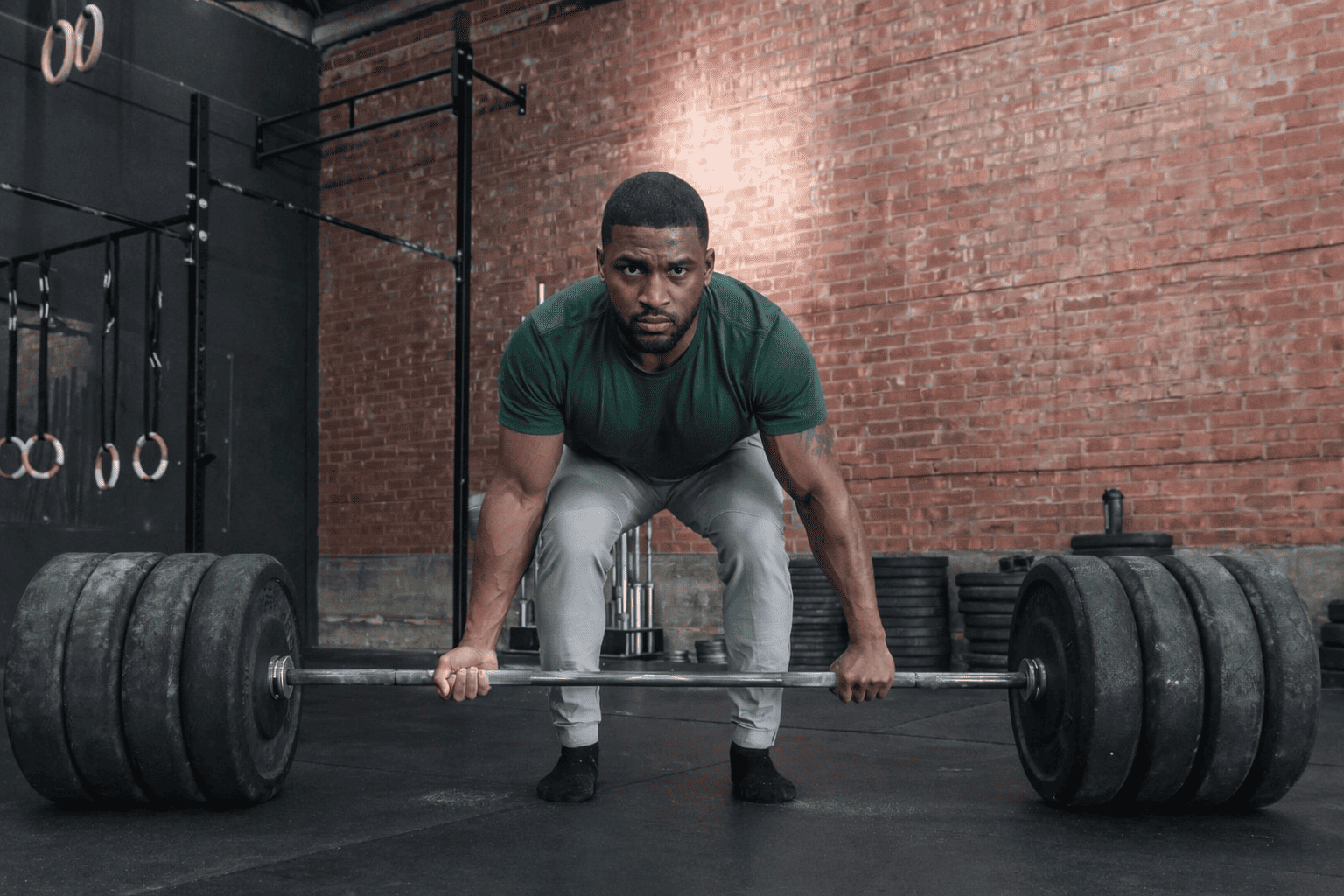

The Romanian deadlift has an identity problem.
To people who love it, it’s a near-perfect exercise: simple, effective, and almost unfairly good at building hamstrings and glutes while teaching the body a skill it desperately needs—how to hinge at the hips without turning every movement into a low-back gamble.
To people who don’t, it’s “that deadlift thing” that somehow always ends up in the lower back.
Both groups are usually talking about the same lift. The difference is technique—and, more specifically, a handful of cues that turn the RDL from a vague bending motion into a precise pattern your body can repeat.
Because here’s the thing: the Romanian deadlift isn’t meant to feel like a back exercise. Your back works, yes—but mostly as a stabilizer. The point is the hamstrings. When the hamstrings are doing their job, the lift feels controlled, grounded, and strangely satisfying: like you found the right groove in a door hinge and it suddenly swings smoothly.
Below are eight cues that protect your back and make your hamstrings do the honest work. They’re written for real gym life—where you have limited time, imperfect equipment, and the occasional urge to load the bar before your body is ready.
A quick safety note: If you have a history of back injury, disc issues, radiating pain, or numbness/tingling, it’s worth checking in with a clinician or qualified coach. And if a cue makes things feel sharply worse, that’s information—adjust, regress, and be patient with your body.
First, what the RDL actually is (and what it isn’t)
A Romanian deadlift is a hip hinge. You move by sending your hips back while your spine stays stable. The knees bend slightly, but they don’t travel forward much. The weight moves down your legs as your hamstrings lengthen under tension. Then you stand back up by driving the hips forward.
What it’s not:
- It’s not a squat.
- It’s not a “touch the floor at all costs” challenge.
- It’s not supposed to look identical for every body.
If you’re chasing the floor and rounding your back to get there, you’re missing the point. Range of motion is earned through control, not demanded through flexibility you don’t have yet.
1) “Close the car door with your hips”
This is the cue that makes the entire lift click for many people.
Meaning: Push your hips back, not your chest down.
You’re not folding forward like a bow. You’re sliding your hips backward as if you’re trying to close a car door behind you—hands full—without turning around.
What you should feel:
- Hamstrings lengthening like a tight rubber band
- Weight shifting into your midfoot/heel
- Torso leaning forward as a consequence, not the main goal
Common mistake: Bending at the waist and letting the knees drift forward. That turns the RDL into a confused half-squat.
Try this drill: Stand a foot away from a wall and hinge back until your hips tap the wall. That’s the pattern.
2) “Keep your ribs stacked over your pelvis”
Most “back pain RDL” stories begin with a subtle loss of position: the ribs flare up, the lower back arches, and suddenly the hinge turns into a back extension under load.
Meaning: Maintain a neutral trunk—ribs down, pelvis under control.
Think of your torso as a solid canister. You’re allowed to lean. You’re not allowed to collapse.
What it looks like:
- Your lower back stays in the same shape throughout the rep
- Your abs feel lightly engaged
- You can breathe without losing position
Common mistake: “Chest up” taken too literally. Lifting the chest can be helpful, but if it turns into a big arch, you’re borrowing stability from your spine instead of your core.
Helpful cue pair:
- “Ribs down.”
- “Belt buckle to chin” (gently; don’t over-tuck).
3) “Soft knees—freeze them there”
If your knees are bending and straightening a lot, you’re not hinging; you’re squatting. If your knees are locked, you’ll pull on hamstrings in a way that feels like a threat.
Meaning: Set a slight knee bend and keep it consistent.
The knee angle stays almost the same on the way down and up.
What you should feel:
- Tension in hamstrings without a sharp tug behind the knee
- Stable balance (no rocking forward)
Common mistake: Knees drifting forward as you lower, which shortens hamstrings and makes the back take over.
A “felt” cue: Think of your shins as mostly vertical.
4) “Drag the weight down your thighs—like you’re shaving your legs (gently)”
The bar (or dumbbells) should stay close. The farther the weight drifts away from your body, the more torque your lower back has to manage. This is physics, not personality.
Meaning: Keep the weight in contact with—or very close to—your legs.
You’re not reaching the weight down toward the floor. You’re letting it travel along your body as your hips move back.
What it looks like:
- Bar path is straight and vertical
- Weight stays over midfoot
- Your lats and upper back feel “on”
Common mistake: Letting the bar swing forward around the knees. That’s a back-tax.
If you use dumbbells: Keep them tight to the thighs and shins, not drifting out front.
5) “Stop the rep when your back wants to negotiate”
This cue is less glamorous, but it might be the most protective one.
A good RDL has a clear bottom position: the point where your hamstrings are stretched and your spine is still stable. Past that point, you might be able to go lower—but only by rounding the back, shifting the pelvis, or losing tension. That’s not “more range.” That’s different mechanics.
Meaning: Your range of motion ends when your pelvis can’t hinge back anymore without spinal movement.
For some people, that’s just below the knee. For others, mid-shin. Both can be excellent.
What you should feel:
- Strong hamstring stretch
- No pinch or strain in lower back
- The ability to pause for a second without collapsing
Common mistake: Chasing the floor and turning the bottom into a relaxed slump.
Try a pause: Pause 1 second at the bottom with perfect form. If you can’t hold it, you’re too low (or too heavy).
6) “Squeeze oranges in your armpits”
This is a classic lat cue, and it works because it’s specific.
The lats help keep the bar close and stabilize the spine. When they’re inactive, the shoulders drift forward, the bar drifts away, and the upper back gets soft. The lift becomes shaky, and the low back picks up the slack.
Meaning: Engage your lats by pulling your shoulders down and slightly back.
Your arms stay long—this is not a row.
What it looks like:
- Shoulders aren’t shrugging
- Upper back is stable
- Bar stays close without effort
Common mistake: Bending the elbows to “pull” the weight. Keep arms like straps.
If you want a simple instruction: Think “put your shoulder blades in your back pockets.”
7) “Make the ascent a hip drive, not a back lift”
On the way up, people often do the opposite of what they want: they extend the back first, then drag the hips forward as an afterthought. That turns the lift into a lower-back dominant move and makes the top feel like a “snap” instead of a stand.
Meaning: Stand up by driving hips forward while maintaining torso position.
The hamstrings and glutes pull you back to standing. The spine stays stable.
What you should feel:
- Glutes finishing the rep
- Hamstrings still loaded until you’re almost upright
- No aggressive lean-back at the top
Common mistake: Overextending at the top (ribs flare, spine arches).
At lockout, you should be tall, not leaning.
A clean finish cue: “Stand tall and exhale.”
8) “Own the tempo: 2 seconds down, 1 second up”
Speed hides flaws. Tempo reveals them.
If you drop fast into the bottom, you’ll often lose position without noticing. If you rise slowly with a wobbly bar path, you’ll feel exactly where your stability is leaking.
Meaning: Use a controlled descent and a confident, smooth ascent.
You don’t need to move like you’re underwater, but you should be able to stop the rep at any point.
A simple tempo:
- 2 seconds down (controlled)
- brief pause at the bottom (optional, but useful)
- 1 second up (smooth, not jerky)
Common mistake: Using momentum to “bounce” out of the bottom.
Progression idea: Keep the weight the same and slow down. It’s humbling in a productive way.
How the RDL should feel (so you know you’re doing it right)
A good Romanian deadlift feels like:
- hamstrings stretching and working
- glutes assisting on the way up
- core engaged in a quiet, steady way
- back present, but not screaming for attention
You should not feel:
- sharp pain in the back
- pinching in the hips
- hamstrings tugging sharply behind the knee
- numbness, tingling, or radiating pain
And if you do feel your lower back a lot, it doesn’t mean the lift is “bad.” It means something in the pattern—bar distance, rib position, range of motion, knee bend, load—is pulling stress away from the target muscles.
That’s fixable.
A simple setup checklist (the kind you can actually remember)
Before each set, run this quick mental list:
- Feet hip-width, weight midfoot
- Soft knees set and steady
- Ribs down (stacked torso)
- Lats on (“oranges in armpits”)
- Hips back (car door cue)
- Bar close (drag it down your legs)
- Stop at tension, not at the floor
- Stand tall, don’t lean back
If you can remember three things, remember these: hips back, bar close, stop at tension.
Common problems and quick fixes
“I feel it mostly in my lower back.”
Likely causes:
- bar drifting away from legs
- going too low and rounding
- ribs flaring and over-arching
- too much weight too soon
Fix:
- lighten the load
- shorten range slightly
- keep the bar glued to legs
- add a 1-second pause at the bottom
“I don’t feel my hamstrings at all.”
Likely causes:
- knees bending too much
- turning it into a squat
- not pushing hips back far enough
Fix:
- set knee bend and keep it steady
- hinge to just below knee first
- slow the descent
“My hamstrings cramp.”
Likely causes:
- fatigue, dehydration, inadequate warm-up, too much stretch too fast
Fix:
- warm up with glute bridges and light hinges
- reduce range and load temporarily
- ensure you’re eating and hydrating reasonably
How to program RDLs for strength and hamstring growth
You don’t need to annihilate yourself with 15-rep RDL sets to get results. In fact, moderate reps with excellent form are often better.
For strength and muscle:
- 3–4 sets of 6–10 reps
- Rest 90–150 seconds
- Use a load that challenges you while preserving form
For technique and back-friendly practice:
- 3 sets of 8 reps with a slower tempo
- Lighter weight, perfect positions
Good pairings:
- RDL + row (hinge + pull)
- RDL + split squat (hinge + single-leg)
- RDL + hamstring curl (hinge + isolation)
And remember: hamstrings respond well to consistent work. Two decent sessions per week beat one heroic session followed by soreness and avoidance.
The bottom line
The Romanian deadlift is a lesson in restraint. It rewards the person who stops the rep early enough to keep it clean. It rewards the person who keeps the bar close, the ribs stacked, the knees quiet, the lats engaged.
Done well, it teaches your body an honest hinge: hips doing the work, spine doing the stabilizing, hamstrings doing what they were built to do.
And done consistently, it does something even better than making you sore. It makes you stronger in the places that matter—on the gym floor, and in the rest of your life.
Important notice: this content is educational and does not replace an individual evaluation. If you have a history of eating disorders, diabetes, pregnancy, or a medical condition, consult a healthcare professional before making dietary or exercise changes.








 Sign In