

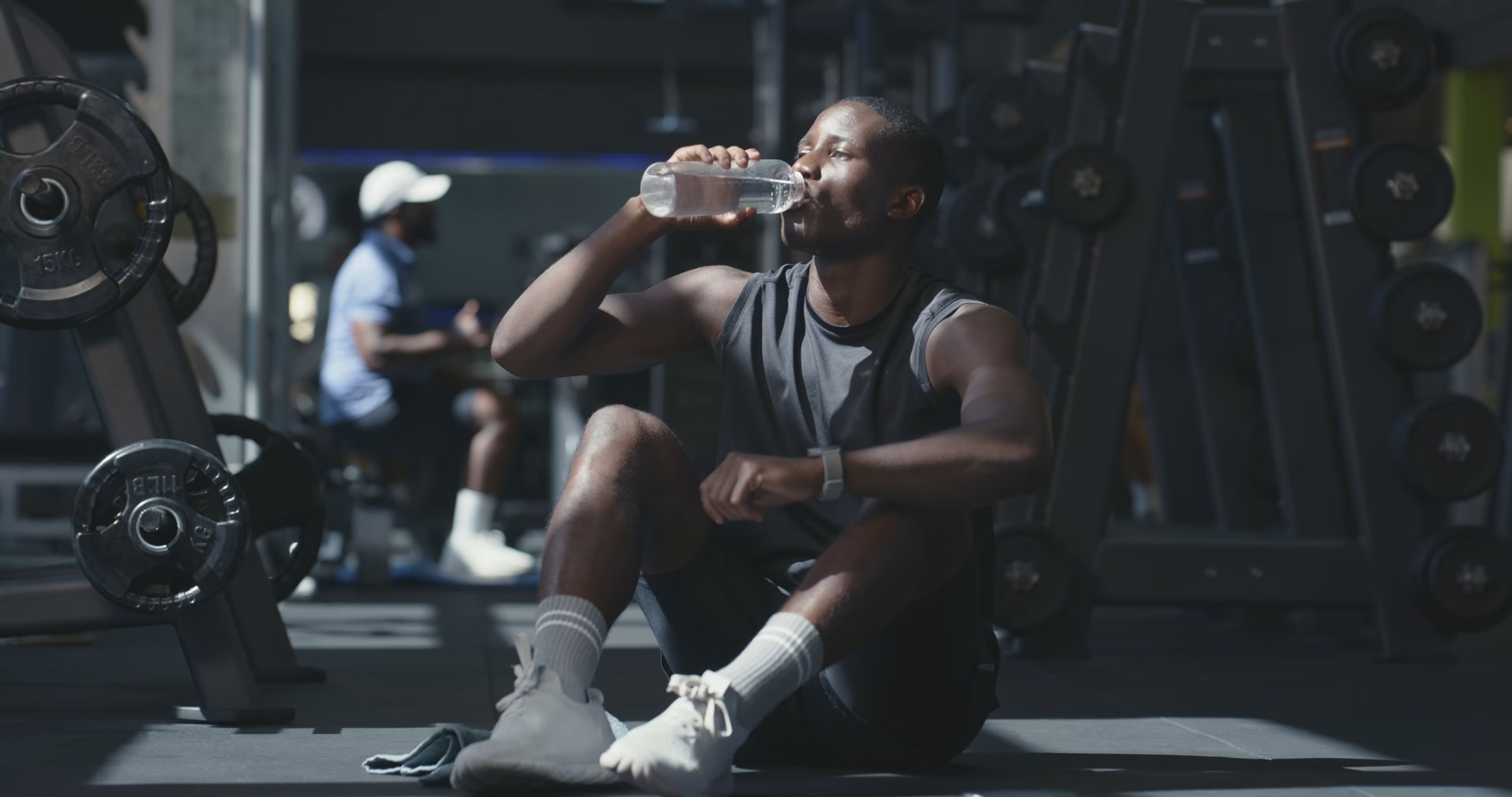

There is an odd mythology in sport and fitness that performance is mainly about work — that raw minutes spent sweating are the decisive input. In the real world, the most significant gains usually arrive on the far side of effort: in the hours and days when the body repairs, adapts and quietly gets stronger. If training is the deposit, recovery is the compounding interest. Skip it, and you pay a penalty in progress; do it well, and every session becomes more effective.
Here are eight recovery habits that are simple, evidence-minded and practical — not glamorous or expensive, but the sort of things that, when practiced reliably, change how you lift, run, think and sleep. I’ll explain why each habit matters, how to adopt it without creating extra stress, and how to measure whether it’s working. Think of this as a field guide for turning good workouts into better adaptations.
1. Prioritize Sleep Like a Training Session
Why it matters
Sleep is not just passive downtime. It is when the brain consolidates learning, hormones that regulate growth and repair do their work, and tissues rebuild. Poor sleep reduces training quality, blunts motivation, interferes with appetite regulation, and hampers immune function. If you had only one recovery habit to get right, this would be a strong candidate.
How to do it without drama
- Aim for 7–9 hours per night and, as importantly, try to keep a consistent schedule. That regularity synchronizes circadian rhythms and makes sleep more efficient.
- Create a 30–60 minute wind-down: dim lights, silence screens, or use a blue-light filter; read or do light stretching; avoid heavy meals and stimulants late in the evening.
- Prioritize sleep when training intensity is high. If you must choose between an extra hard workout or an extra hour of sleep before an intense day, sleep usually wins.
How to measure impact
Track sleep duration and subjective sleep quality for two weeks. Notice whether weekly training performance (weights, perceived exertion, recovery between intervals) correlates with better or worse nights. Small experiments — e.g., bed 30 minutes earlier for a week — often produce noticeable differences in energy and lifting performance.
2. Make Protein Timing and Total Intake Practical Priorities
Why it matters
Muscle is built from amino acids; the engine of repair, muscle protein synthesis, responds to both the quantity and timing of protein. Total daily protein is the dominant factor, but an accessible post-workout meal or snack helps ensure the body has the raw materials it needs for repair.
How to do it without overcomplication
- Aim for ~1.6–2.2 g/kg of bodyweight per day (about 0.7–1.0 g/lb) if hypertrophy or strength is the goal. If that sounds intimidating, start by ensuring a source of protein at every main meal.
- Consume 20–40 g of protein in the 30–120 minute window after training when feasible; a simple shake, yogurt, eggs or a tin of tuna work well. The idea is not perfection but consistency.
- Distribute protein across 3–5 meals to give frequent anabolic signals rather than packing everything into one meal.
How to measure impact
Track total daily protein for a week and compare how your lifts and recovery feel. For many people an incremental bump in protein leads to less soreness and steadier training quality in one to three weeks.
3. Rehydrate and Replenish Electrolytes Sensibly
Why it matters
Water and electrolyte balance influence cellular function, blood volume, thermoregulation and mood. Dehydration reduces strength, cognitive focus and exercise capacity. Conversely, over-loading with fluids without electrolytes can be suboptimal — especially after heavy sweating.
How to do it without fuss
- Replace obvious losses: weigh yourself before and after long sessions; each 0.5–1 kg of weight loss equals roughly 500–1,000 ml of fluid you should replace.
- After long or hot sessions, include sodium in your rehydration strategy — a sports drink, salty snack, or simply adding a pinch of salt to water helps retain fluid and restore balance.
- Don’t obsess; sip water consistently through the day and prioritize rehydration in the first hour after exercise.
How to measure impact
Simple markers work: urine color (pale straw is a good target), subjective thirst and daily bodyweight trends. If your workouts feel harder than usual on similar sleep and nutrition, test whether slight hydration improvement improves perceived exertion.
4. Use Active Recovery and Movement Variation
Why it matters
Complete inactivity after training is rarely the optimal route. Low-intensity movement improves blood flow, aids metabolic waste removal from muscle, supports mood and preserves mobility. Active recovery also helps maintain movement patterns and reduces stiffness.
How to do it without adding fatigue
- Schedule low-intensity movement sessions — walking, easy cycling, light swimming, mobility flows — on non-training days or after heavy sessions. Aim for 20–45 minutes at a conversational pace.
- Focus on movement quality: hip mobility, thoracic rotation and ankle dorsiflexion often return the most functional value.
- Use contrast wisely: a brief, easy mobility flow immediately after training followed by an easy walk later in the day is often better than a single, long passive rest.
How to measure impact
Monitor soreness and readiness. If adding a short walk the afternoon after a hard session reduces next-day stiffness and improves sleep, it’s working. If your performance suffers, dial back intensity or frequency.
5. Intelligent Periodization and Planned Deloads
Why it matters
Adaptation is not linear. Constant high volume or maximal intensity without planned recovery leads to stagnation or overtraining. Periodization — cycling workloads and planned deloads — allows the nervous system and connective tissues to consolidate gains.
How to do it without complexity
- Follow a simple block structure: 3–8 weeks of focused training (accumulation or intensity phase) followed by 1 week of reduced volume or intensity (deload). The deload does not require complete rest; reduce sets by ~40–60% and intensity by ~10–20%.
- If you’re unsure about timing, use subjective markers: if sleep has slipped, mood is low, and performance plateaus or declines, schedule a deload week.
- For casual athletes, even one lighter week every 6–8 weeks improves long-term consistency.
How to measure impact
Record performance trends over months. After deloads you should be able to return to similar or higher loads with better movement and less perceived effort. If not, extend the recovery phase or reassess training stressors.
6. Prioritize Mobility Work and Targeted Soft-Tissue Care
Restriction in joint range or persistent tightness leads to compensations that increase injury risk and blunt performance. Small, regular mobility work restores usable range of motion and helps maintain efficient mechanics under load.
How to do it without becoming a full-time therapist
- Spend 5–10 minutes daily on mobility drills for your limiting areas (ankles if squats feel shallow, thoracic spine if overhead pressing hurts, hips if deadlifts feel stiff). Short, consistent practice beats sporadic marathon stretching.
- Use a mix of active mobility (controlled movement through range), loaded mobility (squats, lunges) and some soft tissue tools (foam rolling) when needed. Avoid aggressive pain-seeking.
- See a physical therapist for persistent asymmetries, but assume most mobility restrictions respond to simple daily work.
How to measure impact
Track range improvements (e.g., deeper squat depth, less forward lean), reduced pre-training stiffness, and smoother movement execution. If mobility work reduces pain and improves load tolerance in a few weeks, it’s paying off.
7. Use Cold, Heat and Compression Strategically — Not Reliably Miraculous, But Useful
Why it matters
Therapeutic modalities are not panaceas. Still, when used intentionally they can reduce subjective soreness, aid sleep, and speed return to training. Cold exposure (ice baths) reduces swelling and perception of soreness; heat improves tissue extensibility and relaxation; compression can support venous return after long, hard sessions.
How to do it without ritualizing
- For short-term recovery when you have a competition or a hard session soon after, cold therapy (10–15 minutes of cool to cold water immersion) can reduce soreness and perceived fatigue. Don’t use it chronically if you’re prioritizing hypertrophy adaptations, as some data suggest repeated cold therapy might blunt long-term muscle growth.
- Use heat for tight, stubborn musculature and to prepare tissues for mobility work (a warm shower or heating pad before stretching).
- Compression garments or pneumatic devices are most useful for athletes with heavy travel or back-to-back sessions; they’re a mild aid to perceived recovery, not a substitute for sleep or nutrition.
How to measure impact
Use these tools selectively and observe whether they improve sleep, reduce next-day soreness or restore readiness for a key session. If a routine cold bath makes you feel better before an event, it has value. If it becomes a daily crutch that displaces sleep or nutrition, rethink it.
8. Cultivate Psychological Recovery — Stress Management and Mental Downtime
Why it matters
Adaptation is biological and psychological. Chronic stress elevates cortisol, disrupts sleep, reduces appetite and interferes with recovery. Mental recovery — deliberate downshifts that reduce sympathetic activation — improves sleep and restores motivation.
How to do it without adding a second obligation to your life
- Build micro-practices: a 10-minute walk without phone notifications, a short breathing exercise on hard days, journaling two lines about what went well, or 5 minutes of mindfulness before bed. These small acts reduce autonomic arousal and improve sleep quality.
- Use social recovery: sharing a meal with friends, a phone call with someone supportive, or light, playful movement (a family hike) often refreshes more than solitary, hyper-efficient recovery rituals.
- Be strategic with screen time: late-night news or social media can easily perpetuate stress. Create an evening buffer to allow the nervous system to downshift.
How to measure impact
Track subjective readiness and sleep. If a 10-minute evening breathing practice reduces nocturnal awakenings or helps you fall asleep faster, it’s working. If mood and training consistency improve over weeks, the psychological practices are compounding.
Putting the Habits Together: A Practical Weekly Template
You don’t need all eight habits at once. Start with the biggest wins and layer in others. Here’s a simple weekly map for a recreational athlete training 3–4 times per week:
- Daily: Prioritize sleep schedule; consume adequate protein; sip water through the day; 5–10 minutes of mobility for limiting joints.
- Training days: Post-workout protein within two hours; 5–15 minutes easy active recovery in the afternoon (walk).
- Non-training days: 20–40 minutes easy movement (walk, swim, light bike) and a short mobility session.
- Weekly: One deload or lighter week every 6–8 weeks; one longer mobility or soft-tissue session if needed; one psychological recovery practice (social dinner, nature time) as a ritual.
Final thought: recovery is not passive, it’s an active skill
Recovery is often described as a passive opposite of training, but that’s a misleading frame. Recovery — sleep, nutrition, mobility, stress management — is an active skill set, and like any skill it improves with simple practice and honest measurement. The habits above are not fads; they are durable inputs that make training more productive, safer and more enjoyable.
The real return on recovery is subtle: you lift heavier with less drama, your workouts sting less, your mood steadies, and the small wins stack. That may not sound sexy in a single Instagram post, but over months and years it’s the difference between showing up and getting better, and showing up and burning out.
If you want, I can translate this into a printable one-page checklist or a four-week recovery plan tailored to your training schedule. Which would be more useful: a pocket checklist for the gym bag or a weekly planner you can pin to the fridge?
Important notice: this content is educational and does not replace an individual evaluation. If you have a history of eating disorders, diabetes, pregnancy, or a medical condition, consult a healthcare professional before making dietary or exercise changes.












 Sign In