



Time is the most honest constraint. It doesn’t care how sincere your intentions were on Sunday night or how expensive your sneakers are. It just keeps moving.
That’s why “quick workouts” have become their own genre — and why they’re often treated with suspicion. Real fitness, we’re told, takes long sessions, big sweat, and heroic consistency. Anything short must be a compromise, a placeholder, a consolation prize.
But the body doesn’t read your calendar. It responds to stimulus.
In practice, a well-designed 12–18 minute workout can build the kinds of fitness that matter most in real life: strength you can feel in your legs when you carry groceries, stamina that makes stairs less insulting, a steadier back and core that doesn’t complain every time you sit too long. It won’t replace everything — it won’t turn you into a marathoner or a competitive powerlifter by itself — but it can create genuine progress, especially if you repeat it.
The secret is not intensity for its own sake. It’s clarity: a simple plan, a consistent dose, and a little progression over time.
Below are eight workouts you can finish in under 20 minutes. Each has a purpose, a structure, and options to make it easier or harder. Choose one that suits your day, and do it like you mean it — not with drama, but with attention.
How to Use These Workouts (So They Actually Work)
1) Don’t skip the “first minute.”
Most people don’t fail at workouts — they fail at starting. Each routine includes a built-in warm-up or an easy first round to get your body online.
2) Use the talk test.
- Easy: you can speak in full sentences.
- Moderate: you can speak in short sentences.
- Hard: you can get out a few words at a time.
Most sessions here should land in moderate to hard, with form staying clean.
3) Progress like an adult, not a movie montage.
Pick 2–3 workouts you like and repeat them weekly for a month. Improve one thing:
- add 1–2 reps
- add a little weight
- shorten rest
- add one round
Small increases compound.
4) Finish with a downshift (30–60 seconds).
One minute of slow breathing, a gentle fold, or lying on your back helps you leave the workout feeling better, not just “done.”
Workout 1: The 12-Minute Full-Body Builder (No Equipment)
Time: 12 minutes
Best for: Busy days, travel, “I just need a solid session”
Format: 40 seconds work / 20 seconds rest, 6 moves, 2 rounds
The circuit
- Squat (bodyweight; sit back, stand tall)
- Push-up (floor, knees, or hands on a counter)
- Hip hinge (good-morning pattern: hands on hips, push hips back, stand)
- Reverse lunge (alternate legs)
- Plank (forearms or hands; knees down is fine)
- Fast march or high knees (choose impact level)
Why it builds real fitness:
You’re training fundamental patterns — squat, push, hinge, lunge, brace — with enough density to elevate your heart rate.
Make it easier:
- Squat to a chair
- Incline push-ups on a wall or counter
- Hold plank for 20 seconds, rest 20 seconds
Make it harder:
- Add a pause at the bottom of squats and lunges
- Do strict push-ups
- Replace fast march with mountain climbers (controlled)
Workout 2: The 15-Minute “One Dumbbell” Strength EMOM
Time: 15 minutes
Best for: Strength and conditioning without complicated setup
Equipment: One dumbbell or kettlebell (optional, but ideal)
Format: EMOM = Every Minute On the Minute, 5 minutes x 3 rounds
At the start of each minute, do the work. Rest for the remainder of the minute.
Minutes 1–5
- Minute 1: 10–12 Goblet squats
- Minute 2: 8–10 One-arm rows (left)
- Minute 3: 8–10 One-arm rows (right)
- Minute 4: 8–12 Floor press (or push-ups if no weight)
- Minute 5: Suitcase carry (walk holding the weight at your side) or march in place for 40 seconds
Repeat the 5-minute block three times.
Why it builds real fitness:
It’s strength training with a built-in pace. You’re doing serious work, but the structure prevents endless rest and decision fatigue.
Make it easier:
- Lower reps (6–8)
- Use a lighter weight
- Replace floor press with incline push-ups
Make it harder:
- Increase load slightly
- Keep reps the same but move more efficiently between exercises
- Make carries slower and taller (no leaning)
Workout 3: The 18-Minute Dumbbell Complex (Strength + Grit)
Time: 18 minutes
Best for: Full-body strength, “feel accomplished fast” workouts
Equipment: One or two dumbbells
Format: 6 moves back-to-back, rest, repeat
How it works
- Do 6 reps of each move without putting the weight down (if possible).
- Rest 90 seconds.
- Repeat for 3 total rounds.
The complex
- Romanian deadlift (hinge; long spine)
- Bent-over row
- Front squat (hold weights at shoulders or goblet style)
- Push press (use legs a bit; control on the way down)
- Reverse lunge (6 total reps; alternate)
- Farmer hold (stand tall for ~20 seconds) — if you finish early
Why it builds real fitness:
Complexes compress a lot of work into a small window. You get strength, coordination, and conditioning — and you learn to stay calm while tired.
Make it easier:
- Use one dumbbell in goblet position
- Reduce to 4 reps per move
- Swap push press for strict overhead press with lighter load
Make it harder:
- Add a 4th round (still under 20 minutes if you keep rest honest)
- Slow the lowering phase (2–3 seconds down)
Workout 4: The 16-Minute Cardio Interval Session (No Running Required)
Time: 16 minutes
Best for: Heart and lung fitness without a long workout
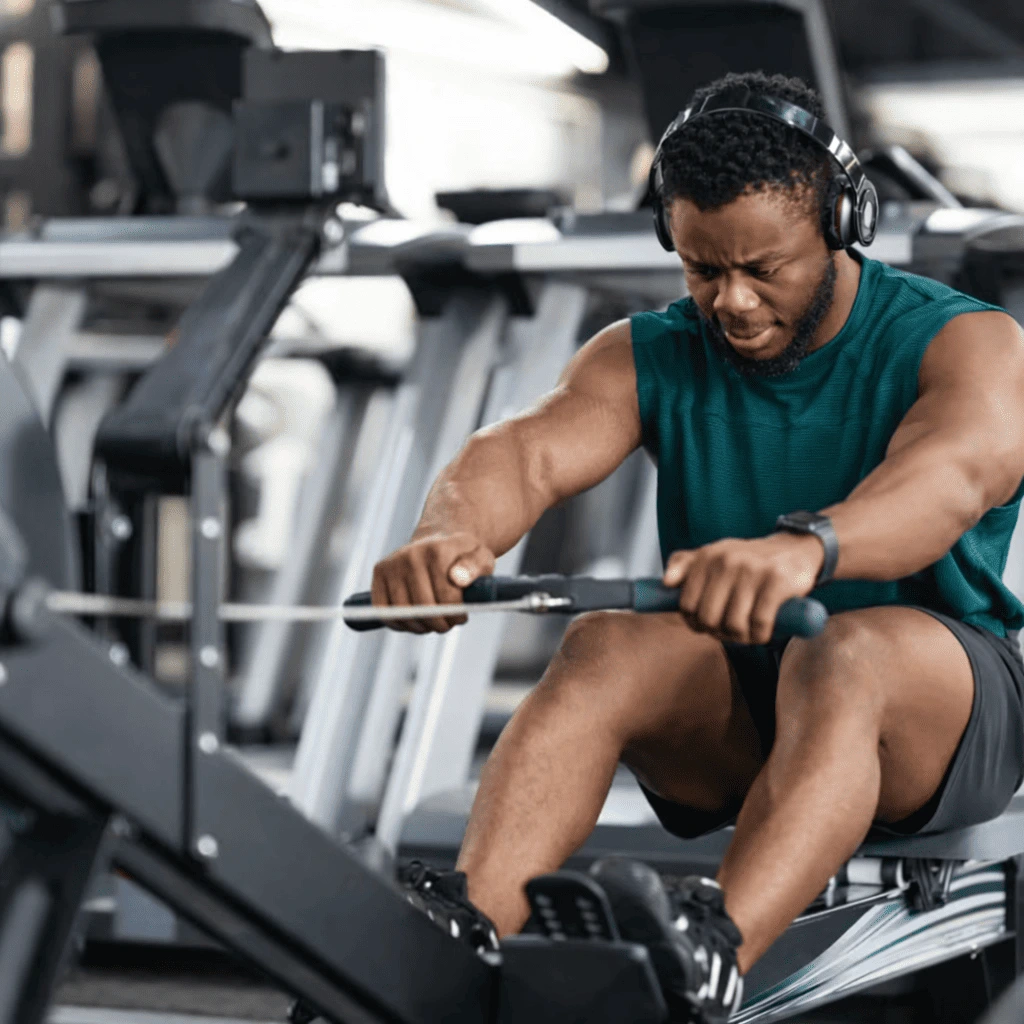
Equipment: None required — but works great on a bike, rower, stairs, or brisk walking
Format: Warm-up + intervals + cool-down
The session
- 2 minutes easy (walk, pedal, row gently)
Then: - 8 rounds:
- 30 seconds hard (breathing heavy, still controlled)
- 60 seconds easy (recover; nasal breathing if you can)
- 2 minutes easy cool-down
Why it builds real fitness:
Short intervals improve aerobic capacity and efficiency. They also teach your body to recover — a underrated form of fitness.
Make it easier:
- Hard intervals become “moderately hard”
- Do 6 rounds instead of 8 (still a great session)
Make it harder:
- Make the hard interval 40 seconds, keep 60 seconds easy (still under 20 minutes)
- Use stairs (step up steadily, hold the handrail lightly if needed)
Workout 5: The 14-Minute “Tabata Remix” (Fast, Focused, Effective)
Time: 14 minutes
Best for: A quick sweat that still trains strength patterns
Equipment: None
Format: Two Tabata blocks + minimal rest
A classic Tabata is 20 seconds work / 10 seconds rest, repeated 8 times (4 minutes). We’ll do two blocks with a breather in between.
Plan
- 2 minutes warm-up: easy squats, arm circles, hip hinges, gentle marching
- Tabata Block 1 (4 minutes): Squat (20 on / 10 off x 8)
- 1 minute easy walk / shake out
- Tabata Block 2 (4 minutes): Push-up (or incline push-up) (20 on / 10 off x 8)
- 3 minutes cool-down: forward fold, chest opener, slow breathing
Why it builds real fitness:
It’s simple, brutal in the right way, and surprisingly strength-forward if you keep reps controlled.
Make it easier:
- Use a chair squat
- Do wall or counter push-ups
- Move slower; quality over quantity
Make it harder:
- Add a pause at the bottom of each squat
- Use stricter push-ups
- Keep your breathing steady rather than frantic
Workout 6: The 19-Minute Lower-Body Strength Sprint (Legs + Core)
Time: 19 minutes
Best for: Stronger legs, better knees/hips, “I want results” days
Equipment: Optional dumbbell/kettlebell
Format: 3 blocks, 6 minutes each + 1-minute finish
Block A (6 minutes): Split Squat Focus
- 40 seconds: split squats (left leg forward)
- 20 seconds: rest
- 40 seconds: split squats (right leg forward)
- 20 seconds: rest
Repeat this pattern 3 times.
Block B (6 minutes): Hinge + Glutes
- 45 seconds: hip hinges (RDL with weight or bodyweight good mornings)
- 15 seconds: rest
- 45 seconds: glute bridges (pause at the top)
- 15 seconds: rest
Repeat 3 times.
Block C (6 minutes): Legs + Conditioning
- 30 seconds: bodyweight squats
- 30 seconds: brisk march or step-ups
Repeat 6 times.
Finish (1 minute)
- Forearm plank (or dead bug if plank isn’t friendly today)
Why it builds real fitness:
Leg strength is the engine for daily life. This session targets it directly — and the short conditioning block trains your ability to keep going when your legs want to stop negotiating.
Make it easier:
- Hold onto a wall for balance in split squats
- Reduce range of motion
- Replace plank with 1 minute of slow breathing on your back
Make it harder:
- Add weight
- Slow the lowering phase of split squats
- Make squats a little deeper with good form
Workout 7: The 18-Minute Mobility-to-Strength “Sandwich”
Time: 18 minutes
Best for: People who feel stiff, sore, or “not in the mood” — but still want real training
Equipment: Optional band or light dumbbell
Format: 6 minutes mobility + 10 minutes strength + 2 minutes downshift
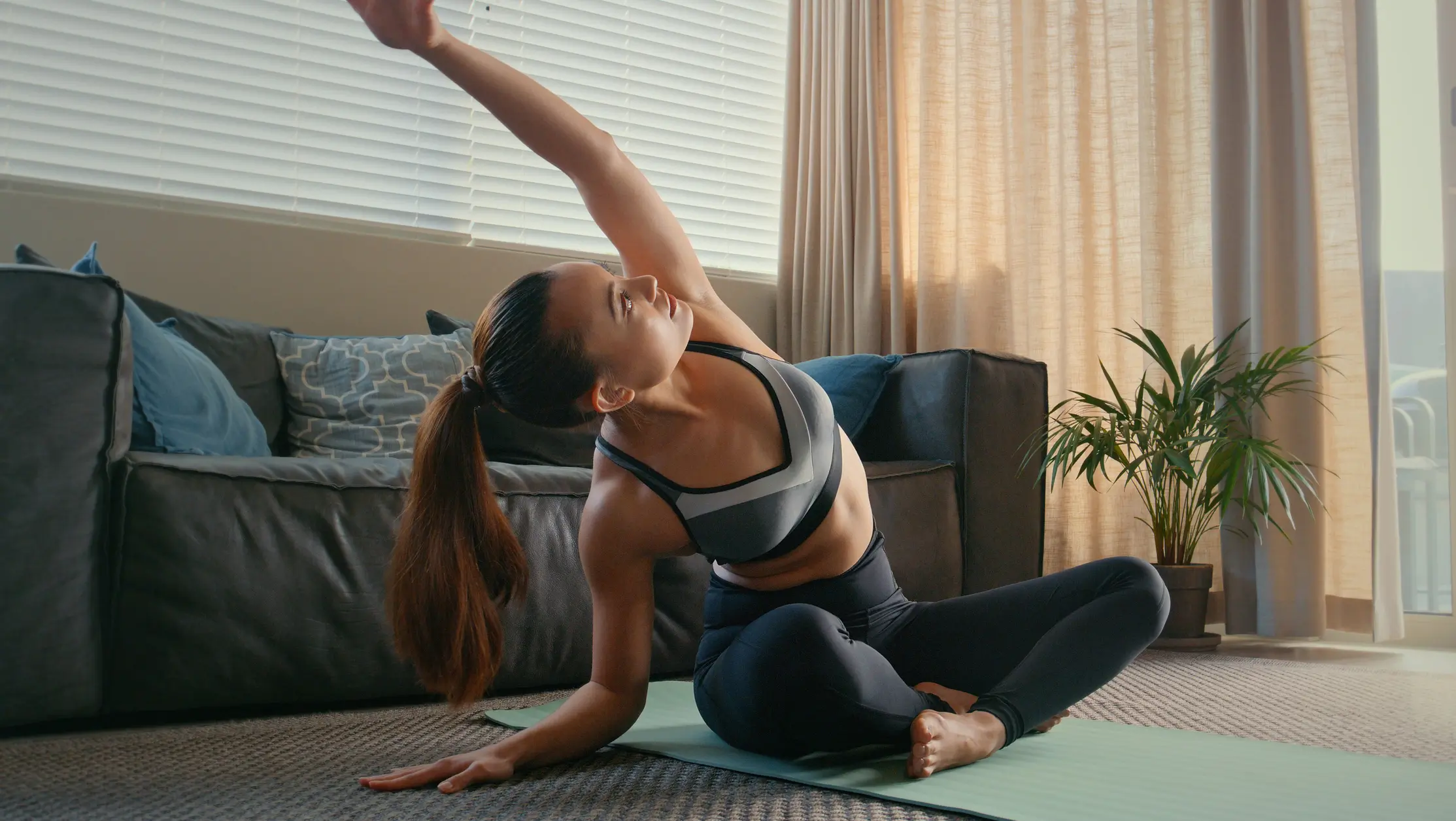
Part 1: 6-Minute Mobility Flow
Move slowly, breathe steadily.
- 60 seconds cat-cow
- 60 seconds down dog to plank (gentle transitions)
- 60 seconds world’s greatest stretch (lunge + rotation), left
- 60 seconds same, right
- 60 seconds deep squat hold (hold onto a doorframe if needed)
- 60 seconds child’s pose with long exhales
Part 2: 10-Minute Strength Circuit
Set a timer for 10 minutes. Cycle through:
- 8–12 squats
- 8–12 push-ups (any version)
- 10–12 rows (band/dumbbell) or supermans (if no equipment)
- 20–30 seconds dead bug (slow)
Part 3: 2-Minute Downshift
Lie on your back. Inhale 4 counts, exhale 6 counts.
Why it builds real fitness:
Mobility helps you move better; strength helps you move longer. This workout respects both without turning into a 60-minute project.
Make it easier:
Do fewer reps and slow down.
Make it harder:
Add light weight to squats, make dead bugs longer, and keep rest minimal.
Workout 8: The 17-Minute Run/Walk “Fartlek” (Play With Pace)
Time: 17 minutes
Best for: Cardio fitness that doesn’t feel like a test
Equipment: Shoes; treadmill optional
Format: Warm-up + alternating pace + cool-down
The session
- 3 minutes easy (walk or slow jog)
Then: - 10 minutes: alternate
- 1 minute faster (comfortably hard; you can’t chat much)
- 1 minute easy (recover)
Finally:
- 4 minutes easy cool-down walk
Why it builds real fitness:
You’re training the ability to change gears — a practical kind of conditioning. It’s also mentally easier than “run hard for 20 minutes,” which is part of why people stick with it.
Make it easier:
Fast minutes become brisk walking, easy minutes become very gentle walking.
Make it harder:
Fast minutes become uphill or slightly faster pace, easy minutes stay truly easy.
How to Turn These Into a Real Plan (Without Overthinking)
You don’t need eight workouts every week. You need repeatable structure.
Here are two simple options:
Option A: The “Three Sessions” Week
- Day 1: Workout 2 or 3 (strength)
- Day 2: Workout 4 or 8 (cardio intervals)
- Day 3: Workout 1 or 6 (full-body or lower-body)
Option B: The “Minimum Effective Dose” Week
- Two strength sessions (Workouts 1, 2, 3, or 6)
- One conditioning session (Workouts 4, 5, or 8)
- One mobility session (Workout 7) if you’re stiff or stressed
Progress rule: Repeat the same 2–3 workouts for two weeks before swapping. Novelty is fun; repetition is effective.
The Point of a Short Workout
A short workout isn’t a shortcut. It’s a commitment to reality.
It says: I’m not waiting for the perfect schedule, the perfect mood, the perfect Monday. I’m going to do something today that supports the person I have to be tomorrow — the person who carries things, climbs stairs, stays steady, keeps going.
Under 20 minutes, done consistently, can build real fitness — not because it’s magical, but because it’s doable. And in the end, what changes people is rarely the most impressive plan. It’s the plan they can live with.
If you want, tell me what equipment you have (none / dumbbells / kettlebell / bands / treadmill) and your goal (fat loss, strength, endurance, stress relief), and I’ll tailor these into a 4-week schedule with progression that still stays under 20 minutes per session.
Important notice: this content is educational and does not replace an individual evaluation. If you have a history of eating disorders, diabetes, pregnancy, or a medical condition, consult a healthcare professional before making dietary or exercise changes.









 Sign In