


Leg day has a reputation problem. Say the phrase out loud and you can almost hear the collective groan: the wobble down the stairs, the negotiation with the toilet seat, the delayed-onset soreness that turns a normal week into a slapstick routine.
But strong legs are not a niche fitness goal. They are the quiet machinery behind almost everything you do: walking, climbing, catching yourself, lifting, carrying, standing for long periods, getting up off the floor. If upper-body strength is often about what you can move, lower-body strength is about how long you can keep moving — and how well you can do it without your back, hips, or knees staging a rebellion.
The trick is that leg training doesn’t have to be complicated. In fact, the best leg-day exercises tend to be the ones you return to again and again. Not because they’re trendy, but because they’re reliable: they build strength across the major patterns (squat, hinge, single-leg work), they scale for different bodies, and they teach you control — which is what keeps “leg day” from becoming “injury day.”
Below are eight exercises worth repeating. They are not the only movements you can do. But they’re a core set you can build around for years. Think of them as the staples: the ones you keep in the kitchen because you know you’ll make something good with them.
A quick note before you start: muscle effort is normal; sharp pain is not. If a movement feels wrong, adjust the range of motion, slow down, reduce load, or choose an easier variation. And if you have a history of injury, get specific guidance.
1) The Squat (Goblet or Back Squat)
Why it’s worth repeating:
Squats are the most direct way to make daily life easier. Standing up from a chair. Sitting down without collapsing. Picking something up from a low shelf without turning it into a back exercise. Squats train the legs and hips to share the load, and they build strength in the positions you actually use.
How to do it well (goblet version):
Hold a dumbbell or kettlebell close to your chest. Stand with feet about shoulder-width, toes slightly turned out if that feels natural. Sit down and back as if aiming for a chair, keeping your chest tall. Let your knees travel forward over your toes as needed — that’s not a crime. Keep your heels down. Stand up by pushing the floor away.
What it trains: quads, glutes, core stability, ankle and hip mobility (when done through a comfortable range).
Repeat-worthy tips:
- Depth is personal. Go as low as you can with control and a stable spine.
- Use a tempo. Try three seconds down, one second pause, then stand. It cleans up form fast.
- Progress slowly. Add weight only when reps look the same at the end as they do at the start.
Common mistake: turning the squat into a forward fold. Keep your torso proud — “sternum up” — and let the hips and knees do the bending.
2) The Romanian Deadlift (RDL)
Why it’s worth repeating:
If squats are the “sit and stand” pattern, hinges are the “pick things up” pattern. The Romanian deadlift teaches your hips to do the heavy lifting so your spine doesn’t have to. It also strengthens the hamstrings and glutes — the muscles that often go missing after long days of sitting.
How to do it well:
Hold dumbbells or a barbell. Soften your knees slightly. Push your hips back as if you’re trying to tap the wall behind you. Keep the weights close to your legs. Your back stays long; your shoulders stay down. Lower until you feel a deep stretch in the hamstrings, then stand up by driving the hips forward.
What it trains: hamstrings, glutes, upper-back tension and control.
Repeat-worthy tips:
- Think “hips back,” not “weights down.” The purpose is the hinge, not reaching the floor.
- Keep it slow. Most people can improve their hinge in one session simply by lowering slowly.
- Stop where control ends. Your range is the deepest point you can reach without rounding.
Common mistake: bending the knees too much and turning the RDL into a squat. In an RDL, the knees are soft, not deeply bent.
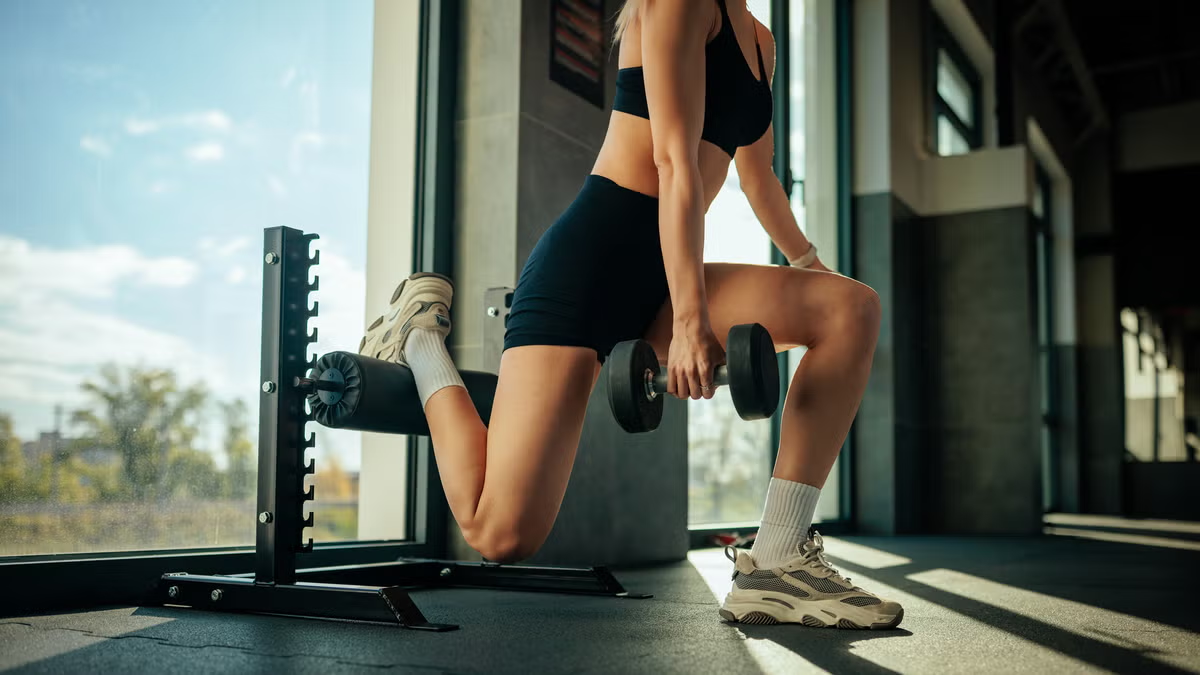
3) The Split Squat (or Lunge)
Why it’s worth repeating:
Single-leg work is the unglamorous secret to feeling athletic. It builds balance and control, and it reveals side-to-side strength differences you can hide in a two-legged squat. It also prepares you for real terrain: stairs, curbs, uneven sidewalks.
How to do it well (split squat):
Start in a staggered stance. Lower straight down, keeping most of your weight in the front foot. Your torso stays tall. The back knee moves toward the floor. Push through the front foot to rise. Repeat all reps on one side before switching.
What it trains: quads and glutes, plus balance and hip stability.
Repeat-worthy tips:
- Light support is allowed. Touch a wall or a pole if balance is the limiter.
- Use a shorter stride for quads, longer stride for glutes. Both are useful.
- Don’t chase depth at first. Chase stability.
Common mistake: front knee collapsing inward. Keep the knee tracking in line with the toes — not rigidly, but deliberately.
4) Step-Ups
Why it’s worth repeating:
Step-ups are leg strength in a form that doesn’t lie. They demand control, especially on the way down. They also translate almost perfectly to daily life because… stairs exist.
How to do it well:
Use a sturdy box or bench. Place one foot fully on it. Lean forward slightly and stand up, bringing the other foot to the top. Step down under control. Repeat on one side, then switch.
What it trains: quads, glutes, balance, coordination, eccentric control.
Repeat-worthy tips:
- Start low. A step that’s too high turns into a hip flexor circus.
- Control the descent. The lowering is where the strength is built.
- Keep the whole foot planted. Avoid stepping with just the toes.
Common mistake: pushing off the back foot like it’s a scooter. Make the working leg work.
5) Hip Thrusts (or Glute Bridges)
Why it’s worth repeating:
Glutes matter more than most people think — not for aesthetics, but for joint mechanics. Strong glutes help stabilize the pelvis, take strain off the lower back, and support the knees. Hip thrusts and bridges train hip extension in a way most modern life does not.
How to do it well (bridge):
Lie on your back, knees bent, feet flat. Brace your core gently. Drive through your heels and lift your hips until your body forms a straight line from shoulders to knees. Pause, squeeze, lower.
How to do it well (hip thrust):
Upper back on a bench, feet on the floor. Start with hips lowered. Drive hips up until thighs are roughly parallel to the floor, ribs stacked over pelvis (don’t overarch). Lower slowly.
What it trains: glutes, hamstrings, core control.
Repeat-worthy tips:
- Feel it in your glutes, not your back. If you feel your lower back, reduce range and brace ribs down.
- Pause at the top. One-second holds can turn a “meh” set into a productive one.
- Progress with load or reps. Both work.
Common mistake: hyperextending at the top. The finish is “hips tall,” not “spine arched.”
6) Leg Press (Used Wisely)
Why it’s worth repeating:
The leg press isn’t fashionable, which might be part of its charm. Done well, it’s an effective way to build leg strength and muscle without asking your balance or lower back to do the heavy administrative work. It’s particularly useful if you’re learning to squat or managing joint sensitivities.
How to do it well:
Set the seat so you can reach a deep knee bend without your pelvis rounding off the pad. Place feet about shoulder-width on the platform. Lower with control, keeping knees tracking with toes. Press up without locking out violently.
What it trains: quads, glutes; some hamstrings depending on foot position.
Repeat-worthy tips:
- Control the bottom. Avoid bouncing.
- Don’t let your hips tuck under. If your lower back rounds, reduce depth or adjust the seat.
- Use it to add volume. It’s great after free-weight work.
Common mistake: going too heavy too soon and shortening the range into a half-rep parade. Full, controlled reps are the point.
7) Hamstring Curls (Machine or Slider)
Why it’s worth repeating:
Hamstrings aren’t just “the back of the leg.” They help stabilize the knee and protect it during running, jumping, and deceleration — the moments that tend to cause injuries. Many people are quad-dominant; hamstring curls are a simple way to balance the relationship.
How to do it well (machine):
Align the machine so the pad sits comfortably above your heels. Curl slowly, squeeze at the top, lower with control.
How to do it well (slider curl at home):
Lie on your back, heels on sliders or towels on a smooth floor. Bridge your hips up and slide heels toward you, then slowly extend back out without dropping your hips.
What it trains: hamstrings, knee flexion strength, tendon resilience.
Repeat-worthy tips:
- Slow on the way down. Eccentric control is gold.
- Keep hips steady. Especially in slider curls.
- Don’t rush reps. Hamstrings respond well to patience.
Common mistake: cramping because the hamstrings are weak or fatigued. Reduce range, rest more, build gradually.
8) Calf Raises (Standing or Seated)
Why it’s worth repeating:
Calves are the unsung workers of walking. They help propel you forward and stabilize the ankle. Strong calves can make stairs, hills, and long days on your feet less exhausting. They also support Achilles tendon health — a common problem area.
How to do it well:
Stand with the balls of your feet on a step or flat floor. Rise up slowly, pause at the top, lower slowly to a stretch. Keep the movement controlled. Seated calf raises emphasize the soleus (important for endurance and walking).
What it trains: gastrocnemius and soleus muscles, ankle stability, Achilles resilience.
Repeat-worthy tips:
- Use a full range. Stretch at the bottom, pause at the top.
- High reps can work well. Sets of 10–20 are common here.
- Be consistent. Calves are stubborn; they reward routine.
Common mistake: bouncing. Think “smooth elevator,” not “pogo stick.”
Putting It Together: A Leg Day You’ll Actually Repeat
You don’t need a maximalist plan. You need a plan you’ll do.
Here’s a simple structure you can use for months:
A practical leg-day template (60 minutes or less)
- Squat (goblet or back): 3–4 sets of 6–10
- Romanian deadlift: 3–4 sets of 6–10
- Split squat or step-up: 3 sets of 8–12 per side
- Hip thrust or glute bridge: 3 sets of 8–12
- Hamstring curl: 2–3 sets of 10–15
- Calf raises: 3 sets of 12–20
If you’re short on time, do the first three and leave. You’ll still get most of the benefit.
How hard should it feel?
A useful guideline: finish most sets with 1–3 reps in reserve — you could do a few more, but you stop while form is solid. Training to absolute failure has its place, but it also increases fatigue in a way that can make consistency harder. And consistency is the real engine here.
Progress without drama
Pick one variable to improve each week:
- Add one rep per set, or
- Add a small amount of weight, or
- Add a set for one exercise, or
- Improve range of motion and control.
The best progress often looks boring on paper — and feels impressive in real life.
Why These Eight Work (and Why Your Knees Will Thank You)
The fitness internet likes novelty. Your joints do not.
These exercises repeat because they cover the major jobs your legs do:
- Squat pattern: bend and stand (squats, leg press)
- Hinge pattern: pick up and protect the back (RDLs)
- Single-leg control: stairs and balance (split squats, step-ups)
- Hip extension: pelvis and back support (bridges, thrusts)
- Knee flexion strength: hamstrings for stability (curls)
- Ankle strength: walking economy (calf raises)
When people say “leg day works,” what they often mean is that their body feels more capable. Their knees feel steadier. Their lower back feels less responsible for everything. They climb stairs without bargaining. They move with less caution.
And when that happens, leg day stops being a punishment and becomes what it was supposed to be all along: practice for the rest of your life.
Important notice: this content is educational and does not replace an individual evaluation. If you have a history of eating disorders, diabetes, pregnancy, or a medical condition, consult a healthcare professional before making dietary or exercise changes.







 Sign In