



You can spot the no-warm-up crowd in about 30 seconds.
They arrive with the posture of their day still clinging to them—shoulders curled over a phone, hips stiff from a chair, ankles that haven’t done anything more athletic than operate a gas pedal. Then they stroll straight to the barbell, or the treadmill, or the court, and ask their bodies to perform like it’s already mid-game.
Sometimes it works. Often it feels terrible. The first set is heavy in a way it won’t be later. The first mile is awkward. The first few minutes of a class feel like your joints are made of cold taffy.
A warm-up isn’t a polite prelude. It’s the first part of the workout—your opening argument to your nervous system that, yes, we’re doing this, and we’d like it to go well.
Physiologically, the case is straightforward: warm-ups raise heart rate gradually, increase blood flow and oxygen delivery, and elevate muscle temperature, which improves flexibility and efficiency. They also ease the cardiovascular “jump” into harder work—less like slamming on the gas, more like rolling onto the highway.
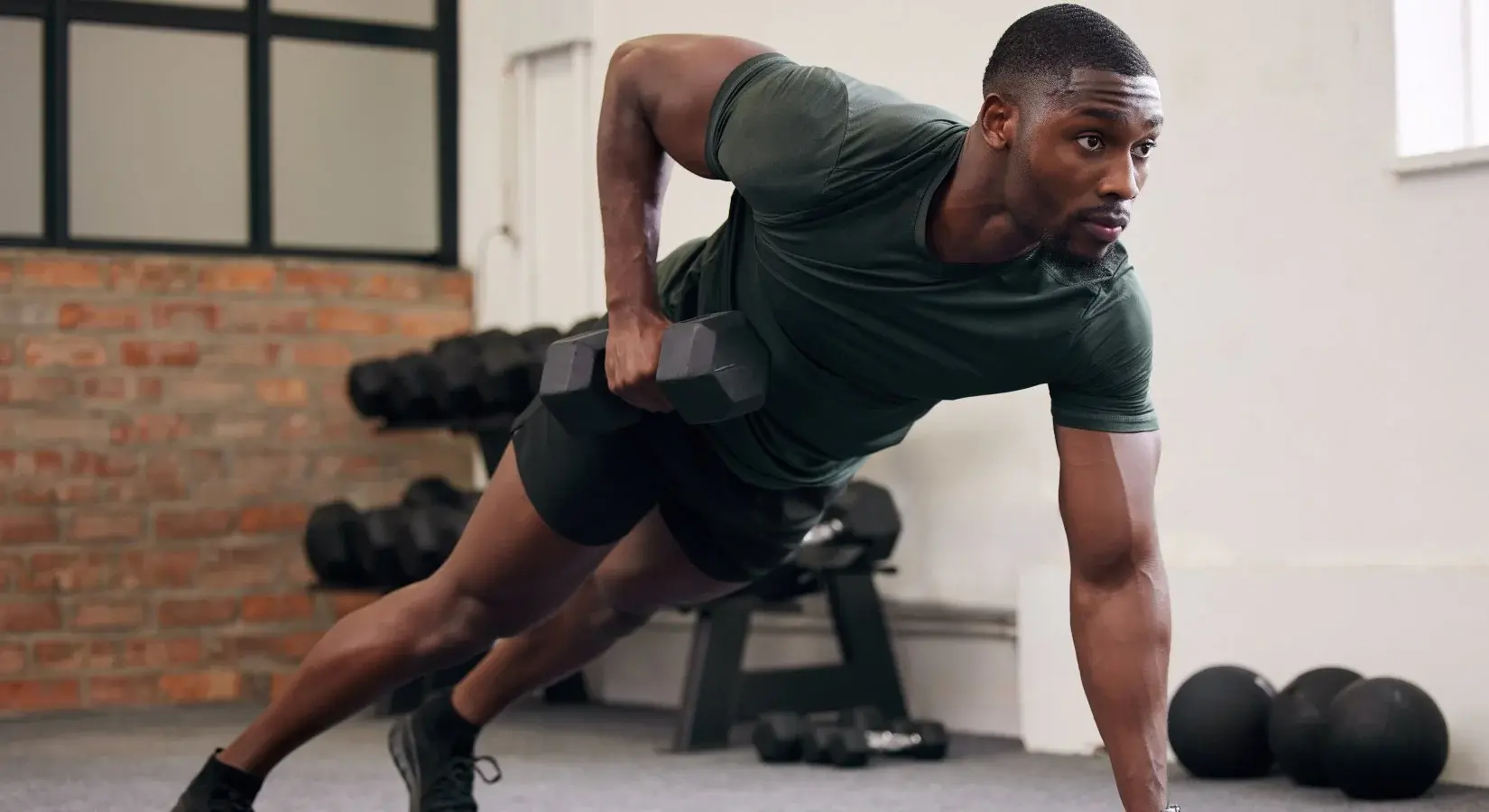
But the bigger benefit may be psychological. A good warm-up changes the texture of effort. Movements feel more coordinated. Breathing finds a rhythm sooner. Your brain stops treating the workout as an emergency and starts treating it as a task.
Research tends to agree on the big themes: warm-ups can improve subsequent performance through temperature-related effects, changes in muscle contractility, and nervous-system readiness—and the best warm-up is specific to what you’re about to do.
That specificity matters because “warming up” is not the same as “stretching,” and the stretching part is where people get lost. Long static stretches right before strength- or power-heavy efforts can slightly reduce maximal output (especially if you hold them a long time). Shorter static stretches, especially when folded into a larger warm-up with light aerobic work and dynamic movement, seem to have trivial effects for most people—but they’re rarely the best first choice if your goal is to feel springy.
A modern, practical way to think about it is a simple sequence many coaches use: Raise, Activate, Mobilize, Potentiate—often shortened to RAMP. In one randomized crossover study, a RAMP-style warm-up outperformed static stretching and no warm-up for sprint and jump measures in young athletes.
What follows are seven warm-ups you can rotate through—each designed to make the main work feel easier and to help you get more out of it. None require fancy equipment (a mini-band helps for one). Most take 6 to 10 minutes, which is also the time window many health organizations recommend for easing into aerobic exercise.
1) The Two-Minute Temperature Riser (When You Want Everything to Stop Feeling “Cold”)
If your workout routinely begins with, “Why do I feel like a rusted robot?” start here. This is the “Raise” in RAMP: you’re turning up the thermostat.
Do this (2 to 4 minutes):
- Pick a simple cyclical movement: brisk walking, easy cycling, light rowing, gentle jogging, jump rope, even marching in place.
- Stay at an effort where you can speak in full sentences, but you notice your breathing.
- Aim to feel slightly warmer by the end—like you could unzip a jacket.
Why it works:
Elevating heart rate gradually widens blood vessels and improves oxygen delivery; warming tissue improves movement efficiency and prepares joints and muscles for higher loads.
Make it specific:
- About to run? Walk briskly, then transition to a very easy jog.
- About to lift? Do 2 minutes of a bike or treadmill walk, then move immediately into the pattern-specific warm-up (see #3 or #4).
Common mistake: turning the warm-up into a workout. If you finish winded, you’ve robbed your main session.
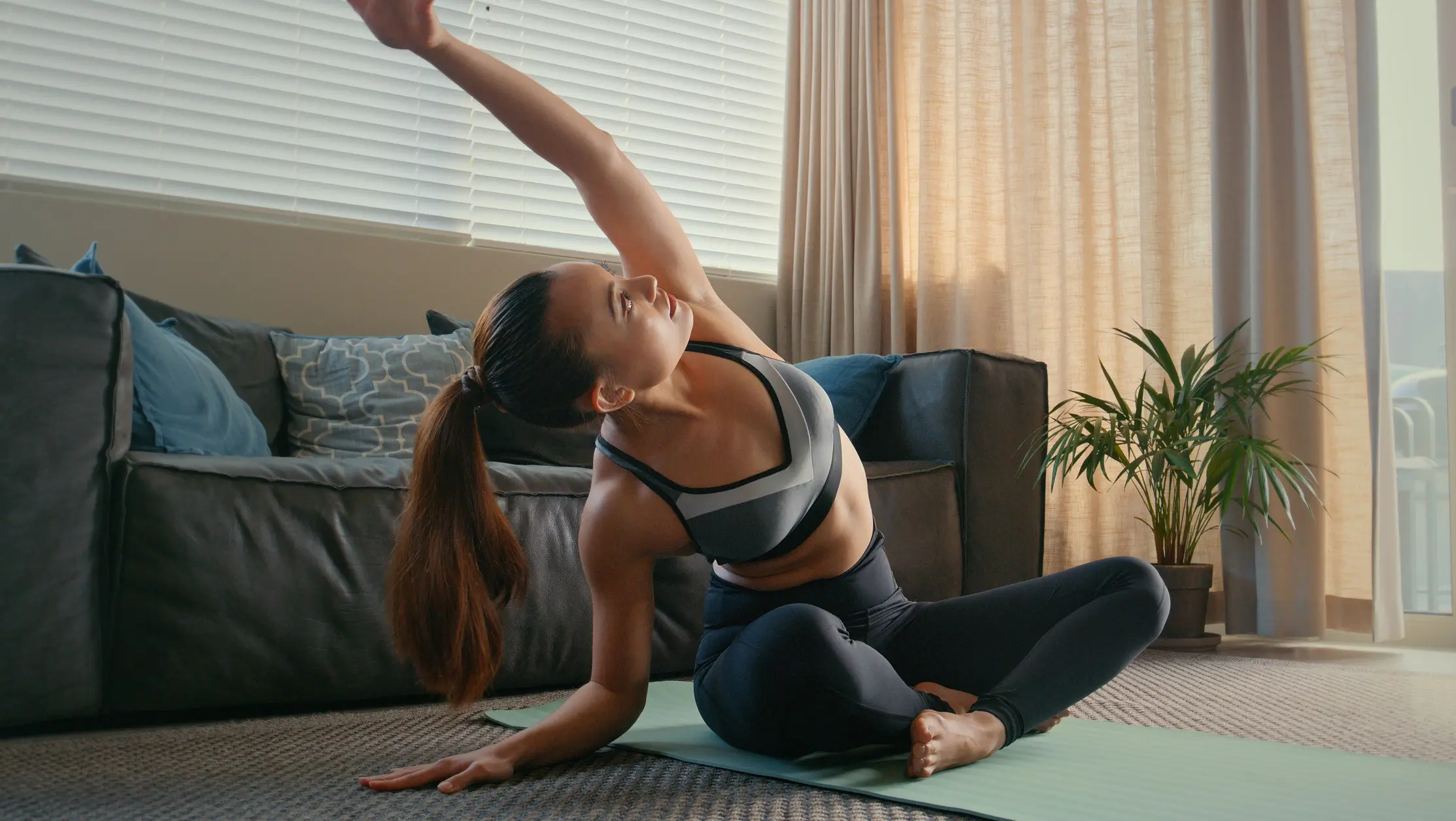
2) The Spine-and-Ribs Reset (For Desk Bodies and Stiff Backs)
A surprising amount of “tightness” is really your nervous system being cautious. If you’ve been sitting, your torso often moves as one rigid block. This warm-up gives you back the ability to rotate, extend, and breathe.
Do this (6 minutes total):
- Cat-cow (60 seconds): slow, exaggerated rounds and arches.
- Thread-the-needle (60 seconds each side): gentle thoracic rotation.
- Open-book rotations (60 seconds each side): lie on your side, rotate your upper arm and chest toward the floor behind you.
- 90/90 breathing (60 seconds): feet on a wall or bench, inhale through the nose, long exhale, ribs soften down.
Why it works:
Many warm-up benefits come from improving movement mechanics and nervous-system readiness—not just “loosening muscles.” Warm-up reviews emphasize that the best protocols prepare the exact patterns you’re about to repeat under load.
Works well before:
- Strength training days where you’ll squat, hinge, press, or pull
- Any class that asks for twists, overhead reaches, or fast transitions
- Long runs that make your low back complain at mile three
Quick test:
Stand up after this and reach overhead. If your ribs flare less and your shoulders feel less “stuck,” you’ve done something useful.
3) The Hip Hinge Primer (For Deadlifts, Kettlebells, and “My Back Does Everything”)
When people skip warm-ups on hinge days, the lower back often volunteers to do the job of the hips. This sequence wakes up glutes and hamstrings and reminds your body what a hinge actually is.
Do this (8 minutes):
- Glute bridges (2 sets of 8–10): pause 2 seconds at the top.
- Bodyweight good mornings (2 sets of 8): hands on hips, push them back, soft knees.
- Hip-hinge to wall (2 sets of 6): stand a foot from a wall, hinge until your hips tap it.
- Ramp-up sets of your first lift (2–3 quick sets): empty bar or light kettlebell, crisp reps.
Why it works:
A warm-up should activate key muscle groups and then rehearse the movement pattern you’ll load. That approach aligns with evidence-based warm-up design principles and the RAMP sequence: raise temperature, activate, mobilize, then potentiate with more specific or more forceful actions.
Make it easier:
If bridges irritate your back, shorten the range and focus on a gentle pelvic tuck, not height.
Make it harder (without fatigue):
Add a mini-band above the knees during bridges to cue glute engagement.
4) The Squat-and-Lunge Ladder (For Leg Day, Sports, and Anything That Requires Knees)
This is a warm-up that also doubles as a movement quality check. If something pinches or wobbles here, you’ll feel it before you’re under a bar or sprinting.
Do this (8 to 10 minutes):
- Ankle rocks (60 seconds each side): knee over toes, heel stays down.
- Bodyweight squats (2 sets of 6): slow down, find depth you can control.
- Reverse lunges (2 sets of 5 each side): soft landing, upright torso.
- Lateral lunges (1–2 sets of 5 each side): sit into one hip, keep the other leg long.
- Quick “potentiation” finish: 2 rounds of 10-second fast feet or gentle pogo hops.
Why it works:
Dynamic movement integrated into a warm-up has been associated with improved readiness and, in several studies, positive effects on injury incidence—especially when the warm-up is a blend of activity plus dynamic mobility.
About those hops:
They’re not mandatory. But brief, low-volume “springy” work can prepare the neuromuscular system for faster, heavier efforts—what the RAMP framework calls potentiation.
If your knees complain:
Make lunges smaller, slow them down, and ensure your foot is planted like a tripod (big toe, little toe, heel).
5) The Shoulder Tune-Up (For Pressing, Pull-Ups, and “Why Does My Neck Take Over?”)
Upper-body days often go wrong in a predictable way: you press with shoulders dumped forward, shrug through rows, and wonder why your neck is tight later. This warm-up puts your shoulder blades back on speaking terms with your ribs.
Do this (7 minutes):
- Scapular push-ups (2 sets of 6–8): straight elbows, let shoulder blades move.
- Band pull-aparts (2 sets of 10): slow, control the return.
- Wall slides (2 sets of 6): keep ribs down, slide arms up without shrugging.
- Light ramp-up sets of your first press or pull (2–3 sets): stop well short of fatigue.
Why it works:
Warm-ups aren’t just about temperature; they’re about coordination. Performance-focused warm-up reviews point to neuromuscular factors—better recruitment patterns, better timing—as part of why you can feel stronger after a good build-up.
Static stretching caveat:
If you love stretching your chest before pressing, keep it brief (think 20–30 seconds) and pair it with activation work like pull-aparts or scapular push-ups. Longer static holds right before power work are where performance dips show up most clearly.
6) The Core That Carries (For Running, Lifting, and Lower-Back Insurance)
“Core” warm-ups fail when they become endurance contests. This one is short and specific: you’re teaching your trunk to resist movement—so your arms and legs can create it.
Do this (6 to 8 minutes):
- Dead bug (2 sets of 5 each side): slow, exhale as the leg extends.
- Side plank (2 sets of 20–30 seconds each side): straight line, ribs stacked.
- Suitcase carry (2 rounds of 30–40 steps each side) or a march in place holding a weight on one side.
Why it works:
A well-designed warm-up is targeted preparation for the session’s demands. If your workout includes running, loaded squats, overhead work, or anything that challenges posture under fatigue, anti-rotation and bracing are not bonus features—they’re prerequisites.
No equipment?
Do the march holding a backpack or a heavy water jug.
How it should feel:
Stable, not smoked. If your abs burn like a finisher, you’ve gone too long.
7) The “Potentiation Pop” (For Speed, HIIT, and Days You Want to Feel Explosive)
This is the warm-up that changes the whole workout’s tone. The idea is not to exhaust yourself; it’s to remind your nervous system that you’re allowed to produce force quickly.
There’s a body of research on “post-activation performance enhancement” (PAPE): doing a heavy or high-intent contraction can acutely improve subsequent explosive performance—when the dose and rest are right.
You don’t need to turn your warm-up into a lab protocol. You just need a taste of speed.
Do this (6 to 9 minutes):
- Raise (2 minutes): easy bike, jog, or jump rope.
- Prime (3 minutes):
- 2 sets of 6 bodyweight squats (fast up, controlled down)
- 2 sets of 5 inchworms to a strong plank
- Pop (2–3 minutes): pick one
- Pogo hops: 3 sets of 10 seconds
- Skipping: 3 sets of 20 meters
- Medicine-ball slams (if available): 3 sets of 5 crisp reps
Why it works:
A RAMP-style warm-up ends with movements that are closer in intensity and intent to the session itself—helping bridge the gap between “I am alive” and “I can sprint / jump / lift.”
If you’re new to impact:
Skip the hops. Use fast step-ups, brisk incline walking, or light kettlebell swings (if you already know the movement).
How to Choose the Right One (Without Overthinking It)
If you only remember one rule, make it this:
Warm up the way you’re about to train.
- Doing steady cardio? Start at a pace you can talk through and build for 5–10 minutes.
- Doing heavy strength work? Raise temperature briefly, then ramp the exact pattern with lighter sets.
- Doing speed or power? Add a small dose of fast intent near the end, while you’re still fresh.
And if you’re stuck, use this simple checklist:
- Are you warmer than when you started?
- Do the first reps feel less clunky?
- Do you feel more stable and coordinated?
- Are you still fresh enough to train hard?
If the answer to all four is yes, you did it right.
A warm-up is not a moral test. It’s a shortcut—one that makes the workout feel less like a negotiation with your body and more like a plan you both agreed to.
Important notice: this content is educational and does not replace an individual evaluation. If you have a history of eating disorders, diabetes, pregnancy, or a medical condition, consult a healthcare professional before making dietary or exercise changes.










 Sign In