

The calorie has become the most overworked character in modern fitness. We talk about it the way people talk about money when they’re anxious: always counting, never quite satisfied. Apps reward you for accumulation. Watches buzz when you’re “behind.” Workouts get sold like a receipt: This class burns 600 calories! as if that number is the whole point.
But the body doesn’t experience exercise as accounting. It experiences it as capability.
Strength training is not just a way to “burn” something. It’s a way to build things: muscle that protects your joints, balance that prevents a fall, bone and connective tissue that benefit from being asked to do real work, and a nervous system that learns calm under load. It’s how you make your body more useful to you — not only smaller.
The seven moves below are deliberately unflashy. They don’t require a complicated machine or a personality built around pain. They show up in good programs because they teach the body patterns it needs in ordinary life: squat, hinge, push, pull, carry, stabilize, get up.
Each move has two goals:
- Make you stronger in a way you can feel outside the gym.
- Make your future workouts safer, more efficient, and less fragile.
Because “burn calories” is temporary. Strength is a system upgrade.
Before you start: if you have an injury, are pregnant, or deal with dizziness, severe pain, or medical issues that change what exercise is safe for you, get individualized guidance. And in general: sharp pain is not a badge. It’s information.
1) The Goblet Squat
What it looks like: You hold a dumbbell (or kettlebell) at your chest and sit down between your legs, then stand.
There are fancier squats. There are heavier squats. But the goblet squat is one of the best “first-class” tickets into lower-body strength because it teaches the pattern without forcing you to wrestle a barbell into position.
What it does beyond calories:
- Teaches your hips and knees to cooperate. Squatting well is less about strong quads and more about coordination: feet grounded, knees tracking, torso stacked.
- Builds “stand up” strength. Getting up from a chair, a toilet, a low couch — that’s a squat.
- Improves mobility where people quietly lose it. Ankles, hips, and upper back all have to participate.
How to do it well (in plain language):
- Hold the dumbbell close to your sternum like you’re protecting it.
- Stand with feet about shoulder-width, toes slightly turned out if that feels natural.
- Inhale, then sit down as if you’re aiming for a stool behind you — but let your knees travel forward as needed.
- Go as low as you can while staying in control: heels down, chest not collapsing, spine not folding.
- Exhale as you stand, pushing the floor away.
Common mistakes that turn it into something else:
- Heels lifting: usually an ankle mobility issue or stance that’s too narrow.
- Knees caving inward: often fixed by slowing down and thinking “spread the floor.”
- Turning it into a good-morning: hips shoot back, torso falls forward. Try a lighter weight and a slower descent.
Make it easier: squat to a box or bench and stand back up.
Make it harder: pause for 2 seconds at the bottom; increase load; progress to front squats with two dumbbells.
A simple prescription: 3–4 sets of 6–10 controlled reps.
2) The Romanian Deadlift (RDL)
What it looks like: You hold dumbbells, slide your hips back, and lower the weights along your legs with a long spine, then stand.
The RDL is the hinge: the movement pattern behind picking something up safely and powerfully. Done well, it feels like your hamstrings and glutes are doing the work — which is exactly the point.
What it does beyond calories:
- Builds the “back of the body.” The muscles that support posture, protect your knees, and keep your low back from doing everyone else’s job.
- Teaches safe lifting mechanics. You learn to load hips, not spine.
- Improves athleticism without theatrics. Hinging is how you jump, sprint, climb, and move with power.
How to do it well:
- Stand tall holding dumbbells in front of your thighs.
- Soften your knees — not a squat, just unlocked.
- Push your hips straight back like you’re closing a car door with your butt.
- Keep the dumbbells close to your legs. Your spine stays long; your ribs stay stacked over your pelvis.
- Lower until you feel a strong hamstring stretch and your torso can’t stay braced anymore.
- Stand by driving hips forward, squeezing glutes at the top.
Common mistakes:
- Turning it into a squat: too much knee bend.
- Rounding the back: usually too much range of motion or too heavy.
- Letting weights drift away: makes it harder on your back and less effective for hamstrings.
Make it easier: do it with one dumbbell (goblet-style) and shorten range.
Make it harder: heavier weights, slower lowering, or single-leg RDLs for balance and hip stability.
A simple prescription: 3–5 sets of 6–10 reps, with full control.
3) The Push-Up (or Dumbbell Floor Press)
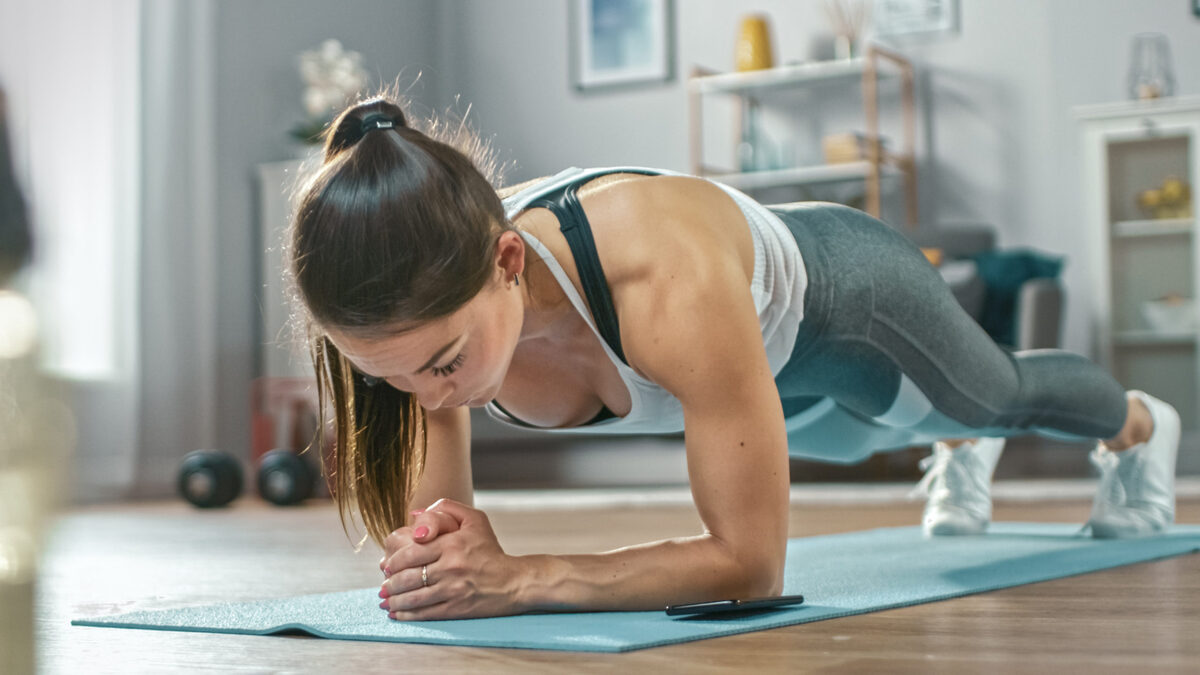
What it looks like: You push the ground away, keeping your body stiff like a plank.
Push-ups are a classic partly because they’re inconvenient: you can’t fake them. They reveal whether your shoulders, core, and upper back can cooperate. And if regular push-ups aren’t there yet, the dumbbell floor press is a smart substitute.
What it does beyond calories:
- Builds “global tension.” The ability to brace your whole body while you move one part — an underrated skill for everything from sports to carrying a suitcase.
- Strengthens shoulders in a joint-friendly way. Especially when done with controlled range and stable scapulae.
- Trains pushing without needing machines. Useful, transferable strength.
How to do a push-up that actually counts:
- Hands slightly wider than shoulders; fingers spread.
- Body in a straight line: head, ribs, hips.
- Lower with control until your chest is close to the floor.
- Press back up without letting hips sag or pike.
If push-ups feel miserable (common): elevate your hands on a bench, couch, or sturdy table. You’ll still get the pattern, with less load.
Floor press version: lie on your back, dumbbells in hands, elbows at about 45 degrees from your body. Press up, pause, lower until triceps touch the floor.
Common mistakes:
- Flaring elbows straight out: rough on shoulders for many people.
- Half reps with no control: looks like work, trains less.
A simple prescription: 3–4 sets near technical failure (stop when form changes). For many people: 6–15 reps.
4) The One-Arm Row
What it looks like: You pull a dumbbell toward your hip while your torso stays stable.
If pushing is overrepresented in gym culture, pulling is its underpaid sibling. Rows train the upper back, lats, and the smaller muscles that keep your shoulders from living permanently in “screen posture.”
What it does beyond calories:
- Supports shoulder health. Strong upper back muscles help keep pressing movements safer and more comfortable.
- Improves posture without “trying to stand up straight.” Strength changes the default position.
- Builds your ability to pull in real life. Doors, luggage, kids, groceries — life is full of pulling.
How to do it well:
- Hinge forward with a flat back; brace your core.
- Let the dumbbell hang.
- Pull the dumbbell toward your hip, not your shoulder. Think: elbow to back pocket.
- Pause briefly at the top.
- Lower slowly; don’t rush the eccentric.
Common mistakes:
- Twisting your torso to “cheat” the weight up. Use lighter weight and keep your ribs square.
- Shrugging the shoulder toward your ear. Keep the shoulder down and back.
Make it easier: two-hand supported row (hand on bench or couch).
Make it harder: chest-supported rows, slow tempo, or heavier loads.
A simple prescription: 3–5 sets of 8–12 reps per side.
5) The Half-Kneeling Overhead Press
What it looks like: You kneel on one knee and press a dumbbell overhead with the opposite arm.
Overhead pressing is one of the most useful “capability” skills you can own — putting something on a high shelf, lifting a suitcase into an overhead bin, holding a child. But it can also irritate shoulders if you lack stability or mobility.
The half-kneeling version is a quiet genius move: it turns the press into a whole-body stability drill.
What it does beyond calories:
- Trains shoulder stability and scapular control. The shoulder works best when the shoulder blade and ribcage cooperate.
- Builds core anti-extension strength. You learn not to arch your low back to “fake” range.
- Improves hip stability. Kneeling challenges you in a way standing sometimes doesn’t.
How to do it well:
- Kneel with right knee down, left foot forward (like the bottom of a lunge).
- Press the dumbbell with the right arm (opposite the front leg) — this encourages stability.
- Keep ribs down, glutes engaged, chin neutral.
- Press up and slightly back so the dumbbell ends over your shoulder, not in front of your face.
Common mistakes:
- Overarching the low back: the most common compensation. Squeeze glutes and keep ribs stacked.
- Pressing forward: ends up as a front-shoulder grind. Aim for “biceps by ear.”
Make it easier: use a lighter weight, or press from a seated position with back support.
Make it harder: slow tempo, pause overhead, or progress to standing presses.
A simple prescription: 3–4 sets of 6–10 reps per side.
6) The Loaded Carry (Farmer or Suitcase)
What it looks like: You pick up heavy dumbbells and walk.
Carries are strangely humbling. They look like nothing. They feel like everything. They also may be the most “life-like” strength move of all: pick something up, move with it, stay upright, keep breathing.
What it does beyond calories:
- Builds grip strength. A predictor of all sorts of functional capability, and one of the first things many people lose if they don’t train it.
- Trains the core the way it actually works. Not by flexing (crunching) but by resisting motion — keeping you stable while you move.
- Improves posture under load. The body learns to stack itself when it matters.
- Conditioning without pounding. Your heart rate rises without the joint stress of running.
Two excellent versions:
- Farmer Carry: one dumbbell in each hand.
- Suitcase Carry: one dumbbell in one hand, the other side empty — forces anti-lean strength.
How to do it well:
- Stand tall. Shoulders down. Ribs stacked.
- Walk with small, controlled steps.
- Don’t lean, don’t shrug, don’t hold your breath like you’re underwater.
Common mistakes:
- Turning into a wobble parade. Go lighter and walk slower.
- Grip giving out immediately. That’s fine — shorten the carry time and build it.
A simple prescription: 4–8 carries of 30–60 seconds. Alternate farmer and suitcase.
7) The Turkish Get-Up (or a Simplified Get-Up)
What it looks like: You move from lying on the floor to standing — and back down — while holding a weight overhead.
The Turkish get-up is not popular because it’s trendy. It’s popular among coaches because it teaches something rare: controlled strength through multiple positions, with attention and coordination.
It’s strength training as skill.
What it does beyond calories:
- Teaches you to get up off the floor. A literal life skill that becomes more important with age than people like to admit.
- Builds shoulder stability in motion. The arm stays organized while the body moves under it.
- Trains the body to transition. Many injuries happen during transitions — twisting, reaching, standing up awkwardly. This rehearses them with intent.
How to do a simplified, beginner-friendly version:
Start with a shoe balanced on your fist (seriously). It forces control without load.
Basic steps (one side):
- Lie on your back. Right arm straight up (holding a light dumbbell or just a fist). Right knee bent, right foot on the floor. Left arm and leg at about 45 degrees.
- Roll onto your left elbow, then your left hand.
- Lift your hips (a bridge).
- Sweep your left leg back under you into a half-kneeling position.
- Stand.
Then reverse it slowly back down.
Common mistakes:
- Rushing. The value is in the control, not the speed.
- Letting the weight drift: keep the arm vertical; eyes on it at first.
- Skipping steps: each position matters.
Make it easier: do it without weight, or only practice the first half (to half-kneeling).
Make it harder: heavier weight, slower tempo, or more reps — but only after you own the pattern.
A simple prescription: 2–4 sets of 1–3 reps per side, moving slowly.
Why These Moves Matter (Even If You Never Track a “Burn” Again)
If you do these seven moves consistently, here’s what tends to happen — not overnight, not magically, but in the steady way that real training works:
- You get stronger in the patterns that keep you independent. Standing up, picking things up, pushing, pulling, carrying, reaching overhead, getting off the floor.
- Your body becomes less fragile. Not invincible — that’s not a real state — but more resilient.
- Exercise becomes less about punishment and more about competence. You stop asking, “How much did I burn?” and start noticing, “This feels lighter than it used to.”
Calories still matter for body weight. It would be silly to pretend they don’t. But focusing only on burning them is like evaluating a book by the weight of the paper.
Strength training earns its place because it improves the quality of the body doing the living.
A Simple Weekly Plan (So This Becomes Real)
If you want to turn this into a repeatable routine without turning it into a second job:
Two full-body days (about 45 minutes each)
- Goblet Squat — 3×8
- Romanian Deadlift — 3×8
- Push-Up or Floor Press — 3×10
- One-Arm Row — 3×10/side
- Loaded Carry — 6×40 seconds (alternate farmer/suitcase)
One “skill + stability” day (about 25–35 minutes)
- Half-Kneeling Press — 4×8/side
- Turkish Get-Up (or partials) — 3×2/side
- Suitcase Carry — 6×30–45 seconds/side
Progression is simple: add a little weight, a rep, a set, or better control — one change at a time. The goal is not to win the day. It’s to become someone who can do this again next week.
Because that, quietly, is what “fitness” is: not a number you burn, but a capacity you keep.
Important notice: this content is educational and does not replace an individual evaluation. If you have a history of eating disorders, diabetes, pregnancy, or a medical condition, consult a healthcare professional before making dietary or exercise changes.







 Sign In