

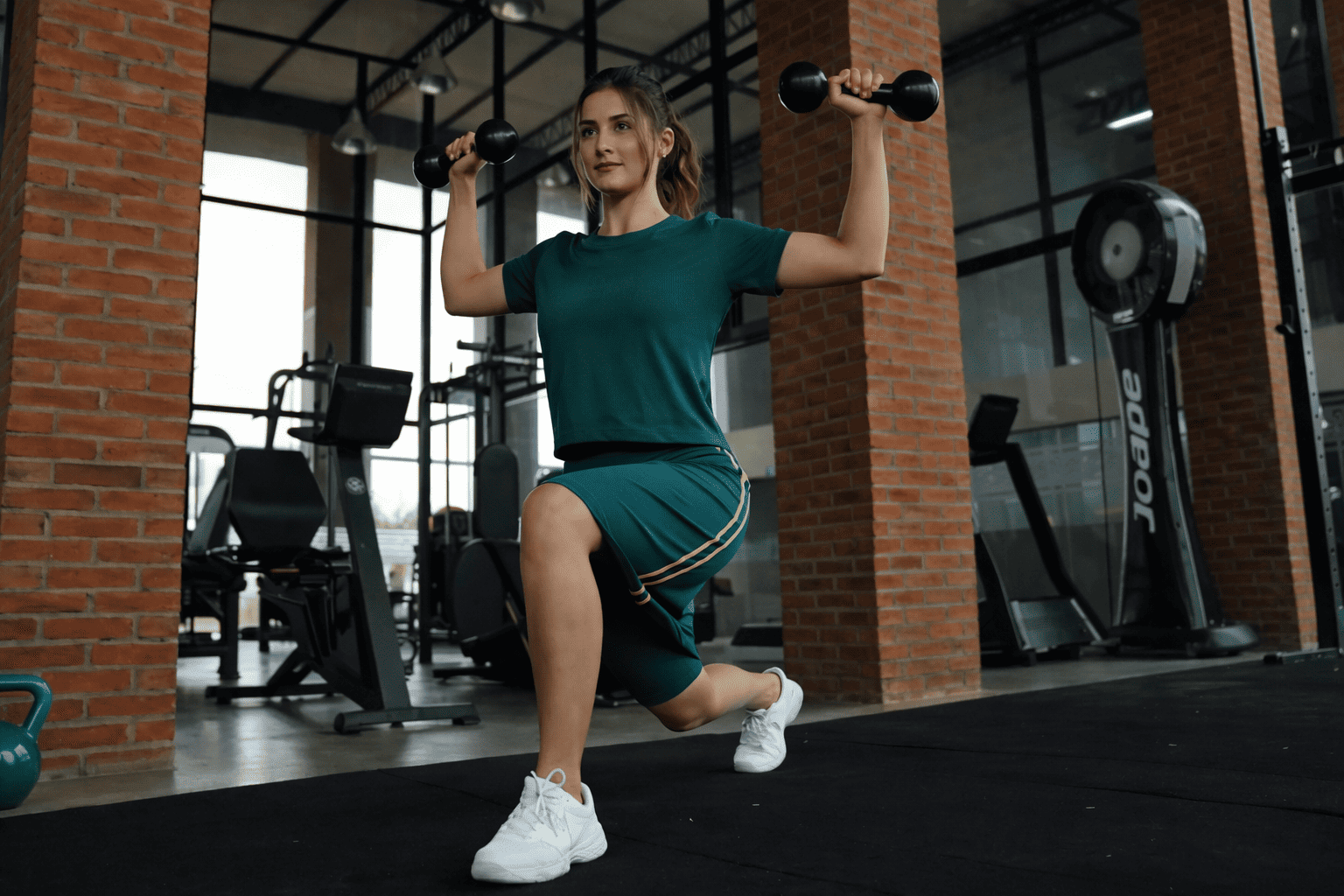

Walk into any gym on a Monday evening and you’ll see the same drama play out in real time: the sprint to the “best” equipment, the loud clank of ambition, the quick scan of mirrors for proof that today’s effort is already paying off. There’s always someone chasing a breakthrough—more weight, more sweat, more intensity—like progress is something you can force into existence through sheer volume.
But bodies don’t work like that. They don’t respond best to theatrical effort, or to occasional heroic weeks followed by long disappearances. They respond to consistency, to repeatable inputs, to tiny behaviors that add up the way interest does: slowly, then all at once.
The most transformative gym habits are rarely the ones that make good social media. They’re the small, almost boring choices that change what you do most days, not what you do on your most motivated day. They don’t announce themselves. They don’t require a new identity. And they tend to be available to anyone, regardless of age, schedule, or genetics.
Here are seven small gym habits that quietly reshape your body over time—by improving the quality of your training, the way you recover, and the odds that you’ll still be doing all of this six months from now.
1) Arrive Early Enough to Become a Different Athlete
There’s a version of you who rushes in late, distracted, stiff, and slightly resentful that the warm-up is “stealing” time from the workout. That version of you lifts with cold joints and an impatient nervous system, and it shows up in subtle ways: shallow depth on squats, unstable shoulders on presses, a back that does too much work because hips didn’t wake up.
Then there’s the version of you who arrives ten minutes early.
Not thirty. Not a full mobility class. Ten minutes—enough time to turn a commute-stressed body into a training-ready one.
A good ten-minute arrival ritual might include:
- 2–3 minutes of light cardio (incline walk, rower, bike) to raise temperature
- 2–3 minutes of joint prep (hips, ankles, thoracic spine, shoulders)
- 2–3 “ramp-up” sets of your first lift, gradually heavier, crisp and controlled
- A final 30 seconds to choose your first working weight with intention, not ego
This habit doesn’t just prevent injuries. It changes your performance. You’ll lift more with better form, which means you’ll create a better training signal. Over time, the gap between “going through motions” and “training” becomes the gap between plateau and progress.
The best part: arriving early also reduces the mental friction that breaks routines. You stop feeling like the gym is an emergency. It becomes a place you enter on purpose.
2) Make Your First Set a Form Audit, Not a Test of Courage
A quiet truth about strength training is that your body doesn’t care what you intended. It responds to what you actually did—rep by rep, position by position. And most people don’t lose progress because they’re lazy; they lose it because their technique slowly drifts until the wrong muscles do the work.
That drift happens in the first set more than any other.
Treat your first working set—especially on compound lifts—as an audit. Ask:
- Are my feet rooted and stable?
- Can I feel the target muscles doing the job?
- Am I controlling the lowering phase?
- Is my range of motion honest?
- Does this look like the rep I want to repeat for the next eight weeks?
The goal isn’t perfection. It’s clarity.
This habit is small because it doesn’t require extra time. It requires attention. But attention compounds. A deadlift with clean bracing turns into stronger hips and back resilience. A press with stable shoulder blades turns into healthy shoulders and better pec development. Squats with controlled depth turn into legs that actually grow.
If you want a simple rule: earn your load with your positions. Over time, the body you’re building isn’t just bigger or leaner—it’s better organized.
3) Leave One or Two Reps “In the Bank” More Often Than You Think
There’s a kind of gym culture that treats every set like a referendum on your character. If you stop a rep short of failure, you didn’t “want it enough.” It’s a seductive story. It’s also one of the most reliable ways to stall.
Training to failure has a place. But if you do it constantly, you turn your workouts into recovery problems. Your joints take the hit. Your technique gets sloppy. The quality of your next sessions declines. And because you can’t recover, you can’t progress consistently.
A more sustainable approach—quiet, almost unglamorous—is to train most sets with one to two reps in reserve. That means you finish a set knowing you could have done one or two more good reps, with clean form.
This does a few important things:
- Keeps technique sharp, because the hardest reps are where form breaks
- Lets you train more frequently, because you’re not wrecked all the time
- Builds confidence, because you’re practicing strong reps, not desperate ones
- Makes progress predictable, which is the most underrated performance enhancer
If you’ve been stuck, it’s often not because you’re not pushing hard enough. It’s because you’re pushing hard in the wrong way, too often. The body likes consistency, not chaos.
Over time, those “controlled” sessions add up to more total high-quality work. And that’s what changes your physique.
4) Track Something Small—And Let It Tell You the Truth
Most people say they “kind of know” what they did last week. Kind of is not a training plan. It’s a vibe.
You don’t need an elaborate spreadsheet. You need a record that can answer two questions:
- Did I do enough work to deserve adaptation?
- Am I gradually doing a little more over time?
That’s it.
Tracking can be as simple as writing down:
- The exercise
- The weight
- The reps
- A quick note on effort (“hard but clean,” “felt heavy,” “easy”)
This habit is small, but it does something profound: it replaces mood with evidence.
On days you feel weak, you’ll see you’re actually progressing. On days you feel invincible, you’ll notice you’re about to do something reckless. Tracking keeps your ambition tethered to reality, which is where long-term results live.
It also creates momentum. Nothing builds consistency like proof that the work is working.
5) Stop Treating Rest Times Like Dead Time
In many gyms, rest is where progress goes to die. People scroll, drift, chat, and accidentally turn 90 seconds into six minutes. Or they do the opposite: rush, shorten rest, and wonder why the weights feel heavier each set.
Rest is not a break from training. Rest is part of the set.
A quiet habit that transforms training quality is simply having a plan for rest:
- For strength work (heavy sets of 3–6): rest 2–4 minutes
- For hypertrophy (6–12 reps): rest 1–2 minutes
- For accessories (12+ reps): rest 45–90 seconds
- For conditioning: follow the intervals as written, not as felt
But there’s another layer: what you do during those minutes. Rest time is a perfect moment for small behaviors that keep you training like an adult:
- Sip water
- Re-rack your weights (yes, really)
- Walk and breathe instead of collapsing
- Mentally rehearse the next set’s cues
- Check your notes so you don’t improvise when you’re tired
People often underestimate how much better training feels when rest is intentional. Your heart rate settles. Your nervous system calms. Your next set becomes crisp. And crisp reps—repeatable reps—are what you can build a body on.
6) Make Protein and Hydration Boringly Reliable
You can do everything right in the gym and still struggle to change your body if recovery is an afterthought. Muscle isn’t built during sets. It’s built afterward, when your body has the raw materials and the calm enough internal environment to repair and adapt.
Two of the simplest recovery inputs are also the ones people treat like optional accessories: protein and hydration.
You don’t need perfection. You need reliability.
A useful baseline for many active adults is:
- Protein: aim for a protein source at each meal; if you want numbers, many people do well around 1.6–2.2 g/kg of body weight per day (a common evidence-based range), but consistency matters more than precision.
- Hydration: arrive at the gym already hydrated; drink during training; don’t turn thirst into a personality trait.
This habit transforms training because it changes how you show up the next day. Recovery becomes smoother. Soreness becomes manageable. Your performance stops oscillating. And when performance is stable, progression is possible.
The quiet genius here is that these habits don’t feel dramatic. They feel mundane. And mundane is what you can repeat.
7) End the Session Like You Plan to Come Back Tomorrow
The most underrated moment in the gym is the last five minutes. That’s where people either seal the habit—or sabotage it.
Some leave like they’re escaping a crime scene: heart racing, breath shallow, nervous system on fire. Others keep adding “just one more” exercise until the workout becomes a two-hour ordeal they can’t replicate, which practically guarantees inconsistency.
A quiet, body-changing habit is to cool down with intention and make your exit easy:
- Two minutes of easy movement (slow walk, light bike)
- One minute of deep breathing (nasal inhale, long exhale)
- A quick note: what you did, how it felt, what you’ll do next time
- Leave one small win (tidy your space, refill water, plan your next session)
This matters because workouts don’t live in isolation. They live inside a life. If every session ends in exhaustion and time stress, your brain starts associating the gym with depletion. If sessions end with control, clarity, and a sense of completion, the habit becomes easier to maintain.
And maintenance, over time, becomes transformation.
The Quiet Logic Behind Visible Results
These habits aren’t flashy. They don’t promise a “new body in 14 days.” They don’t require punishment, only presence.
But they work because they address the real reasons people stall:
- They improve training quality (warm-up, form audit, planned rest).
- They protect recovery (reps in reserve, protein, hydration, calm exits).
- They strengthen consistency (tracking, manageable sessions, reduced friction).
And the body responds best to a training life that can actually be lived.
Over weeks, you’ll notice small changes: better posture under load, less soreness that lingers, workouts that feel more predictable. Over months, those changes become visible: more shape in shoulders and arms, stronger legs, a waist that tightens not through panic but through steady progress. Over years, you look back and realize the transformation wasn’t one decision—it was a hundred small ones that became your default.
Conclusion: Small Habits, Clear Plans
Most people don’t need more motivation. They need fewer points of failure. A warm-up you can repeat. A plan you can follow. A way to track progress without turning fitness into a second job.
That’s why having a simple training structure matters. And it’s also why it’s easy to keep a program on track using the Fitsse app—so your workouts, progression, and weekly plan stay organized without you having to reinvent the wheel every time you step into the gym.
Because the truth is: the habits are small. The results aren’t.
Important notice: this content is educational and does not replace an individual evaluation. If you have a history of eating disorders, diabetes, pregnancy, or a medical condition, consult a healthcare professional before making dietary or exercise changes.










 Sign In