
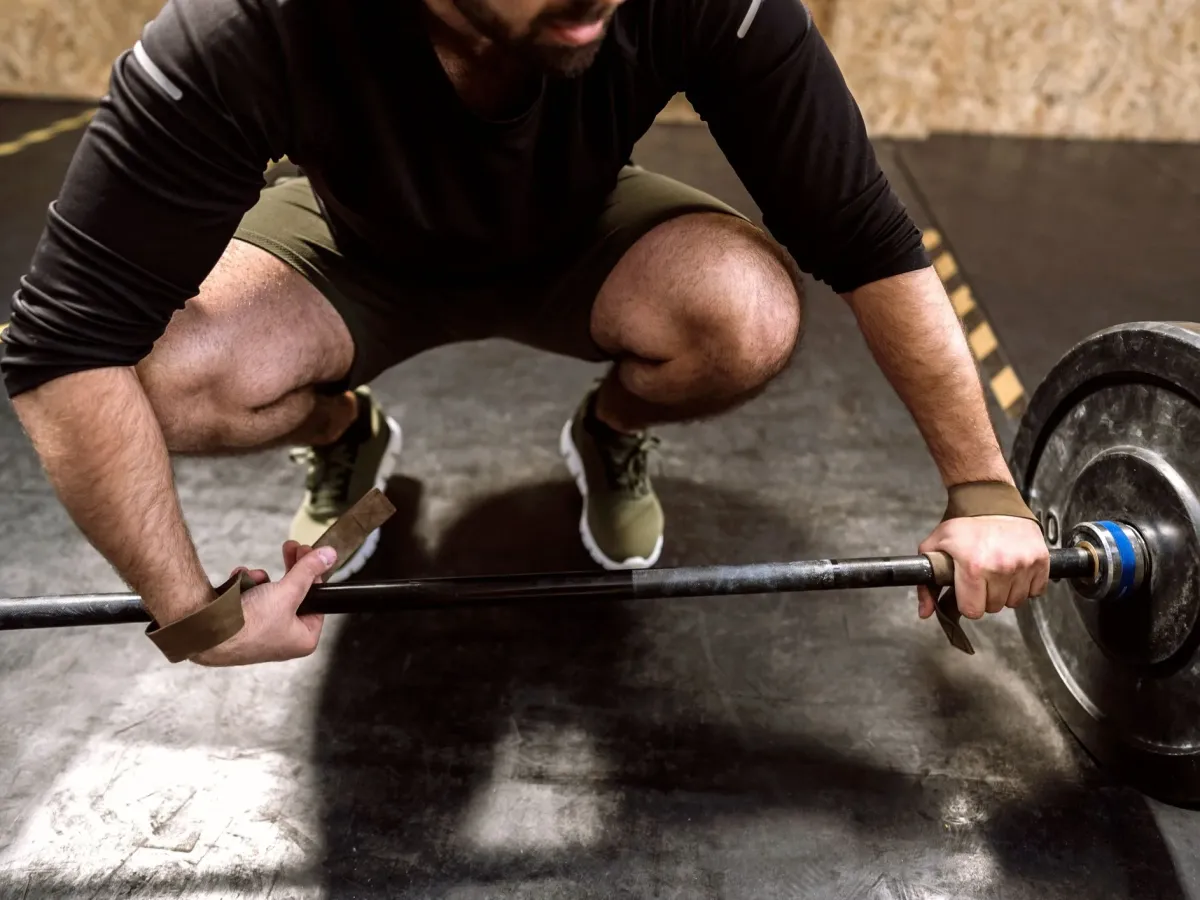

At most gyms, Olympic lifting lives in a kind of cultural quarantine.
In the corner you’ll see a platform, a few battered bumper plates, maybe a chalk bowl that looks like it has survived a small war. Someone is dropping a barbell with the confidence of a person who has decided gravity is negotiable. Nearby, everyone else is doing what they always do: curls, presses, machines, the comforting choreography of fitness.
The separation is understandable. Olympic-style lifts — the snatch and the clean and jerk — look technical, theatrical, even a little hostile to the uninitiated. They’re associated with competitions, with loud rooms, with people who seem to speak in abbreviations: “triple extension,” “catch,” “turnover,” “pull under.”
But here’s the part that rarely gets said plainly: you don’t have to be an Olympic lifter to benefit from Olympic lifting.
Not because you should start throwing heavy barbells overhead for fun, but because the drills that teach Olympic lifting teach something almost everyone needs: cleaner reps. Better positions. More coordination. A body that can produce force quickly and accept it safely.
Even if your goals are simple — build muscle, get stronger, feel athletic again — these drills can sharpen your training in a way that typical gym work often doesn’t. They teach you to move with intention. They punish laziness in posture. They reward a kind of disciplined speed.
They also have an unexpected side effect: they make you pay attention.
Below are seven Olympic-style lifting drills that can improve your technique and make your reps cleaner — even if you never compete, never learn a full snatch, and never put on a singlet in your life.
A safety note that matters: Olympic-style drills demand mobility, timing, and joint tolerance. If you have shoulder, wrist, back, or knee issues, keep loads light, progress slowly, and consider working with a qualified coach. The goal is cleaner reps, not a new injury story.
What “Cleaner Reps” Actually Means
In the gym, “clean” gets used as a compliment. But it’s also a standard.
A clean rep is usually one that has:
- Good positions (your joints are stacked and stable)
- Clear intent (you know what you’re trying to do)
- Control where it matters (you’re not flailing through the hard part)
- Speed where it’s useful (you’re not grinding everything to a halt)
Olympic lifting drills teach these qualities because the lifts don’t allow you to fake them for long. A sloppy deadlift can still move. A sloppy snatch usually doesn’t.
That’s why the drills are valuable even if you never chase the full lifts: they train the habits that keep strength training honest.
1) The Tall Clean (and Tall Snatch): Learning to Pull Under, Not Yank Up
If you’ve ever watched someone “clean” a bar by curling it up and then doing an awkward reverse biceps-and-hope maneuver, you’ve seen the most common misunderstanding: people think the clean is about pulling the bar up.
It’s not. It’s about pulling yourself under.
The tall clean is a drill that teaches this without letting you use momentum from your legs. You start tall — no dip, no drive — and you practice the turnover into the front rack.
What it trains:
- Fast elbows
- Proper rack position
- Confidence receiving the bar
- The idea that the body moves under the bar, not the other way around
How to do it (clean version):
- Start standing tall with the bar at mid-thigh, grip slightly wider than shoulder width.
- Rise onto your toes slightly and shrug, then quickly pull yourself under into the front rack.
- Catch in a quarter squat with elbows high.
- Stand up.
Use an empty bar or very light weight. The point is speed and timing, not load.
Common cues:
- “Elbows to the ceiling.”
- “Meet the bar.”
- “Fast feet, fast elbows.”
Where it fits:
As part of your warm-up or technique block, 3–5 sets of 2–3 reps.
Why it makes reps cleaner:
Because it trains the turnover and receiving position — the part that usually looks messy — without letting you hide behind a big pull.
2) Clean Pulls and Snatch Pulls: The Discipline of a Straight Bar Path
Pulls are one of the most useful drills for people who want the athletic benefits of Olympic lifting without the complexity of catching the bar overhead or in the rack.
A clean pull is essentially the powerful “pull” portion of the clean, performed without the turnover. You accelerate the bar, extend hard, and then… you stop. You don’t try to catch it. You just return it to the floor under control.
It’s a surprisingly effective way to learn how to generate power without turning every rep into a circus.
What it trains:
- A strong hinge position
- Power through the hips and legs
- Bar closeness (the bar should stay near your body)
- Timing of extension
How to do it:
- Start in your clean setup: bar over midfoot, back tight, shoulders slightly over bar.
- Pull smoothly to the knees (controlled, not yanked).
- As the bar passes the knees, bring it in close and accelerate.
- Finish tall — hips and knees extended, shoulders shrugged — then return.
You can also do this from the hang (bar starting above knees) to focus on the explosive portion.
Load guidance:
Moderate. You should move it fast. If it’s grinding, it’s too heavy.
Where it fits:
Before deadlifts, before cleans, or on a “power” day: 3–5 sets of 2–5 reps.
Why it makes reps cleaner:
Because it teaches you to keep the bar close and move in the correct sequence — a skill that improves everything from deadlifts to kettlebell swings.
3) The Hang Power Clean (or Hang Power Snatch): Learning to Be Explosive Without Getting Lost
The hang power clean is one of the best “gateway” drills for non-competitors. It’s simpler than lifting from the floor, it’s easier to control than a full clean, and it teaches the most important part: the explosive extension.
Starting from the hang removes some of the complexity of the first pull (from floor to knees) and puts you right where the action is.
What it trains:
- Explosive hip extension
- Timing and speed
- The front rack catch in a manageable range
- Athletic posture
How to do it:
- Stand tall with the bar, then hinge to the hang position (bar above knees, back tight).
- Pause briefly — feel hamstrings loaded, shoulders over bar.
- Drive hard through the floor, extend, and pull under into a quarter squat catch.
- Stand.
Start light. Keep the reps crisp. Think “snap,” not “heave.”
Where it fits:
As your main explosive movement 1–2x/week: 4–6 sets of 2–3 reps.
Why it makes reps cleaner:
Because it teaches clean force production — the kind that makes your squats and deadlifts feel more athletic, and your whole training less sluggish.
4) The High Hang (Hip) Clean: A Drill for Timing and Patience
The high hang clean is performed with the bar at the hip crease — very high — which forces you to be precise. You can’t wind up. You can’t drift forward. You have to dip slightly and then explode.
It’s the drill equivalent of a short poem: there isn’t room for extra words.
What it trains:
- The dip and drive rhythm (especially relevant for jerks)
- Bar contact in the right place
- Speed under the bar
- A vertical, clean extension
How to do it:
- Start tall with the bar at the hip crease, shoulders slightly in front of the bar.
- Perform a small dip (bend knees slightly, torso stays upright).
- Drive up hard, shrug, and pull under to catch.
Programming:
3–5 sets of 2 reps, light to moderate.
Why it makes reps cleaner:
Because it exposes timing errors immediately. If you’re mistimed, the bar will loop away or crash. If you’re crisp, it feels effortless.
5) The Front Squat Pause: Building the Position That Makes Cleans Look Smooth
If you want to make your cleans look cleaner — and make your squats stronger — practice the front squat with a pause.
The front rack position is unforgiving. It demands a tall torso, braced core, and strong upper back. A pause at the bottom removes the bounce and forces you to own the position.
Even if you never clean, front squats teach you to stay upright under load — a skill that transfers to many lifts and, frankly, to daily life.
What it trains:
- Upright posture and bracing
- Mobility in ankles, hips, and thoracic spine
- Confidence in the “bottom”
- Upper back strength
How to do it:
- Front rack the bar (or cross-arm grip if needed).
- Descend under control.
- Pause 2–3 seconds at the bottom without collapsing.
- Drive up.
Keep it lighter than your regular front squat. The pause is the difficulty.
Where it fits:
On squat day: 3–5 sets of 3–5 reps.
Why it makes reps cleaner:
Because it teaches you to stay organized where you usually lose organization. Clean reps are often just strong positions repeated.
6) The Jerk Dip and Drive: Leg Power With a Still Upper Body
The jerk looks like an upper-body movement because the bar ends overhead. But the jerk is primarily legs — a vertical drive — with the arms finishing the job.
Many people press the bar up slowly, turning the jerk into a strained overhead press with a small panic jump. The jerk dip and drive drill teaches the opposite: a powerful leg drive while the torso stays stacked and stable.
This drill can be done with a barbell or even a PVC pipe.
What it trains:
- A vertical dip (knees forward, torso upright)
- A strong drive (like jumping)
- Control of ribcage and spine
- Timing
How to do it:
- Start with the bar in the front rack.
- Dip straight down a few inches — torso upright, weight balanced midfoot.
- Drive straight up hard and fast, finishing tall.
- Do not split or catch overhead; just reset.
Programming:
3–5 sets of 3 reps, light.
Why it makes reps cleaner:
Because it builds a clean vertical force path. That improves not only jerks but also squats and presses, which often get messy when the torso can’t stay stacked.
7) Overhead Squat or Snatch Balance (Light): The Confidence Drill
If the snatch is the lift people fear, it’s often because of the overhead position: the sensation of having a bar above your head while you squat beneath it. It feels precarious — until it doesn’t.
Two drills build that comfort: the overhead squat and the snatch balance. For non-competitors, the overhead squat is usually the safer, simpler starting point.
What it trains:
- Shoulder stability
- Thoracic mobility
- Midline control
- The ability to receive weight overhead confidently
How to do it (overhead squat):
- Use a light bar or PVC.
- Press or snatch grip the bar overhead, elbows locked, shoulders active.
- Squat slowly to a comfortable depth, keeping the bar stacked over midfoot.
- Stand.
How to do it (snatch balance, optional and advanced):
- Bar on back like a squat.
- Dip slightly and drive, then “punch” into the overhead catch as you drop into a squat.
If you’re not coached, keep snatch balance very light or skip it. Overhead squats alone will do plenty.
Programming:
2–4 sets of 3–6 reps, light.
Why it makes reps cleaner:
Because it teaches you to stabilize overhead — a skill that improves presses and reduces the “wobbly” feeling that makes people avoid overhead work.
How to Build a Simple “Cleaner Reps” Session (Even in a Regular Gym)
You don’t need a full Olympic lifting program. You need a short technique block that fits into your usual training.
Here are two templates.
Template A: Lower Body + Power (45–60 minutes)
- Hang power clean — 5 x 2 (light/moderate, crisp)
- Front squat pause — 4 x 3
- Clean pulls — 3 x 3
- Assistance (optional): RDLs, lunges, core work
Template B: Upper Body + Athleticism (45–60 minutes)
- Jerk dip and drive — 5 x 3 (light)
- Push press or strict press — 4 x 5
- Rows or pull-ups — 4 x 8–12
- Overhead squat — 3 x 5 (light, controlled)
Keep the Olympic-style drills early, when you’re fresh. They’re about coordination and speed. They’re not meant to be done while exhausted.
The Cues That Make These Work (And Make You Safer)
If you take nothing else, take these:
- “Bar close.” The bar should travel near your body; looping is wasted energy.
- “Finish tall.” Extension should be vertical — hips and knees extend fully.
- “Then pull under.” Don’t keep pulling upward when you should be moving under.
- “Fast elbows.” In cleans, the rack position is made by quick elbows, not slow hands.
- “Quiet feet.” Stomping is not the goal; controlled repositioning is.
Cleaner reps are not about perfection. They’re about removing obvious leaks.
Why This Matters If You’re Just Trying to Get Strong (or Look Better)
It’s easy to see Olympic lifting drills as a niche skill set. But the qualities they teach are widely useful:
- Power: the ability to produce force quickly (useful for sports, aging well, feeling athletic)
- Coordination: moving multiple joints in sequence without chaos
- Stability: owning positions under load
- Intent: lifting with purpose rather than just surviving sets
When you train these qualities, your other lifts often improve — and they improve in a way that feels good. Your deadlifts get snappier off the floor. Your squats feel more upright. Your presses feel more stable. Your body feels more like a system and less like a collection of parts.
And there’s something else, something subtle: Olympic-style drills bring back a sense of play. They remind you that training can involve skill, not just suffering. That you can learn, not just endure.
The Honest Disclaimer: Keep It Light Until It’s Automatic
There’s a temptation — especially for people who like to “work hard” — to load these drills quickly. Resist it.
Technique is not built by forcing. It’s built by repetition with control. Most of these drills should be done light enough that you can move fast and stay precise. If your reps look sloppy, the drill is no longer teaching what it’s supposed to teach.
Think of it like learning an instrument. You don’t start with a concerto at full speed. You start with scales.
The payoff is that, over time, those scales become music.
A Final Thought: The Point Isn’t to Become an Olympic Lifter
The point is to become a cleaner lifter.
To move with purpose. To stay stacked. To generate force and accept it without drama. To make the gym feel less like a place where you brace for discomfort and more like a place where your body becomes capable.
Olympic lifting drills can do that — not with flair, but with a kind of quiet insistence on good movement.
And once you’ve felt that difference — once you’ve walked up to the bar and had your first set feel, unexpectedly, smooth — it’s hard to go back.
Clean reps are a form of self-respect. They’re also, in the long run, what make strength sustainable.
Even if you’re not competing. Especially if you’re not.







 Sign In