
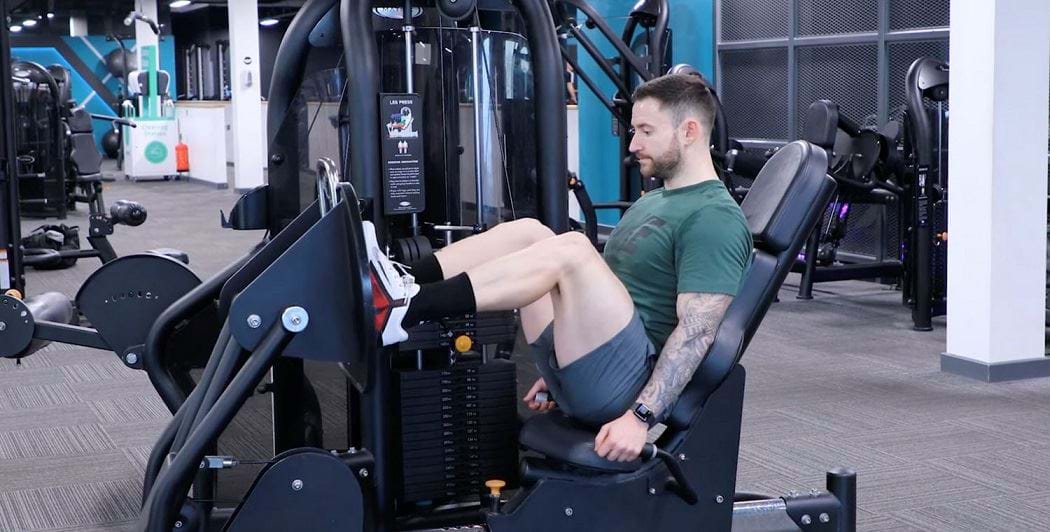

The leg press is one of the most popular machines in the gym for a reason. It’s straightforward, it lets you move a lot of weight, and it feels—especially on a crowded day—like a rare moment of control. You sit down, you press, you get off. No one asks you to “work in,” no one curls in the squat rack, and you don’t have to worry about balancing a bar on your back.
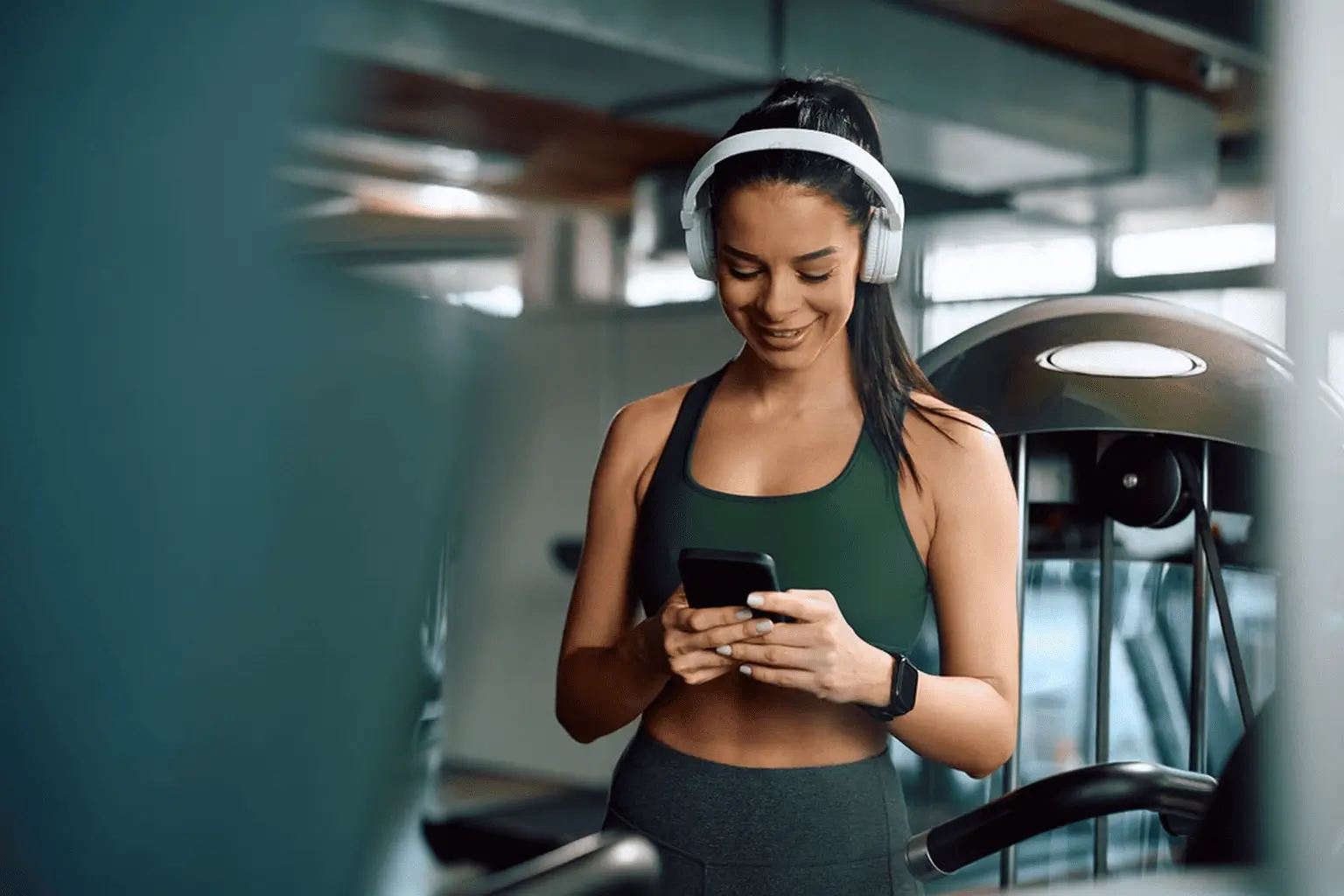
Which is why it’s so annoying when the leg press is taken. Not just taken—occupied by someone who appears to be training for a career in phone scrolling, with a set every seven minutes, the machine acting as a throne.
If you lift long enough, you learn a small truth: the gym will not always cooperate with your plan. That doesn’t mean your workout has to fall apart. It just means you need substitutions that make sense—moves that hit the same muscles, with a similar training effect, without requiring the exact machine you came for.
The leg press is mostly a knee-dominant lower-body exercise that heavily targets the quadriceps, while also involving glutes and adductors depending on foot placement and depth. It also offers stability, which lets you train hard even when you’re fatigued or not feeling particularly coordinated.
So the best alternatives will do one or more of the following:
- Train the quads through a meaningful range of motion
- Allow progressive overload (you can make them harder over time)
- Offer enough stability to push effort safely
- Be practical in a busy gym (minimal equipment, low setup time)
Here are seven options, with simple ways to scale each one—so you can keep building strong legs even when the gym is crowded and your patience is not.
How to choose the right alternative in 30 seconds
Ask yourself:
- Do I have dumbbells available?
- Is there an open bench or box?
- Is a Smith machine free?
- Can I tolerate single-leg work today?
- Do my knees feel okay with deep bending?
Then pick one of the options below. You don’t need all seven. You need one that fits the room you’re in.
1) Bulgarian Split Squat (a leg press in disguise)
If you want an exercise that can match the leg press for sheer “this will work” effectiveness, this is the one. It’s also the one most people avoid, which is a clue.
Why it works:
It loads the quads and glutes hard with relatively light weights because you’re training one leg at a time. It also exposes asymmetries—your stronger side can’t hide behind your weaker one.
How to do it:
- Stand a step or two in front of a bench.
- Place the top of your back foot on the bench behind you.
- Lower until your front thigh approaches parallel (or your comfortable depth), then stand back up.
- Keep your torso slightly forward and your front foot planted.
Make it more quad-focused:
Bring your front foot a little closer to the bench and keep your knee traveling forward over your toes—within your comfort and mobility.
Sets/reps: 3–4 sets of 6–10 per side
Rest: 60–90 seconds between sides
Common mistake:
Letting the front heel lift or collapsing forward. Reduce weight and own the movement.
Crowded-gym tip:
You need one bench and a pair of dumbbells. That’s usually easier to find than a free machine.
2) Goblet Squat (simple, honest, scalable)
The goblet squat is the “I can always do something” option. It won’t let you load as heavy as a barbell squat, but it can absolutely challenge your legs if you do it properly.
Why it works:
It trains the same squat pattern and hammers the quads through a deep range. It also encourages good positioning: upright torso, controlled depth.
How to do it:
- Hold one dumbbell vertically at your chest (like a goblet).
- Sit down between your knees.
- Keep your whole foot planted and your chest lifted.
Make it feel like the leg press:
Use a slow tempo: 3 seconds down, pause 1 second at the bottom, stand up strong. That turns a “moderate” weight into a serious set.
Sets/reps: 3–4 sets of 8–15
Rest: 60–90 seconds
Common mistake:
Rushing the reps. If you want leg-press intensity, you have to earn it with control.
3) Smith Machine Squat or Split Squat (stability when you want to push)
Some people love to hate the Smith machine. But on a busy day, it can be a very practical tool: stable, quick to set up, and easier to push near failure without worrying about balance.
Why it works:
The leg press gives you stability. The Smith machine can do the same. That stability lets you load the quads hard.
Two good options:
A) Smith squat (feet slightly forward)
- Set the bar on your upper back like a squat.
- Step your feet slightly forward so you can stay upright.
- Squat to a comfortable depth.
B) Smith split squat (one leg forward, one back)
- Get into a split stance under the bar.
- Descend straight down, drive up.
Sets/reps: 3–4 sets of 6–12
Rest: 90 seconds
Common mistake:
Going too heavy too soon because it feels stable. Control still matters. If your knees or back feel “off,” adjust stance or reduce load.
4) Dumbbell Step-Ups (the functional quad builder)
Step-ups look innocent. They are not. Done well, they’re a leg press that makes you balance and stabilise—useful if you want strength that shows up outside the gym.
Why it works:
They hammer the quads and glutes, and they train hip and knee control. They’re also easy to progress: higher step, heavier dumbbells, slower reps.
How to do it:
- Use a box or bench at knee height or slightly lower.
- Place one foot fully on top.
- Stand up by driving through that foot—avoid pushing off the back foot.
- Step down with control.
Sets/reps: 3 sets of 8–12 per side
Rest: 60–90 seconds
Make it more quad-focused:
Use a slightly lower box and let the knee travel forward. Move slowly on the way down.
Common mistake:
Launching off the back leg. If your back foot is doing the work, you’re cheating yourself.
5) Reverse Lunge (a knee-friendly alternative with real payoff)
When the gym is packed, space is often the limiting factor. Reverse lunges work in a small footprint and are often kinder to knees than forward lunges.
Why it works:
They train quads and glutes with a strong stability demand, and they’re easy to load with dumbbells.
How to do it:
- Stand tall, dumbbells at your sides.
- Step one foot back and lower into a lunge.
- Drive through your front foot to return.
Sets/reps: 3–4 sets of 8–12 per leg
Rest: 60–90 seconds
Make it harder:
Add a slight pause at the bottom, or turn it into a “deficit reverse lunge” by standing on a plate for a deeper range of motion.
Common mistake:
Front knee collapsing inward. Think “knee tracks over middle toes.”
6) Hack Squat Pattern Without the Hack Squat (Heel-Elevated Dumbbell Squat)
Not everyone has access to a hack squat machine, and even if your gym does, it’s often as busy as the leg press. A heel-elevated squat can mimic some of that upright, quad-heavy feel.
Why it works:
Elevating your heels lets your knees travel forward more comfortably and keeps your torso more upright, increasing quad demand.
How to do it:
- Place your heels on small plates, a wedge, or even a sturdy, low ramp.
- Hold dumbbells at your sides or one dumbbell in goblet position.
- Squat down, keeping knees tracking forward and out.
- Stand up strong.
Sets/reps: 3–4 sets of 10–15
Rest: 60–90 seconds
Make it harder:
Slow tempo and a 1–2 second pause at the bottom.
Common mistake:
Letting the arch collapse. Keep the whole foot engaged, even with heels elevated.
7) Leg Extension (yes, it counts—if you use it right)
The leg press is a compound movement. The leg extension is isolation. They are not the same. But if your goal is to train the quads hard when everything else is taken, leg extensions can be an excellent substitute or addition—particularly for hypertrophy and knee resilience (in the right context).
Why it works:
It targets the quads directly, especially near knee extension. It’s also very easy to push close to failure without worrying about technique breakdown elsewhere.
How to do it well:
- Set the pad so it sits just above your ankles.
- Use a controlled range (don’t slam into lockout).
- Slow the lowering phase.
- Stop if you feel sharp knee pain—mild discomfort is different, but pain is a signal.
Sets/reps: 3–4 sets of 10–20
Rest: 60 seconds
Make it feel like a “real” strength stimulus:
Try a “mechanical drop set”: do 10–12 full reps, then 5–8 partial reps in the top half of the range.
Common mistake:
Going too heavy and swinging. If your hips lift off the seat, the weight is too much.
Two fast “packed gym” leg workouts (30 minutes)
When you’re short on time—and equipment is scarce—structure matters. Here are two templates.
Plan A: Quad Focus (leg press substitute)
Warm-up: 3–4 minutes (bodyweight squats, hip hinges, lunges)
- Bulgarian split squat — 3 sets of 8 per side
- Heel-elevated dumbbell squat — 3 sets of 12
- Leg extension — 2–3 sets of 15–20
Optional finisher: walking lunges or step-ups — 1 set to a “challenging but controlled” stop
Plan B: Balanced Legs (strength + stability)
Warm-up: 3–4 minutes
- Goblet squat — 4 sets of 10 (slow eccentric)
- Reverse lunge — 3 sets of 10 per side
- Dumbbell Romanian deadlift — 3 sets of 10
Optional: calf raises — 2 sets of 20
If you’re doing this twice a week, alternate Plan A and Plan B.
How to progress without the leg press
The leg press makes progression obvious: add a plate. These moves can be progressed just as reliably:
- Add reps (8 → 10 → 12)
- Add sets (3 → 4)
- Increase range of motion (deeper squat, higher step-up if safe)
- Slow the eccentric (3 seconds down)
- Add a pause at the hardest point
- Reduce rest slightly
Progression doesn’t need to be complicated. It needs to be consistent.
The leg press wasn’t magic. Your effort was.
A crowded gym can feel like a test of your mood more than your fitness. You came for a plan, and now the plan is blocked by someone filming a set of half reps and then re-watching it like a film critic. It’s easy to get annoyed. It’s also easy to leave.
But the underlying training goal—strong quads, strong hips, strong legs—doesn’t belong to the leg press machine. It belongs to you. And it’s portable.
So the next time the leg press is taken, you can do what experienced lifters do: pivot without panic. Pick one alternative, do it well, and move on. Strength, in the end, is not just what you lift. It’s also what you adapt to.
Important notice: this content is educational and does not replace an individual evaluation. If you have a history of eating disorders, diabetes, pregnancy, or a medical condition, consult a healthcare professional before making dietary or exercise changes.





 Sign In