



There’s a particular kind of frustration that shows up in the gym — not the dramatic, Hollywood kind, but the quiet, practical kind. You’re strong enough to row the weight. Your legs can handle the deadlift. Your back is ready for the pull-up progression you’ve been chasing for weeks.
And then your hands give out.
Grip is the bouncer at the door of strength training. It doesn’t care how fit you are, how determined you feel, or how good your form looks on video. If your fingers and forearms can’t hold on, the set ends. And the body learns a blunt lesson: this is your limit.
The irony is that grip strength isn’t only about lifting heavier. It’s about making everything else easier — pull-ups, kettlebell swings, farmer’s carries, rock climbing, jiu-jitsu, even mundane chores like carrying groceries without doing the awkward mid-sidewalk hand switch. A better grip often turns “I can’t” into “I can,” not because your back suddenly transformed overnight, but because the weakest link stopped snapping first.
Forearms don’t get much glamour. They’re rarely the centerpiece of a workout plan; they’re the supporting cast that only gets noticed when the show falls apart. But when you train them with a little intention — and not by mindlessly curling your wrists until your elbows ache — they reward you with something unusually transferable: capacity. The kind of strength that makes other strength show up more consistently.
Below are seven exercises that build grip in ways that carry over to the rest of your training (and your life). You don’t need to do all seven at once. In fact, you shouldn’t. Pick two or three, cycle them, and treat them like the skill work they are: brief, specific, repeatable.
First, a quick map of grip
Grip strength isn’t one thing; it’s a few closely related things that feel similar until you try to train them.
- Crush grip: closing your hand hard (think: grippers, squeezing a bar, heavy dumbbells).
- Pinch grip: holding something between thumb and fingers (think: plates, blocks, smooth objects).
- Support grip: holding a load for time (think: carries, hangs, deadlifts for reps).
- Wrist stability: keeping the wrist from collapsing under load (essential for presses, front rack positions, kettlebells).
- Pronation/supination: rotating the forearm (quietly crucial for elbow health and resilient pulling).
A well-rounded “grip program” touches more than one of these. It also respects one inconvenient fact: forearms are easy to overwork. The tissues are small, the tendons take time to adapt, and the soreness can be outsized compared with how “small” the training seems. The goal is consistent progress, not a week of heroics followed by a month of irritated elbows.
With that, let’s get into the exercises.
1) Dead Hangs (Passive and Active)
If you want one movement that’s brutally honest — and simple enough to repeat for months — it’s the dead hang.
A hang trains support grip in the most direct way possible: your bodyweight is the load, your hands are the interface, and time is the scoreboard. It also teaches the shoulder blades to behave, which matters for pull-ups, lat pulldowns, and any kind of overhead work.
How to do it
- Grab a pull-up bar with a full grip (thumb wrapped).
- Let your body hang long. Think “tall” through the torso.
- Start with a passive hang: shoulders relaxed, ribs down, breathing steady.
- Progress to an active hang: gently pull the shoulder blades down and back (as if you’re trying to make your neck longer), without bending the elbows.
Programming
- Beginners: 3–5 sets of 10–20 seconds.
- Intermediate: 3–4 sets of 20–40 seconds.
- Advanced: 2–3 sets of 45–60+ seconds, or add load with a belt.
Make it better (without making it risky)
- Use chalk if sweat is the limiting factor.
- If the bar is too aggressive on the skin, build time gradually rather than “toughing it out.”
- If shoulder discomfort shows up, shorten the hangs and prioritize the active version with controlled scapular tension.
Why it carries over
Hangs are essentially a “grip tax” on your bodyweight. They make pulling movements less chaotic because your hands stop panicking first. And the simplest improvement — adding 10 seconds — often translates into an extra rep on pull-ups weeks later, the way small upgrades do when they land in the right place.
2) Farmer’s Carries (Heavy, Short, and Unavoidable)
Farmer’s carries are the kind of exercise that looks like a warm-up until you do them heavy. Then they become a negotiation.
They train support grip, postural strength, and the sort of full-body bracing that makes everything else feel more stable. They also give you grip work without the repetitive wrist bending that can irritate elbows.
How to do it
- Pick up two heavy dumbbells or kettlebells.
- Stand tall: ribs stacked over pelvis, shoulders down, neck long.
- Walk with short, controlled steps. Don’t rush.
- Keep the handles quiet — no swinging, no clanging.
Programming
- Heavy carries: 4–6 sets of 20–40 meters (or 20–40 seconds).
- Rest 60–120 seconds between sets.
- Choose a load that makes the last 5–10 seconds feel like a serious decision, but doesn’t cause you to hunch or lose control.
Variations that add range
- Suitcase carry (one weight): challenges grip and trunk stability asymmetrically.
- Rack carry (kettlebells in front rack): more wrist stability, more core, less pure grip — good rotation.
- Trap bar carry: often the heaviest option; excellent for loaded support.
Why it carries over
Carries make the gym feel lighter. They strengthen the “handles” on your strength. And they do it in a way that’s remarkably honest: your grip isn’t asked to perform a trick; it’s asked to hold on while you move through space.
3) Towel Pull-Ups (or Towel Rows) for Real-World Grip
A towel turns an ordinary pull into a different animal. The fabric is thicker, less predictable, and harder to “cheat” by locking into a perfect bar position. It shifts more work into the fingers and thumb — and forces you to stabilize as you pull.
If you can’t do pull-ups yet, you can still do this with rows on a cable or a machine.
How to do it (pull-up version)
- Drape two towels over a pull-up bar, shoulder-width apart.
- Grab one towel in each hand.
- Hang, stabilize, then pull.
Row version
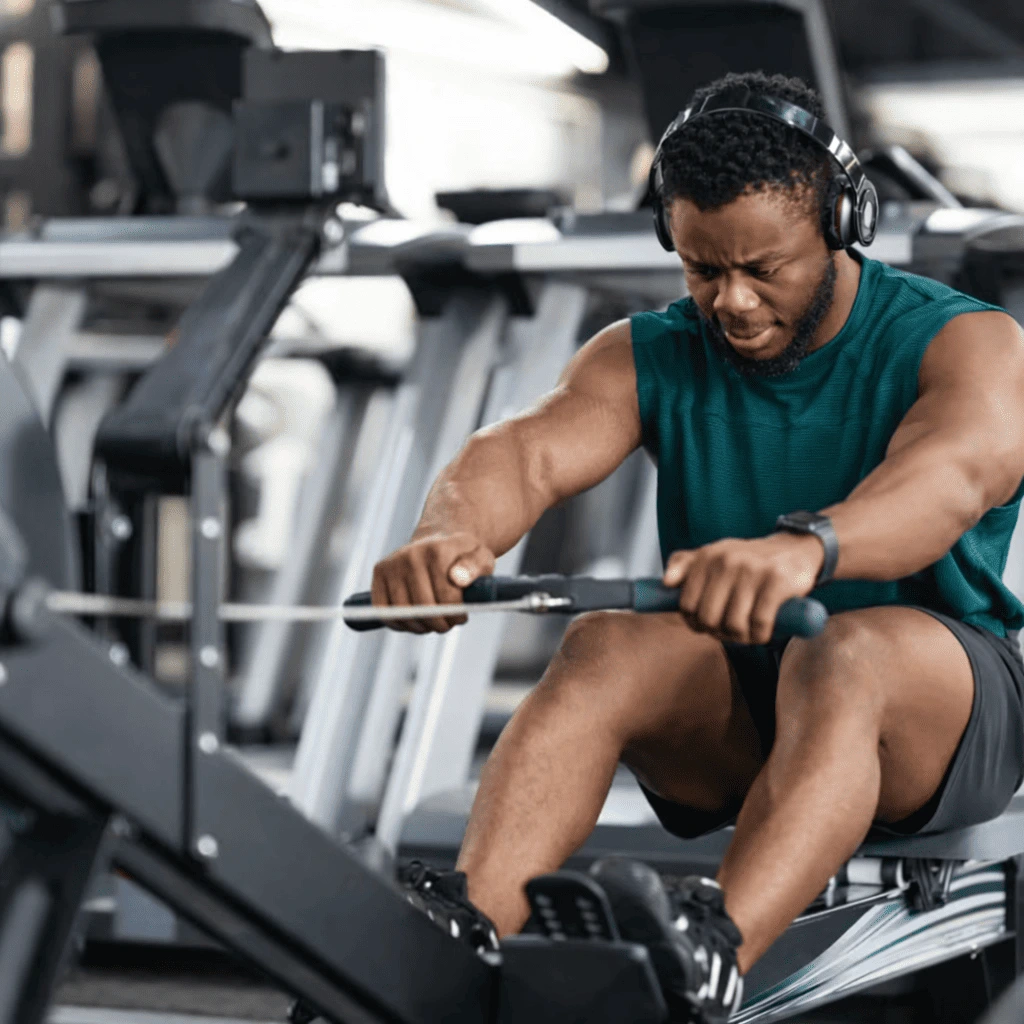
- Wrap a towel around a cable handle or attach it to a row station.
- Row while keeping wrists neutral and shoulders steady.
Programming
- 3–5 sets of 3–8 reps for pull-ups (or 8–12 reps for rows).
- Rest 90–150 seconds.
- Keep reps clean; stop before grip turns into frantic squeezing.
Important note
Towel work is intense. Your forearms will feel it quickly. Treat it like a “once or twice a week” tool, not a daily ritual.
Why it carries over
Towel grips resemble the messiness of real life — ropes, bags, thick handles, odd objects. They strengthen the thumb-and-finger coordination that standard bars sometimes don’t challenge as much. They also expose the difference between “I can pull” and “I can hold and pull,” which is the version that matters.
4) Plate Pinches (The Thumb’s Revenge)
The thumb is often the neglected hero of grip. Plate pinches fix that quickly.
Pinch grip isn’t just a party trick; it’s a foundation for holding smooth or awkward items — and it improves your overall hand strength balance. If your crush grip is decent but your thumb is undertrained, your grip can still be oddly fragile.
How to do it
- Take two weight plates and pinch them together smooth-side out (start light).
- Stand tall and hold.
- Keep shoulders down; don’t shrug the plates into a “trap exercise.”
Programming
- 4–6 holds of 15–30 seconds.
- Rest 60–90 seconds.
- Increase difficulty by adding time, then load.
Options
- If your gym has pinch blocks or dedicated grip tools, use them.
- At home, a thick book held by its spine can be a surprisingly effective pinch hold.
Common mistake
Letting the wrist collapse backward. Keep the wrist neutral — imagine your knuckles reaching toward the floor slightly, rather than bending the wrist to “save” the fingers.
Why it carries over
Pinch strength shows up when you least expect it: carrying awkward bags, holding a heavy dumbbell by its head, controlling kettlebells during transitions, maintaining grip on wide bars or fat grips. It’s the kind of strength that feels practical because it is.
5) The Wrist Roller (Old-School, Still Effective)
The wrist roller looks like something you’d find in a dusty corner of a boxing gym, which is part of its charm. It’s simple: a handle, a rope, a weight. You roll the weight up and down by winding the rope, and your forearms light up in a way that’s hard to replicate.
It trains the forearm muscles through sustained tension and teaches you to control the wrist rather than fling it.
How to do it
- Hold the roller handle with both hands at shoulder height, arms straight.
- Roll the weight up by turning the wrists, then reverse to lower slowly.
- Keep shoulders down and core braced so the work stays in the forearms.
Programming
- 2–4 rounds up and down.
- Rest 90–120 seconds between rounds.
- Start lighter than you think. The burn arrives late and stays.
Why it carries over
The wrist roller builds endurance in the forearm flexors and extensors, which can improve how long you can hold onto barbells, kettlebells, and heavy dumbbells. It also strengthens wrist control — the quiet skill that keeps heavy pressing and front rack positions from feeling unstable.
6) Hammer Curls + Controlled Rotations (Pronation and Supination)
Hammer curls are often treated like a biceps variation — which they are — but they’re also a forearm exercise in disguise. Done with control, they strengthen the brachioradialis (a major forearm muscle) and help build a grip that doesn’t collapse when fatigue hits.
Add slow rotations and you start training the “twist” capacity of the forearm: pronation and supination. This matters for elbow resilience, tendon health, and the ability to hold and control objects when the wrist isn’t perfectly aligned.
How to do it
- Hold dumbbells with a neutral grip (thumbs up).
- Curl without swinging. Keep elbows near your sides.
- For rotations: hold a light dumbbell or a hammer by the end, rotate the forearm slowly palm-up to palm-down, and back.
Programming
- Hammer curls: 3–4 sets of 8–12 reps.
- Rotations: 2–3 sets of 6–10 slow reps each direction.
- Keep the rotation weight light. The goal is control, not ego.
Why it carries over
Rotational strength is a missing piece for many lifters. It supports healthier elbows during pulling volume and helps you grip when the load isn’t perfectly symmetrical — which is most of life. It’s also one of the few grip-adjacent trainings that feels like “injury prevention” without being boring.
7) Finger Extensions (Because Grip Isn’t Only Closing Your Hand)
Grip training is usually all flexion: squeezing, holding, crushing. But the hand also needs the opposite: opening.
Finger extensions strengthen the muscles that open the hand and balance the forearm. This isn’t glamorous work. It’s also the kind that keeps your elbows happier when you’re doing lots of pulling, lots of carries, or lots of gripping sports.
How to do it
- Use a rubber band around the fingers (or a purpose-built finger extension band).
- Open the fingers against resistance, then control back.
- Keep the movement smooth, not snappy.
Programming
- 2–4 sets of 15–25 reps.
- Add it at the end of workouts or between sets of pressing.
Why it carries over
Balanced strength tends to be durable strength. Training only the “close” muscles can make forearms tight and cranky. Extension work is a small investment that often pays off in fewer aches and steadier progress — especially if you’re also typing all day and then gripping hard at night.
How to put it into a simple plan (without turning it into a second job)
Forearm training works best as a short add-on — 8 to 15 minutes — done consistently.
Here are three easy templates:
Option A: The Minimalist (2x/week)
- Dead hangs: 4 sets of 20–40 sec
- Farmer’s carries: 4 sets of 20–40 m
- Finger extensions: 2 sets of 20–25 reps
Option B: The Pulling Booster (2–3x/week)
- Towel rows or towel pull-ups: 4 sets
- Plate pinches: 4–5 holds
- Rotations (light): 2–3 sets
Option C: The Balanced Rotation (3x/week, short sessions)
- Day 1: Carries + finger extensions
- Day 2: Hangs + wrist roller
- Day 3: Plate pinches + hammer curls/rotations
Progression rule that keeps you sane:
Increase time first (holds, hangs, carries). Then increase load. Don’t chase both at once.
Where to place it:
After your main lifts, when your nervous system is already warm and you’re not risking grip fatigue before heavy pulling. If grip is the limiting factor for deadlifts or rows, do forearms on a different day or after the main work.
A few mistakes that make grip training backfire
Doing too much, too soon.
Forearms recover differently. They’re involved in almost everything, and tendons don’t love sudden volume spikes.
Turning every set into a max effort.
Grip improves with repeated submaximal work. Save “all-out” for occasional tests.
Ignoring pain signals around the elbow.
Forearm work can irritate the medial or lateral elbow if you’re aggressive. If you feel sharp pain (not just muscle burn), scale down volume, use neutral grips, and emphasize carries and hangs over high-rep wrist flexion.
Letting wrists collapse.
Wrist position matters. Neutral wrists tend to be friendlier on joints and more transferable to compound lifts.
The quiet payoff
Grip training doesn’t offer the dramatic before-and-after story that people love to post. It’s more like upgrading the infrastructure of a city: fewer bottlenecks, smoother traffic, more capacity for everything else.
One day you’ll realize your rows feel cleaner. Your pull-ups don’t stall at the top because your hands are slipping. Your deadlifts feel less like you’re surviving the bar and more like you’re controlling it. Even outside the gym, you’ll carry things with less strain and less fuss.
And that’s the real point. Not bigger forearms for their own sake (though that may happen), but a stronger connection between your body and the work you’re asking it to do.
Conclusion
A better grip is rarely the goal people announce — it’s the goal that makes the other goals possible. Train it the way you’d train anything worth keeping: small doses, steady repetition, and enough variation to stay resilient.
And if you want to keep it simple, it’s easy to have a structured training program using the Fitsse app — so your grip work (and everything else) actually gets done, week after week.
Important notice: this content is educational and does not replace an individual evaluation. If you have a history of eating disorders, diabetes, pregnancy, or a medical condition, consult a healthcare professional before making dietary or exercise changes.







 Sign In