

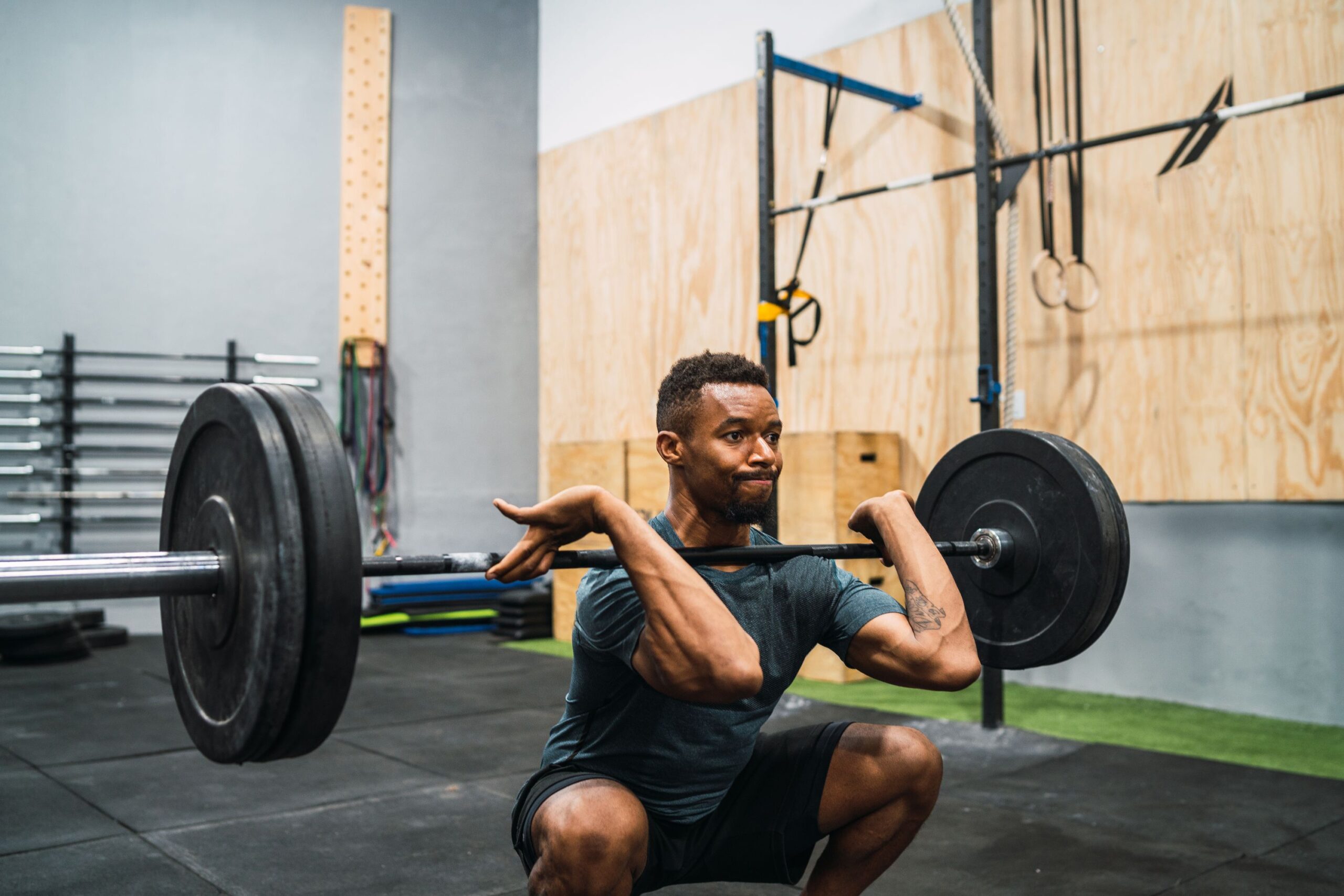

On most weekday evenings, the gym is a small democracy of effort: people negotiating space, time and expectations under fluorescent lights. Near the squat racks you’ll see the same quiet drama play out again and again — someone steps under the bar, inhales like they’re about to dive, and then, halfway down, everything looks a little… off. Knees drift. Heels lift. The torso pitches forward as if chasing the floor. The bar wobbles on the way back up. The lifter racks it, shakes out their hands, and stares at their reflection with the universal question: Why does this feel harder than it should?
The honest answer is rarely exotic. It’s usually basic.
Technique isn’t a secret handshake. It’s a small set of repeatable behaviors — the kind you can do when you’re tired, distracted, or training in a crowded room with someone filming a set two feet behind you. And while every body is different, the squat, deadlift and press share a common demand: you must organize your skeleton and your breath so the force you generate actually goes where you want it to go.
These are six fundamentals that, practiced patiently, tend to make the big three lifts look smoother, feel safer, and progress faster — not by turning you into a different person, but by giving your current strength somewhere clean to live.
1) Learn the Brace: Your Breath Is a Piece of Equipment
If you fix only one thing, fix this.
Most “form breakdown” is really “brace breakdown.” When your torso can’t act like a solid cylinder, your body starts making side deals: the lower back overextends to compensate, the ribs flare, the hips shoot up early, the bar drifts away from your center, and suddenly every rep feels like a negotiation.
What bracing actually is:
Not sucking in your stomach. Not puffing your chest like a superhero. Bracing is creating 360-degree pressure around your midsection — front, sides, and back — so your spine has support while your hips and legs do the work.
How it fixes your squat
A good brace keeps your torso angle consistent. That means you can sit between your hips instead of folding forward to find the bottom. You’ll also feel more stable in the “sticking point,” where the lift often turns into a shaky good-morning.
Useful cues:
- “Ribs down, belt buckle up.” (Even if you don’t wear a belt.)
- “Breathe into your sides.”
- “Make your torso heavy.”
How it fixes your deadlift
The deadlift punishes a soft brace because the bar wants to pull you into flexion. A strong brace lets you transfer force from the floor through your hips without your spine becoming the weak link.
Useful cues:
- “Big breath, lock it in.”
- “Show me your logo” (a neutral chest, not an overarched back).
- “Brace before you pull slack out.”
How it fixes your press
Overhead pressing is bracing in public. If you can’t lock your ribs over your pelvis, you’ll compensate by leaning back — turning a press into a standing incline bench and asking your lower back to be your spotter.
Useful cues:
- “Zip up your ribs.”
- “Glutes tight, quads on.”
- “Press from your midline.”
A simple bracing drill (do it in warm-ups)
- Stand tall. Exhale fully through your mouth like you’re fogging a mirror. Feel your ribs come down.
- Inhale through your nose into your belly and sides. Keep ribs down.
- Hold that pressure, then do a slow bodyweight squat or hip hinge.
The goal is not to feel rigid everywhere — it’s to feel supported where it matters.
2) Build a Real Base: The Tripod Foot and the Middle of the Floor
Weightlifting is often taught from the top down — “chest up,” “back tight,” “eyes forward.” But your body is a stack. If the base is unstable, the rest of the tower improvises.
A reliable base starts with the tripod foot:
- Big toe mound
- Little toe mound
- Heel
Not “weight on your toes.” Not “sit on your heels.” Just pressure distributed so your foot can do what it was designed to do: stabilize and transmit force.
How it fixes your squat
When people cave inward (the knees collapsing) or lose balance, it often begins with the foot rolling in or the heel lifting. Holding the tripod gives the knee a better track and the hip a better job.
Useful cues:
- “Screw your feet into the floor” (a gentle outward torque without moving your feet).
- “Keep the big toe down.”
- “Stand on the whole foot.”
Practical note about stance:
There’s no single perfect stance. Some people squat best with a narrow stance and toes forward-ish; others need wider with toes out. The tell is not aesthetics — it’s whether you can hit depth while keeping the midfoot loaded and the knees tracking without pain.
How it fixes your deadlift
In the deadlift, foot pressure influences bar path. If you rock forward, the bar drifts away and becomes heavier. If you rock back, you’ll overextend and lose leverage off the floor.
Useful cues:
- “Midfoot pressure.”
- “Push the floor away.”
- “Stay glued to the bar.”
How it fixes your press
A stable press is a quiet press. If your feet are shifting, your body will find movement somewhere — usually in the ribs and lower back. In the strict press, your legs don’t drive the bar, but they do anchor the body.
Useful cues:
- “Root down.”
- “Squeeze the floor with your feet.”
- “Don’t dance.”
Shoes matter more than people like to admit:
If you’re squatting heavy in soft running shoes, you’re essentially lifting on foam. A hard, stable sole — lifting shoes or flat, firm trainers — can make your base honest.
3) Master the Hinge and the Wedge: The Deadlift Setup That Makes the Pull Feel “Closer”
Many deadlifts go wrong before the bar even moves. The bar is a truth-teller: it won’t lie about distance. If it’s drifting forward, it’s because you set up too far away or you lost your connection to it.
The key concept here is the wedge — pulling yourself into a strong position between the bar and the floor before you try to stand up with the weight.
How it fixes your deadlift
A good wedge makes the first inch of the pull feel less like yanking and more like standing.
The wedge checklist:
- Bar over midfoot. (Not over the toes.)
- Shins to the bar (lightly, not crashing into it).
- Hips back enough to feel hamstrings but not so high your back turns into a lever.
- Lats engaged — imagine squeezing oranges in your armpits.
- Pull the slack out — tension the bar until you hear/feel the plates “click,” then pull.
Useful cues:
- “Bend the bar around your shins.”
- “Armpits to pockets.”
- “Show your shoulder blades to the wall behind you” (lat tension keeps the bar close).
When the lats are on, the bar wants to travel in a straight line near your body. When they’re off, the bar swings out like a pendulum, and you pay for it with your back.
How it fixes your squat
The hinge matters for squatting because the squat is not “straight down.” Even upright squatters hinge a little. If you can’t hinge with control, your body will default to collapsing forward in the hole.
A simple way to practice:
- Do a tempo squat (3 seconds down) and notice whether you lose your midfoot or your brace.
- Add a pause at the bottom and keep pressure on the tripod foot.
How it fixes your press
The hinge’s cousin in pressing is resisting the urge to lean back. If you can maintain a stacked torso (ribs over pelvis) while creating tension through the glutes and legs, your press becomes cleaner and more vertical.
4) Stack Your Joints: Bar Over Midfoot, Forearms Vertical, Ribs Over Pelvis
“Good form” is often described like art — vague, aesthetic, open to interpretation. But the most useful technique cue in weightlifting is closer to physics:
Stack the system so the load travels over the support.
That typically means:
- Bar stays over midfoot
- Joints line up so force transfers efficiently
- Torso stays organized
How it fixes your squat
The squat is strongest when the bar stays roughly over midfoot. If the bar drifts forward, you fold. If it drifts back, you tip.
A common mistake is trying to keep the chest “too” high at the expense of rib position — turning the brace into a back arch. A stacked squat doesn’t look like a proud military posture; it looks like someone who can breathe and brace at the same time.
Useful cues:
- “Stay stacked.”
- “Ribs down, hips under you.”
- “Sit between your hips.”
How it fixes your deadlift
In a strong deadlift, the bar is close and your shoulders are positioned to pull it vertically. Many lifters overthink “back flat” and end up overextending, which steals hamstring tension and makes the start harder.
Neutral isn’t a pose; it’s a range. Your goal is a position you can hold while under tension.
Useful cues:
- “Neutral spine, not ‘proud chest.’”
- “Wedge in, then stand.”
How it fixes your press
The press becomes dramatically easier when your forearms are vertical at the start and the bar is positioned so you can press it up — not forward, not around your face, not in a zigzag.
Two frequent problems:
- Hands too wide → forearms angle inward, elbows flare, shoulder gets cranky.
- Bar starting too far forward → you chase it.
Useful cues:
- “Knuckles to the ceiling.”
- “Elbows slightly in front of the bar.”
- “Press back slightly, then stack under it.”
And yes, your head should move — just enough to let the bar pass, then return so the bar finishes over the midfoot, not out in front like you’re holding a grocery bag at arm’s length.
5) Own the Eccentric: Control Down, Pause Where You’re Weak, Then Stand Up
Most people train the part of the lift they like — the explosive up. But positions are built on the way down.
A controlled eccentric (the lowering phase) teaches your body where to be. Pauses teach it how to stay there.
This is not about making everything slow forever. It’s about using tempo and pauses as education, not punishment.
How it fixes your squat
If you dive-bomb into the hole and bounce out in a shape you didn’t choose, you’re practicing chaos.
Try this:
- 3 seconds down
- 1 second pause at the bottom
- Stand up with intent
This exposes the real issue quickly:
- If you lose the brace at the bottom, it’s a brace problem.
- If your heels lift, it’s a base/mobility/stance issue.
- If your knees cave, it’s foot pressure + hip control.
How it fixes your deadlift
Deadlifts don’t have a long eccentric unless you insist on it — but you can still use pauses:
- Pause deadlifts one inch off the floor
- Or 2-count pauses at the knee
These teach you to keep the bar close and maintain tension where many lifters lose it and let the bar drift.
How it fixes your press
The press benefits from controlled lowering because it reinforces the groove and shoulder position. Many lifters drop the bar and wonder why each rep starts in a different place.
Try:
- 1-second pause at the collarbone
- Strict press up
- 2 seconds down
It’s simple. It’s also humbling — the way the basics usually are.
6) Treat Technique Like Practice, Not a Performance: The Right Loads, the Right Reps, the Right Patience
The most expensive mistake in the gym is treating every session like an audition.
If you only practice good form when the weight is light, and only chase heavy numbers when the form is messy, you train two different lifters — and you’ll eventually meet the weaker one at the worst time.
A more useful approach:
Most of your training should live in a load range where you can move well and repeat well — not maximal, not casual. Think: heavy enough to matter, light enough to learn.
How it fixes your squat, deadlift, and press
- Your best technique reps happen before failure.
- Your worst habits appear when fatigue shows up.
So build strength where you can still recognize your positions.
A practical guideline many lifters find helpful:
- Do the majority of work around RPE 6–8 (you could do 2–4 more reps if you had to).
- Save true grinders for rare tests, not weekly rituals.
Warm-ups that actually warm up your technique
Instead of random stretches, use warm-up sets as rehearsals:
- Start with the empty bar (or light weight).
- Add load while keeping the same cues.
- If a cue disappears at a certain weight, that’s information — not failure.
Accessory work that supports the basics (not distracts from them)
Pick a small menu that reinforces your weak positions:
- For squat: paused squats, front squats, split squats
- For deadlift: Romanian deadlifts, pause deadlifts, rows (for upper back/lats)
- For press: strict press volume, dumbbell presses, lateral raises, triceps work
Accessory work is where you build the tissues and positions that the main lift demands.
A “Fix-It” Checklist You Can Use Today
If your lifts feel inconsistent, run this quick audit before you add more weight:
- Did I brace before I moved?
- Do I feel a stable tripod foot?
- Is the bar traveling over my midfoot?
- Am I keeping the bar close (especially in the deadlift)?
- Can I control the lowering and pause in my weak spot?
- Am I training at loads that let me repeat good reps?
If you can answer “yes” to most of these, your lift is probably not “wrong.” It’s just under-practiced.
The Quiet Payoff of the Basics
There is a certain romance in believing the next trick will change everything — a new program, a new cue, a new piece of equipment, a new influencer’s “one weird fix.” But weightlifting rewards something less glamorous and more dependable: a set of fundamentals you can return to when your confidence dips, when your schedule gets messy, when your sleep is bad, when the bar feels heavier than the number suggests.
The squat, deadlift, and press don’t require perfection. They require reliability. The basics — the brace, the base, the wedge, the stack, the control, the plan — are how you earn it.
And once you do, the most satisfying thing happens: the bar stops arguing with you. It simply moves.
Important notice: this content is educational and does not replace an individual evaluation. If you have a history of eating disorders, diabetes, pregnancy, or a medical condition, consult a healthcare professional before making dietary or exercise changes.






 Sign In