

For years, “core work” in the gym has been treated like a side quest—something you do quickly at the end of a session, mostly because you feel like you should. A few rushed crunches, maybe a plank you half-hate, then back to the good stuff: squats, deadlifts, presses.
Pilates people have been watching this for decades with the quiet confidence of someone who knows you’re missing the point.
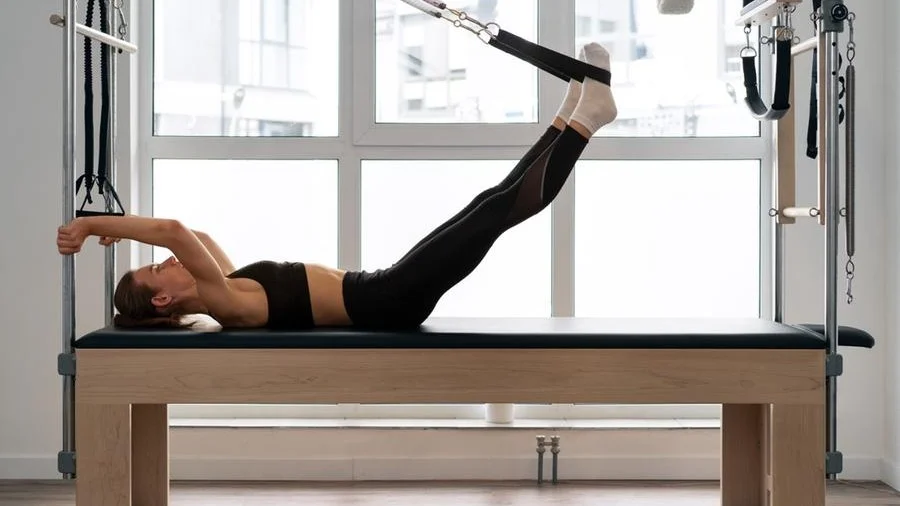
In Pilates, the core isn’t a six-pack project. It’s a system: the muscles around your trunk and hips that control your spine, position your ribs over your pelvis, and let your limbs move without the rest of your body coming apart. It’s less about burning and more about organization.
Lifters—especially the ones who move real weight—are already familiar with the idea, even if they don’t call it Pilates. A strong squat isn’t just legs. It’s bracing. A deadlift isn’t just back and hamstrings. It’s the ability to hinge while keeping the spine stable. An overhead press isn’t just shoulders. It’s a rib cage that doesn’t flare like a sail.
That’s why Pilates-inspired core training pairs so well with lifting. It doesn’t compete with your strength work. It supports it. It teaches the body to resist unwanted motion—arching, twisting, wobbling—so the muscles you’re trying to train can actually do their jobs.
Below are six Pilates-inspired core moves that complement lifting in a way that feels almost unfair: they improve stability, help clean up technique, and often make your lower back and shoulders feel better—not by “fixing” you, but by giving you more control.
A quick note on safety: If you have a history of serious back injury, radiating pain, numbness or tingling, or you’re working through a diagnosis, it’s smart to consult a clinician or qualified coach. These movements should feel challenging and precise—not sharp or threatening.
Why Pilates core work is different (and why lifters should care)
Most gym core work falls into two categories:
- “Make it burn” exercises—high reps, lots of fatigue, often involving spinal flexion.
- “Hold on for dear life” exercises—planks held so long your form dissolves into survival.
Pilates approaches the core more like a craft. The aim is to keep the trunk stable while the arms and legs move. The work is often quiet. You can do it for 20 seconds and feel like you’ve done something serious.
For lifting, that’s perfect. Most heavy lifts are essentially “anti-movement” challenges:
- Anti-extension: resisting the urge to arch your lower back (common in squats, deadlifts, presses).
- Anti-rotation: resisting twisting (common in unilateral work, carries, rows).
- Anti-lateral flexion: resisting leaning side to side (common in carries, single-arm presses, split squats).
Pilates-inspired moves train exactly that. And the payoff is surprisingly practical: you feel more stable under load. Your rib cage doesn’t pop up. Your hips feel more connected. Your lower back stops auditioning as the star of the show.
The 6 Pilates-Inspired Core Moves
Each move below includes setup cues, what it trains, and common mistakes. You don’t need special equipment—just a floor and enough patience to move slowly.
1) The Dead Bug (Pilates-style breathing version)
If there’s a core exercise that should be prescribed with every lifting program, it’s this one. The dead bug teaches you to keep your spine stable while your limbs move—exactly what you want when you squat, hinge, or press.
What it trains: deep core control (especially anti-extension), rib-to-pelvis alignment, breathing under tension.
How to do it:
- Lie on your back with knees bent at 90 degrees, hips stacked over knees.
- Arms reach toward the ceiling.
- Lightly press your lower back into the floor—not by smashing it down, but by keeping your ribs from flaring.
- Exhale slowly as you extend one leg forward (or lower it toward the floor) while the opposite arm reaches overhead.
- Inhale to return; alternate sides.
Pilates-inspired cue that changes everything:
Exhale like you’re fogging a mirror slowly. Let the exhale help your ribs soften down.
Common mistakes:
- Lower back arches as the leg extends.
- Movement is too fast, turning the exercise into flailing.
- Shoulders shrug up toward ears.
Make it easier: shorten the range of the leg; keep the knee bent.
Make it harder: straighten both legs more fully, or hold a light weight in your hands above your chest.
Why it pairs well with lifting:
It teaches “brace without panic.” That’s the skill that keeps heavy squats and deadlifts honest.
2) The Glute Bridge with Posterior Pelvic Tilt
A glute bridge sounds basic until you do it with intent. Pilates emphasizes pelvic control: the ability to tilt the pelvis without compensating through the lower back. This is huge for lifters who over-arch during hinges and presses.
What it trains: glutes, hamstrings, deep core, pelvic control.
How to do it:
- Lie on your back, knees bent, feet flat about hip-width.
- Before you lift, gently tuck your pelvis—think of drawing your pubic bone slightly toward your ribs.
- Press through your heels and lift your hips.
- At the top, squeeze glutes and keep ribs down.
- Lower slowly.
Cues that help:
- “Ribs heavy.”
- “Lift your hips, not your lower back.”
- “Squeeze glutes like you’re holding a credit card.”
Common mistakes:
- Overextending at the top (turning it into a low-back arch).
- Pushing through toes and feeling it mostly in quads.
- Rushing the reps.
Make it easier: reduce range of motion; hold for 10–20 seconds.
Make it harder: single-leg glute bridge, or add a pause at the top.
Why it pairs well with lifting:
It reinforces hip extension with a stable trunk—exactly what deadlifts, RDLs, and hip thrusts demand.
3) Side Plank with “Thread the Needle” (Controlled Rotation)
Side planks are the Pilates cousin of “core that actually matters.” Adding a small, controlled rotation teaches you to manage movement rather than avoid it—useful for everything from single-arm rows to split squats.
What it trains: obliques, shoulder stability, anti-rotation control, lateral hip stability.
How to do it:
- Start in a side plank on your forearm, elbow under shoulder.
- Stack feet (or stagger for stability).
- Reach top arm to the ceiling.
- Slowly rotate the torso and “thread” the top arm under your body, then return.
Cues:
- “Hips high, ribs quiet.”
- “Move like you’re in honey.”
- “Don’t let the shoulder shrug.”
Common mistakes:
- Hips sagging or twisting.
- Rotating fast and losing control.
- Neck strain (looking up too aggressively).
Make it easier: keep knees down; skip the rotation and hold.
Make it harder: extend top leg, or pause in the rotated position.
Why it pairs well with lifting:
It builds the anti-lean strength you need for carries, unilateral presses, and anything that tries to tip you sideways.
4) The Bird Dog (Pilates-tempo version)
The bird dog is deceptively powerful when done slowly. It teaches cross-body stability—right arm and left leg moving while the trunk stays still. That’s walking mechanics, running mechanics, and a lot of athletic movement. It’s also a great “back-friendly” core builder.
What it trains: deep core, glute activation, scapular stability, coordination.
How to do it:
- Start on all fours, hands under shoulders, knees under hips.
- Brace gently—imagine pulling your lower belly away from the floor.
- Extend one leg back and the opposite arm forward.
- Hold for 2–3 seconds; return slowly; switch sides.
Cues:
- “Balance a glass of water on your low back.”
- “Hips square to the floor.”
- “Reach long, don’t lift high.”
Common mistakes:
- Overarching the lower back.
- Swinging the leg up high like it’s a contest.
- Rotating the hips open.
Make it easier: extend only the leg or only the arm at first.
Make it harder: add a slow elbow-to-knee “crunch” under the body, keeping control.
Why it pairs well with lifting:
It teaches spinal stability during limb movement—a skill that shows up in every compound lift, especially under fatigue.
5) The Hollow Body Hold (Beginner-friendly “Pilates hollow”)
Gymnasts love the hollow hold. Pilates people often arrive at something similar through rib control and breathing. For lifters, this is a direct antidote to rib flare and low-back arching.
What it trains: anti-extension core strength, deep abdominal endurance.
How to do it (beginner version):
- Lie on your back.
- Bring knees toward chest and arms overhead.
- Exhale and gently flatten ribs toward the floor.
- Lift head and shoulders slightly (optional) and extend legs to a point where you can keep your lower back stable.
- Hold 10–30 seconds.
Cues:
- “Ribs down, zipper up.”
- “Find the hardest position you can hold cleanly.”
- “Breathe without losing shape.”
Common mistakes:
- Legs too low, back arches.
- Holding breath.
- Neck strain from reaching too hard.
Make it easier: keep knees bent; arms by sides.
Make it harder: straighten legs lower, or add a small rock (advanced).
Why it pairs well with lifting:
It’s essentially bracing practice. If your hollow hold improves, your squat and overhead work often feel more stable.
6) The Pilates “Hundred” (Modified for Lifters)
The Hundred is iconic Pilates. It’s also misunderstood. Done well, it’s not about flailing your arms. It’s about breathing under abdominal tension—building endurance in the kind of brace that supports long sets and high-effort training.
What it trains: abdominal endurance, breathing control, rib positioning.
How to do it (modified):
- Lie on your back with knees bent in tabletop (90 degrees).
- Lift head and shoulders slightly if comfortable; keep ribs down.
- Arms reach long by your sides and pulse up and down a few inches.
- Inhale for 5 counts, exhale for 5 counts. Repeat 5–10 cycles.
Cues:
- “Arms long, neck relaxed.”
- “Exhale like you’re slowly blowing out candles.”
- “Hold your shape; don’t chase speed.”
Common mistakes:
- Neck strain.
- Ribs popping up as fatigue hits.
- Legs extended too low too soon.
Make it easier: keep head down and focus on breathing; keep knees bent.
Make it harder: extend legs slightly farther, but only if ribs stay down.
Why it pairs well with lifting:
It trains endurance in the brace—useful for high-rep squats, long sets, and conditioning work.
How to Program These With Lifting (Without Turning Your Workout Into Pilates Class)
You don’t need to add an entire second workout. The trick is to use these moves as support, not replacement.
Option 1: Warm-Up Core (5–8 minutes)
Pick 2 moves, do them with quality, then lift.
Example:
- Dead bug: 2 sets of 6 per side
- Glute bridge with posterior tilt: 2 sets of 10
Then begin your main lifts.
This is especially good on squat and deadlift days. It teaches your ribcage and pelvis to behave before you load them.
Option 2: Between Sets “Core Hygiene”
During your lifting session, do low-fatigue core work between sets of upper-body lifts.
Example between bench press sets:
- Bird dog: 5 per side (slow)
or - Side plank: 15–20 seconds per side
This keeps quality high without draining you.
Option 3: Finisher (6–10 minutes)
Choose 3 moves and cycle through.
Example:
- Side plank thread-the-needle: 6 per side
- Hollow hold: 20 seconds
- Hundred (modified): 5 breathing cycles
Repeat 2 rounds.
The key is to stop before form collapses. Pilates-inspired work loses its magic when it becomes sloppy.
A Few “Lifter Problems” These Moves Often Improve
Rib Flare in Overhead Press
Try: dead bug + hollow hold
They teach ribs-down control without locking your spine into stiffness.
Lower Back Takes Over on Deadlifts/RDLs
Try: glute bridge with posterior tilt + bird dog
They reinforce hip drive and trunk stability.
Wobble in Split Squats and Single-Arm Rows
Try: side plank + thread-the-needle
Anti-rotation strength transfers directly.
“Core Work Never Feels Like Anything”
That’s often a sign you’re moving too fast or choosing moves that are too hard. Pilates-style cues—slow tempo, controlled breathing—make the work show up.
The Bottom Line
Pilates-inspired core training is not a detour from lifting. It’s a foundation upgrade.
It’s the difference between bracing like you’re bracing for impact and bracing like you actually own your spine. It’s the ability to keep ribs stacked over pelvis when the bar gets heavy. It’s the quiet stability that makes your strength feel more available—less shaky, less compensatory, more direct.
And there’s something satisfying about that kind of progress. It doesn’t scream. It doesn’t require a new identity. It just makes the work you already do feel better—like the whole system is finally cooperating.
Important notice: this content is educational and does not replace an individual evaluation. If you have a history of eating disorders, diabetes, pregnancy, or a medical condition, consult a healthcare professional before making dietary or exercise changes.



 Sign In