
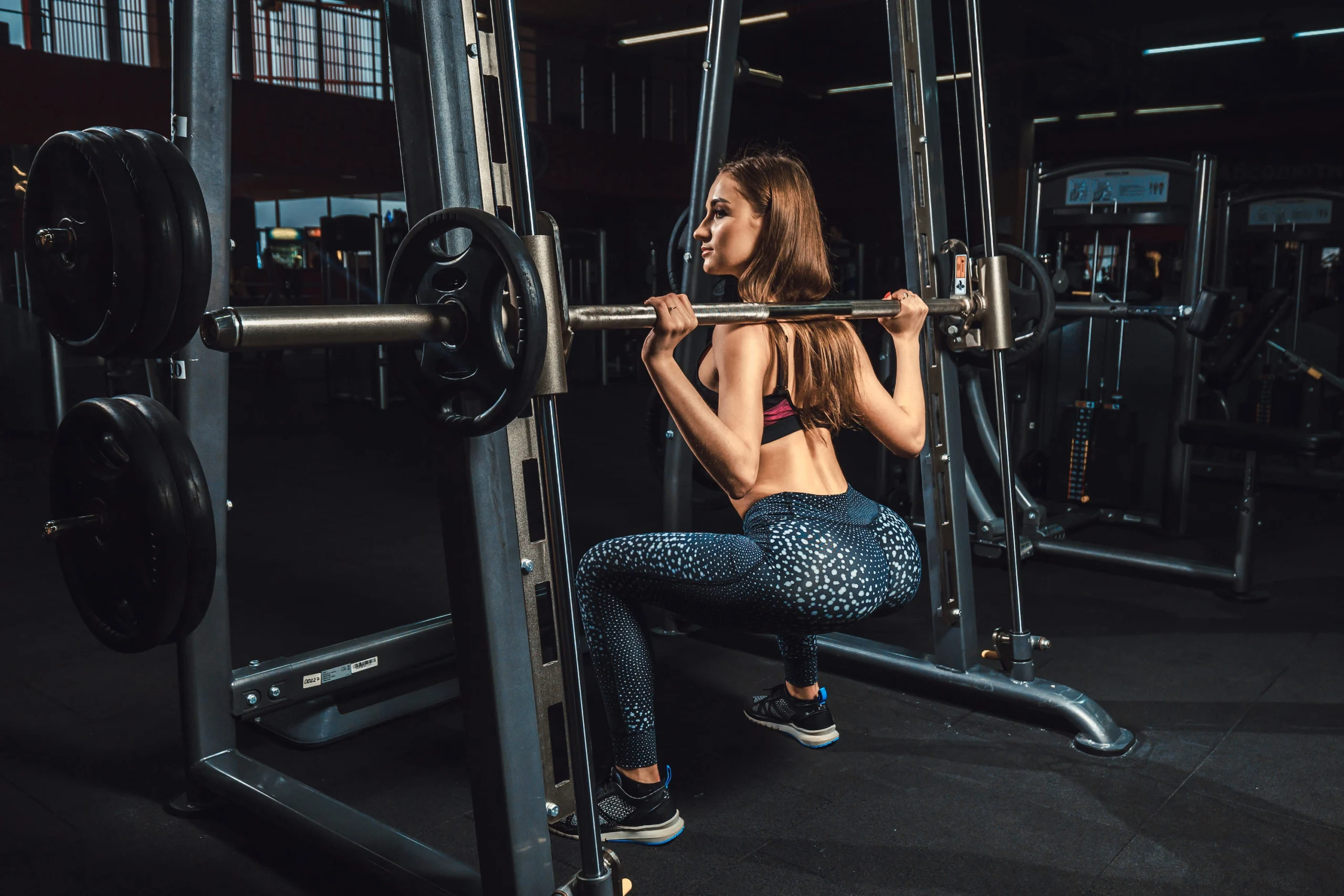

In the gym, “glute day” has a familiar plot twist. You start with sincere intentions—strong hips, better posture, a steadier stride, maybe a little more shape at the back of your jeans. You finish with an aching lower back and the uneasy feeling that your body rerouted the work to the wrong neighborhood.
This is more common than people admit. The glutes are powerful, but they’re also easy to outsource. When the pelvis tips forward, the ribs flare up, and the spine becomes the hinge, the lower back—small muscles designed for support, not heavy lifting—tries to play starring role. It can. For a while. Then it complains.
The fix is rarely “try harder.” It’s usually set up better. Choose movements that keep the spine quiet, put the hips in a position to work, and let your glutes do what they’re built to do: extend the hip and stabilize the pelvis.
Below are six glute exercises that, when done with the right cues, are far less likely to become “secret lower-back workouts.” They’re not trendy. They’re effective. They’ll also teach you something useful: if you can feel your glutes without feeling your back, you’re probably moving well.
Why Glute Work Turns Into Lower-Back Work (and How to Stop It)
Before the exercises, it helps to understand the most common “back takeover” patterns—because they show up everywhere, from hip thrusts to lunges to cable work.
1) You’re finishing reps by arching, not extending
Many people lock out a rep by leaning back and cranking the lower spine into extension. It looks like a strong finish. It often feels like the back.
The alternative: finish by driving the hips forward while keeping the ribs “stacked” over the pelvis—think “zip up” your torso, not “lean back.”
2) Your ribs and pelvis aren’t stacked
If your rib cage is flared and your pelvis is dumped forward (an exaggerated arch), the back stays “on” all the time—like a light switch stuck in the up position.
The alternative: exhale gently to bring the ribs down, then brace as if you’re about to be poked in the side. You’re not flattening your spine—you’re controlling it.
3) Your hips don’t own the movement
If your hips are tight or the pattern is unfamiliar, you’ll borrow motion from the spine. This is especially true in hinge-like movements.
The alternative: use exercises that reduce the need for perfect hinging at first, and build control gradually.
A simple self-check (no equipment)
Try this standing: place one hand on your low back, the other on your glute. Squeeze your glute hard. If your low back tightens and you feel yourself arching, you’re practicing the exact compensation you don’t want.
Now try again with a long exhale first, ribs down, then squeeze without leaning back. That’s the sensation you’ll chase in the gym: glutes working, spine calm.
The Quiet Cues That Keep the Low Back Out of It
These cues will show up repeatedly because they work:
- “Ribs down.” Not forced—just gently stacked.
- “Tuck the tail slightly.” A small posterior pelvic tilt at the top of hip extension.
- “Reach long through the spine.” Keep length, don’t crunch.
- “Shins mostly vertical.” Often helps glutes take over in bridges/thrusts.
- “Finish tall, not back.” Hip extension, not spine extension.
- “Pause at the top.” If you can’t hold the top position without your back, the load is too heavy or the setup is off.
1) Hip Thrust (Barbell, Dumbbell, or Smith Machine)
If there’s a flagship glute exercise, it’s the hip thrust—because it loads hip extension hard without asking the spine to carry the show. Done well, it’s glutes in bold print.
Why it tends to spare the lower back
Your upper back is supported. The load sits across the hips. The movement is mostly hip extension. Your spine’s job is to stay stable.
Setup that makes all the difference
- Sit with your upper back against a bench (bottom of shoulder blades near the edge).
- Feet flat, about shoulder-width.
- At the top position, your shins are close to vertical. (Adjust foot distance until they are.)
- Chin slightly tucked; gaze forward or slightly down.
The rep
- Exhale softly to stack ribs.
- Brace your core.
- Drive through your heels and midfoot.
- At the top, think “belt buckle up”—a slight pelvic tuck.
- Pause one second at peak contraction.
- Lower under control.
How it turns into back work (and how to fix it)
Problem: You’re “finishing” by arching the lower back.
Fix: Keep your chin tucked and ribs down; stop the rep the moment your pelvis stops moving.
Problem: Feet too far forward or too close.
Fix: Find that vertical-shin lockout. It’s not aesthetic—it’s biomechanics.
A smart progression
Start with a dumbbell hip thrust or smith machine thrust if balancing the bar is distracting. Add load only when you can pause at the top without your back taking over.
2) Glute Bridge With a Long Pause (Floor-Based)
The glute bridge is the hip thrust’s quieter cousin, and it’s often better at teaching control. It’s also harder than it looks—especially when you do it the way your glutes prefer.
Why it tends to spare the lower back
The range is smaller than a hip thrust, and the floor gives you feedback. It’s easier to keep the ribs down and avoid overextending.
Setup
- Lie on your back, knees bent, feet flat.
- Feet hip-width, heels a comfortable distance from your glutes.
- Arms down by your sides.
The rep (the “slow money” version)
- Take a long exhale and feel your ribs soften downward.
- Posteriorly tilt the pelvis slightly—as if tucking your tail.
- Drive through heels and midfoot to lift your hips.
- Hold 2–3 seconds at the top, glutes tight.
- Lower slowly.
What people get wrong
They chase height instead of tension. They push the hips up and then finish by arching the spine. In a good bridge, the top position feels like a hard glute squeeze, not a yoga pose.
Variations that keep the back honest
- Banded glute bridge: a mini band above knees encourages glute med stability.
- Heels-elevated bridge: can increase hamstring involvement; useful for balance, but don’t let it shift into cramping.
Programming tip
Bridges are excellent early in a session as a “glute reminder” or later as a high-rep finisher. They also work well on days when your back feels cranky and you still want a training signal.
3) Bulgarian Split Squat (Glute-Biased)
The Bulgarian split squat has a reputation for being brutal, which is often correct. It also has a reputation for being quad-dominant, which is optional. With a small change in torso angle and shin position, it becomes one of the best glute builders that doesn’t require heavy spinal loading.
Why it tends to spare the lower back
The load is held in your hands (dumbbells) or on your back lightly (if advanced), but the spine doesn’t need to hinge. The hips and legs do the work. The unilateral stance also exposes compensations early—before they become heavy habits.
Setup
- Rear foot elevated on a bench or pad.
- Front foot far enough forward that you can descend without the knee shooting excessively forward (you’re aiming for a more “sit back” pattern).
- Hold dumbbells at your sides.
The glute-biased form
- Lean your torso slightly forward (not collapsing—just angled).
- Keep the front shin closer to vertical than you would for a quad-focused version.
- Descend under control.
- Drive up through the front heel and midfoot, feeling the front glute work.
Where the back sneaks in
Problem: You’re hyperextending at the top to “finish.”
Fix: Finish tall with ribs down. No victory lean.
Problem: You’re wobbling and the back tightens to stabilize.
Fix: Reduce load. Use a light hand support on a rack until you own the pattern.
A humane way to progress
Start with bodyweight, then light dumbbells, then increase load slowly. Progression here is not a race—it’s a negotiation with your balance and control.
4) Step-Up (High Box, Glute-Focused)
Step-ups are one of the most underrated glute exercises because they look too ordinary to be powerful. But a properly set step-up—especially with a slightly higher box—forces the hip to do real work.
Why it tends to spare the lower back
You’re moving mostly vertically. The spine stays neutral. The glutes work as hip extensors and pelvic stabilizers.
Choose the right height
A low step can become a knee exercise. A higher step (roughly knee height, give or take) usually increases hip demand—provided you can keep control.
The rep
- Place one foot on the box.
- Lean slightly forward from the hips—again, not collapsing, just loading the hip.
- Drive through the whole foot on the box.
- Stand up fully on the box without pushing off the trailing leg.
- Control the step down.
Common mistakes that shift it away from the glutes
- Pushing off the floor leg (turns it into a momentum move).
- Letting the knee cave in (hip stabilizers lose the plot).
- Rushing the lowering (eccentric control matters).
The cue that changes everything
“Quiet foot.” If your foot slaps and your torso jerks, you’re not controlling the rep. Control is where the glute stimulus lives.
5) Cable Kickback (or Band Kickback) With a Still Torso
Kickbacks are easy to dismiss until you do them correctly. When you keep the pelvis stable and move only at the hip, they’re a direct line to the glute—without asking the lower back to contribute.
Why it tends to spare the lower back
The load is lighter and the spine can stay braced while the hip extends through a smaller range. It’s almost a laboratory version of “glute does hip extension.”
Setup
- Use an ankle strap on a cable machine, or a band anchored low.
- Hold a stable support with both hands.
- Slight bend in the working knee.
- Torso angled slightly forward, spine long.
The rep
- Brace your core and keep hips square.
- Kick back by squeezing the glute, not by swinging the leg.
- Stop where your pelvis wants to rotate or your back wants to arch.
- Pause briefly.
- Return slowly.
How it turns into back work
People try to kick higher and end up extending the spine instead of the hip.
Fix: Think “back, not up.” And keep the range modest. A smaller range with a hard squeeze beats a big swing every time.
Where it fits best
Kickbacks shine as accessory work—after heavier movements—because they add volume without wrecking recovery.
6) 45-Degree Hip Extension (Glute-Biased Back Extension)
This is the exercise many people approach with suspicion because of the word “back.” But on a 45-degree hyperextension bench, you can turn what looks like a back exercise into a precise glute exercise—if you control the pelvis and keep the spine from doing the lifting.
Why it tends to spare the lower back (when done right)
The bench supports you. You can limit spinal motion. The hip extensors—glutes and hamstrings—do the work.
Setup
- Set the pad so your hips can hinge freely (pad is under the hip crease, not on the stomach).
- Feet planted, body aligned.
- Hug a plate or hold light dumbbells once you own the pattern.
The glute-biased technique
- Start with a neutral spine.
- Hinge down by folding at the hips (not rounding the back).
- On the way up, think “glutes pull me up,” not “back lifts me up.”
- At the top, round slightly through the upper back if needed to avoid overextension, and add a small posterior pelvic tilt.
- Pause and squeeze glutes.
This is subtle. It’s also effective. If you feel it mostly in the lower back, you’re likely extending the spine instead of extending the hip.
A practical cue
Imagine you’re trying to push your hips into the pad as you lift. That pushes the work into the hips and out of the spine.
A Simple Glute Session That Stays Out of Your Lower Back
If your goal is growth and strength without back takeover, you don’t need a circus. You need smart sequencing and repeatable sets.
Here’s one template:
- Glute Bridge (pause) – 2 sets of 10–15 (slow, controlled)
- Hip Thrust – 3–4 sets of 6–10 (pause at top)
- Bulgarian Split Squat (glute-biased) – 3 sets of 8–12 per leg
- Step-Up – 2–3 sets of 8–12 per leg
- Cable Kickback – 2–3 sets of 12–20 per side
- 45-Degree Hip Extension (glute-biased) – 2–3 sets of 10–15
A few quiet rules:
- If you can’t keep ribs down, lower the load.
- If the back tightens first, reduce range and slow down.
- If you can’t pause at the top, you’re probably using momentum or too much weight.
- Build volume gradually. The glutes can handle work, but your joints and nervous system still need pacing.
When to Worry (and When to Adjust)
Some muscle fatigue in the lower back can happen even with good form—your spine still stabilizes. But sharp pain, nerve symptoms, or pain that lingers and worsens is not “good soreness.”
If you’re dealing with persistent back pain, it’s worth getting guidance from a qualified professional who can assess your movement and history. The goal is glutes that support your back—not glutes that provoke it.
Conclusion: Glutes That Work, Backs That Don’t Have To
The secret to glute training that doesn’t hijack your lower back is not a single miracle exercise. It’s a pattern: keep the torso stable, finish with the hips—not the spine—and choose movements that reward control more than ego.
When you do, the results are quiet at first. Your back feels less “busy.” Your reps look cleaner. You recover faster. And, over time, your glutes actually grow—because they’re finally doing the job you’ve been assigning them.
And if you want to make this kind of training easier to follow week after week, it helps to have a plan you don’t have to reinvent. In the Fitsse app, it’s easy to use a structured training program—so your exercises, progressions, and weekly routine stay organized, and your glute work stays exactly where it belongs.
Important notice: this content is educational and does not replace an individual evaluation. If you have a history of eating disorders, diabetes, pregnancy, or a medical condition, consult a healthcare professional before making dietary or exercise changes.







 Sign In