

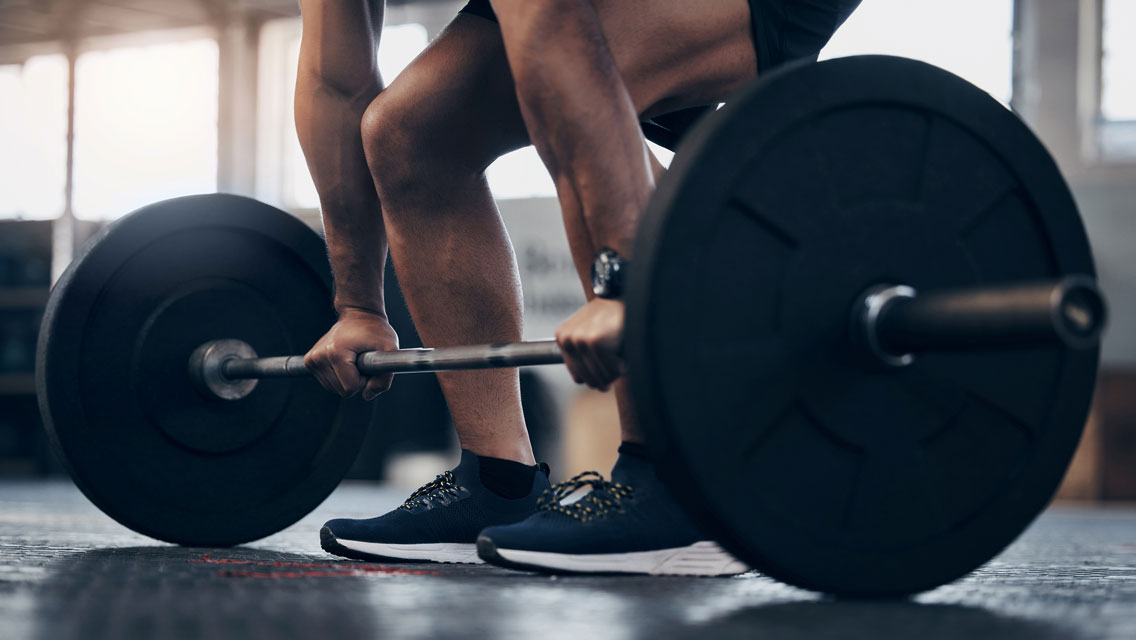

The first time you walk into a weight room with a serious intention — not just to “get a workout,” but to get stronger — you notice two things at once.
One is the obvious: barbells, plates, racks, machines. The architecture of effort.
The other is subtler: the small stuff. A lifter wrapping something around a wrist. Someone sliding a loop over a shoe. A belt being tightened with a calm, practiced tug. A pair of straps dangling from a gym bag like punctuation marks.
Accessories can look like shortcuts. Or like costumes. Or like the kind of thing people buy when they’re trying to feel like they belong.
But used well, they’re closer to what a good kitchen tool is to cooking: not a replacement for skill, just a way to make the skill easier to practice — with more consistency, less friction, and fewer preventable problems.
The best weightlifting accessories don’t make you strong. They make it easier to become strong by helping you train longer, lift better, or recover faster — especially in the reality of a busy week.
There’s also a quiet truth most people learn over time: your progress often stalls for small reasons. A grip that gives out before your legs. A wrist that feels cranky under pressing. A bar that keeps slipping because your hands won’t cooperate. A hip crease that feels pinched because your ankles don’t bend the way the exercise assumes they do.
Accessories can address those bottlenecks — not dramatically, but steadily. And that steadiness is how strength is built.
Below are five accessories that help more than you might expect, along with how to use them without turning them into crutches.
1) Lifting Straps: The “Let My Back Work” Tool
If you’ve ever ended a set of deadlifts because your hands quit before your body did, you’ve met the problem straps solve.
In many compound lifts, especially pulls — deadlifts, Romanian deadlifts, heavy rows, shrug variations — your grip is the smallest link in the chain. That’s not a moral failing. It’s anatomy. Your forearms and hands are smaller muscle groups than your glutes, hamstrings, and lats.
Straps give your hands a temporary assist so the bigger muscles can do the job they came for.
When straps help the most
- Heavy deadlifts and RDLs (especially higher-rep sets)
- Barbell or dumbbell rows when grip fatigue makes your back undertrained
- Shrugs where grip becomes the limiting factor
- High-volume pulling days (pull-ups, lat work, posterior chain circuits)
How to use them without neglecting grip
The fear is reasonable: “If I use straps, I’ll never build grip strength.”
The answer is not to avoid straps. The answer is to use them strategically.
Try this simple approach:
- Do your first 1–2 working sets without straps when possible.
- Use straps on the heaviest set(s), or the highest-rep sets, when grip becomes the bottleneck.
- Add one dedicated grip finisher at the end of a workout: farmer’s carries, dead hangs, or plate pinches.
This way, grip still develops — but it doesn’t sabotage your back training.
What to look for
- Cotton straps (comfortable, durable, less “slick”)
- A secure loop that feels stable around the wrist
- Enough length to wrap the bar without a wrestling match
There’s a version called “figure-eight straps” that many heavy deadlifters like for maximal security, but for most people, simple loop straps are more than enough.
The bigger benefit
Straps don’t just help you lift more. They help you train the intended muscle group more consistently.
Consistency beats the occasional heroic set. It’s the quiet engine of progress.
2) A Lifting Belt: Not Armor, but a Reminder to Brace
A lifting belt has a reputation problem. In some gyms, it’s treated like a badge: the thing you put on when you’re serious, or when you want people to think you are.
But the belt’s real job is boring — and that’s good.
A belt doesn’t “protect your back” on its own. It doesn’t replace technique. What it does is give your torso something to press against so you can create more intra-abdominal pressure — the internal bracing that makes heavy lifts more stable.
Think of it less as a protective wall and more as a tactile cue: “Hey, tighten here.”
When a belt helps the most
- Heavy squats (especially low-bar or front squats when you’re pushing intensity)
- Heavy deadlifts
- Overhead presses when you need trunk stability
- Any lift where your torso feels like it’s collapsing before your legs do
How to use it well
- Use the belt on hard sets, not as a default for warm-ups.
- Wear it snug but not suffocating; you should still be able to breathe.
- Before a rep, inhale into your belly and sides — then brace 360 degrees, as if you’re preparing for a friendly shove.
- The belt should sit where it helps you brace: some prefer higher for deadlifts, lower for squats. You’ll learn your spot.
If you’re new to belts, a useful mental shift is this: you don’t brace because you have a belt; you wear a belt because you brace.
What to look for
- A belt that fits your torso height (shorter torsos often prefer a narrower belt)
- A consistent width (often 4 inches) or a tapered option if you hate the rib-to-hip squeeze
- A closure you’ll actually use: single-prong, double-prong, lever
- Lever belts are fast and solid but less adjustable day to day
- Prong belts are slower but more flexible
The bigger benefit
For many lifters, the belt unlocks a level of confidence under load that makes training feel safer — not because the belt is magic, but because it reinforces bracing.
Confidence changes how you move. It changes how you commit to a rep. And commitment matters.
3) Wrist Wraps: Small Support for Big Pressing Days
Wrist pain has a way of making you feel older than you are.
Pressing movements — bench press, overhead press, push press, dips — ask a lot from the wrist joint. If your wrists bend too far back, you lose power and strain the joint. Wraps help keep the wrist in a stronger position, especially when loads climb.
They’re not just for powerlifters. They’re for anyone who wants to press consistently without feeling like their wrists are filing a complaint.
When wrist wraps help the most
- Bench press (especially heavier work)
- Overhead pressing
- Front rack positions (front squats can stress wrists for some people)
- Dips if wrist extension bothers you
How to use them without hiding problems
Wraps are best when they reinforce good alignment:
- The bar (or dumbbells) should sit over a fairly straight wrist — not cranked back.
- Your knuckles should be stacked over your forearm.
- Wraps should feel supportive, not like a tourniquet.
If you need wraps for every light set, it’s worth checking technique, mobility, and load management.
What to look for
- Length: shorter wraps are easier for beginners; longer wraps offer more support.
- Stiffness: some wraps are soft and comfortable; others are stiffer for heavier lifting.
- A thumb loop that makes wrapping easier (some people remove it later)
The bigger benefit
Wraps can be the difference between “I guess I’ll skip pressing this week” and “I can train as planned.”
A good accessory sometimes doesn’t increase your max. It protects your momentum.
4) Lifting Shoes: The Most Underrated “Technique Upgrade”
If you squat in running shoes, you’re essentially squatting on cushions. Running shoes are designed to compress and rebound. That’s great for jogging. It’s not great for trying to produce force into the floor.
Weightlifting shoes — the ones with a firm sole and an elevated heel — are less glamorous than belts and wraps. They also might change your squat faster than anything else on this list.
A raised heel can help people who struggle with ankle mobility, allowing a more upright torso and a deeper, more stable squat position. The hard sole improves force transfer and balance.
When lifting shoes help the most
- Back squats and front squats
- Olympic lifting movements (cleans, snatches)
- Leg training where stability matters (some people like them for split squats)
They’re not necessary for everyone. Some lifters with excellent ankle mobility prefer flat shoes. Some powerlifters choose a flat sole for deadlifts. But for a large portion of people, lifting shoes are a game-changer for squats.
How to know if you’d benefit
You might be a good candidate if:
- Your heels lift when you squat deep
- Your torso tips forward more than you want
- Your squats feel unstable even at moderate weights
- You can’t hit depth comfortably without your lower back rounding
A simple test: place small plates under your heels (carefully) and squat. If your squat suddenly feels smoother and more upright, lifting shoes may help.
What to look for
- A hard, stable sole (this is the point)
- A heel height that matches your body and mobility (many are around 0.75 inches)
- A snug fit through the midfoot, often with straps
The bigger benefit
Lifting shoes are not just equipment. They’re a permission slip to squat with better mechanics — which can reduce discomfort and improve confidence.
When a lift feels more stable, you practice it more. When you practice it more, you get better at it.
That’s the whole story of strength.
5) Chalk (and Grip Aids): The Difference Between “I Can” and “It Slipped”
Chalk is the least expensive accessory on this list and, in many gyms, the most controversial.
But if your hands sweat, or if you lift in a humid climate, or if you simply don’t enjoy the sensation of a bar slowly rotating out of your grip, chalk can feel like a minor miracle.
It increases friction. That’s it. But friction is the difference between control and chaos.
When chalk helps the most
- Deadlifts
- Pull-ups
- Rows
- Kettlebell swings
- Any lift where grip security affects performance or confidence
Some gyms ban loose chalk because it gets everywhere. In that case, liquid chalk can be a good compromise. It dries quickly, reduces mess, and still boosts grip.
What about gloves?
Gloves can help if you have skin issues, but they often reduce grip quality by adding material between your hand and the bar. Many lifters prefer to build calluses gradually and use chalk instead.
The bigger benefit
Chalk doesn’t just help your hands. It helps your head.
A secure grip changes how you approach a heavy set. It reduces hesitation. And hesitation is costly under load.
How to Use Accessories Without Letting Them Use You
Accessories are tools. Tools can become dependencies if you use them to compensate for something you could — with time — improve.
The line is usually clear if you ask one question:
Is this accessory helping me train the target movement better, or helping me avoid learning it?
Here’s a practical way to keep that balance:
A simple “earned” strategy
- Earn straps by doing some strapless sets and finishing with grip work.
- Earn a belt by learning to brace without one, then using it to go heavier safely.
- Earn wraps by improving wrist stacking and gradually loading pressing movements.
- Earn lifting shoes by continuing ankle and hip work, even if shoes make squats feel better immediately.
- Earn chalk by maintaining bar control and taking care of your hands.
This isn’t moralizing. It’s just a plan to keep the tool in its proper place.
What a Busy Week Needs: Fewer Decisions, More Consistency
There’s a hidden way accessories help: they reduce friction.
When you’re busy, the barrier isn’t usually a lack of willpower. It’s the number of tiny obstacles:
- The lift hurts in a way that feels concerning.
- Your grip fails and you feel frustrated.
- Your squat feels awkward and you lose confidence.
- You’re tired and don’t want to troubleshoot technique under pressure.
Accessories can reduce those obstacles. They make workouts more repeatable. They keep you in the game long enough for your body to adapt.
And adaptation is what we’re after — not a perfect workout, not a perfect week.
A Practical Starter Kit (If You Don’t Want to Overbuy)
If you’re building a small kit, here’s a sensible order for most general lifters:
- Chalk (or liquid chalk) — cheap, immediate benefit for many
- Wrist wraps — especially if you press regularly
- Straps — if grip regularly limits your pulling volume
- Lifting shoes — if squats feel unstable or limited by mobility
- Belt — when loads are heavy enough that bracing becomes the limiting factor
You don’t need all of this at once. You don’t need any of it to begin. But if you’re training consistently, you may find that one or two pieces of “small stuff” can change your relationship with lifting.
Not by turning you into someone else — but by helping you become more of the person you already are: the one who shows up, does the work, and keeps going.
The Bottom Line
Strength doesn’t come from accessories. It comes from repetition — careful, honest repetition — over months and years.
But accessories can help you repeat. They can help you lift with better mechanics, manage discomfort, push volume safely, and stay consistent through the messy weeks when consistency is hardest.
In a culture that loves dramatic transformations, accessories offer something less flashy and more useful: they make the ordinary work easier to do.
And the ordinary work, done often, is what changes you.
Important notice: this content is educational and does not replace an individual evaluation. If you have a history of eating disorders, diabetes, pregnancy, or a medical condition, consult a healthcare professional before making dietary or exercise changes.






 Sign In