



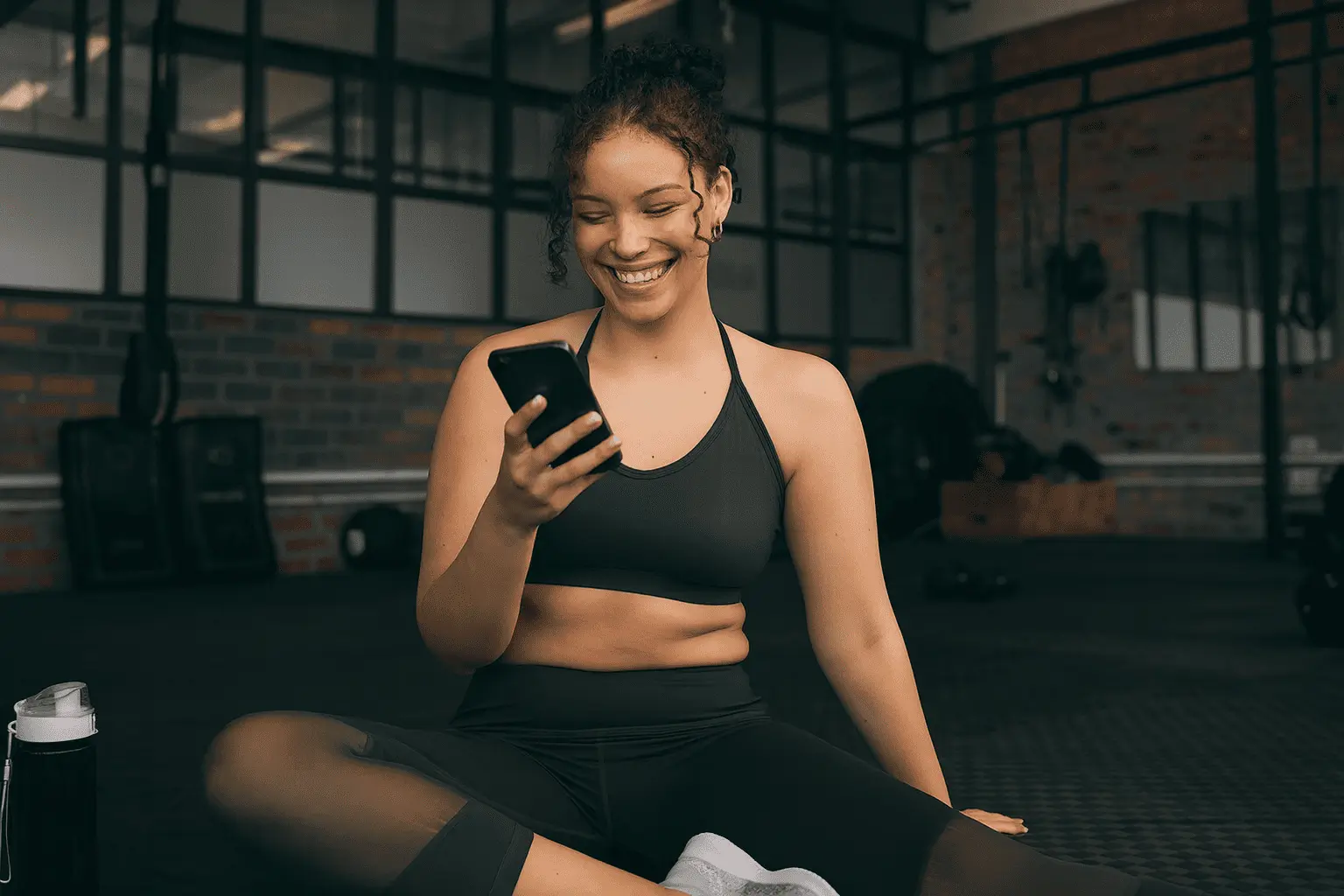
Walking into a gym for the first time often feels like arriving at a foreign city without a map. Machines hum with purpose, barbells clank like a language you haven’t yet learned, and the people who frequent the place move with a calm that looks earned and permanent. It’s easy to imagine you’re the only one who doesn’t know where to start.
The surprising truth is that nearly everyone who trains once felt anxious, awkward, or plainly out of their depth. The people who last are not always the most gifted; they are the ones who found a path through the noise and made it small enough to repeat. Strength training — lifting weights or using bodyweight to build muscle and resilience — is one of the most practical investments you can make in long-term health and function. It reduces injury risk, supports metabolic health, improves mood, and simply makes everyday tasks easier. But first you need to get comfortable with the process.
Below are five concrete, humane ways to turn intimidation into confidence. Each section is practical: why the idea matters, how to do it this week, and what to expect in the first month. The tone is intentionally conversational — imagine reading advice from someone who has coached a thousand awkward first sessions and learned which small changes matter most.
1. Shrink the Goal — Start with Tiny, Non-Scary Doses
Why it helps
Beginners often sabotage themselves by turning a single workout into a test of character. The subconscious math is brutal: “If I miss this session, the program fails.” That pressure creates performance anxiety and makes the gym feel punitive. A simple antidote is to make your first commitments so small they feel ludicrously easy. The real objective is consistency, not heroics.
How to do it this week
- Decide to do two 20-minute strength sessions this week. That’s it. Block them on your calendar and treat them like a meeting you cannot miss.
- Design a micro-session: three compound movements, two sets each, slow and controlled. For example: bodyweight squat 2×8, push-up (incline if needed) 2×6, and bent-over row with light dumbbells or a resistance band 2×8. Warm up with two minutes of marching in place and finish with gentle stretching.
- Use a timer — 20 minutes, then stop. No overtime. This makes the gym less like a trial and more like a habit-friendly appointment.
What to expect
The early returns are simple: confidence for having shown up, a small movement improvement, and the beginnings of a habit loop that will make the next week’s session easier to commit to. Over four weeks, three 20-minute sessions per week will yield measurable improvements in technique and comfort in the gym. The goal isn’t dramatic transformation in 30 days; it’s to build a sustainable habit that survives life’s bumps.
2. Learn Three Movement Patterns — Before You Touch a Machine
Why it helps
Gyms can be overwhelming because they present dozens of machines and endless variations of the same thing. Instead of trying to learn everything, begin with three fundamental movement patterns that cover most daily tasks: a push, a pull, and a hinge/squat pattern. Mastering these gives you a portable toolkit that works with almost any equipment and prevents the paralysis of choice.
How to do it this week
- Push: Practice a push-up progression. If floor push-ups are too hard, use an incline (hands on a bench or table). Work on 2–3 sets of 5–8 quality reps. Focus on a straight line from head to heels and controlled tempo.
- Pull: Use a vertical pulling substitute if pull-ups are out of reach. Try single-arm dumbbell rows, resistance band rows, or a chest-supported row if the gym has one. Again, 2–3 sets of 6–10 reps.
- Hinge/Squat: Learn a bodyweight squat and a hip-hinge (Romanian deadlift with light dumbbells or kettlebell). The hinge teaches you how to bend at the hips, which is essential for lower-back safety. Two sets of 8–12 reps per movement is a practical starting point.
What to expect
After two weeks of practicing these patterns twice per week, you’ll notice clearer movement, less unnecessary strain, and the beginnings of strength. More importantly, these movements are portable: your program can be done at home, in a hotel, or in the gym. The gym then becomes a place of tools, not of judgment.
3. Use Simple Plans and Track Small Wins — The Power of a Training Log
Why it helps
Intimidation thrives on uncertainty. When you don’t know whether you’re improving, every session becomes a vague exercise in hope. A training log cuts through that fog: it records evidence. The act of writing down weight, reps and a single note about effort transforms the gym from theater into controlled experiment.
How to do it this week
- Pick a simple program for beginners (a three-day full-body routine works well). If you want, I can draft one here.
- Create a one-page log (paper or notes app). For each session enter: date, exercises, sets, reps, weight, and one line — “felt strong,” “knees sore,” “good sleep.”
- After each workout, circle one small win: “added one rep to deadlifts” or “kept back neutral in all squats.” Wins can be not only numbers but also quality markers.
What to expect
Within three to six sessions you’ll have objective proof that you’re getting stronger or at least improving technique. That tangible progress is a powerful antidote to intimidation because decisions become based on evidence rather than feeling. If something stalls, the log helps you see whether recovery, nutrition, or programming is the issue rather than blaming yourself.
4. Normalize Low Stakes — Use “Practice” Sessions and Coach Check-Ins
Why it helps
Most people believe they must perform well the first time. That’s false — the gym is a workshop for practice. Reframing sessions as practice lowers the psychological bar and encourages experimentation. Pair that with occasional coach feedback — even a single session — and you compress learning dramatically.
How to do it this week
- Rebrand one weekly session as a “practice session.” Your explicit goal is not to lift maximal weight but to rehearse technique for three lifts at 50–60% of perceived capacity. Use lighter weights, focus on breathing and posture, and view errors as data rather than failure.
- Book a single 45-minute session with a qualified trainer (many gyms offer an inexpensive introductory consultation). Ask them to review three lifts and give you 3–4 cues to work on. Treat that conversation like a short manual you can refer to during practice days.
What to expect
Practice sessions reduce fear because you give yourself permission to be imperfect. A single coaching session often repays its cost many times over by removing persistent technical errors that slow progress or breed injury. Expect immediate, actionable cues you can apply the next three sessions. The combination of low-stakes practice and targeted feedback creates rapid learning.
5. Make the Gym Socially Safe — Bring a Friend or Create a Micro-Community
Why it helps
We are social creatures. Shame and comparison often come from feeling alone. Training with a friend, joining a small class, or finding one consistent lifting partner turns the gym into a social ritual rather than a performance stage. People in small groups tend to encourage each other, reduce anxiety, and create accountability in a humane way.
How to do it this week
- Ask a friend to join you for one session. Your plan for that day is to do the micro-session mentioned earlier: short, focused and low-pressure. If you don’t have a friend, look for beginner-oriented classes or coached group sessions at the gym; these tend to be friendly spaces with peers at similar points in their journeys.
- If classes feel public, try the gym’s off-peak hours with one friend or find an online community (forum, WhatsApp group, or app) where people post small wins. Sharing that you did two 20-minute sessions this week is an honest, low-friction accountability post.
What to expect
Social support lowers the activation energy needed to go to the gym again. It also makes the gym feel less like a place where you must perform perfectly and more like a communal workspace. Over time, small rituals — the same greeting at the desk, the same warm-up routine — create belonging and remove intimidation.
Practical Starter Program: Four Weeks to Comfort
Here’s a gentle four-week beginner plan that incorporates the five ways above. It’s intentionally minimal so you can build habit without burning out.
Schedule: 3 sessions/week (e.g., Monday, Wednesday, Saturday). Two are “normal” sessions and one is a “practice” session.
Session A (20–30 mins)
- Warm-up: 3–5 mins brisk walk or marching and shoulder rolls.
- Bodyweight squat or goblet squat: 2 sets × 8 reps.
- Incline push-up or bench press (light): 2 sets × 6–8 reps.
- Dumbbell row or band row: 2 sets × 8–10 reps.
- Plank: 2 × 20–30 seconds.
- Log: Weight, reps, one note.
Session B (Practice session — technique focus)
- Warm-up mobility: hip hinge rehearsal, shoulder band pull-aparts.
- Romanian deadlift with light dumbbells: 3 × 6 (focus on hip hinge).
- Overhead press with an empty bar or light dumbbells: 3 × 6 (focus on bracing).
- Glute bridge: 3 × 10 (slow eccentrics).
- Cool-down breathing and 2 minutes of gentle stretching.
Session C (Short compound session)
- Warm-up: 3–5 mins.
- Step-ups or lunges: 2 sets × 8 per side.
- Push (push-up or machine): 2 × 8.
- Pull (seated row or band): 2 × 10.
- Farmer carry or loaded walk: 2 × 30 secs.
- Log: note a single win.
Progression rule: when an exercise becomes easy, add one rep to each set or add a small amount of weight (1–2.5 kg). Keep changes tiny and measurable.
Frequently Asked Questions — Real Answers, Short
Will I look silly doing the easier versions?
Yes — and so will everyone else on their first week. Most people are quietly focused on their own work. The best way to survive any embarrassment is to remember you’re practicing.
How often should I increase weight?
When you can perform the prescribed sets and reps for two consecutive workouts with good technique, add a small increment. The “two-for-two” rule (able to do two more reps than planned for two sessions) is a practical guide.
Do I need a coach?
Not forever. A short, targeted session with a coach early on shortens the learning curve dramatically. After that, simple programming and logging will carry you forward for months.
What if I have joint pain?
Start with regressions — lighter loads, reduced range of motion — and consult a physical therapist if pain persists. Pain that is sharp, radiating or consistent with certain movements deserves professional attention.
The quiet payoff: confidence that compounds
Intimidation is social, psychological, and physical, but it’s resolvable. The people who keep training are not those who avoid failure; they are those who learned to fail small and learn quickly. Start tiny. Practice deliberately. Track simple wins. Seek a little coaching. Bring a friend. Over time, the gym becomes less like a mystery and more like a familiar workshop — a place where you repair and build something that matters: your physical capacity, your autonomy, and your energy for life.Strength training is nothing like a moral test. It’s a long-form relationship with your body. When you make that relationship kind, manageable, and evidence-based, intimidation dissolves. The result is boringly simple: you show up, you get stronger, and the rest of your life becomes easier because you did.
Important notice: this content is educational and does not replace an individual evaluation. If you have a history of eating disorders, diabetes, pregnancy, or a medical condition, consult a healthcare professional before making dietary or exercise changes.










 Sign In