


Weight loss has a way of making people impatient. Beginners walk into a gym hoping for revelation and are often handed theater instead: punishing circuits, exotic moves, and the vague promise that if they simply suffer hard enough, the body will eventually cooperate. But most successful weight loss does not begin with a dramatic workout. It begins with a tolerable one. A repeatable one. A session that does not leave a beginner feeling foolish, wrecked, or unable to come back two days later.
That is one reason gym machines deserve more respect than they usually get. They are often treated as the boring furniture of the weight room — useful, perhaps, but somehow less serious than barbells or less noble than a hard run. Yet for beginners, that prejudice misses the point. The best exercise for weight loss is not the one that looks impressive from across the gym. It is the one that helps you create enough weekly activity, enough muscular work, and enough consistency for your body to change over time. According to the CDC, weight loss comes from a calorie deficit, and physical activity helps create that deficit while also supporting health and weight-loss maintenance. Adults should aim for at least 150 minutes of moderate aerobic activity per week plus at least two days of muscle-strengthening work. More than that can bring additional benefits.
There is also a quieter truth beginners are rarely told: weight loss is not only about how many calories you burn during a workout. It is also about how much movement you can sustain, how much muscle you preserve while losing fat, and whether your program is realistic enough to survive a bad week. A recent JAMA Network Open meta-analysis of 116 randomized trials found that aerobic exercise reduced body weight, waist circumference, and body fat in adults with overweight or obesity, with clinically important reductions in waist size and body fat emerging at roughly 150 minutes per week or more of moderate-intensity aerobic exercise. Resistance training matters too. A systematic review and meta-analysis published in Sports Medicine found that resistance training reduced body fat percentage, fat mass, and visceral fat in healthy adults.
That is where machines become surprisingly useful. For novices, they reduce some of the chaos. A 2020 randomized trial in novice adult males found that 10 weeks of training with machines, free weights, or a combination of both led to similar improvements in muscularity, strength, and functional ability. That does not mean machines are superior. It means beginners do not need to feel they are using some lesser form of exercise. They can get stronger and more capable on equipment that feels less technically intimidating — and for weight loss, feeling capable is not a small advantage. It is often the thing that keeps people going.
So here are five gym machine exercises that are surprisingly effective for weight loss beginners — not because they are magic, and not because they “target fat,” which no exercise does, but because they help beginners do what actually works: move more, train more muscle, recover well enough to return, and build a routine that can outlast motivation.
1. The Incline Treadmill Walk
There is a certain strain of fitness culture that treats walking as beneath ambition. This is a mistake, and the incline treadmill may be one of the most underrated correctives in any commercial gym.
For a beginner trying to lose weight, incline walking offers several things at once: it is familiar, scalable, and easier to recover from than running. It can raise heart rate into a meaningful aerobic zone without the joint stress or technical demands that often make more intense cardio hard to sustain. The CDC’s guidance is simple but important here: moderate-intensity aerobic activity counts, and adults can accumulate it in manageable chunks across the week. You do not need a cinematic workout to produce benefits. You need enough quality movement, repeated often enough, for it to matter.
The incline is what changes the character of the walk. A flat treadmill stroll can be pleasant, but a modest incline recruits more of the lower body, especially the glutes and calves, while making a moderate pace feel substantially more demanding. That matters for beginners because it allows effort without speed. You do not need to run if running makes you hate the gym. You do not need to bounce between machines in pursuit of novelty. You can simply walk with intention.
A good beginner session is almost aggressively unflashy: five minutes easy, then 15 to 25 minutes of brisk incline walking at a pace that makes conversation possible but not effortless, then a gentle cooldown. That may not look like much on paper. But done three or four times a week, it begins to add up toward the 150-minute threshold that has been associated with more meaningful changes in waist circumference and body fat in overweight and obese adults. The beauty of the treadmill is that it allows progression without drama: a little more incline, a little more time, a little less reliance on the handrails.
There is also a psychological advantage here that is easy to undervalue. Many beginners do not need to be challenged first. They need to be disarmed. The treadmill does that. It removes the embarrassment of not knowing what to do. It replaces uncertainty with a simple question: Can you do a little more than last week? For weight loss, that is often the right question.
2. The Leg Press
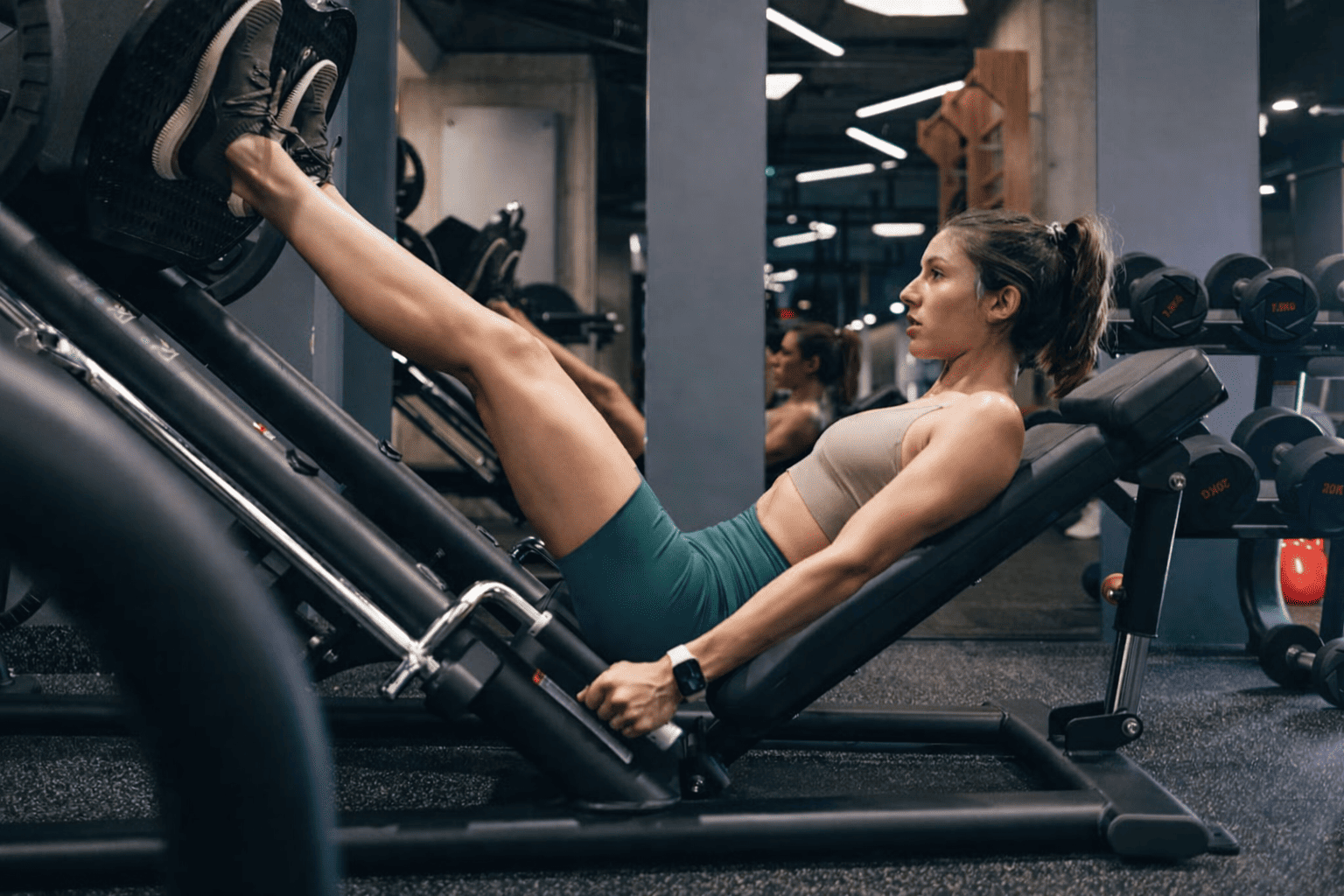
If the incline treadmill is the gentle entrance to sustainable cardio, the leg press is the most practical argument for why beginners should not ignore strength training.
Weight loss conversations are still oddly cardio-dominated, as if the only useful exercise is the one that leaves you breathless. But resistance training does something cardio alone does not always do well: it helps preserve or build lean tissue while improving body composition. That matters because losing weight without giving the body a reason to keep muscle can leave people smaller, yes, but not necessarily stronger, firmer, or more physically capable. The evidence is stronger than many people realize. Resistance training has been shown to reduce body fat percentage, fat mass, and visceral fat in healthy adults, even without being packaged as some trendy “fat-burning” system.
The leg press is particularly effective for beginners because it lets them train some of the body’s biggest muscle groups — quads, glutes, and hamstrings — with less balance demand than a barbell squat. This matters. A beginner who is winded, deconditioned, or anxious in a gym often benefits from an exercise that feels stable enough to learn yet substantial enough to matter. The leg press usually delivers both. It allows relatively large muscular work, which means a meaningful training stimulus, without requiring the coordination, mobility, or confidence that free-weight squats often demand on day one.
The common objection is that machines are too artificial. Sometimes that is true. But beginners do not need purity; they need traction. And the machine-based route is not some fitness dead end. In novice trainees, machine-based programs have produced improvements comparable to free weights in strength and muscularity. That is especially relevant for the person whose real barrier is not optimization but entry. A leg press that gets done consistently is better than a barbell squat that never gets attempted.
For beginners, the leg press works best when it is treated as a controlled, full-range exercise rather than a test of ego. Two or three sets of 8 to 12 repetitions, with a load that feels challenging but does not collapse technique, is enough. Lower the platform with control. Press through the full foot. Do not lock out aggressively. The goal is not to imitate the strongest person in the gym. It is to teach the lower body to produce force and tolerate work. Once that begins happening, weight loss efforts tend to improve for a simple reason: the body becomes more trainable.
3. The Lat Pulldown
Weight loss beginners often make one strategic mistake very early: they build their entire routine around the visible lower half of the body and neglect the upper back entirely. They walk, they bike, they sometimes leg press — and then they wonder why the gym still feels awkward, tiring, and strangely fragile. The lat pulldown helps correct that.
At first glance, it may not seem like a “weight loss exercise.” It is a seated machine move. It does not spike the heart rate the way cardio does. It does not carry the status of a deadlift or the sweat of a treadmill interval. But the lat pulldown trains a broad sweep of upper-body musculature: the lats, upper back, and elbow flexors, with postural support from the trunk. For beginners, that matters more than it seems. Muscle-strengthening activity is part of the public-health baseline for adults, not some specialty add-on, and upper-body pulling is one of the most practical categories to include.
There is a second reason it belongs in a beginner weight-loss program: it is one of the easiest ways to start building real upper-body strength without needing to perform a pull-up, which for many beginners is simply too advanced. The lat pulldown offers a clear progression. It is also humbling in a useful way. A beginner learns quickly that the body is not a collection of aesthetic zones but an integrated system with weak links, compensations, and forgotten muscles. That recognition is valuable. People tend to stick with exercise longer when they can feel themselves improving at it.
And while no single upper-body machine will determine body composition on its own, the cumulative effect of strength work matters. Resistance training, in the aggregate, supports reductions in fat mass and improvements in body composition. The beginner does not need to turn every session into a calorie-burn contest. They need enough total training across the week — some aerobic, some muscular — to shift the body gradually. The lat pulldown earns its place because it makes that weekly structure more complete.
One practical note: beginners should pull the bar toward the upper chest, not behind the neck, and think about drawing the elbows down rather than yanking with the hands. Two or three sets of 8 to 12 repetitions is plenty. The exercise should feel demanding in the back, not chaotic in the shoulders. Good form here does not just train muscle. It trains confidence.
4. The Seated Cable Row
If the lat pulldown teaches vertical pulling, the seated cable row teaches the horizontal version — and beginners are often better off learning both.
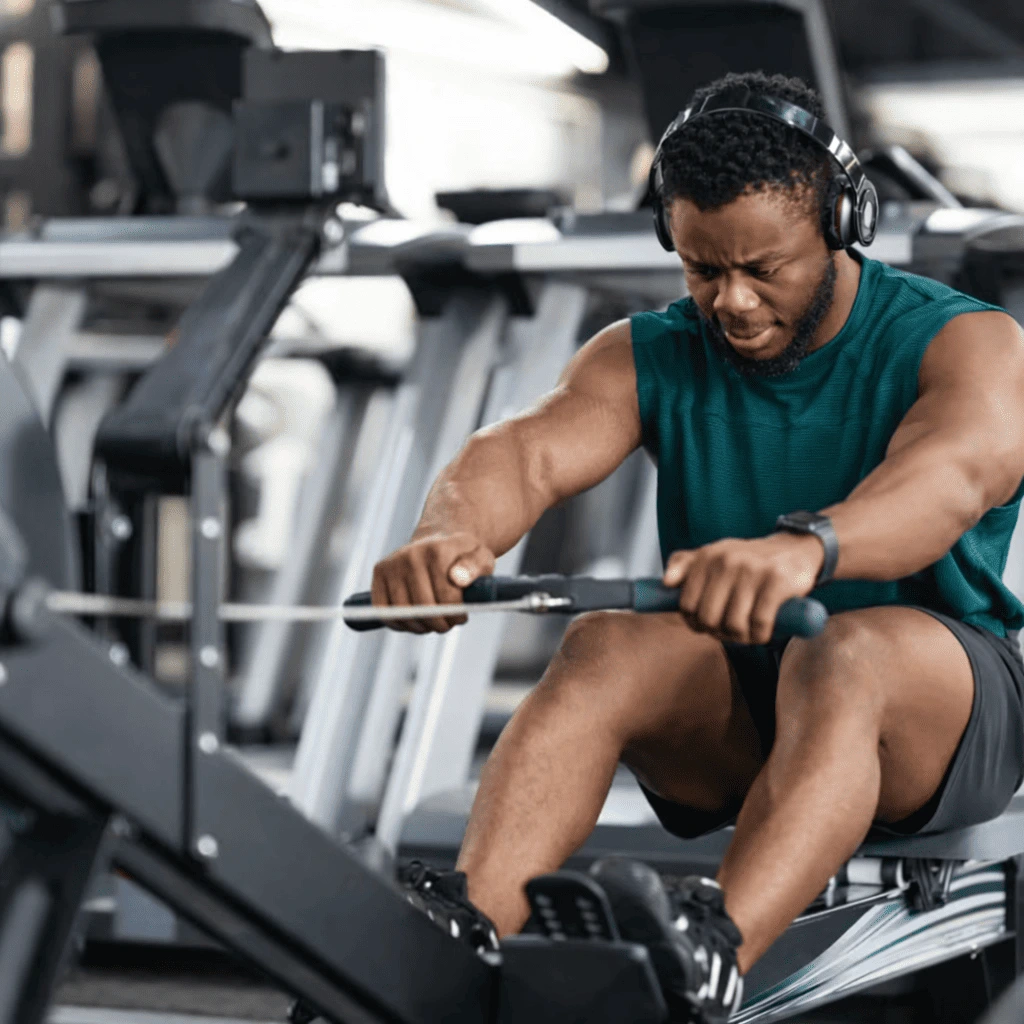
The seated row is effective for weight loss beginners for a surprisingly basic reason: it helps them handle life better. Not in the mystical sense, but in the daily physical sense. Many beginners arrive at the gym from lives spent sitting: working at laptops, driving, scrolling, eating hurried meals in forward-curled postures. The seated row asks the upper back to do the opposite. It builds strength through the mid-back, rear shoulders, and arms while encouraging a more organized torso position. That does not “fix posture” in one dramatic stroke, but it can make the body feel more supported, more coordinated, and more willing to train again tomorrow.
This matters because exercise adherence is not only about motivation. It is also about whether the body feels punished by the experience. A beginner who leaves every workout with aching knees or a fried lower back is not in a good long-term relationship with the gym. The seated cable row offers training volume with relatively low orthopedic drama. It is stable. It is adjustable. It allows a beginner to feel muscles working in a clear, intelligible way. That clarity is underrated.
The evidence base again favors not mystique but consistency. Adults are advised to include muscle-strengthening activity at least two days per week, and resistance training has measurable benefits for body composition. Beginners do not need to overcomplicate this. A routine that includes large lower-body work like the leg press, aerobic work like treadmill walking, and upper-body pulling like rows and pulldowns is already far more rational than the random, machine-hopping sessions many people default to.
Done well, the seated row is less about the handle and more about the squeeze: chest tall, shoulders not shrugged, elbows traveling back with control. Two or three sets of 10 to 12 repetitions works well for most beginners. Use enough weight to feel the muscles between the shoulder blades wake up, not so much that the movement turns into a full-body heave. Weight loss does not require spectacle. It requires enough honest work.
5. The Elliptical Interval Session
The elliptical has long suffered from a branding problem. It is neither the dramatic machine nor the cool one. People either drift onto it absent-mindedly or avoid it because it seems too mild to count. But for beginners — especially those with higher body weight, lower conditioning, or joints that do not love impact — the elliptical can be one of the most useful cardio tools in the building.
Part of the reason is mechanical. The elliptical allows continuous lower-body movement with less impact than running while still giving users a meaningful cardiovascular challenge. For people who find treadmill jogging uncomfortable or intimidating, that can mean the difference between quitting and accumulating real aerobic time. And aerobic time matters. The JAMA meta-analysis is useful precisely because it cuts through fantasy: more aerobic training, up to about 300 minutes per week, was associated with greater reductions in body weight, waist size, and body fat in adults with overweight or obesity, with clinically important reductions appearing at 150 minutes per week or more.
The surprise is that the elliptical becomes especially effective when it is used intentionally rather than lazily. A beginner does not need all-out intervals that turn the session into a panic attack. They need controlled fluctuations in effort: perhaps one minute moderately hard, two minutes easier, repeated for 20 to 25 minutes after a warm-up. This creates variation, keeps boredom down, and helps beginners spend more total time at an effective cardiovascular effort than they might if they tried to grind through a steady pace that was either too easy or unsustainably hard.
And yet the best thing about the elliptical may be what it does not do. It does not require the skill of rowing. It does not force impact the way running does. It does not corner a beginner into feeling athletic before they are ready to feel athletic. It offers a middle path, and middle paths are often where real habits are built. The CDC’s guidance that some activity is better than none, and that adults can build toward weekly targets over time, is practically written for machines like this.
What Makes These Five Work
The common thread across these machines is not novelty. It is usefulness.
The incline treadmill and elliptical help beginners accumulate aerobic work in forms they can repeat. The leg press gives the lower body a substantial strength stimulus without demanding advanced technique. The lat pulldown and seated row round out the upper body while building a stronger, more capable frame. Together, they create a beginner program that respects both halves of the weight-loss equation: increasing energy expenditure through movement and improving body composition through strength training. That is more intelligent than chasing only sweat or only soreness.
Just as important, these exercises are difficult enough to matter and simple enough to learn. That is not a trivial design feature; it is the whole point. Beginners often fail not because they lack effort but because they are given programs built for someone else’s confidence. A useful beginner workout should feel like an invitation, not an audition.
A reasonable weekly structure might look something like this: two days built around the leg press, lat pulldown, and seated row; two or three additional days of incline treadmill walking or elliptical work; and a gradual push toward the broader weekly target of at least 150 minutes of aerobic activity, with more as tolerance improves. That is not the only way to do it, but it is a sane one — and sanity is underrated in fitness. The public-health recommendations themselves emphasize building up over time, especially for people who are currently inactive.
The beginner should also understand what exercise cannot do alone. The CDC is clear that most weight loss comes from lowering calorie intake, while physical activity helps create the calorie deficit and is especially important for keeping weight off over time. This is not discouraging news. It is freeing news. It means you do not need to force one gym session to accomplish everything. Exercise does not have to be punished into being effective. It has to be paired with a way of eating you can live with, and it has to be consistent enough to accumulate.
In the end, these five machine exercises are surprisingly effective for beginners not because they are secret weapons, but because they are honest ones. They lower the barrier to entry. They let people train hard enough without being humiliated by complexity. They make it possible to repeat effort, which is the only kind of effort the body really rewards.
And if what you need most is structure, not inspiration, that is where a guided platform can help. Fitsse describes itself as a workout and nutrition platform with personalized training and meal guidance, and its app listings highlight workout programs, nutrition content, activity tracking, and other fitness tools. In practical terms, that means it is easy to have a workout program using the Fitsse app instead of improvising every session — and for beginners, having a clear plan is often the difference between visiting the gym and actually changing in it.
Important notice: this content is educational and does not replace an individual evaluation. If you have a history of eating disorders, diabetes, pregnancy, or a medical condition, consult a healthcare professional before making dietary or exercise changes.







 Sign In