

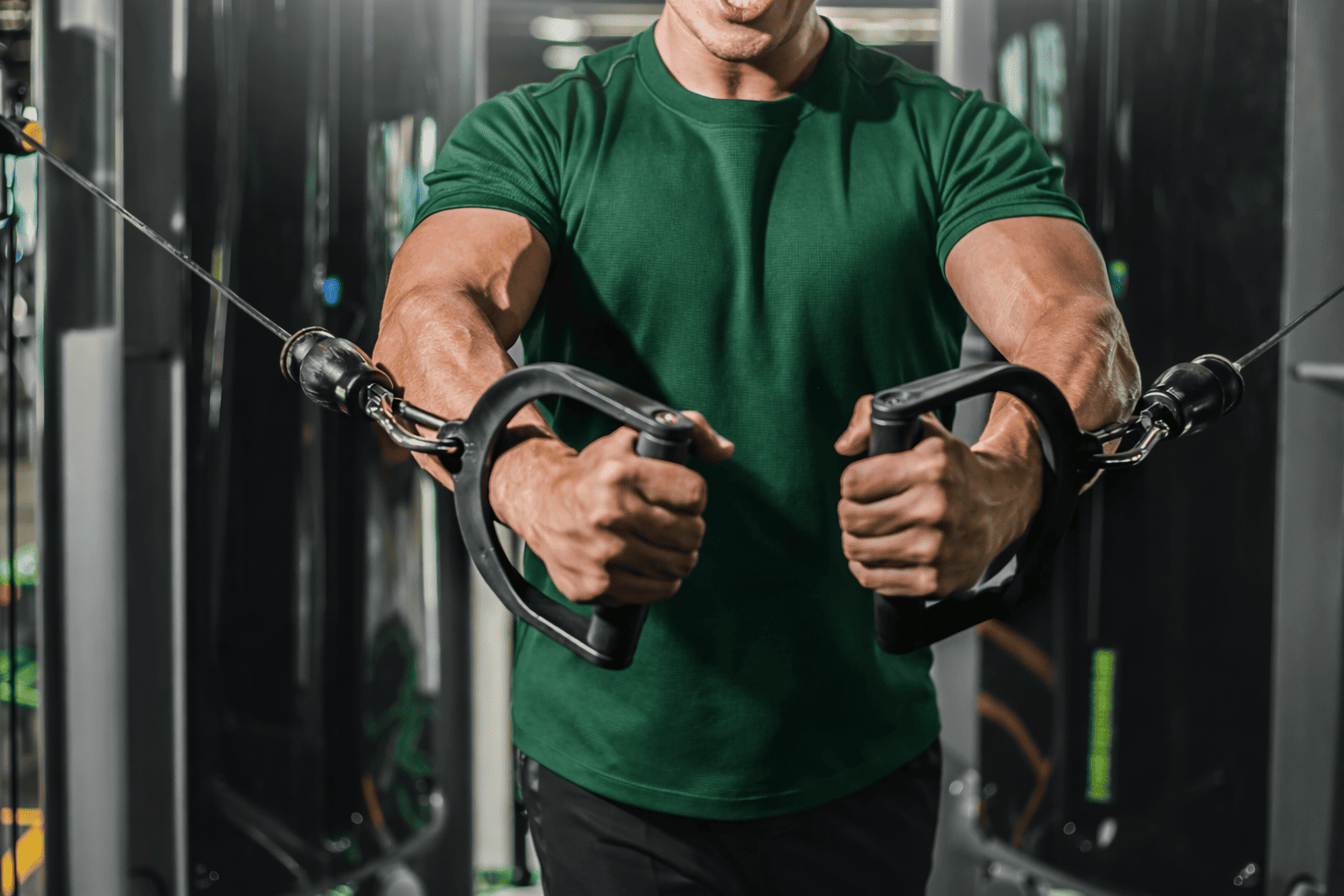

There is a particular kind of gym-goer who treats the cable station like a last resort—something you use when the squat racks are taken, when you’re traveling, or when you’re “just doing accessories.” Meanwhile, the people who train consistently for years—without constantly rehabbing a shoulder, an elbow, a lower back—often have a different relationship with cables. They use them not as a consolation prize, but as a quiet advantage.
Cables don’t demand bravado. They don’t reward ego lifting in the way a barbell can. And that is exactly what makes them powerful: the resistance stays honest. It follows you through the movement, keeps tension where you want it, and punishes the little cheats that free weights sometimes let you get away with.
The surprising part is that you can train the whole body with cables using relatively little weight and still feel like you did something real. This is not magic. It’s physics: cables provide consistent tension, allow you to choose joint-friendly angles, and force your body to stabilize. Done correctly, they can make 30 pounds feel like 60—without the wear and tear.
This article is designed for people who want efficient training: the office worker who can’t afford a cranky back, the beginner who wants to learn movement patterns safely, the experienced lifter who wants hypertrophy without inflaming joints, the traveler who wants a reliable session in any gym. It’s also written with E-E-A-T in mind: practical advice grounded in what coaches use, what lifters can verify in their own bodies, and what tends to hold up over time.
Below are five cable exercises that train multiple muscle groups at once—often the entire body—while keeping loads modest and technique crisp. You’ll also find setup tips, programming ideas, common mistakes, and a sample full-body cable workout you can take straight to the gym.
Why Cable Training Works (Even When the Weight Looks “Light”)
If you’ve ever felt humbled by a cable row with half the weight you’d normally use on a barbell row, you’ve already met the core idea.
Cables are effective because they:
- Maintain constant tension across much of the range of motion.
- Let you adjust the line of pull to match your body and joint comfort.
- Encourage cleaner reps by reducing momentum and “dead zones.”
- Require stabilization—especially in split stances, half-kneeling positions, or single-arm work.
- Make it easier to target muscles without compensating patterns (like turning a row into a low-back exercise).
The result is efficiency. You get a strong training stimulus without always needing heavy external load. For fat loss phases, joint-sensitive lifters, or anyone who wants a “high return” session without feeling beat up, that’s a gift.
1) The Cable Squat-to-Row (The Quiet Full-Body Workhorse)
If you could only do one cable movement to train most of the body, this would be a strong contender. The cable squat-to-row is simple: you squat while holding the handle(s), then stand and row. It connects lower body power with upper body pulling—two big engines of strength training.
Muscles trained
- Quads and glutes (squat)
- Upper back and lats (row)
- Core and deep stabilizers (anti-flexion, anti-rotation)
- Grip and forearms
- Postural muscles that keep you tall and balanced
How to set it up
- Set the pulley to mid height (around your lower chest).
- Use a straight bar, rope, or two handles.
- Step back so there’s tension even at the bottom of the squat.
- Feet about shoulder width, chest tall.
How to do it well
- Sit into a controlled squat, letting arms extend forward slightly.
- Stand up smoothly.
- As you reach standing, pull the handle toward your ribs: a clean row.
- Reverse with control—don’t let the cable yank you.
Why it works with little weight
Because you’re training multiple segments at once and stabilizing against a forward pull. The cable is trying to tip you forward; your core and upper back refuse.
Common mistakes
- Turning it into a curl (hands too close, elbows drifting forward).
- Rounding the lower back at the bottom (step back less, squat higher, or reduce load).
- Jerking into the row (slow down; let the legs and torso set your position).
Programming
- 3–4 sets of 8–12 reps
- Rest 60–90 seconds
- Use a weight that keeps reps smooth and consistent.
2) The Half-Kneeling Cable Chop (Core Training That Actually Transfers)
Many people still treat “core day” as crunches and hope. The half-kneeling cable chop is different. It trains the core the way your body uses it in real life: resisting rotation, transferring force between hips and shoulders, maintaining posture while your arms move.
Muscles trained
- Obliques and deep core stabilizers
- Glutes (especially the kneeling-side glute)
- Upper back and shoulders as stabilizers
- Hip stabilizers and adductors
- Postural muscles and coordination
Why half-kneeling matters
Half-kneeling (one knee down) reduces compensation and forces you to stabilize through the pelvis and ribcage. It also acts like a “screen”: if you can’t keep your ribs stacked over your hips, the movement tells on you.
Setup
- Pulley set high for a high-to-low chop.
- Kneel sideways to the machine: inside knee up, outside knee down.
- Start with hands near the high pulley, then chop diagonally down across your body.
Technique cues
- Keep ribs down, pelvis neutral—no dramatic arching.
- Move slowly, like you’re drawing a clean diagonal line.
- Exhale as you chop; inhale returning.
Why it works with little weight
A little rotational pull goes a long way when you’re trying to keep your trunk stable. This is “small weight, big effort” done correctly.
Programming
- 2–4 sets of 8–12 reps per side
- Or 30–45 seconds per side as a finisher
- Keep it controlled; this isn’t a speed exercise.
3) The Single-Arm Cable Press (A Whole-Body Push Without the Joint Drama)
Pressing heavy can be productive—and also, for some shoulders and elbows, a little unforgiving. The single-arm cable press is a more joint-friendly way to train pushing strength while sneaking in core and hip stabilization.
Done in a split stance, it becomes a full-body exercise: your legs create the base, your core resists rotation, your upper body presses.
Muscles trained
- Chest, shoulders, triceps
- Core (anti-rotation, anti-extension)
- Glutes and legs (split-stance stability)
- Scapular stabilizers and posture muscles
Setup
- Pulley at chest height.
- Use a single handle.
- Stand sideways to the machine in a split stance (one foot forward).
- The cable should pull you slightly toward the machine.
How to do it
- Start with your hand near your chest, elbow slightly back.
- Brace your core—imagine zipping your ribs down.
- Press forward, keeping your shoulder down and stable.
- Return slowly; don’t let the cable yank your shoulder.
Why it works with little weight
Because your body is fighting rotation the entire time. The press becomes a stability drill disguised as a chest exercise.
Common mistakes
- Leaning into the cable to “cheat” stability.
- Letting the shoulder shrug up.
- Flaring the elbow dramatically (keep it at a comfortable angle).
Programming
- 3–4 sets of 8–15 reps per side
- Moderate tempo, especially on the return.
4) The Cable Romanian Deadlift (A Hinge That Teaches You the Right Pattern)
The Romanian deadlift (RDL) is one of the best exercises for the posterior chain: hamstrings, glutes, and the muscles that keep your spine stable. But many people struggle to learn it with a barbell. They turn it into a squat. Or they feel it in the lower back because they don’t know how to hinge.
A cable RDL is a quiet teaching tool: the cable pulls you forward, and you learn to push your hips back. It also keeps tension on the hamstrings throughout.
Muscles trained
- Hamstrings and glutes
- Lower back stabilizers (isometric)
- Core and lats (bracing)
- Upper back posture muscles
- Grip (depending on attachment)
Setup
- Pulley set low.
- Use a rope or straight bar.
- Stand facing away from the machine or facing it depending on station layout; the key is a line of pull that challenges the hinge.
- Step forward to create tension.
Technique cues
- Soft knees, hips go back.
- Spine stays long; neck neutral.
- Think “close the car door with your hips.”
- Stop when hamstrings are stretched—not when your back rounds.
Why it works with little weight
Constant tension + longer time under tension + less momentum. Many people can get a hamstring burn with surprisingly modest load.
Programming
- 3–5 sets of 8–12 reps
- Rest 60–120 seconds
- Use controlled reps; don’t rush the bottom.
5) The Cable Reverse Lunge + Row (Strength, Balance, and Posture in One Move)
If you want “whole body” in the practical sense—the kind that makes daily movement feel easier—single-leg work is hard to beat. Add a row to a reverse lunge and you get a movement that trains legs, glutes, back, and core while also challenging balance and coordination.
Muscles trained
- Glutes and quads (lunge)
- Upper back and lats (row)
- Core stabilizers (anti-rotation, posture)
- Hip stabilizers and ankles (balance)
- Grip and forearms
Setup
- Pulley at mid height.
- Use a single handle or two handles.
- Stand facing the machine with a little tension.
How to do it
- Step back into a reverse lunge.
- As you rise, row the handle toward your ribs.
- Pause briefly at the top—tall posture, ribs stacked.
- Repeat on the same side or alternate.
Why it works with little weight
Single-leg work amplifies difficulty. Add a cable’s constant tension and the stabilizers light up. It becomes a full-body effort without heavy load.
Common mistakes
- Falling forward at the bottom (reduce load, shorten range, or slow down).
- Twisting through the torso (brace and keep hips square).
- Letting the row become a shrug (shoulders down, elbows back).
Programming
- 2–4 sets of 8–12 reps per side
- If balance is a challenge, start with fewer reps and perfect the pattern.
How to Put These Together: A Full-Body Cable Session (30–45 Minutes)
Here’s a simple structure you can use 2–3 times per week, adjusting load modestly and focusing on clean reps.
Warm-up (5 minutes)
- 2 minutes brisk walk or bike
- 1–2 light sets of cable rows and presses (15 reps)
- Hip hinge patterning (bodyweight RDLs)
Main Workout
- Cable Squat-to-Row — 3 sets × 10 reps
- Cable Romanian Deadlift — 3 sets × 10 reps
- Single-Arm Cable Press (split stance) — 3 sets × 12 per side
- Half-Kneeling Cable Chop — 2 sets × 10 per side
- Cable Reverse Lunge + Row — 2 sets × 8 per side
Keep rest reasonable: 60–90 seconds between sets. If you’re short on time, reduce one set per movement and you still have a complete session.
Why “Surprisingly Little Weight” Is Not a Compromise
Many lifters equate progress with heavier plates. That’s understandable. It’s also incomplete. The body responds to tension, effort, and progressive challenge—not just load.
With cables, progression can look like:
- adding reps at the same weight,
- slowing the eccentric,
- increasing range of motion,
- improving stability (less torso movement),
- reducing rest time,
- using a more challenging stance (half-kneeling, split stance, single-leg).
These are legitimate progress markers. They keep training effective when your joints don’t want maximal loads—or when your schedule doesn’t.
Cables also shine for people who train in phases:
- In a hypertrophy phase, they’re excellent for targeted tension.
- In a fat loss phase, they’re excellent for consistent output without excessive fatigue.
- In a “busy life” phase, they’re excellent for efficient full-body sessions.
Frequently Asked Questions (SEO-Friendly, Real-World Answers)
Are cable workouts effective for building muscle?
Yes—especially when you train close to muscular fatigue with good form and progressive overload (more reps, more tension, better control over time). Cables provide consistent tension that can be highly effective for hypertrophy.
Are cables good for beginners?
Often, yes. Cables can make it easier to learn movement patterns with control, especially rows, presses, chops, and certain hinge patterns. A beginner can get a strong stimulus without needing heavy weights.
Can you do a full-body workout with only cables?
Absolutely. With smart exercise selection—squat patterns, hinges, pushes, pulls, and core—cables can cover the whole body in 30–45 minutes.
Do cables help protect joints?
They can, because you can adjust angles and keep tension smooth. They don’t guarantee safety, but they often reduce the need for awkward positions and momentum.
Conclusion
Cable stations have a reputation for being “accessory territory,” but that’s a misunderstanding. Cables can train the entire body with modest weight because they keep tension honest, challenge stability, and allow joint-friendly movement paths. The five exercises above—squat-to-row, half-kneeling chop, single-arm press, cable RDL, and reverse lunge plus row—cover the major patterns most bodies need: squat, hinge, push, pull, rotation control, and single-leg strength.
If you want the benefits without spending time guessing what to do each day, it’s easy to follow a structured training program using the Fitsse app—so your cable workouts (and progression) stay organized, efficient, and consistent, even when life is busy.
Important notice: this content is educational and does not replace an individual evaluation. If you have a history of eating disorders, diabetes, pregnancy, or a medical condition, consult a healthcare professional before making dietary or exercise changes.









 Sign In