

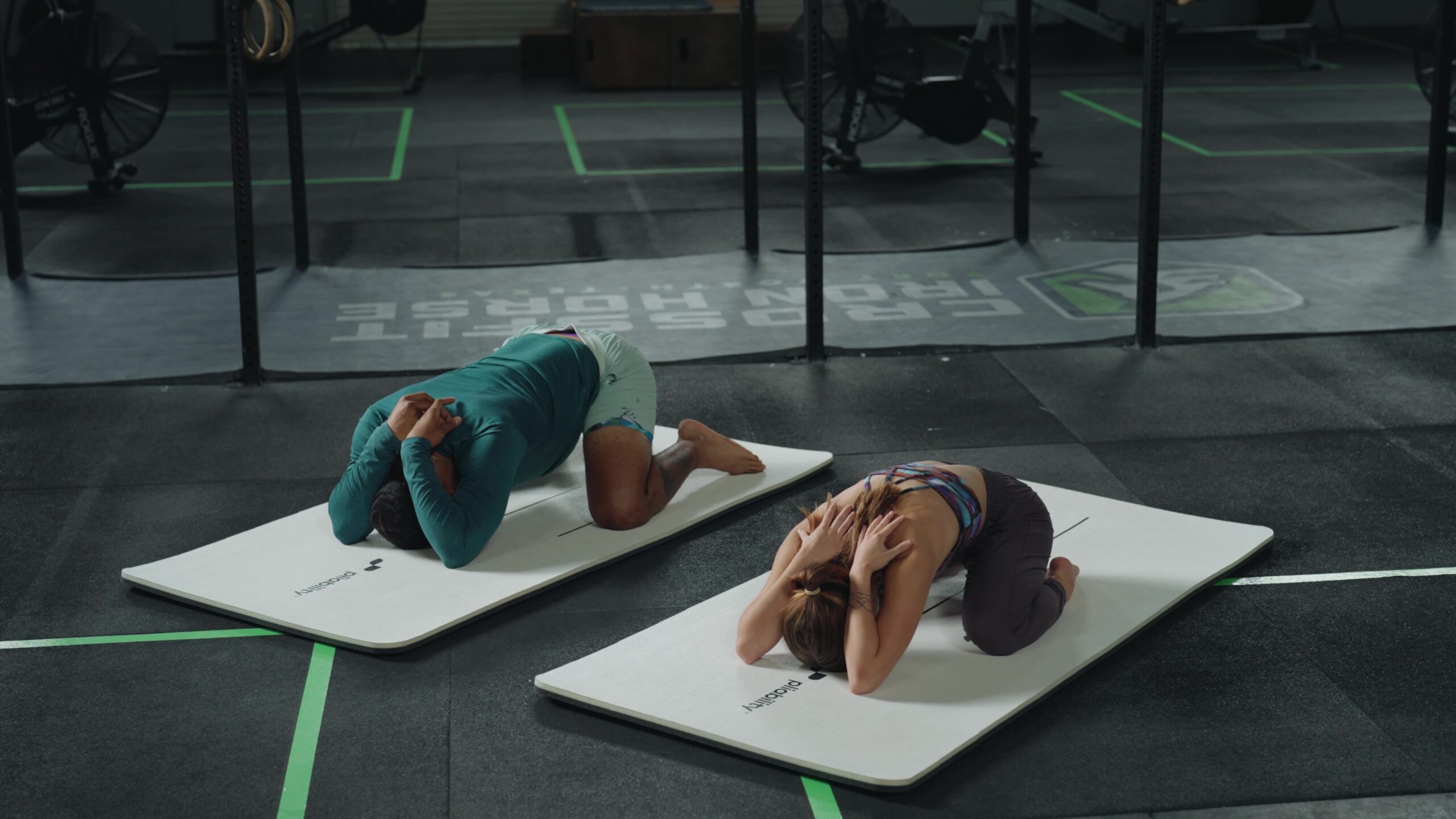

In recent years, the idea of “fitness” has gradually expanded beyond strength and aesthetics. There is growing interest in how well the body actually moves in daily life: getting up from the floor, carrying groceries, reaching overhead, turning to look behind while driving, or walking up stairs without discomfort. This is where functional mobility becomes central.
Functional mobility describes the ability to move joints and muscles through useful ranges of motion with control and stability. It is not only relevant for athletes; it is a foundation for independent living, especially as we age. Large observational studies show that people who maintain good mobility, leg strength and balance are more likely to preserve independence and reduce the risk of falls and disability later in life.
The good news is that mobility can be trained. You do not need complex equipment or long sessions. A small group of well-chosen exercises, performed regularly, can make everyday movements feel more stable and less restricted.
Below are five functional mobility exercises designed to support common daily tasks. They focus on major joints and movement patterns: squatting, hinging, reaching, rotating and balancing. Each exercise includes purpose, step-by-step instructions, and simple progressions or modifications.
1. Deep Squat to Stand
The ability to lower and raise the body under control is fundamental for daily life: sitting down and standing up, getting in and out of a car, or picking something up from a low surface. The deep squat to stand exercise works ankle, knee and hip mobility while teaching coordinated movement through the lower body.
Purpose
- Improve mobility in the hips, knees and ankles
- Reinforce a stable, aligned squatting pattern
- Support tasks such as rising from a chair, using stairs, or lifting objects from the floor
How to perform
- Stand with your feet about shoulder-width apart, toes slightly turned out if that feels more natural.
- Take a breath in and gently brace the abdominal area (as if preparing for a light cough).
- Begin the movement by bending at the hips and knees at the same time, lowering your body into a squat. Allow the hips to move back slightly as you descend.
- Aim to keep the heels on the floor. Descend only as far as you can while maintaining balance and a relatively upright torso.
- Pause briefly at the bottom of your comfortable range.
- Press evenly through the mid-foot and heel to return to standing. Avoid collapsing the knees inward as you rise.
Repetitions and frequency
- 2–3 sets of 8–10 repetitions
- On most days of the week, especially before lower-body training or after long periods sitting
Modifications
- If balance is limited: hold a stable surface such as the back of a chair or a door frame with one or both hands.
- If ankle mobility is restricted: place a thin wedge or small weight plate under the heels to reduce the range demand on the ankles while you work gradually on mobility.
- If the range is small at first: descend only part of the way, focusing on control and alignment. Depth can increase over time.
The objective is not to force a “perfect” squat but to improve comfort and control within your own structure.
2. Hip Hinge with Reach
Many daily tasks are based on a hinge pattern rather than a squat: leaning forward to pick up a bag, loading a dishwasher, or moving objects from one surface to another. The hip hinge with reach teaches the body to bend at the hips while preserving a neutral spine and stable legs, distributing the effort through the large muscles of the posterior chain rather than the lower back alone.
Purpose
- Improve hip mobility and control
- Reinforce a safe bending pattern for lifting and reaching
- Support activities such as lifting boxes, gardening, or working at low surfaces
How to perform
- Stand with your feet about hip-width apart, knees slightly unlocked.
- Place your hands on the front of the hips. Imagine your pelvis as a hinge that folds forward over the thighs.
- Initiate the movement by gently moving the hips backward, as if you were reaching them toward a wall behind you.
- As the hips move back, allow the torso to incline forward while keeping the spine long. Avoid rounding aggressively through the upper or lower back.
- When you feel a stretch in the back of the thighs (hamstrings) and the trunk is inclined at roughly 30–45 degrees, pause.
- From this position, slowly reach both arms forward at shoulder height, as if placing an object on a shelf in front of you. Maintain balance and a stable core.
- Bring the arms back, then push through the feet to bring the hips forward and return to standing.
Repetitions and frequency
- 2–3 sets of 6–8 repetitions
- Performed 3–5 times per week, or integrated into a warm-up before strength training
Modifications
- For additional support: place one hand on a stable surface (such as a table) while hinging.
- To increase challenge: hold a light weight close to the chest or in the hands as you hinge and reach, making sure the movement remains controlled.
- If hamstrings feel very tight: limit the depth and increase the range gradually as comfort improves.
This exercise helps train the body to share the load between hips and trunk rather than overloading the lower back during daily bending tasks.
3. Half-Kneeling Lunge with Rotation (“World’s Greatest Stretch” variation)
Many routine movements—turning to look behind, stepping over obstacles, picking something up from the floor and placing it on a higher surface—combine lower-body motion with trunk rotation. The half-kneeling lunge with rotation integrates hip mobility, thoracic spine mobility, and core control in a single pattern.
Purpose
- Improve hip flexor and hamstring mobility
- Enhance rotational mobility in the mid-back (thoracic spine)
- Support tasks such as rotating while carrying objects, turning to reach into the back seat of a car, or moving in tight spaces
How to perform
- Begin in a half-kneeling position:
- Right foot in front, flat on the floor, knee bent at about 90 degrees.
- Left knee on the floor behind, also bent at 90 degrees, with the top of the foot relaxed on the ground.
- Ensure that the front knee is directly above the ankle, not collapsing inward.
- Place both hands on the front thigh for support. Gently lengthen the spine, as if you were increasing the distance between the crown of the head and the tailbone.
- Slowly shift the hips forward a few centimeters until you feel a mild stretch in the front of the back hip (hip flexor region).
- From this position, move the left hand to the floor beside the front foot.
- Rotate the torso gently to the right while raising the right arm toward the ceiling, following the hand with your eyes. Keep the hips stable and avoid letting the front knee collapse inward.
- Hold the end position for one or two breaths, then return to the starting position and repeat.
Repetitions and frequency
- 6–8 controlled repetitions per side
- 1–2 sets, 3–5 days per week
- Particularly useful after periods of prolonged sitting
Modifications
- If kneeling is uncomfortable: place a folded towel or mat under the back knee.
- If floor contact is not possible: perform a similar pattern in a standing lunge, with a smaller range and hands supported on a chair or bench as you rotate.
- To simplify: perform only the forward hip shift initially, then add rotation later as mobility and balance allow.
This coordinated exercise reinforces the ability to move the hips and spine separately yet harmoniously—an important factor in reducing unnecessary strain during twisting and reaching tasks.
4. Supported Single-Leg Reach
Balance is a crucial element of functional mobility. Everyday tasks such as stepping off a curb, walking on uneven surfaces, or dressing (for example, putting on trousers or shoes) require controlled single-leg support. The supported single-leg reach trains balance, hip stability and ankle control in a practical, low-intensity way.
Purpose
- Improve balance and proprioception (awareness of body position)
- Strengthen and mobilize the hip and ankle in a single-leg stance
- Support activities such as walking, climbing stairs, and moving safely over irregular ground
How to perform
- Stand next to a stable surface—such as the back of a chair, countertop or rail—lightly resting one hand on it for support.
- Shift your weight onto the leg closest to the support (for example, the right leg).
- Gently lift the opposite foot (left) a few centimeters off the floor, keeping the hips level.
- With the free leg slightly bent and relaxed, hinge at the hips (similar to the hip hinge described earlier) and allow the free leg to extend slightly behind you as you reach the free hand (left hand) toward the floor or a point in front of the standing foot.
- Keep the standing knee softly bent, not locked. Focus on maintaining balance through the whole foot.
- When you have reached a comfortable depth without losing control, pause briefly, then return to the upright position.
- Complete all repetitions on one side before switching legs.
Repetitions and frequency
- 2–3 sets of 6–8 repetitions per leg
- At least 2–3 times per week
Modifications
- To simplify:
- Keep the reach smaller, touching only the knee or shin rather than the floor.
- Maintain more contact with the support surface with the assisting hand.
- To progress:
- Lighten the support gradually, using only fingertips.
- Perform the exercise without holding on, once balance improves.
- Hold a small object in the reaching hand to add a modest challenge.
This exercise builds practical single-leg stability and prepares the body for tasks that demand balance in dynamic situations.
5. Quadruped Reach and Rotation
Modern life often involves prolonged sitting, forward head posture and relatively little rotation or extension through the upper back. Over time, this can contribute to discomfort when turning, reaching overhead, or maintaining good posture while working or driving. The quadruped reach and rotation focuses on restoring controlled motion through the thoracic spine while reinforcing core stability.
Purpose
- Improve rotational mobility in the upper and mid-back
- Encourage better alignment of the spine and shoulder girdle
- Support tasks such as reaching into cabinets, turning the head and torso while walking or driving, and maintaining upright posture
How to perform
- Begin on all fours on a mat or comfortable surface. Place hands under shoulders and knees under hips.
- Maintain a neutral spine—neither rounded nor excessively arched. The neck follows the line of the spine.
- Place your right hand lightly behind your head, with the elbow pointing outward. Support your weight through the left arm and both knees.
- Keeping the hips relatively stable, slowly rotate the upper back so that the right elbow moves toward the left hand, allowing the spine to flex slightly.
- Then reverse the motion, rotating the torso so that the right elbow opens upward toward the ceiling. Follow the elbow with your eyes.
- Move smoothly through the range that feels available without forcing.
- After completing the planned repetitions, switch sides and repeat with the left hand behind the head.
Repetitions and frequency
- 2 sets of 8–10 rotations per side
- On most days, especially those involving upper-body strength training or extensive desk work
Modifications
- If kneeling is uncomfortable: place extra padding under the knees or perform a similar movement seated, with hands behind the head and gentle torso rotations.
- If balance is challenging: widen the position of the supporting hand and knees to create a more stable base.
- To progress: after mastering the basic version, you can extend the free arm fully instead of placing the hand behind the head, increasing the lever length and demand on control.
This exercise helps to reintroduce controlled rotation into an area of the spine that is often underused but essential for comfortable, efficient movement.
Integrating These Exercises into Daily Life
The value of functional mobility exercises lies not only in the movements themselves but in how they are integrated into everyday routines. A few practical suggestions:
- Short daily sequences:
- Choose 3–5 of the exercises above (or all of them) and perform them in sequence, which can take 10–15 minutes.
- Use this as a morning routine, a break from desk work, or a warm-up before strength training.
- Micro-sessions during the day:
- Perform one or two sets of a single exercise after prolonged sitting, such as the half-kneeling lunge with rotation after long meetings, or the quadruped reach and rotation in the evening.
- This approach distributes movement throughout the day instead of concentrating it only in one training session.
- Linking exercises to daily habits:
- For example, you might perform a set of deep squat to stand after brushing your teeth, or supported single-leg reaches while waiting for the kettle to boil.
- Such associations help make mobility practice a natural part of daily life rather than an additional task.
It is not necessary to perform all exercises every day. Consistency over weeks and months, even with modest volume, tends to produce better results than occasional, intensive efforts.
Conclusion
Functional mobility is not a separate category of fitness reserved for rehabilitation or advanced training. It is deeply connected to the quality of ordinary movements—standing up, bending, turning, reaching and walking. When these actions become smoother and more controlled, daily life often feels less demanding, and other forms of training can be performed with greater comfort and confidence.
The five exercises outlined here—deep squat to stand, hip hinge with reach, half-kneeling lunge with rotation, supported single-leg reach and quadruped reach and rotation—were selected because they address common patterns that many people use every day. They require minimal or no equipment and can be adapted to different levels of ability.
Approached with attention and patience, these movements do more than “stretch” isolated muscles. They help the body remember how to move as an integrated system—stable where it must be stable, mobile where it must be mobile. Over time, that integration becomes a quiet but significant support for both everyday tasks and more demanding training.
Important notice: this content is educational and does not replace an individual evaluation. If you have a history of eating disorders, diabetes, pregnancy, or a medical condition, consult a healthcare professional before making dietary or exercise changes.









 Sign In