


Forearms are the body’s quiet workers. They don’t get the flattering lighting of shoulders or the cultural mythology of abs. But they show up everywhere: the deadlift that slips at the top, the pull-up that fades into a hang, the grocery bags that feel heavier than they should, the keyboard hours that leave your hands strangely tired. When your forearms are strong, life feels easier in small, almost unnoticeable ways.
And then there’s the other reality: a lot of forearm training hurts.
Not the honest burn of muscle doing its job — but the sharp, irritating discomfort that flares at the wrist, the kind that makes you doubt your grip, your technique, or your anatomy. Many popular forearm exercises load the wrist joint aggressively, especially in extended positions, with high repetition and poor control. If you’ve ever chased a pump with endless wrist curls only to end up with cranky tendons, you already know the bargain: big effort, small results, and pain as the receipt.
There’s a smarter approach. You can build forearms — thicker, stronger, more fatigue-resistant — while treating the wrist like a joint worth protecting. The trick is to shift the emphasis toward grip and forearm musculature without forcing the wrist into angles it doesn’t tolerate, and to respect the difference between muscle fatigue and tendon irritation.
What follows are five forearm builders that are brutally effective and unusually joint-friendly. They’re also realistic: you can do them in a commercial gym, a CrossFit box, or at home with modest equipment. Each one includes the “why,” the “how,” and the cues that keep your wrists out of trouble.
A note before we begin: This is educational content, not medical advice. If you have persistent wrist pain, numbness/tingling, a recent injury, or pain that worsens week to week, consult a qualified clinician (sports physician, physiotherapist, or hand specialist). Pain is not a moral failure. It’s information.
What Most People Get Wrong About Forearm Training
Forearm strength is not just “bigger wrists.” It’s a blend of:
- Crush grip (closing the hand tightly, like squeezing a gripper or holding a dumbbell)
- Support grip (holding something heavy for time, like a farmer carry)
- Pinch grip (thumb-to-finger pressure, like holding plates)
- Wrist stability (keeping the wrist neutral while the hand works)
- Forearm endurance (resisting fatigue under repeated contractions)
Many wrist-pain problems show up when training becomes wrist movement instead of wrist stability. Endless wrist curls and extensions can be useful in rehab contexts with careful loading — but in “pump culture,” they’re often done fast, heavy, and with the wrist jammed into ranges that irritate tendons.
If you want strong, muscular forearms without aggravating the joint, your training should follow three principles:
- Prioritize neutral wrist positions.
Strong forearms do not require extreme wrist flexion or extension. - Use progressive overload, but with patience.
Tendons adapt slower than muscles. Forearm work has to earn its volume. - Train grip types, not just one movement.
Variety is not confusion here; it’s balanced development.
Before You Train: The “Wrist-Friendly” Setup (2 Minutes)
You don’t need a long warm-up, but you do need a brief check-in.
Do this once before forearm-focused work:
- 30 seconds: open-and-close hands quickly, then shake them out
- 30 seconds: gentle wrist circles (small, controlled)
- 1 minute: light dead hang or band-assisted hang with a neutral wrist
(If hanging bothers your wrists, skip it and do a light farmer hold instead.)
Then assess:
Do your wrists feel normal? Or do they feel “pinchy,” hot, or sharp? If it’s the latter, today is not the day to push volume.
1) Farmer Carries (The Most Honest Forearm Builder)
Why it builds forearms without wrist pain:
Carries train support grip with the wrist mostly neutral. The load is vertical, the position is simple, and you can scale it infinitely. It’s less about wrist motion and more about the forearm’s job in real life: hold something heavy and don’t drop it.
How to do it:
- Pick two dumbbells or kettlebells.
- Stand tall: ribs down, shoulders “packed” (not shrugged to your ears).
- Wrists neutral — imagine your knuckles pointing straight down.
- Walk with calm steps. No wobbling, no leaning.
- When grip starts to fail, stop. Don’t turn it into a fight with your tendons.
Prescription (choose one):
- Strength focus: 4–6 carries of 20–30 meters (or 20–30 seconds) heavy, full recovery
- Hypertrophy/endurance: 3–4 carries of 40–60 meters moderate, 60–90 seconds rest
Wrist-friendly adjustments:
- Use kettlebells if dumbbell handles irritate.
- If the thumb side of your wrist gets angry, try trap bar carries (if available) — the neutral handles often feel better.
NYT-style reality check:
Carries don’t look glamorous. They also don’t lie. If your forearms are a weak link, a heavy carry will find that truth quickly — without asking your wrist joint to do gymnastics.
2) Towel or Fat-Grip Pulling (Big Forearms, Smaller Joint Complaints)
Why it works:
Thicker grips increase demand on the forearm flexors and hand musculature without requiring you to curl your wrist. You’re simply asking your hand to hold a more difficult shape.
This is also, quietly, one of the most “transferable” forms of forearm work: it builds grip strength that shows up in pull-ups, rows, deadlifts, and even daily tasks.
Two ways to do it:
Option A: Towel Pull-Ups or Towel Hangs
- Loop a towel over a pull-up bar.
- Hold the towel ends with a neutral wrist.
- Do pull-ups (scaled) or timed hangs.
Prescription:
- Beginner: 5–8 sets of 10–20 seconds hangs
- Intermediate: 4–6 sets of 3–6 towel pull-ups
- Advanced: mixed: 3 sets hangs + 3 sets pull-ups
Option B: Fat Grip Rows
- Put fat grips (or a towel) around dumbbells, a cable handle, or barbell.
- Do rows with strict form.
Prescription:
- 3–4 sets of 8–12 reps, controlled tempo
Wrist-friendly cues:
- Keep wrists stacked; don’t let them bend backward at the top of the pull.
- Stop a set when you lose wrist neutrality — that’s the joint warning you before pain shows up.
Scaling tip:
If towel hangs aggravate wrists, switch to fat-grip cable rows. Hanging compresses some wrists in ways rowing does not.
3) Plate Pinch Holds (The “Thumb Workout” Everyone Forgets)
Why it builds forearms without wrist pain:
Pinch grip shifts emphasis toward the thumb and intrinsic hand muscles, which often get neglected. Because the wrist can stay neutral, this can be a surprisingly wrist-friendly forearm builder — and it can improve your overall grip resilience.
How to do it:
- Take two weight plates (smooth sides outward), press them together with your fingers and thumb.
- Stand tall, shoulders down, wrist neutral.
- Hold for time.
Prescription:
- 4–6 sets of 20–40 seconds
- Rest 60–90 seconds between sets
Progressions:
- Increase the time first, then increase the plate weight.
- You can also do walks with the pinch (short distances), but start with static holds.
Wrist-friendly adjustments:
- Use lighter plates and longer holds if you feel wrist strain.
- If you feel pain at the wrist rather than fatigue in the thumb/forearm, stop and reduce load.
A small editorial note:
Pinch holds are humbling — the kind of humble that feels personal. That’s part of why they work. They reveal what your training doesn’t usually ask of you.
4) Hammer Curls With a Neutral Grip (Forearms Included, Wrists Not Punished)
Why it works:
Hammer curls are not a “forearm exercise,” but they might be the best forearm builder hiding in plain sight. They train the brachioradialis — a major forearm muscle that contributes to thickness and strength — using a neutral grip that often feels better on wrists than traditional curls.
How to do it:
- Hold dumbbells like you’re holding two hammers (palms facing each other).
- Keep wrists straight.
- Curl without swinging. Lower under control.
Prescription:
- 3–5 sets of 8–12 reps
- Tempo: 2 seconds up, 3 seconds down
Wrist-friendly cues:
- Avoid bending wrists at the top to “finish” the rep. The rep ends when your elbow flexes, not when your wrist curls.
- If dumbbells irritate the wrist, use a cable rope attachment for a neutral-grip curl.
Variants (choose one):
- Cross-body hammer curl: slightly different angle, often easier on elbows and wrists
- Incline hammer curl: more stretch; use lighter loads, slower tempo
Why this belongs here:
If forearm work has historically meant “wrist torture,” hammer curls give you a strong forearm stimulus while letting your wrists stay quiet.
5) Wrist-Stable Rows and Holds (The Anti-Pain Forearm Plan)
This one is less flashy and more strategic: you train the forearms through isometric stability while you build your back — two birds, one joint-friendly stone.
Why it works:
Pain often comes from repeated wrist motion under load. But the forearms also grow and strengthen from simply holding tension, especially in pulling patterns where the wrist can remain neutral and the scapula does most of the moving.
Two options:
Option A: Deadlift Holds (From Blocks or Rack)
- Set a bar at just below knee height (blocks or rack pins).
- Pull it up to lockout with perfect posture.
- Hold at the top, wrist neutral, shoulders down.
Prescription:
- 5–8 sets of 8–15 seconds
- Rest 60–120 seconds
- Use straps only if wrist pain forces it — but the point is the grip, so minimize assistance.
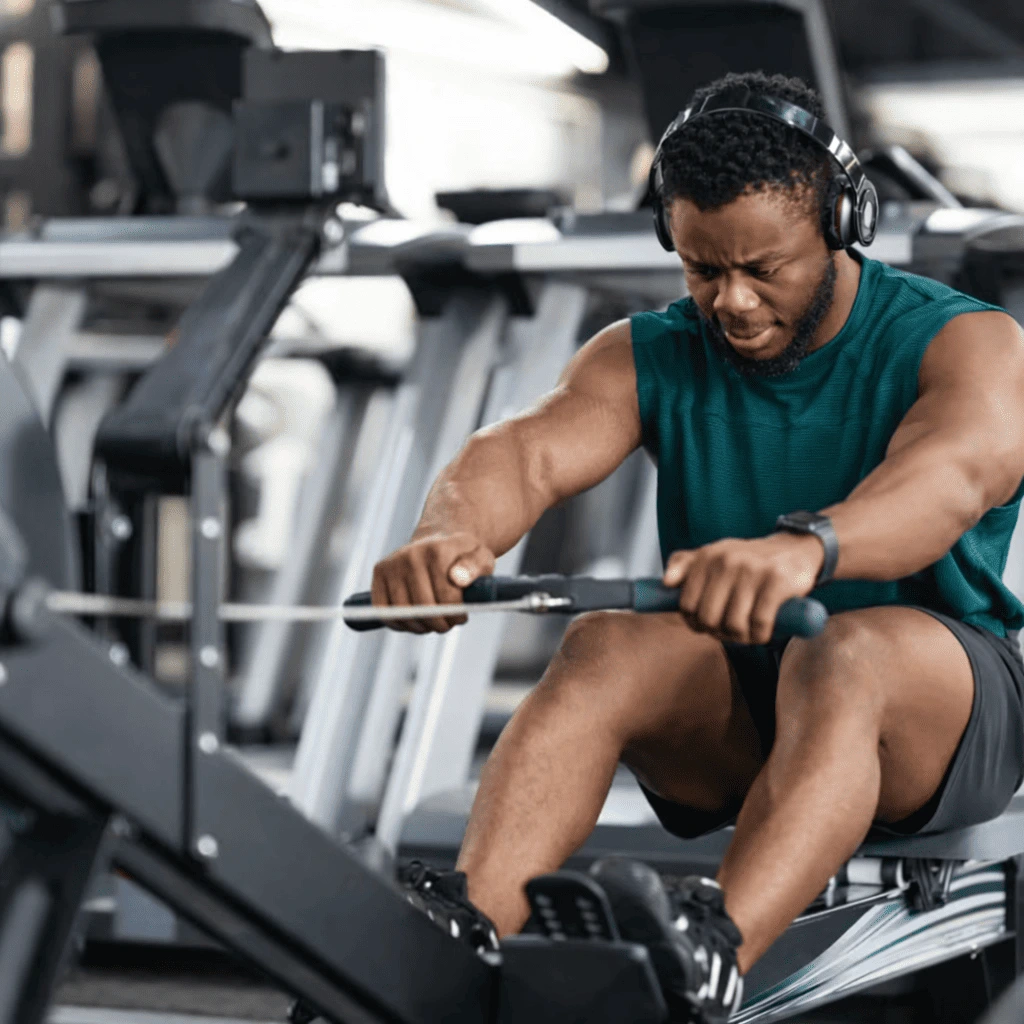
Option B: Heavy Cable Row Holds
- Row to the top position.
- Hold the contraction for 10–20 seconds.
- Repeat.
Prescription:
- 3–4 sets of 8 reps with a 3–5 second hold each rep
or - 4–6 sets of a single 15–25 second hold
Wrist-friendly cues:
- Don’t “break” the wrists to get extra range.
- The hand is a hook; the elbow drives; the back finishes.
Why this is E-E-A-T friendly:
Experienced lifters and coaches quietly rely on holds when joints get sensitive. It’s not a hack. It’s a principle: when movement irritates, you can often keep training capacity with stable positions and smart loading.
A Simple 2-Day Forearm Plan (Wrist-Friendly, Progressive)
You don’t need to train forearms every day. In fact, if you want to avoid tendon irritation, you probably shouldn’t.
Here’s a practical approach:
Day A (After Upper Body or Pull Day)
- Fat-grip rows — 3–4 sets of 8–12
- Hammer curls — 3–4 sets of 8–12
- Plate pinch holds — 4 sets of 20–40 seconds
Day B (After Lower Body or Full-Body Day)
- Farmer carries — 4–6 rounds of 20–40 meters
- Deadlift holds (from blocks/rack) — 5–6 sets of 8–12 seconds
- Towel hangs (optional) — 5 sets of 10–20 seconds
Weekly frequency: 2 times per week
Progression: add time first, then load. Keep the wrist neutral as your non-negotiable.
How to Tell the Difference Between “Training Discomfort” and “Bad Wrist Pain”
Forearm training can feel intense. It should.
But pain is a different language than effort. Here’s a rough guide:
Usually okay:
- A deep forearm burn that fades after the set
- Muscle soreness the next day
- Fatigue that improves as you warm up
A reason to stop and reassess:
- Sharp pain at the wrist during a rep
- Tingling, numbness, or shooting sensations into fingers
- Pain that escalates as the session goes on
- Wrist pain that lingers or worsens across days
If you repeatedly get the second category, the problem isn’t that you’re weak. The problem is that something is irritated — and irritation doesn’t respond to stubbornness the way muscles do.
Small Technique Fixes That Save Wrists
These are not dramatic, but they matter.
- Keep the wrist stacked.
Think “straight line” from knuckles through forearm. - Don’t chase the pump with sloppy reps.
Tendons hate speed + fatigue + poor alignment. - Train grip types, not just one.
Overuse happens when you do the same angle endlessly. - Respect volume.
Forearms recover quickly — until they don’t. - Use chalk strategically.
Chalk doesn’t make you weaker. It reduces excessive gripping strain from slipping.
The Quiet Case for Forearm Strength
Forearms aren’t just aesthetic. They’re functional. They improve performance in big lifts. They make pull-ups more repeatable. They allow you to carry heavy things without bargaining with your hands. And they often determine how long you can stay in the workout before your grip becomes the limiting factor.
The irony is that the best forearm training looks almost boring: holds, carries, rows, thicker grips, neutral wrists. It’s not the kind of training that begs for attention. But it’s the kind that pays off everywhere.
Conclusion: Strong Forearms Shouldn’t Cost You Your Wrists
Forearm training doesn’t have to be a tradeoff between strength and pain. If you keep the wrist neutral, prioritize holds and carries, and build volume gradually, you can grow your forearms — and your grip — without waking up to that familiar, irritated ache.
Choose two or three of the builders above. Train them twice a week. Track time, load, and quality. In a month, you’ll notice it not only in the mirror, but in the moments that used to feel fragile: heavy pulls, long sets, even daily life.
And if you want this to feel effortless to organize, it’s easy to follow a structured training program using the Fitsse app — so your grip work, strength sessions, and recovery aren’t left to guesswork when life gets busy.
Important notice: this content is educational and does not replace an individual evaluation. If you have a history of eating disorders, diabetes, pregnancy, or a medical condition, consult a healthcare professional before making dietary or exercise changes.











 Sign In