


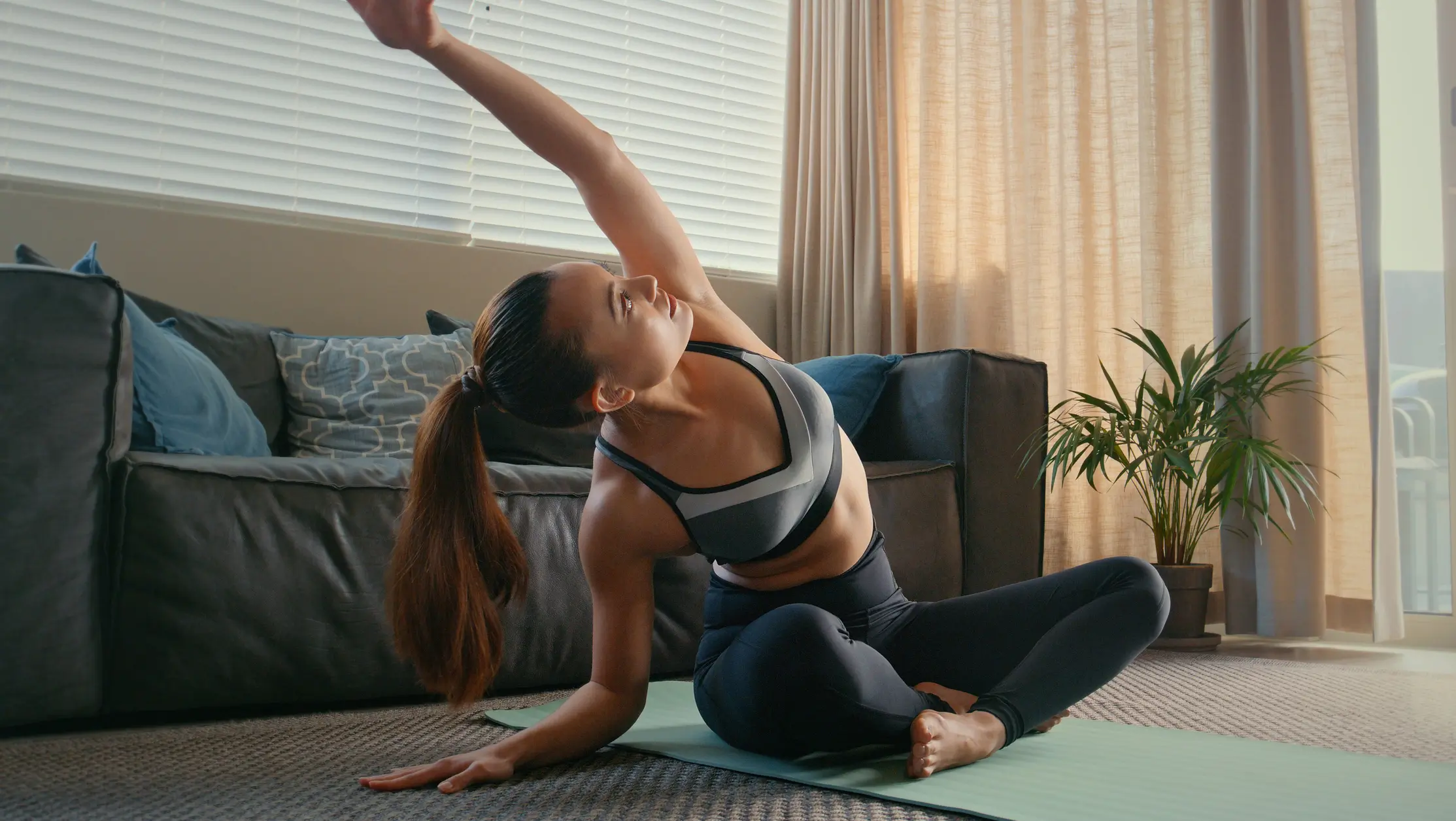
On a rainy Tuesday evening, with the TV quiet and a single lamp casting a warm rectangle on the floor, a woman in her thirties clips on a pair of resistance bands, slides a yoga mat into place and begins to move with a deliberate, almost domestic intensity. No barbells clank. No spotter shouts encouragement. What she builds in that modest space is the same thing people once sought in iron: strength — slow, stubborn, immovable.
Calisthenics, the practice of using your body as resistance, has a clarity to it that appeals in an age of screens and subscriptions. It is practical and portable; it requires little equipment and, when programmed well, delivers the same physiological prize as gym-based training: more muscle, thicker tendons, steadier joints and a stronger, more capable body. Below are five foundational calisthenics exercises that are uniquely suited to building strength at home — each explained with technique cues, progressions, common mistakes and ways to plug them into a sustainable program.
Why calisthenics works for strength
Before we get into the moves, a short primer. Strength is the nervous system’s ability to produce force and the muscles’ ability to sustain and generate it. Traditional weightlifting and calisthenics both tax those systems; they just do it in different ways. Calisthenics emphasizes leverages, body position and tension management. When you master the basics and then make them harder — by changing angles, adding repetitions, or introducing external resistance — your body adapts by adding muscle and neural efficiency.
If you’re training without a barbell, remember that progression matters more than novelty. Incremental difficulty — adding a few more reps, shortening rest, slowing tempo, or moving the center of mass — will create the stimulus needed for adaptation.
1. The Pull-Up (and its regressions/progressions)
Why it matters: Pull-ups are a near-universal test of upper-body pulling strength. They train the lats, biceps, rear delts, and the connective tissue of the scapulae and upper spine. They also improve posture, bringing the shoulders out of a rounded position and making daily tasks easier.
How to do it (basic cues): Grip the bar slightly wider than shoulder-width with palms facing away (pronated grip). Hang tall: chest proud, shoulders down and back, core engaged and legs slightly forward to avoid swinging. Initiate the pull by driving the elbows down and back, aiming to bring the chin over the bar or the chest to the bar for more complete scapular retraction. Lower in a controlled way until the arms are fully extended.
Progressions and regressions:
- Regression: Australian/pull-up row on a low bar (body at an incline). This reduces the load and teaches the pulling pattern.
- Band-assisted pull-ups: Loop a resistance band around the bar and under a knee or foot to help with the ascent.
- Eccentric-focused pull-ups: Jump or use a step to get your chin above the bar, then lower slowly over 3–6 seconds.
- Progression: Weighted pull-ups or towel pull-ups (grip variation) and eventually one-arm pull-up work for advanced trainees.
Common mistakes: Kipping (unless you’re doing it for crossfit-style conditioning), shrugging the shoulders, and swinging the legs. Each takes tension away from the target muscles or increases injury risk.
Programming tip: Two or three pulling sets per session, performed two to three times a week, built from quality volume (e.g., 4–6 sets of 3–8 reps for strength, or 3–4 sets of 8–15 on regressions for hypertrophy).
2. The Push-Up (with meaningful variations)
Why it matters: The push-up is more than a chest exercise. It’s a full-body pattern that demands shoulder stability, trunk control and hip steadiness. Done well, it improves pressing strength and shoulder health.
How to do it (basic cues): Start in a high plank with hands beneath but slightly wider than shoulders. Keep the body in a straight line from head to heels. Bend the elbows at roughly a 45-degree angle to the torso, lower with control until the chest hovers an inch above the floor, then press back to full extension, maintaining tightness from head to heels.
Progressions and regressions:
- Regression: Incline push-ups (hands on a bench or a sturdy table). Reduces the proportion of bodyweight.
- Regression 2: Knee push-ups with strict plank form.
- Progression: Decline push-ups (feet elevated), archer push-ups (asymmetrical load), or one-arm push-up progressions like assisted negatives and triple-pulse eccentrics.
- Add difficulty: Slow down tempo (3–4 second descent), pause at the bottom, or add a weighted vest once the movement is mastered.
Common mistakes: Letting the hips sag, flaring the elbows excessively (which stresses the shoulders), or letting the head drop. Focus on a braced core and a neutral neck.
Programming tip: For strength, aim for sets in the 4–8 rep range once you’re on harder variations. For general conditioning and muscle-building, 3–5 sets of 8–15 reps on a challenging but maintainable variation works well.
3. The Bulgarian Split Squat (single-leg strength at home)
Why it matters: Single-leg work like the Bulgarian split squat cultivates unilateral strength, balance and pelvic stability. It’s especially valuable at home because it requires little space and no heavy equipment.
How to do it (basic cues): Stand a couple of feet in front of a low bench or chair and place the top of one foot behind you on the bench. Keep the front foot far enough forward that, when you descend, the front knee tracks over the toes without collapsing inward. Lower until the front thigh is roughly parallel to the floor, keeping the torso upright and the core engaged. Drive up through the front heel.
Progressions and regressions:
- Regression: Regular split squat (rear foot on the floor) or assisted Bulgarian split squat holding onto a stable surface.
- Progression: Add a dumbbell or kettlebell, hold the weight in a goblet position, or increase time under tension with slow eccentrics.
- Advanced progression: Rear-foot elevated pistol squat (single-leg squat to a box or to the floor).
Common mistakes: Letting the front knee cave inward, pushing excessively from the toes, or using the rear leg to assist. Aim for controlled descent and a strong push with the front heel.
Programming tip: Do 3–4 sets of 6–12 reps per leg depending on load; include unilateral work twice a week to reduce asymmetries and build practical strength.
4. The Plank-to-Push-Up (core strength that transfers)
Why it matters: Core strength is often misunderstood as ab isolation. Real functional core strength is about resisting rotation and transferring force between upper and lower body. The plank-to-push-up (also called plank-up) trains anti-extension, shoulder stability and coordinated strength.
How to do it (basic cues): Start in a forearm plank with elbows under shoulders and body in a straight line. Brace the core, then one hand at a time press to a high plank (push-up top). Lower back to forearms one arm at a time. Alternate the leading arm. Maintain a rigid torso; avoid rotating the hips.
Progressions and regressions:
- Regression: Forearm plank holds, then partial transitions with the knees on the floor.
- Progression: Perform with feet elevated, add a shoulder tap between transitions, or add a slow tempo to increase time under tension.
- Advanced: Combine with resistance (weighted vest) or include into a loaded carry circuit for a strength-endurance element.
Common mistakes: Letting hips rock, lifting the hips too high during transitions or rushing through the movement. Control and symmetry are the priorities.
Programming tip: Use as a core finisher: 3–5 sets of 6–12 transitions per side or timed rounds (e.g., 30–60 seconds of continuous transitions).
5. The Glute Bridge / Hip Thrust (posterior chain power)
Why it matters: Strong glutes protect the lower back, power the hips and improve sprinting and jumping capacity. Glute bridges and hip thrusts are the most effective bodyweight ways to target the posterior chain at home.
How to do it (basic cues): Lie on your back with knees bent and feet flat, hip-width apart. Drive through the heels, squeeze the glutes, and lift the hips until your torso is in line with your thighs. Hold briefly at the top with a tight glute squeeze, then lower under control.
Progressions and regressions:
- Regression: Single-leg glute bridge (reverse progression) — perform with one foot planted and the other extended.
- Progression: Elevate the shoulders on a bench or couch for a hip thrust; add resistance with a band around the knees or a weighted object on the hips (sandbag, dumbbell). Increase range of motion or add pauses at the top.
- Advanced: Weighted single-leg hip thrusts or tempo manipulations (slow eccentrics).
Common mistakes: Relying on lumbar extension (arching the low back) rather than glute contraction, or pushing from the toes. Focus on squeezing through the heels and maintaining a neutral spine.
Programming tip: For hypertrophy, 3–5 sets of 8–15 reps. For strength, fewer reps with added resistance and longer rests.
How to build these exercises into a simple four-week plan
Progress requires consistency. Below is a gentle, practical template for three workouts per week that balances strength and recovery. Use it as a starting point; increase load, reps or sets as exercises become easier.
Week 1–2 (foundation)
- Day A: Pull-up regressions (3 × 6–10), Bulgarian split squats (3 × 8 each leg), plank-to-push-up (3 × 8 transitions), glute bridge (3 × 12)
- Day B: Push-up regressions (4 × 6–12), bodyweight rows (3 × 8–12), single-leg Romanian deadlift (3 × 8 each), hollow-body hold (3 × 20–30 sec)
Week 3–4 (progression)
- Day A: Pull-ups or band-assisted (4 × 5–8), Bulgarian split squats with added load (4 × 6–10), plank-to-push-up (4 × 10), hip thrusts elevated (4 × 8–12)
- Day B: Decline or archer push-ups (4 × 5–8), Australian rows with increased angle (4 × 8–12), pistol progressions (3 × 5–6 each), loaded carries or suitcase holds for 30–60 seconds.
Aim to increase one variable each week: a rep, a set, reduced assistance or a small added weight. If progress stalls, insert a lighter week: reduce volume by ~30% to recover.
Warm-up, recovery and safety
Never skip a purposeful warm-up. Five to ten minutes of light cardio (marching, cycling), followed by dynamic mobility that opens the hips, shoulders and thoracic spine, primes the nervous system. For pulling and pressing work, include banded rows and shoulder rotations to wake the scapular muscles.
Recovery matters. Sleep, protein intake (aim for a moderate portion at each meal), hydration and active recovery (light walks, mobility work) accelerate gains. If a movement causes sharp pain, stop and reassess mechanics or consult a professional. Many issues at home can be fixed by small technique tweaks.
Common mistakes people make (and how to avoid them)
- Rushing progressions. Don’t skip regressions — mastery at easier levels builds safer gains.
- Neglecting unilateral work. Single-leg strength corrects asymmetries.
- Ignoring tempo. Fast reps often cheat the target muscle; slow, controlled reps cement strength.
- Training without a plan. Random effort yields random results; track and tweak.
- Underestimating recovery. Overdo it and you’ll backslide; scheduled rest is productive.
A brief note on equipment
You can build formidable strength with a pull-up bar, a set of dumbbells or a sandbag, and a resistance band. These inexpensive tools expand progressions and let you add load safely at home. A sturdy chair or bench completes the kit.
When to seek guidance
If you’re new to exercise, returning from injury or managing chronic pain, a few sessions with a qualified trainer or physical therapist can accelerate progress and reduce setbacks. They’ll help tailor progressions, check form and set realistic milestones.
Final thoughts
Strength cultivated at home with calisthenics is not a compromise; it is a deliberate form of training that rewards patience, precision and thoughtful progression. The five exercises above — pull-ups, push-ups, Bulgarian split squats, plank-to-push-ups and glute bridges — form a compact, effective blueprint. Used consistently, they reshape how you move through the day: lifting groceries without a hitch, climbing stairs with less breathlessness, picking up a child or a suitcase with confidence.
Real strength is as much about the small choices you make between workouts as the workouts themselves: choosing to sleep a little earlier, to add a single extra rep, to practice a movement one more time. Those choices compound. Over weeks and months they become not just bigger muscles but a quieter assurance — the sense, as you stand in your lamp-lit living room after a session, that your body will faithfully do what you ask of it.
Important notice: this content is educational and does not replace an individual evaluation. If you have a history of eating disorders, diabetes, pregnancy, or a medical condition, consult a healthcare professional before making dietary or exercise changes.








 Sign In