



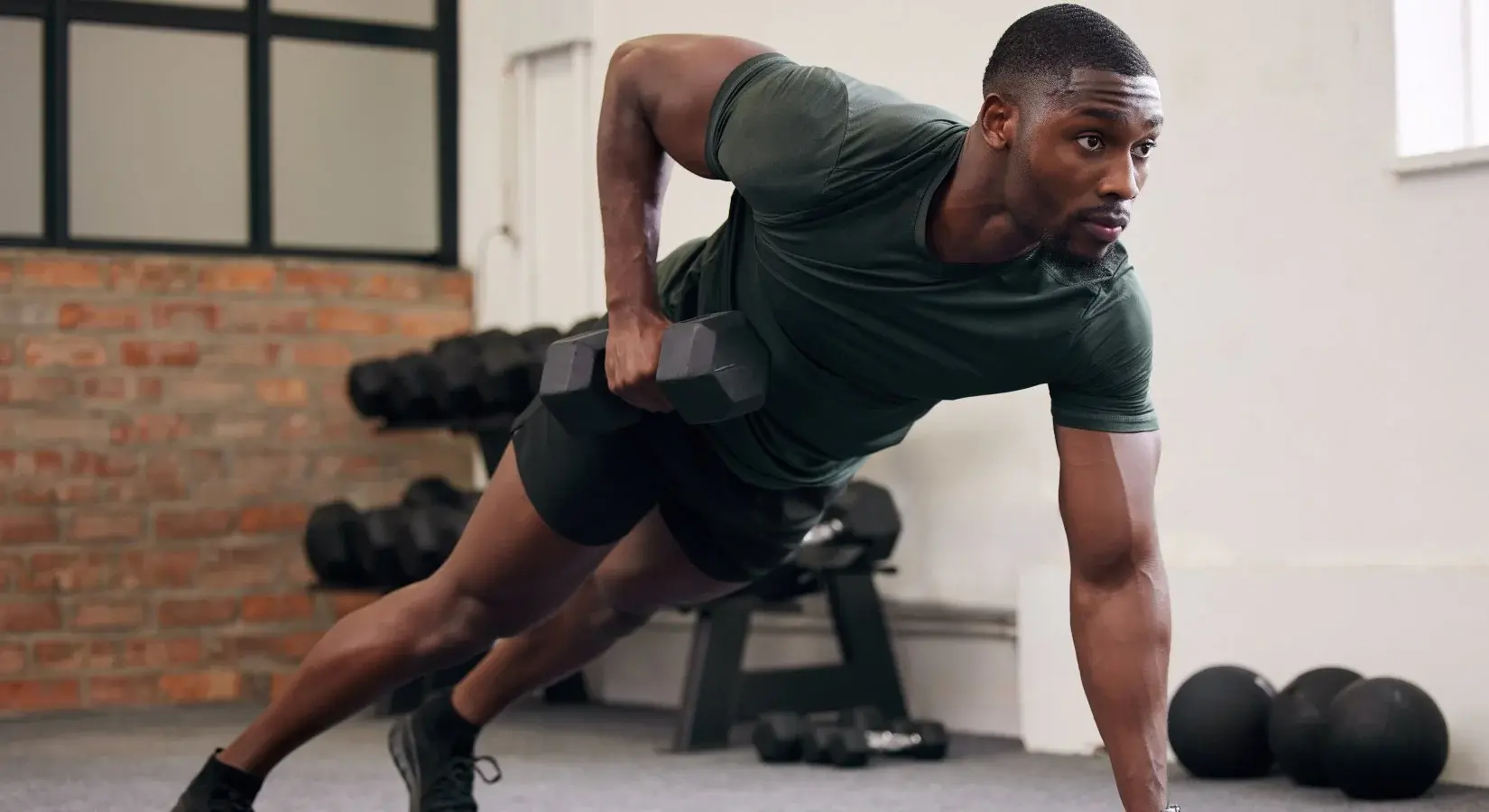
On any given Monday, the weight room has a familiar cast: the regulars moving with quiet certainty, the new people moving with quiet hope, and the rest of us trying to look like we belong while we figure out where the clips are.
Beginners often arrive with the same two goals, spoken or not: don’t get hurt, and make visible progress—fast enough to feel encouraged, steady enough to feel real. The problem is that these goals can seem like they’re in conflict. The internet makes lifting look like a montage: add weight, take your shirt off, repeat. But the body is not a montage. It’s a long story, and it likes good editing.
Injury prevention and progress are not separate projects. They’re linked. Most setbacks in the gym don’t come from bad luck; they come from a handful of predictable patterns: doing too much too soon, treating warm-ups like a nuisance, turning every session into a test, ignoring fatigue, and relying on memory instead of tracking.
The good news is that you don’t need perfect technique, a complicated plan, or expensive gear to start lifting well. You need habits—small, repeatable behaviors that make good outcomes more likely. Here are five that do the most work for you, early on.
Habit 1: Warm Up Like You Mean It (and Build Up to Your Working Weight)
Many beginners “warm up” the way people “stretch” before a flight: briefly, vaguely, and mostly out of guilt. They walk in, do a few arm circles, and load the bar with the number they want to lift. If something hurts, they assume lifting hurts. If they feel weak, they assume they’re weak.
A good warm-up is not a ritual. It’s information. It tells you what kind of day you’re having—tight, snappy, sluggish—and it prepares your joints, tissues, and nervous system to do a demanding task.
A practical warm-up has three parts:
1) Raise your temperature (3–5 minutes)
You don’t need to jog a mile. You just need to feel warmer than when you walked in: incline walk, bike, rower, jumping jacks, brisk stairs. The goal is simple: breathing a little heavier, body a little looser.
2) Move the joints you’ll use (3–5 minutes)
If you’re going to squat, your hips, ankles, and upper back will have opinions. If you’re going to press, your shoulders and upper back will, too. Do movements that look like your workout, but easy:
- For lower body days: bodyweight squats, hip hinges, lunges, glute bridges
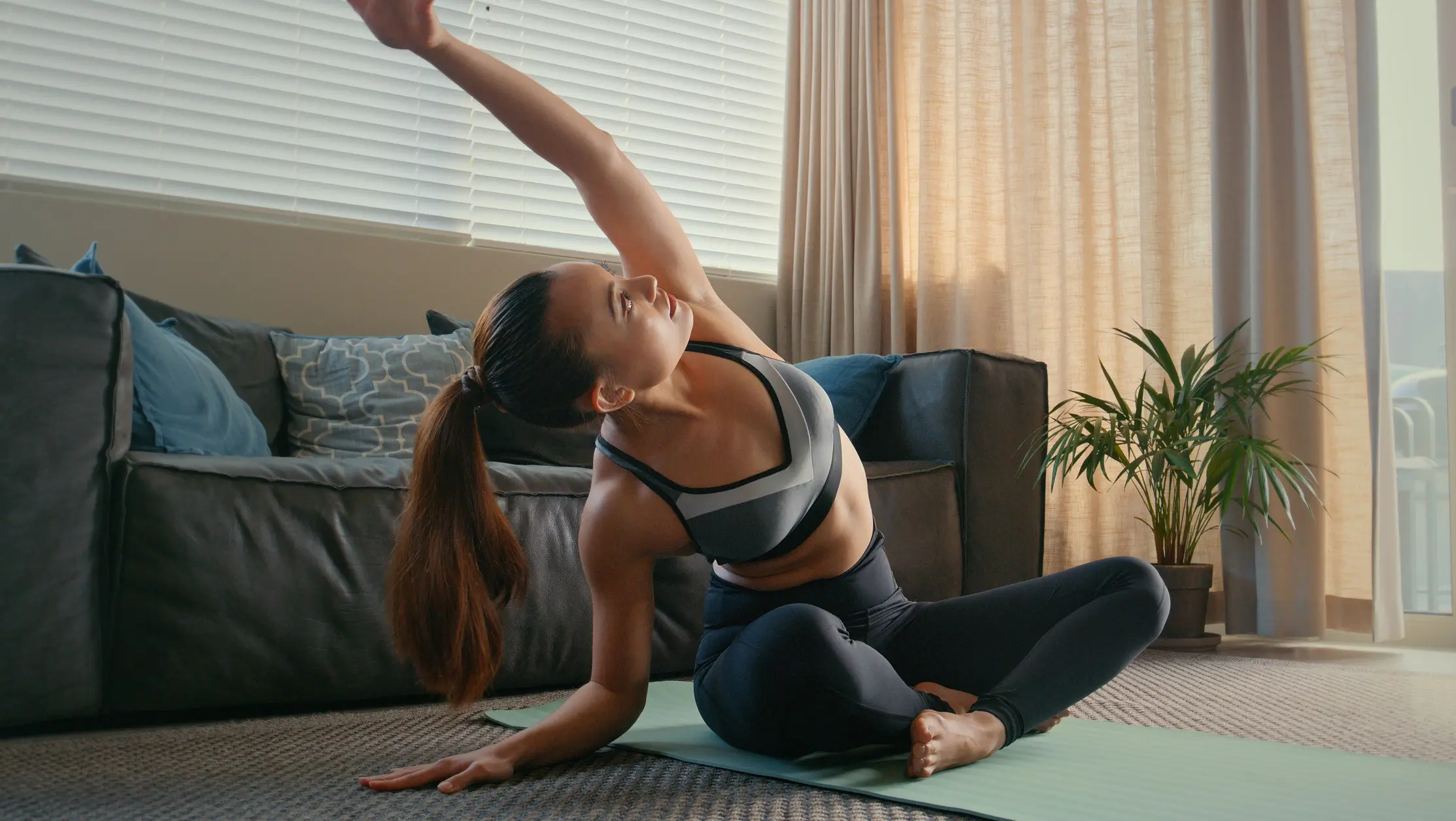
- For upper body days: band pull-aparts, scapular push-ups, light rows, shoulder circles
Keep it short. The point isn’t fatigue; it’s readiness.
3) Do “ramp-up sets” (the real secret)
Ramp-up sets are practice reps that gradually approach your working weight. This is where beginners skip ahead—and where a lot of tweaks and strains begin.
If your working weight for squats today is 135 pounds, that does not mean the first time your body meets 135 should be set one. It means you might do:
- Empty bar x 8–10
- 75 x 5
- 95 x 3–5
- 115 x 2–3
- Then working sets at 135
These sets aren’t wasted time. They groove the movement pattern. They let your bracing improve. They reveal whether your shoulder is cranky or your hip feels pinchy. They also make the working sets feel more stable—often instantly.
Injury prevention comes from preparedness. If you take nothing else from this article: earn your first working set.
A useful rule: Your warm-up should end with you feeling more confident, not more tired.
Habit 2: Treat Technique as a Skill (and Learn to Brace)
A beginner’s mistake is to think of technique as a moral category: good lifters have “good form,” and everyone else should try harder. But technique is just skill. And like any skill, it improves fastest when you practice it in a way that’s repeatable.
The biggest technique upgrade you can make early on isn’t a fancy cue about knee tracking or elbow position. It’s learning to brace.
What bracing actually is
Bracing is how you create a stable trunk so your limbs can produce force safely. Think of your torso as a soda can. An empty can collapses easily. A pressurized can—stiff with internal pressure—is remarkably strong.
Bracing is not “sucking in your stomach.” It’s the opposite: you’re creating circumferential pressure—front, sides, and back—like you’re preparing for someone to poke you.
How to learn it (without overthinking)
Before a squat, deadlift, or press:
- Stand tall with ribs stacked over hips.
- Take a breath into your belly and sides (not just your chest).
- Tighten your torso as if you’re about to cough or take a punch.
- Hold that firmness as you move through the rep. Exhale at the top, reset, repeat.
You don’t need to hold your breath forever. You need to be stable during the hard part.
Why beginners get hurt here
When people move heavy weight with a loose torso, the spine and shoulders take on work they shouldn’t. That’s where you see the common beginner issues: low back strains on deadlifts, cranky shoulders on pressing, irritation that feels like a mysterious “pinch.”
Technique “anchors” for the big lifts
You can get lost in cues. Use a few anchors and ignore the rest until later.
For the squat
- Feet stable and rooted (whole foot, not just toes)
- Torso braced before you descend
- Hips and knees bend together
- Control down; stand up with intention
For the deadlift (or hip hinge)
- Bar close to the body (it should practically graze your legs)
- Brace before you pull
- Push the floor away, don’t yank the bar
- Finish tall; no dramatic lean-back
For the press
- Ribs down; brace so you’re not “arching” the weight up
- Shoulder blades stable; think “reach long” at the top rather than shrugging
- Control the lowering phase
The habit that accelerates technique
Film one set per lift, once or twice a week. Not for social media. For you. Most people are shocked by the difference between what a lift feels like and what it looks like.
Better yet, ask someone who knows what they’re doing for a five-minute form check: a coach, a competent friend, a trainer who lifts. Beginners often wait until something hurts to seek feedback. The smarter move is to seek feedback while everything is still easy to change.
Progress is faster when you move well. Not because “perfect form” is the goal, but because good mechanics let you train more often, with less drama, for longer.
Habit 3: Progress With Restraint (Stop Turning Every Day Into a Test)
The modern gym has an unspoken pressure: if you aren’t lifting more weight every session, you aren’t improving. So beginners chase numbers. They max out frequently. They grind reps with shaking faces. They confuse exhaustion with effectiveness.
In reality, strength is built with repeated exposures to manageable stress. Not with constant proofs of toughness.
The most reliable beginner progression
You can make great gains early on with an approach that’s almost boring:
- Choose a weight you can lift with solid form for a target rep range (say, 5–8 reps).
- Each session, add reps or add a small amount of weight.
- When you can hit the top of the rep range for all sets, increase weight next time.
Example on bench press:
- Week 1: 3 sets of 6 at 95 pounds
- Week 2: 3 sets of 7 at 95
- Week 3: 3 sets of 8 at 95
- Week 4: 3 sets of 6 at 100
This method creates progress without forcing heroics.
Leave reps “in the tank”
A simple guideline: most of your sets should end with 1–3 good reps left if you absolutely had to. This is sometimes called “reps in reserve.” You’re still working hard. You’re just not turning every set into a fight for survival.
Why it matters:
- Grinding reps with ugly form is where a lot of small injuries begin.
- Training slightly submaximally lets you recover better.
- You can train more consistently, which is the real advantage.
Microloading is your friend
Beginners often jump weight in big leaps because the plates are big. But your body doesn’t know “five-pound increments” are traditional. If you can use 2.5-pound plates (or even 1.25s), you can progress smoothly—especially on upper-body lifts, where gains can be slower.
The underrated skill: knowing when to hold steady
Some days you walk in and you’re strong. Some days you’re a little flat because you slept poorly, you’re stressed, you’re dehydrated, or your legs are still heavy from yesterday.
A habit that prevents injury is allowing yourself to say: “Today, I’ll match last week.” Maintaining a weight with excellent control is still training. It reinforces skill. It preserves momentum.
Deloads: the grown-up move
As you lift for months, you may find that progress is no longer linear. That’s normal. One strategy: every 4–8 weeks, take a lighter week—same exercises, fewer sets or lighter weights. You’ll come back sharper.
You don’t get credit for suffering. You get results for showing up again.
Habit 4: Build Recovery Into the Plan (Sleep, Tendons, and the Boring Stuff)
Beginners think recovery is what you do after you “finish” training. But recovery is training—because your body adapts when you rest, not when you lift.
If you want to avoid injury, you need to understand one simple mismatch: muscles adapt faster than connective tissue. Your quads and glutes may feel ready to add weight quickly. Your tendons and joints often lag behind. That’s why some people feel great for three weeks and then develop nagging elbow pain, knee irritation, or an ache that doesn’t go away.
Sleep is a performance enhancer you can’t substitute
If you’re lifting regularly, sleep becomes non-negotiable. You don’t need perfect sleep, but you should treat it like part of your program.
If you’re constantly short on sleep, consider:
- Training slightly fewer days
- Keeping sets shy of failure
- Being conservative with increases
Your best program is the one your recovery can support.
Don’t chase soreness
Soreness is common. It’s not a score. Being sore is not proof you trained correctly; it’s proof you did something your body wasn’t fully adapted to.
Chasing soreness can lead to:
- Too much volume too soon
- Poor movement quality under fatigue
- Persistent joint irritation
A better metric is performance: your reps, your control, your energy, your consistency.
Eat like someone who is building something
You don’t need to be perfect, but you do need enough fuel.
- Protein supports muscle repair and growth.
- Carbs support training performance.
- Hydration affects strength, endurance, and joint comfort more than people think.
If you’re trying to lose fat while lifting, the goal is to keep the deficit reasonable so you can still recover. Beginners sometimes cut calories aggressively, then wonder why the bar feels glued to the floor. The body can diet or it can thrive under training stress; doing both aggressively is difficult.
A beginner-friendly weekly structure
If you’re new, three full-body sessions a week is often the sweet spot. For example:
- Monday: squat pattern + press + row
- Wednesday: hinge pattern + press + pull-down/pull-up progression
- Friday: squat variation + bench variation + row variation
This gives you practice, rest days, and enough frequency to improve skill.
Add walking, light cardio, or mobility on off days if you enjoy it—but don’t turn off days into secret workouts you can’t recover from.
The “ache” rule
Here’s a guideline that keeps people lifting for the long run:
- Muscle soreness that improves as you warm up is usually fine.
- Sharp pain, pain that changes your movement, or pain that worsens as you continue is a stop sign.
- Pain that persists or escalates over several sessions deserves attention—often a technique adjustment, a load reduction, or a visit to a qualified clinician.
Most injuries become serious because they’re ignored while they’re still small.
Habit 5: Track Your Training (and Make Small, Specific Adjustments)
The gym is full of people who “feel like” they’re doing a lot. The people who improve are usually the ones who can tell you exactly what they did last week.
Tracking doesn’t have to be intense. It can be a notes app. But it should include:
- Exercises
- Sets and reps
- Weight used
- A quick note about difficulty (“easy,” “hard,” “could’ve done 2 more reps”)
Why tracking prevents injury
If you don’t track, you’re more likely to:
- Add too much weight because you forgot what you did last time
- Add too much volume because you “feel good”
- Miss patterns—like a lift that always hurts after you increase weight
Tracking makes your training honest. It also makes it easier to be patient, because you can see progress accumulating.
Make adjustments like a professional
When something doesn’t feel right, beginners often make dramatic changes: new exercises, new split, new everything. A better habit is to adjust one variable at a time.
If your shoulder feels cranky on bench press, consider:
- Reduce the weight 5–10% and rebuild
- Pause slightly on the chest to control position
- Use a slightly narrower grip
- Add more rowing volume to balance pressing
- Try a dumbbell press temporarily for a friendlier range of motion
If deadlifts bother your back, consider:
- Lower the weight and re-learn bracing
- Use a trap bar if available
- Elevate the bar slightly (blocks) while you build hinge mechanics
- Reduce reps per set (triples instead of sets of eight)
These are not “failures.” They’re normal training decisions.
The habit that makes everything else work: consistency
A beginner who lifts three times a week for six months—without getting hurt—will almost always outperform the beginner who lifts five times a week for three weeks, gets injured, and then disappears for a month.
Consistency is what turns the gym from a stressful event into a stable part of your life. It also builds the kind of confidence that doesn’t depend on a single number on a bar.
Putting It All Together: A Simple Session Template
If you want a structure you can use tomorrow, here is one:
- Warm-up (8–12 minutes)
- 3–5 minutes easy cardio
- 3–5 minutes movement prep
- Ramp-up sets for your first lift
- Main lift (15–20 minutes)
- Squat or hinge variation
- 3–5 working sets in the 5–8 rep range
- Stop with 1–3 reps in reserve most sets
- Secondary lifts (20 minutes)
- Press (bench or overhead) + Row
- 3 sets each, moderate effort
- Accessory (10 minutes)
- A single-leg exercise (lunges or split squats) or core work
- 2–3 sets
- Leave with something in the tank
That’s not a motivational slogan. It’s an injury-prevention strategy.
A Final Note on “Being a Beginner”
Beginner is not an insult; it’s a phase. It’s a period when your body adapts quickly, your skill improves rapidly, and your confidence can grow fast—if you don’t sabotage it with impatience.
The best lifters don’t look fearless. They look prepared. They warm up the same way every time. They take technique seriously, not dramatically. They progress steadily. They treat recovery as part of the job. They write things down.
They are not always the strongest person in the room today. But they are the person who will still be lifting next year—stronger, healthier, and harder to injure. And that, in the end, is the point.
Important notice: this content is educational and does not replace an individual evaluation. If you have a history of eating disorders, diabetes, pregnancy, or a medical condition, consult a healthcare professional before making dietary or exercise changes.










 Sign In