

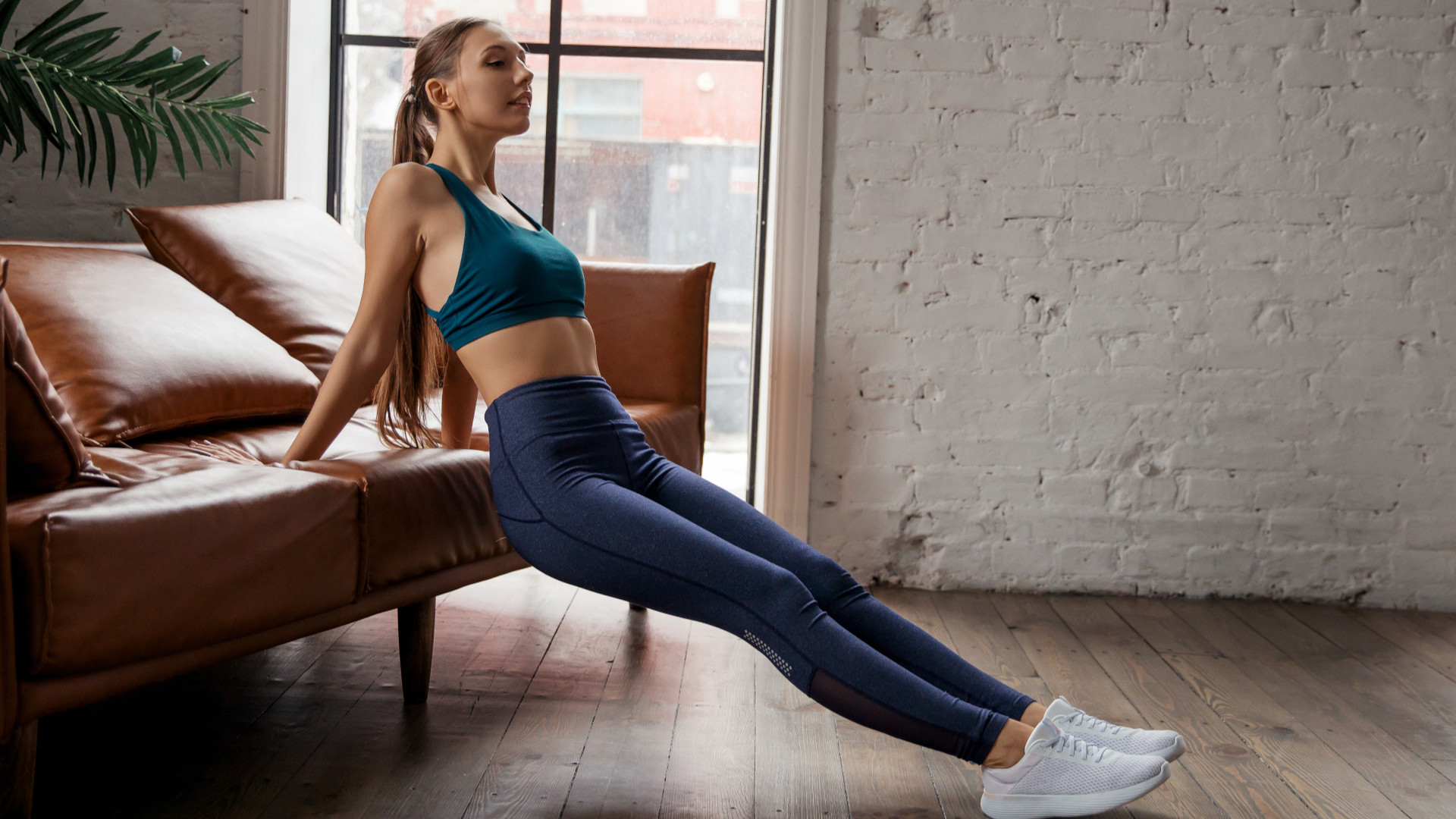

There is a particular kind of frustration that comes from wanting to get stronger and not having the time to train the way you think you should.
You imagine the ideal version of fitness: a full hour at the gym, a careful warm-up, a complete strength program, a protein-rich meal afterward, perhaps even ten quiet minutes to stretch. Then real life arrives. Work runs late. Children need something. Traffic steals the evening. Your inbox expands. Sleep becomes more valuable than another set of squats.
So the workout disappears.
This is where many busy people get fitness wrong. They assume that if they cannot do the perfect session, there is no point doing anything at all. But strength does not require perfection. It requires enough repeated effort to give the body a reason to adapt.
The Centers for Disease Control and Prevention recommends adults do muscle-strengthening activities at least two days a week, working all major muscle groups. It also notes that physical activity can be spread throughout the week and broken into smaller chunks. That is good news for anyone whose calendar does not leave much room for heroic routines.
You do not need a long workout to make progress. You need a smart one.
Below are three quick workouts designed for busy people who still want to get stronger. They are simple, practical, and built around movements that train the body efficiently. They are not magic. They are not shortcuts in the dishonest sense. They are what good training often looks like when life is full: focused, repeatable, and honest.
Before You Start: The Rules of a Good Quick Workout
A short workout has to earn its place.
If you only have 12, 15, or 20 minutes, you cannot spend half of it wandering between machines or deciding what to do next. The session should be planned before you begin. It should use movements that train multiple muscles at once. It should be challenging, but not reckless.
Good form matters more when time is limited, not less. The Mayo Clinic emphasizes proper technique in strength training to help prevent injury and get the most benefit from the exercise.
Use a weight you can control. Move with purpose. Stop a set when your form starts to break. A fast workout should not be a sloppy workout.
And if you are new to strength training, have a medical condition, are returning from injury, or feel pain during exercise, it is wise to get guidance from a qualified professional. Strength training is useful, but the right version depends on the body doing it.
Workout 1: The 12-Minute Full-Body Bodyweight Circuit
This is the workout for the day that almost got away.
You do not need a gym. You do not need equipment. You do not even need much space. You need 12 minutes, a floor, and enough willingness to begin before your brain talks you out of it.
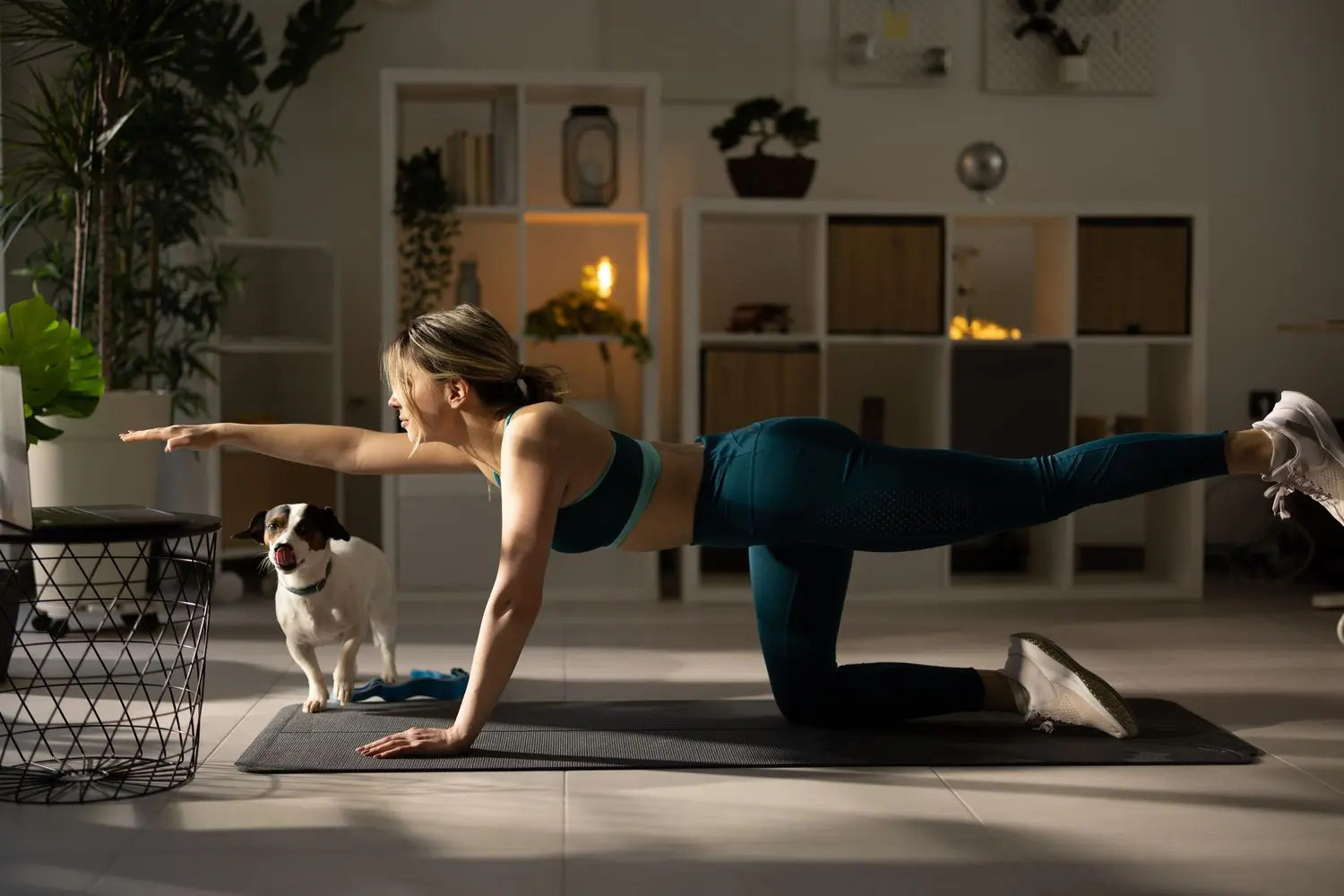
The goal is not to destroy yourself. The goal is to train the major movement patterns quickly: squat, push, hinge, core, and conditioning.
Set a timer for 12 minutes. Move through the following circuit at a steady pace:
Bodyweight squats — 10 reps
Incline push-ups or regular push-ups — 8 reps
Reverse lunges — 8 reps per side
Glute bridges — 12 reps
Plank — 20 to 30 seconds
Rest when needed, then repeat until the timer ends.
This workout works because it is simple. Squats and lunges train the legs. Push-ups train the chest, shoulders, arms, and core. Glute bridges wake up the hips and hamstrings, which is especially useful for people who sit for long hours. Planks teach the body to stay stable under tension.
If regular push-ups are too difficult, do them with your hands on a countertop, bench, or sturdy chair. If lunges bother your knees, shorten the range of motion or replace them with step-backs that feel controlled. If planks strain your lower back, reduce the time or perform them from your knees.
A beginner might complete two rounds. Someone more experienced might complete four or five. Both count.
To make this workout more effective over time, do not simply rush faster. Progress can mean cleaner reps, deeper control, fewer breaks, more rounds, or a harder variation. The American College of Sports Medicine describes progression as an important part of continued adaptation in resistance training; in practical terms, your body needs a gradually increasing challenge to keep improving.
The quiet power of this workout is that it removes excuses. It is short enough to do before a shower, between meetings, or while dinner is in the oven. It will not replace every longer strength session. It does not need to. It keeps the habit alive.
And some weeks, keeping the habit alive is the win that makes everything else possible.
Workout 2: The 15-Minute Dumbbell Strength Session
If you have one pair of dumbbells, you have enough.
This workout is for people who want a more traditional strength session without spending an hour in the gym. It uses compound exercises, which means each movement trains several muscle groups at once. That makes it efficient.
Choose dumbbells that feel challenging but manageable. You should be able to finish each set with good form, with perhaps one or two clean reps left in reserve.
Set a timer for 15 minutes. Complete as many quality rounds as possible:
Goblet squat — 8 to 10 reps
Dumbbell Romanian deadlift — 8 to 10 reps
Dumbbell floor press — 8 to 10 reps
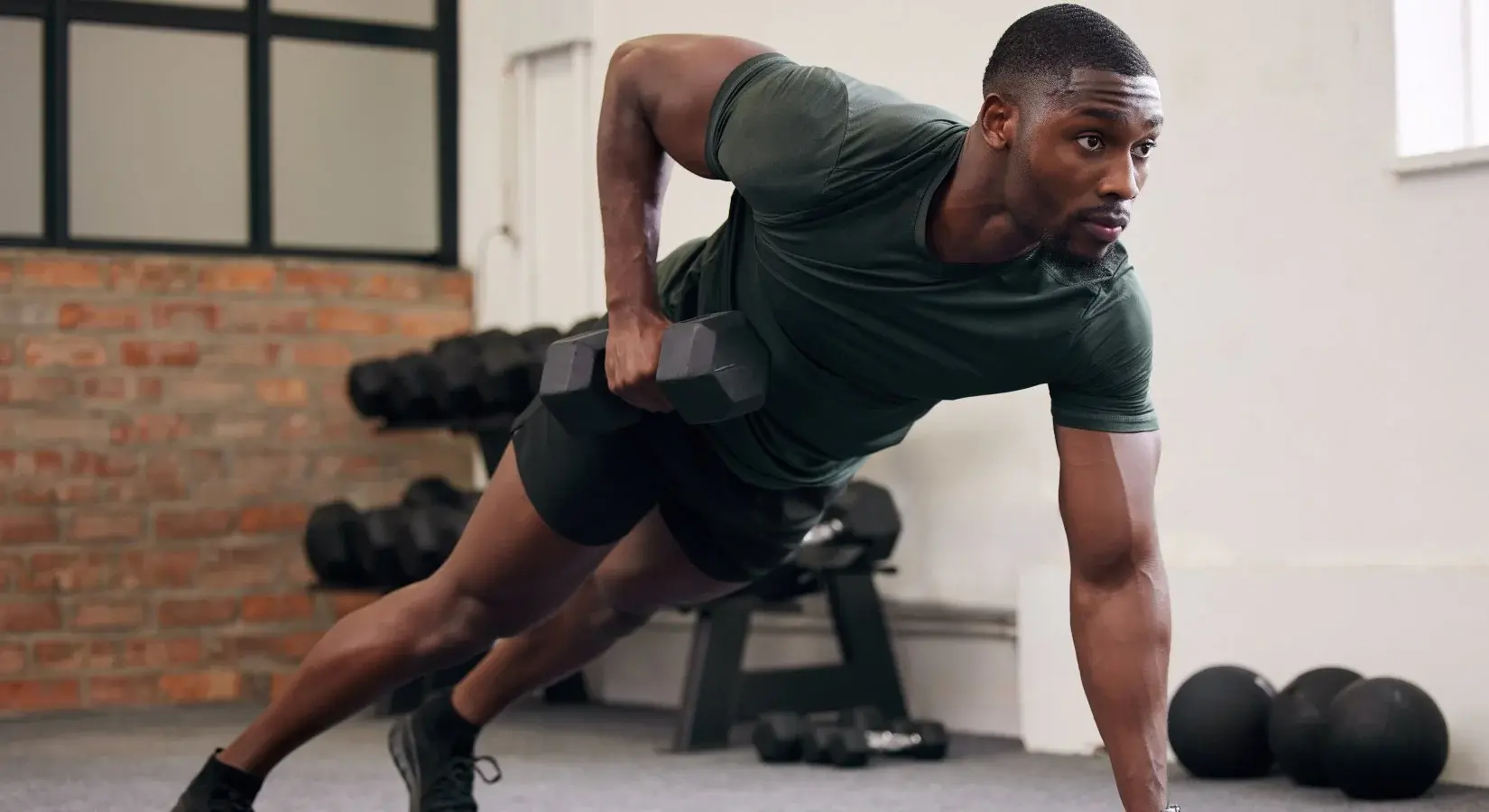
One-arm dumbbell row — 8 reps per side
Rest as needed between exercises.
The goblet squat trains the legs and core. The Romanian deadlift trains the hamstrings, glutes, and back side of the body. The floor press trains the chest, shoulders, and triceps. The row trains the upper back and arms, and it helps balance the pressing work.
This is not a glamorous workout. That is part of why it works.
It covers a lot of ground quickly. It also gives you an easy way to measure progress. If you used 20-pound dumbbells this week and performed three controlled rounds, try to perform a little better next week. That might mean one extra round, one extra rep per set, or slightly heavier dumbbells.
Progress does not have to be dramatic. In strength training, small improvements repeated over time are the whole story.
The most important exercise here may be the Romanian deadlift, because it teaches the hip hinge — a movement many people need but do not practice well. Keep the dumbbells close to your legs. Push your hips back. Keep your spine neutral. Stop when you feel a stretch in the hamstrings, then stand tall by driving through the hips.
Do not turn it into a toe touch. Do not round your back to chase more range of motion. Control beats depth.
For the floor press, lie on your back with knees bent. Lower the dumbbells until your upper arms touch the floor, then press back up. The floor limits the range of motion, which can make this pressing variation more shoulder-friendly for many people.
For the row, place one hand on a bench, couch, or sturdy surface. Pull the dumbbell toward your ribs, not your neck. Keep the shoulder away from your ear.
This session is short, but it asks for attention. That is the trade-off. When the workout is brief, the reps should be good.
Workout 3: The 20-Minute Strength and Carry Workout
This is the most complete of the three workouts.
It is still quick, but it has a little more room to breathe. It works well in a gym, but it can also be done at home with dumbbells, kettlebells, or even heavy household objects if needed.
The structure is simple: strength, then carries.
Start with a brief warm-up: two minutes of brisk walking, marching in place, or easy cycling, followed by a few bodyweight squats, hip hinges, shoulder circles, and light planks.
Then complete three rounds:
Step-ups or split squats — 8 reps per side
Dumbbell or kettlebell deadlift — 10 reps
Push-ups or dumbbell press — 8 to 10 reps
Farmer’s carry — 30 to 45 seconds
Rest 60 to 90 seconds between rounds.
The step-up or split squat trains one leg at a time, which helps build balance and useful strength. The deadlift trains the hips and posterior chain. The push-up or press trains the upper body. The farmer’s carry trains grip, posture, core stability, and full-body tension.
Carries are one of the most practical strength exercises available. You pick up weight, stand tall, and walk. It resembles real life more than many gym exercises do: carrying groceries, luggage, children, boxes, or anything else the day hands you.
For the farmer’s carry, hold a heavy weight in each hand. Keep your shoulders down and back, ribs stacked over your hips, and steps controlled. Do not lean backward. Do not rush. Walk like your posture matters.
If you only have one weight, do a suitcase carry: hold the weight in one hand and walk without leaning. Switch sides. This variation trains the core intensely because your body has to resist bending.
This workout feels different from the first two because it is less about speed and more about composure. You are not racing the clock. You are practicing strength under control.
That distinction matters.
Busy people often bring the pace of their lives into their workouts. They rush the warm-up, rush the reps, rush the rest, rush the finish. But strength rewards patience, even inside a short session.
Twenty focused minutes can be enough. Mayo Clinic notes that people do not need to spend hours a day lifting weights to benefit from strength training; two or three 20- or 30-minute sessions a week can produce meaningful improvements in strength for many people.
The important part is not the length. It is whether the workout is done consistently and progressed intelligently.
How to Fit These Workouts Into a Busy Week
You do not need to do all three workouts every week, though you can.
A simple plan might look like this:
Monday: 15-minute dumbbell strength session
Wednesday: 12-minute bodyweight circuit
Friday or Saturday: 20-minute strength and carry workout
That gives you three strength sessions without requiring a major lifestyle overhaul.
If your week is especially crowded, do two sessions. If your week completely falls apart, do one. One workout is not failure. It is a foothold.
The CDC’s guidance that adults should do muscle-strengthening work at least two days per week is a useful target, but the larger lesson is that training can be accumulated in realistic ways.
For busy people, consistency often depends less on motivation and more on friction. Reduce the friction.
Keep dumbbells visible. Put workouts on your calendar. Save these three routines in your phone. Decide in advance which workout you will do on low-energy days. Keep your shoes where you can see them. Do not make the start more complicated than it needs to be.
A workout that begins easily is more likely to happen.
How to Get Stronger Without Making the Workouts Longer
The answer is progression.
If the workout never changes, your body eventually has less reason to change. But progression does not always mean adding more time. For busy people, that is good news.
You can progress by adding weight, adding reps, adding a round, slowing the lowering phase of each movement, improving range of motion, reducing rest slightly, or choosing a harder variation.
For example, incline push-ups can become floor push-ups. Bodyweight squats can become goblet squats. A short plank can become a longer plank. A farmer’s carry can become heavier or slower. A 15-minute dumbbell session can stay 15 minutes while becoming more demanding.
This is how strength grows inside a real schedule.
The mistake is trying to progress everything at once. Do not add weight, reps, rounds, and speed in the same week. Choose one variable. Let the body adapt. Then adjust again.
Progress should feel earned, not forced.
What These Workouts Will Not Do
A trustworthy fitness article should tell the truth.
These workouts will not turn you into a bodybuilder in three weeks. They will not replace a full, specialized strength program if your goal is advanced muscle growth. They will not undo poor sleep, poor nutrition, or a life with no recovery.
But they can help you get stronger. They can preserve the habit during busy seasons. They can build confidence, improve movement, and make strength training feel possible instead of overwhelming.
That matters.
Most people do not fail because they lack the perfect workout. They fail because the workout they chose does not fit their life.
A 60-minute plan that never happens is less useful than a 15-minute plan you repeat.
A Note on Safety
Strength training should feel challenging, but it should not feel sharp, sudden, or painful.
Muscle fatigue is normal. Heavy breathing is normal. A burning sensation during a hard set can be normal. Joint pain, stabbing pain, dizziness, chest pain, or pain that changes your form is not something to push through.
If something hurts, stop. Modify the movement. Reduce the weight. Shorten the range of motion. Choose another exercise. If pain persists, consult a qualified health professional.
The goal is not to prove toughness in one session. The goal is to keep training long enough for consistency to work.
The Bottom Line
Busy people do not need fitness advice written for imaginary lives.
They need workouts that can survive meetings, family obligations, bad sleep, full calendars, and the ordinary fatigue of being human.
These three workouts are not perfect. They are practical. A 12-minute bodyweight circuit, a 15-minute dumbbell session, and a 20-minute strength-and-carry workout can give you a simple structure for building strength when time is limited.
Start where you are. Use good form. Progress gradually. Repeat the work.
Strength does not always arrive through grand routines.
Sometimes it arrives in 15 minutes, between everything else, because you decided that a short workout still counts.
Important notice: this content is educational and does not replace an individual evaluation. If you have a history of eating disorders, diabetes, pregnancy, or a medical condition, consult a healthcare professional before making dietary or exercise changes.







 Sign In