
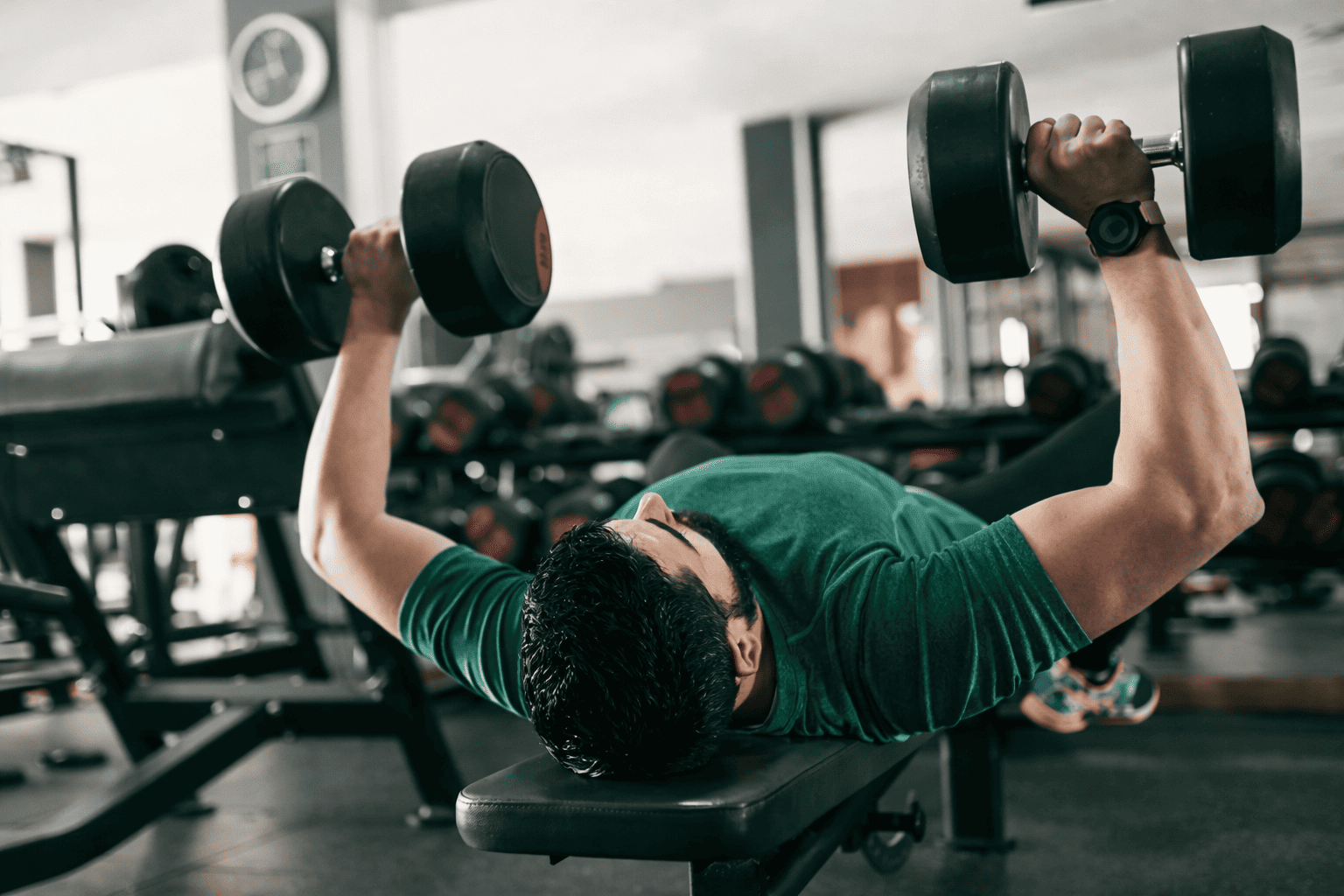

Dumbbells are refreshingly honest.
A barbell can make you feel powerful before you’ve earned it. Machines can hide your weak side behind a track and a seatbelt. But dumbbells demand that you stabilize, coordinate, and commit — one arm, one leg, one rep at a time. They also offer something rare in fitness culture: a way to train hard without needing a complicated plan, a crowded gym, or a personality built around suffering.
The best dumbbell workouts often look almost too plain to be effective. A squat. A press. A hinge. A row. A carry. The boring classics. They’re boring the way a well-made chair is boring: you only notice the craft when it isn’t there.
The workouts below are designed to feel simple — few exercises, clear structure, minimal fuss — while still delivering the kind of results people actually want: strength, muscle, conditioning, and the quiet confidence of being capable in your own body.
A few ground rules before we begin:
- Choose a weight you can control. “Control” means you can stop the rep anywhere, not just survive it.
- Leave one or two reps in reserve on most sets, especially if you’re training alone.
- Rest like you mean it. The fastest way to turn “simple but effective” into “messy and pointless” is rushing.
- If something hurts in a sharp or alarming way, stop. Modify, swap, or skip.
You’ll see “simple” show up in different forms: straight sets, short circuits, ladders, complexes. The through-line is the same: repeatable effort, not theatrical exhaustion.
1) The Five-Move Full-Body Session (The One You Can Repeat Forever)
If you want a workout that never goes out of style, this is it: squat, hinge, push, pull, carry. It’s a weekly staple that builds strength in the patterns that matter.
Time: 35–45 minutes
What you need: One pair of dumbbells (moderate to heavy)
Warm-up (5 minutes): brisk walk in place + hip hinges + arm circles + a few bodyweight squats.
The Workout (Straight Sets):
Do 3–4 rounds of the following. Rest 60–90 seconds between sets.
- Dumbbell Front Squat — 8 reps
- Dumbbell Romanian Deadlift — 10 reps
- Dumbbell Floor Press — 8–10 reps
- One-Arm Dumbbell Row — 10 reps/side
- Farmer Carry — 40–60 seconds
Why it delivers: It’s complete without being complicated. You train legs, glutes, back, chest, core, grip — and you leave the gym (or your living room) feeling put together, not depleted.
Make it easier: 3 rounds, lighter weights, shorter carries.
Make it harder: 4 rounds, heavier weights, longer carries — or slower eccentrics (3 seconds down).
2) The “Two Moves, No Excuses” Workout (Because Life Happens)
Some days you don’t need variety. You need a plan that works when motivation is missing and your calendar is rude.
Time: 18–25 minutes
What you need: One pair of dumbbells
The Workout (Alternating Sets):
Alternate A and B for 6–8 total rounds. Rest 30–60 seconds between sets.
- A) Goblet Squat — 10 reps
- B) Standing Dumbbell Press — 8 reps
That’s it. Two moves. Done.
Why it delivers: Squats ask for full-body tension. Presses train shoulders and triceps while forcing the midsection to stabilize. Together, they’re honest work.
Make it easier: Press seated; squat to a box or bench.
Make it harder: Turn the press into a push press (small knee dip) or add a pause at the bottom of the squat.
3) The 20-Minute Strength-and-Sweat Circuit (Simple, Not Easy)
This is a “move well, keep moving” session — a mix of strength and conditioning without turning into chaos.
Time: 20 minutes
What you need: One pair of dumbbells (moderate)
The Workout (20-Minute AMRAP):
Set a timer for 20 minutes. Complete as many quality rounds as you can of:
- Reverse Lunge — 8 reps/side
- Dumbbell Row — 10 reps/side
- Dumbbell RDL — 12 reps
- Push-Up — 8–15 reps (hands elevated if needed)
Why it delivers: The lunge and hinge work your lower body without pounding. The row balances your shoulders. Push-ups keep things honest. You’ll get sweaty, but you’ll also get stronger.
Make it easier: Reduce reps; do incline push-ups.
Make it harder: Increase the dumbbell load or add a front rack hold during lunges.
4) The Upper-Body “Looks Like Nothing” Superset (But Your Back Will Disagree)
This is for people who want better posture, stronger pressing, and arms that look like they belong to someone who lifts — without living in the mirror.
Time: 25–35 minutes
What you need: A pair of dumbbells + somewhere to row (bench, couch arm, or hinge position)
The Workout (Supersets):
Do 4 rounds of A1 + A2, then 3 rounds of B1 + B2.
A Superset (4 rounds):
- A1) Dumbbell Floor Press — 8–12 reps
- A2) One-Arm Dumbbell Row — 10–12 reps/side
Rest 60 seconds after both.
B Superset (3 rounds):
- B1) Dumbbell Lateral Raise — 12–15 reps
- B2) Dumbbell Curl — 10–12 reps
Rest 60 seconds after both.
Why it delivers: Press + row is a foundational pairing. The second superset builds shoulders and arms without wrecking joints.
Make it easier: Lighter raises; fewer rounds.
Make it harder: Slow the lowering phase (3 seconds down) on presses and rows.
5) The Lower-Body Builder (Leg Day Without the Drama)
You don’t need novelty for legs. You need a few movements done well with enough load to matter.
Time: 30–40 minutes
What you need: Two dumbbells (moderate to heavy)
The Workout (Three Blocks):
Block 1 (Strength): 4 rounds
- Dumbbell Split Squat — 8 reps/side
Rest 90 seconds.
Block 2 (Hinge): 4 rounds
- Dumbbell Romanian Deadlift — 10 reps
Rest 90 seconds.
Block 3 (Finisher): 3 rounds
- Goblet Squat — 12 reps
- Standing Calf Raise (holding DBs) — 15–20 reps
Rest 60 seconds.
Why it delivers: Split squats build legs and balance. RDLs build posterior chain. Goblet squats finish the job. It’s basic — and basic works.
Make it easier: Reduce range of motion; hold one dumbbell goblet-style.
Make it harder: Add pauses (1–2 seconds) at the bottom of split squats.
6) The Core-and-Carry Workout (Quietly Brutal, Extremely Useful)
If “core training” makes you think of endless crunches, this will feel like a correction. Carries and anti-rotation work build the kind of core strength that shows up everywhere.
Time: 20–30 minutes
What you need: One heavy dumbbell (or one heavier than the pair)
The Workout (4 Rounds):
Move through the list, resting as needed.
- Suitcase Carry — 40–60 seconds/side
- Half-Kneeling One-Arm Press — 8 reps/side
- Dead Bug (holding one DB above chest) — 8 reps/side (slow)
- Side Plank — 20–40 seconds/side
Why it delivers: Your midsection learns to resist bending and twisting when it doesn’t want to — which is most of real life.
Make it easier: Shorter carries; knee-down side plank.
Make it harder: Heavier suitcase carry or longer time.
7) The Dumbbell Complex (One Set, Five Moves, No Putting Them Down)
A complex is simple in a specific way: you do a string of movements back-to-back with the same dumbbells. It’s efficient, sweaty, and strangely satisfying.
Time: 15–25 minutes
What you need: One pair of dumbbells (lighter than you think)
The Complex (6 Rounds):
Do these moves without setting the dumbbells down, then rest 90 seconds:
- Dumbbell RDL — 6 reps
- Dumbbell Row — 6 reps
- Hang Clean — 6 reps (from above knee to shoulders)
- Front Squat — 6 reps
- Push Press — 6 reps
Why it delivers: The load stays modest, but the density is high. Your heart rate rises, your whole body works, and your brain has to stay awake.
Make it easier: 4 rounds; reduce reps to 5 each.
Make it harder: 7–8 rounds or shorten rest to 60–75 seconds.
8) The Strength Ladder (Simple Math, Serious Work)
Ladders make effort feel manageable because you’re always counting toward something you can see.
Time: 20–30 minutes
What you need: One pair of dumbbells (moderate)
The Workout (1–5 Ladder, Repeat):
Do:
- 1 rep of each move, then 2, up to 5, then repeat from 1.
Aim for 3–5 total ladders.
Moves:
- Dumbbell Thruster (squat to press)
- Renegade Row (row from plank) — 1 rep/side counts as “1”
Why it delivers: Thrusters are full-body. Renegade rows force core stability and upper-back strength. The ladder keeps you from sprinting into bad form too fast.
Make it easier: Do renegade rows from knees, or swap for a hinge row.
Make it harder: Add a third move: RDL x ladder reps.
9) The “Better Posture” Pull Session (Because Your Shoulders Live on Screens)
This one is understated: mostly rows, rear delts, and pulling volume. It’s the kind of training that makes everything else feel better — presses, running, even standing.
Time: 25–35 minutes
What you need: Pair of dumbbells
The Workout (3 Parts):
Part A (4 rounds):
- Chest-Supported Dumbbell Row — 10–12 reps
(Use an incline bench, or lie face-down on a couch/stacked pillows.)
Rest 60–90 seconds.
Part B (3 rounds):
- Dumbbell Rear Delt Fly — 12–15 reps
- Dumbbell Hammer Curl — 10–12 reps
Rest 60 seconds.
Part C (2 rounds):
- Farmer Carry — 60 seconds
- Dead Hang (if you have a bar) — 20–40 seconds (optional)
Why it delivers: You’re building the back that holds you up. It’s not glamorous. It’s transformative.
Make it easier: Lighter weights; fewer rounds.
Make it harder: Add a 1-second squeeze at the top of each row.
10) The “I Want to Feel Athletic” Workout (Without Needing to Be One)
Athleticism isn’t a look; it’s a feeling — coordination, power, control. This session trains it with simple moves and clear boundaries.
Time: 20–30 minutes
What you need: One moderate dumbbell + space
The Workout (Intervals):
Do 6 rounds. Each round is:
- 30 seconds: Single-Arm Dumbbell Snatch (alternate arms)
- 30 seconds: Rest
- 30 seconds: Goblet Squat
- 30 seconds: Rest
Rest 1 minute between rounds if needed.
Why it delivers: The snatch teaches power from hips and a stable overhead finish. Goblet squats keep you honest and strong.
Make it easier: Replace snatch with single-arm clean (to shoulder).
Make it harder: Increase work to 40 seconds on, 20 seconds off.
11) The Minimalist Muscle Builder (Three Moves, Hypertrophy-Friendly)
If you want muscle, you need enough tension and enough volume — not a circus.
Time: 30–40 minutes
What you need: Pair of dumbbells (moderate to heavy)
The Workout (3 Exercises, 4 Sets Each):
Rest 90 seconds between sets.
- Dumbbell Bench Press or Floor Press — 8–12 reps
- Dumbbell Bulgarian Split Squat — 8–10 reps/side
- One-Arm Dumbbell Row — 10–12 reps/side
Why it delivers: This is the grown-up version of training: big return, minimal decisions.
Make it easier: Regular split squat instead of Bulgarian.
Make it harder: Add a back-off set: one lighter set for 15–20 reps on presses and rows.
12) The 12-Minute Finisher That Doesn’t Feel Like a Finisher
This is the workout for days you want to sweat without feeling punished — and for days you want to add a clean ending to a strength session.
Time: 12 minutes
What you need: Pair of dumbbells (moderate)
The Workout (Every 2 Minutes x 6 Rounds):
Start a timer. Every 2 minutes, perform:
- 8 Dumbbell RDLs
- 8 Push Press
- 8 Bent-Over Rows
Use the remaining time in the 2 minutes to rest. Repeat for 6 rounds.
Why it delivers: It’s three basic moves in a tight container. The structure keeps you honest, and the built-in rest keeps form from falling apart.
Make it easier: 6 reps each move.
Make it harder: Slightly heavier weights or 10 reps each.
How to Choose the Right One (So You Actually Do It)
If you’re staring at 12 options and feeling the old familiar paralysis, here’s a simple way to choose:
- Want a “real workout” that covers everything? Start with #1.
- Short on time or energy? Do #2 or #12.
- Want sweat and conditioning? Try #3, #7, or #8.
- Want legs? Do #5.
- Want upper body? Do #4 or #9.
- Want core that transfers to life? Do #6.
- Want to feel athletic? Do #10.
- Want muscle with minimal noise? Do #11.
And if you want a simple weekly plan:
- Day 1: #1 (Full body)
- Day 2: #9 (Pull/Posture) + #12 (optional finisher)
- Day 3: #5 (Lower body)
- Day 4: #3 or #7 (Conditioning)
- Plus: #6 once a week, like brushing your teeth for your spine.
The point isn’t to do all of these. The point is to find two or three that fit your life so well they stop feeling like a project.
Simple workouts “deliver” when they’re repeatable — when you can show up again next week and do a little more weight, a little more control, a little less rest, and feel the quiet satisfaction of progress that doesn’t need a rebrand.
Important notice: this content is educational and does not replace an individual evaluation. If you have a history of eating disorders, diabetes, pregnancy, or a medical condition, consult a healthcare professional before making dietary or exercise changes.









 Sign In