

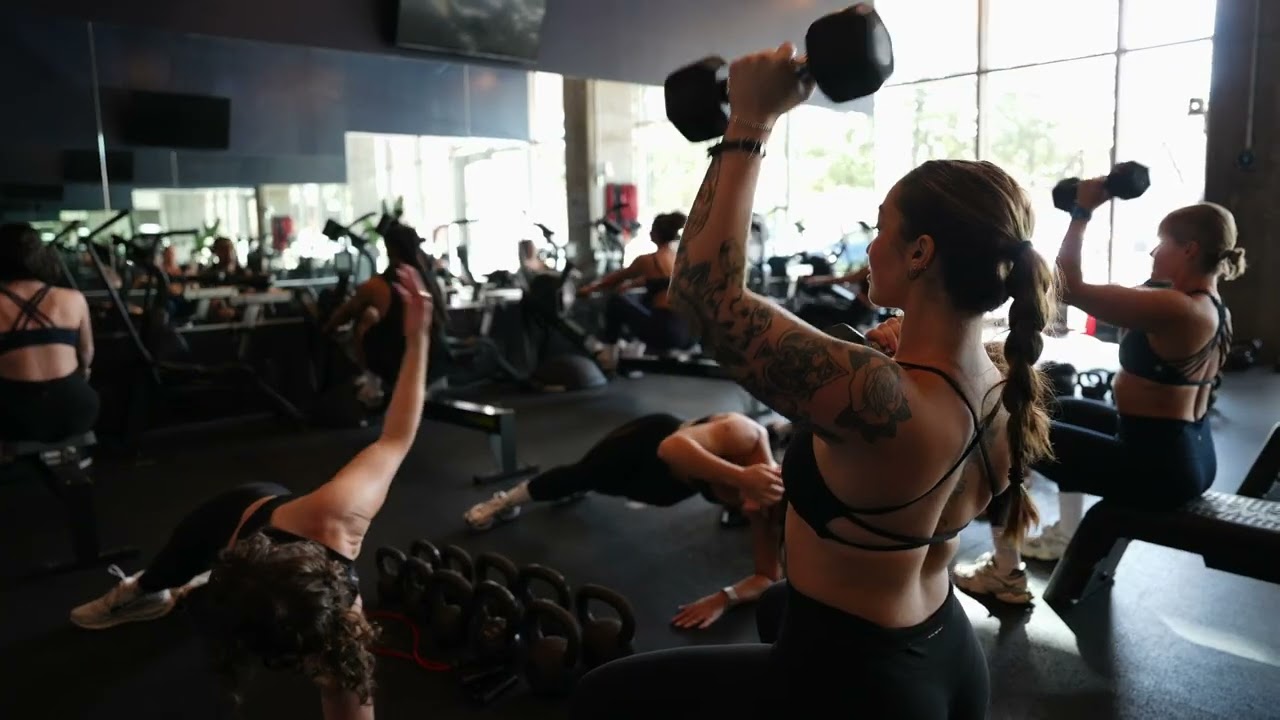

Some people walk into a gym and feel a pleasant, focused hush descend over them — as if the day’s problems have politely waited outside.
Others walk in and immediately start negotiating with themselves.
The lights are too bright. The music is too loud. The mirrors feel accusatory. The machines look like they were designed by someone who hates knees. And there is always, somehow, a man grunting like a malfunctioning leaf blower.
If that’s you, you’re in good company. Disliking the gym is not a character flaw. It’s often a perfectly rational response to a space that can feel performative, crowded and faintly confusing. The mistake is assuming that because you don’t love the gym, strength training must not be “for you.”
Strength training isn’t a building. It’s a skill. It’s the practice of asking your muscles to do slightly more than they’re used to — and then letting them adapt. You can do that in a gym, at home, in a park, in a quiet corner of your living room while the kettle boils. You can do it without blasting music or joining a cult or buying leggings that cost as much as a utility bill.
What follows are 10 basics — not the dramatic, “transform your life in 10 days” kind, but the gentler, more durable sort. The kind that helps you get stronger without needing to become a gym person.
1) Lower the bar: aim for the minimum effective dose
If you’ve ever created a workout plan in a burst of optimism — five days a week, new routine, new you — you probably know how this story ends. By week three, you’re “busy,” then you’re “tired,” then suddenly it’s been a month and your gym bag becomes a storage unit for guilt.
Try this instead: two sessions a week. Twenty to thirty minutes each. That’s it.
This is not a motivational trick. It’s a strategy. Most people don’t fail because they’re lazy; they fail because the plan is too big to survive real life. Two short sessions are easier to protect from work, family, travel and your occasional desire to do nothing at all.
Consistency is the point. Everything else — strength, muscle, confidence — is an outcome of consistency.
2) Learn movement patterns, not machines
Machines can be helpful. They can also make you feel like you’re assembling furniture incorrectly in public.
A simpler way to think about strength training is to learn a few basic movement patterns:
- Squat (sit down and stand up)
- Hinge (bend at the hips, like picking up a suitcase)
- Push (push something away)
- Pull (pull something toward you)
- Carry (hold something and walk)
These patterns cover most of what your body does in daily life: getting off the floor, lifting groceries, hauling laundry, opening heavy doors, lugging a suitcase through an airport with false confidence.
Once you understand the patterns, you can do them with dumbbells, bands, bodyweight, kettlebells, a backpack stuffed with books — even a gallon jug if that’s what you have.
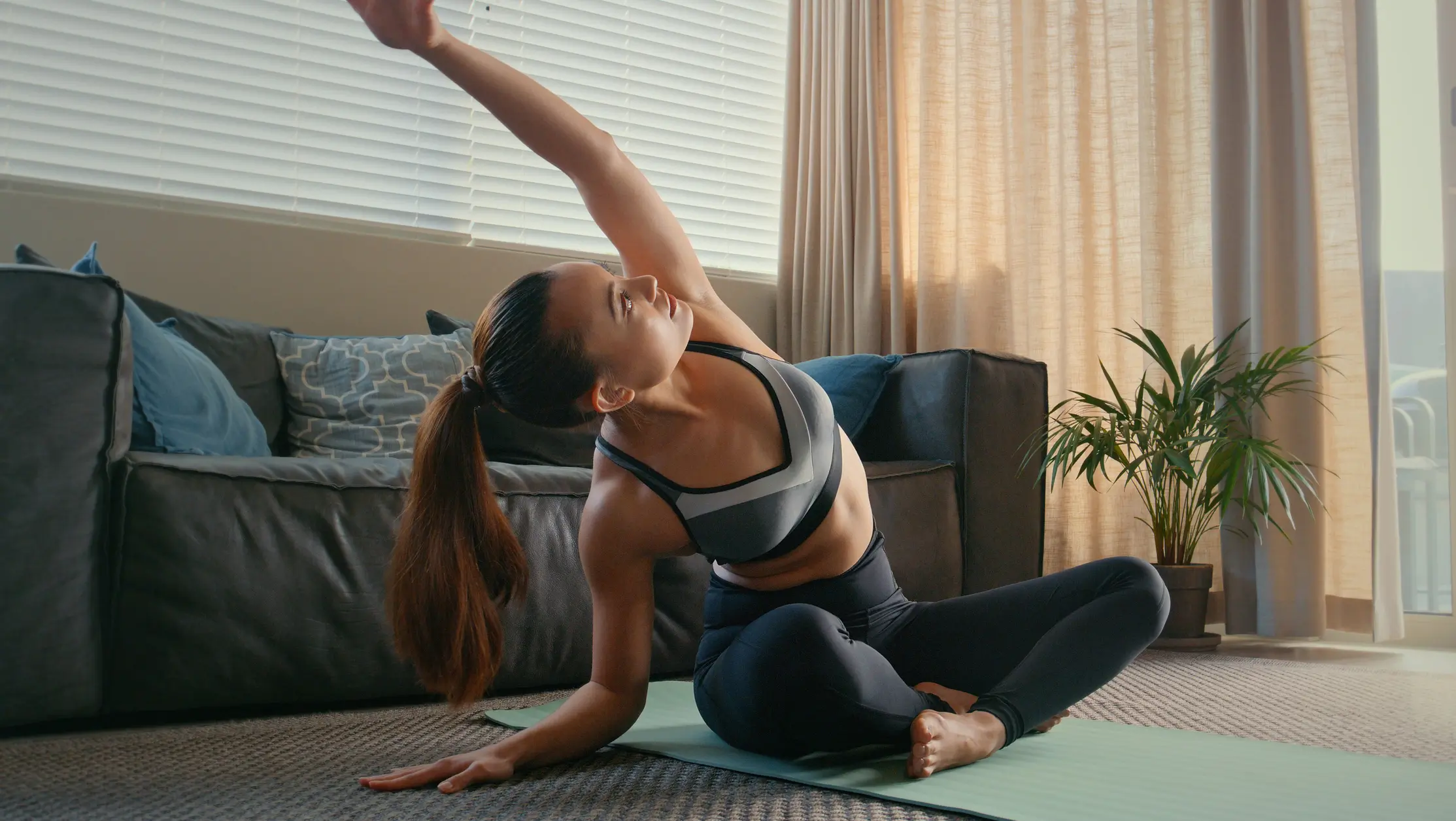
3) Make it doable at home (without turning your home into a gym)
Some people avoid the gym and then assume the alternative is a full home setup: racks, plates, a treadmill that doubles as a clothing rack. Not necessary.
A very workable starter kit looks like this:
- One pair of adjustable dumbbells or a couple of fixed dumbbells
- A set of resistance bands
- A yoga mat (optional, but nice)
That’s enough for months — often years — of progress.
If you’re stubbornly minimalist, you can still get strong with bodyweight and a backpack. Add books, water bottles, bags of rice — anything that increases load. It’s not glamorous, but strength doesn’t care about glamour. Your muscles respond to challenge, not aesthetics.
4) Warm up like a grown-up: short, specific, and not dramatic
A warm-up is not a punishment you must endure to earn the right to exercise. It’s a way of telling your body, “We’re about to do something; please don’t be surprised.”
Keep it simple:
- 3–5 minutes of easy movement (walking, marching in place, stairs)
- A few gentle reps of your first exercise (bodyweight squats before weighted squats, light rows before heavier rows)
That’s usually enough. If you hate long warm-ups, don’t do long warm-ups. The perfect routine you don’t do is less useful than the basic routine you actually start.
5) Stop chasing exhaustion. Start chasing “hard enough.”
A lot of people who dislike gyms also dislike the culture of suffering that sometimes comes with them — the idea that if you’re not drenched, shaking and questioning your life choices, the workout “doesn’t count.”
Strength training works differently.
Most of the time, you want sets that feel challenging but controlled. A useful rule of thumb: finish a set with one to three reps left in the tank. You’re working hard, but you’re not collapsing. You could do a couple more if you had to, which is exactly why you’ll be able to come back and do it again later.
The goal is not to survive workouts. It’s to repeat them.
6) Progress is boring — and that’s good news
People love novelty. Bodies love repetition.
If you want to get stronger, you don’t need 37 exercises. You need a small set of movements you do often enough to improve.
Progress can look like:
- Adding one rep to a set
- Increasing weight by a small amount
- Doing the same reps with cleaner form
- Reducing rest time slightly
- Moving from an easier variation to a harder one (incline push-up → floor push-up)
The best kind of progress is so modest it feels almost insulting. That’s how you know you’ve picked something sustainable.
7) Track one thing, in the least annoying way possible
If tracking makes you feel like a lab rat, skip the spreadsheets. But do keep a tiny record, because memory is unreliable — especially when you’re tired.
Write down:
- Exercise
- Weight (or band level)
- Reps/sets
That’s enough. Use your notes app. Use a scrap of paper. The point is not data perfection. The point is to know what you did last time so you can nudge it forward next time.
Without tracking, people tend to wander — repeating the same comfortable weights for months while insisting they’re “working hard.”
8) Make your environment fit you (not the other way around)
If you don’t love the gym, stop forcing yourself to become someone who does.
Design a version of strength training that matches your temperament:
- Hate crowds? Train at home or go at off-peak hours.
- Hate mirrors? Find a quieter corner, or a smaller gym, or ignore them with righteous stubbornness.
- Hate loud music? Wear headphones, or choose a space that doesn’t treat volume as a personality.
- Feel intimidated? Consider a couple of sessions with a coach, or follow a simple program so you’re not improvising.
The goal is not to prove you can tolerate a miserable environment. The goal is to get stronger.
9) Form matters — but “perfect” is the enemy of “done”
For beginners, the fear of “doing it wrong” is real. It keeps people from starting, or it turns the whole experience into a tense internal exam.
Good form matters because it makes training safer and more effective. But you don’t need perfection on day one.
Here’s a simpler standard: controlled reps, full range you can manage, no sharp pain.
A few reliable cues:
- For squats: keep your whole foot on the ground; let knees bend naturally; control the descent.
- For hinges (like deadlifts): push hips back; keep spine neutral; feel hamstrings and glutes working.
- For pushing/pulling: keep shoulders down and stable; move smoothly; don’t jerk.
If you can, film a set from the side. Most people learn more from 10 seconds of video than from 10 minutes of overthinking.
And if you’re dealing with old injuries or ongoing pain, it’s worth getting guidance from a qualified professional. Strength training can help many issues, but it should not feel like an argument with your joints.
10) Give it a purpose that isn’t aesthetic
Many people start strength training to change how they look. That’s understandable. It can also be a fragile motivator, because bodies change slowly and unpredictably.
Stronger motivations tend to be functional:
- Carry your groceries without stopping to rest in the parking lot.
- Make your back feel more reliable.
- Protect your knees when you take the stairs.
- Be the person who can lift a suitcase into the overhead bin without performing a public drama.
- Feel steady and capable as you age.
Strength is a kind of quiet independence. It’s not about impressing strangers. It’s about making your day-to-day life less taxing.
A Simple Starter Plan (2–3 Days a Week, 25–35 Minutes)
Here’s a basic template that doesn’t require a gym and doesn’t demand a personality transplant.
Workout A
- Goblet Squat (dumbbell or kettlebell) — 3 sets of 8–12
- One-Arm Dumbbell Row — 3 sets of 8–12 each side
- Incline Push-Up (hands on a bench/couch) — 3 sets of 6–12
- Farmer’s Carry (walk holding weights) — 3 rounds of 30–60 seconds
Workout B
- Romanian Deadlift (dumbbells) — 3 sets of 8–12
- Overhead Press (dumbbells) — 3 sets of 6–10
- Band Pull-Apart or Lat Pulldown Variation (band) — 3 sets of 12–20
- Split Squat (bodyweight or light weight) — 2–3 sets of 8–10 each side
How hard should it feel? Challenging by the last few reps, but controlled.
How to progress? Add a rep, then add a little weight, then repeat.
How long to stick with it? At least 6–8 weeks before you decide it’s “not working.”
What to Expect (So You Don’t Quit at the Wrong Time)
In the first two weeks, you may feel awkward. That’s normal. Strength training is coordination as much as it is muscle.
In weeks three to six, you’ll likely notice practical changes: carrying things feels easier, posture feels steadier, stairs feel less rude.
Visible changes, if they come, usually take longer — and are influenced by sleep, stress, nutrition, and genetics. But the early wins tend to be functional: you feel more capable in your own body. That’s a kind of progress many people don’t realize they’re allowed to want.
The Gym Isn’t the Point
If you dislike the gym, you don’t need to conquer it. You can simply route around it.
Strength training is not a personality type. It’s not a membership. It’s a small, repeated act of self-maintenance — like brushing your teeth, except with squats.
Do a little. Do it often. Keep it simple enough that you can keep your promise to yourself even on the weeks when life is loud.
And if you ever do step into a gym again, it can be on your terms — not as a test you’re trying to pass, but as one option among many for doing something quietly useful: getting stronger.
Important notice: this content is educational and does not replace an individual evaluation. If you have a history of eating disorders, diabetes, pregnancy, or a medical condition, consult a healthcare professional before making dietary or exercise changes.










 Sign In