

Strength training has a marketing problem. It’s often sold as a before-and-after photo, a beach body countdown, a promise to “torch” something. But most people don’t get out of bed in the morning hoping to torch anything. They want their backs to stop complaining when they lift a suitcase. They want to carry groceries without turning it into a forearm endurance event. They want to stand up from the floor without plotting the next three moves like a chess match.
In other words: they want life to feel lighter.
The good news is that “everyday strength” is not mysterious. It isn’t reserved for athletes or the genetically blessed. It’s mostly about getting better at a handful of basic patterns — squatting, hinging, pushing, pulling, carrying, stabilizing — and doing them often enough that your body stops treating ordinary tasks like surprise pop quizzes.
Below are 10 strength exercises that have a way of showing up outside the gym: on stairs, in doorways, at airports, in kitchens, on the living-room floor. You don’t need to do all of them every day. But if you build them into your week, you’ll notice a quiet shift: fewer aches that come “out of nowhere,” more confidence in small movements, and a little more energy left over for the parts of life that aren’t training.
A quick note before we start: “Pain” is not a badge of honor. Muscle effort is expected; sharp pain is not. If you have an injury history or medical condition, get guidance from a clinician or qualified coach. And if a movement feels wrong, it probably is — for now.
1) The Goblet Squat
Why it makes life easier: Standing up from a chair, getting in and out of a car, picking something up from a low shelf, using the toilet — squatting is daily living in disguise.
How to do it: Hold a dumbbell or kettlebell close to your chest like a heavy chalice. Stand with feet about shoulder-width apart. Sit down and back as if aiming for a chair, keeping your chest tall. Go as low as you comfortably can while maintaining control, then stand up by driving through your midfoot.
Everyday payoff: This teaches your legs to work together with your core, so you don’t rely on your lower back for everything. It also builds what many people lack: strength at the bottom of a bend — where real life loves to put you.
Make it easier:
- Squat to a box or bench and stand back up.
- Hold onto a sturdy support (a countertop can work) while you practice depth.
Make it harder:
- Slow the lowering phase (3 seconds down).
- Pause for a full second at the bottom.
- Increase the weight gradually.
Common mistake: Knees collapsing inward and heels lifting. Think: “knees track over toes,” and keep your feet glued to the floor.
2) The Romanian Deadlift (Hip Hinge)
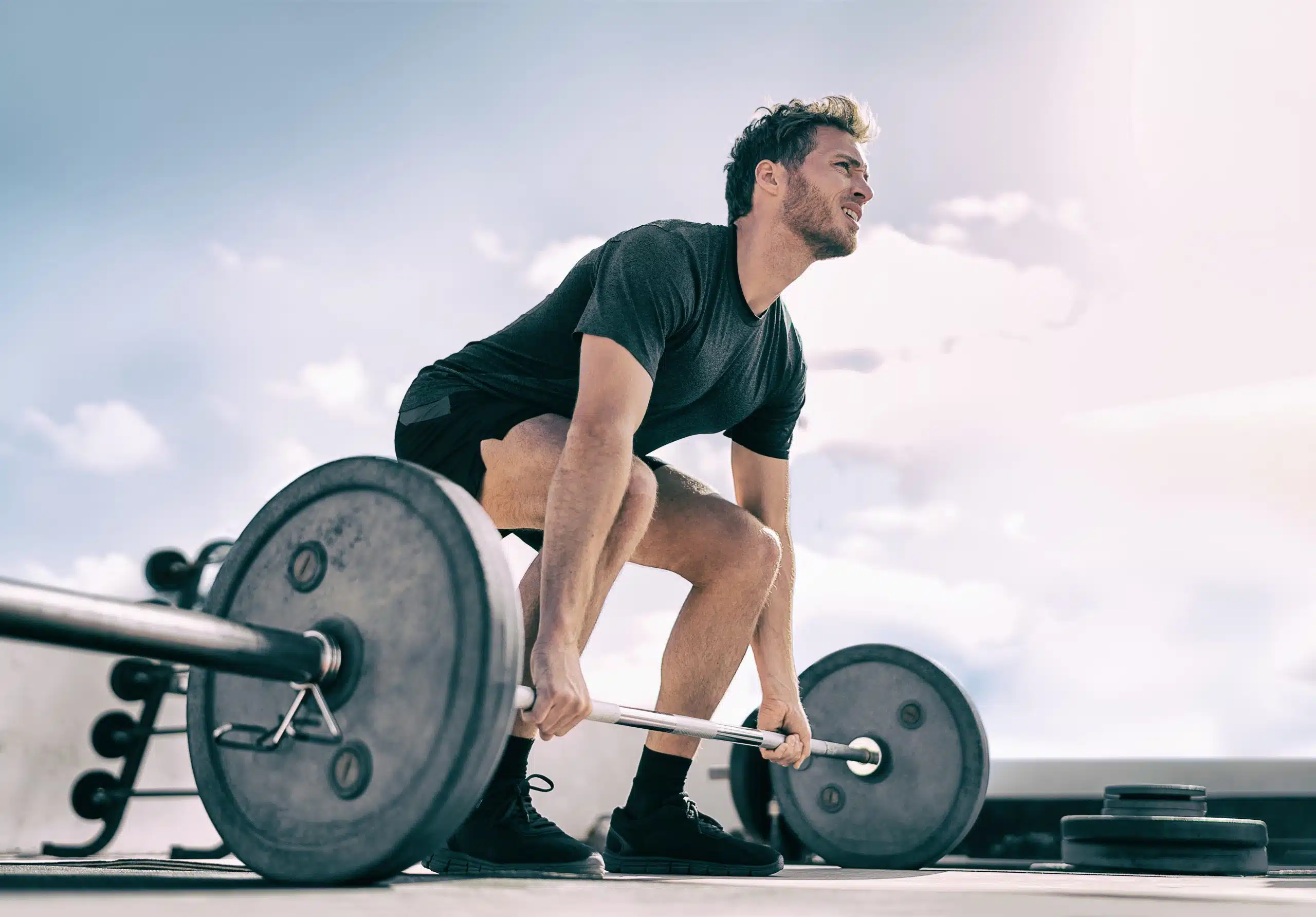
Why it makes life easier: Picking up laundry baskets, lifting a child, moving a heavy box — the hinge is how you lift without turning your spine into the main worker.
How to do it: Stand tall holding dumbbells, a barbell, or a kettlebell. Soften your knees slightly. Push your hips back as if closing a car door behind you. Keep your spine long and your weights close to your legs. You should feel tension build in your hamstrings. Stand back up by driving your hips forward.
Everyday payoff: A strong hinge is a strong back because your hips take on the workload. You’re training the posterior chain — glutes and hamstrings — the parts that tend to go missing after long days of sitting.
Make it easier:
- Practice the hinge with a broomstick along your back (head, upper back, tailbone all touching).
- Use one kettlebell and reduce the range of motion.
Make it harder:
- Increase weight slowly.
- Add a pause at mid-shin for control.
Common mistake: Turning it into a squat. The knees don’t need to bend much; the hips move backward.
3) The Split Squat (or Lunge)
Why it makes life easier: Stairs are a series of single-leg squats. So are curbs, hikes, uneven sidewalks, and the moment you step into a bathtub with a bit of skepticism.
How to do it: Stand in a staggered stance (one foot forward, one foot back). Lower your body straight down, keeping most of your weight in the front foot. Your back knee moves toward the floor; your torso stays tall. Push through the front foot to rise.
Everyday payoff: Single-leg strength improves balance and reduces the “wobble tax” your body pays on uneven ground. It can also expose — and then fix — side-to-side imbalances you didn’t know you had.
Make it easier:
- Hold onto a wall or countertop lightly for balance.
- Reduce depth and build gradually.
Make it harder:
- Add dumbbells at your sides.
- Elevate the back foot (Bulgarian split squat) — but only once the basic version feels stable.
Common mistake: Letting the front knee drift far inward. Keep the knee tracking in line with your toes.
4) Step-Ups
Why it makes life easier: Because stairs. Also because stepping up is a surprisingly honest test of leg strength — no momentum required.
How to do it: Use a sturdy box or bench around knee height or lower. Place one foot fully on the surface. Lean slightly forward and stand up, bringing the other foot to the top. Step down with control. Repeat on the same side, then switch.
Everyday payoff: Step-ups train strength and coordination while keeping your spine relatively calm. They also translate beautifully: climbing subway steps, hiking trails, stepping onto a bus.
Make it easier:
- Use a lower step.
- Move slowly and use a railing for balance (lightly).
Make it harder:
- Hold dumbbells.
- Increase step height gradually.
- Pause at the top without letting the hip pop out to the side.
Common mistake: Pushing off the back foot like it’s a kickstand. Make the working leg do the work.
5) The Push-Up (Incline Counts)
Why it makes life easier: Pushing heavy doors, getting up off the floor, shoving a stuck drawer back into place — pushing strength is sneakily useful.
How to do it: Place hands on the floor under shoulders (or on a bench for incline). Keep your body in a straight line from head to heels. Lower until your chest is near the surface, then push the ground away.
Everyday payoff: Push-ups build chest, shoulders, triceps — and a surprising amount of core control. Incline push-ups are not “cheating”; they’re the version that lets you practice good reps without collapsing.
Make it easier:
- Do incline push-ups against a counter or bench.
- Use a slower tempo and stop before form breaks.
Make it harder:
- Lower the incline over time until you’re on the floor.
- Add a pause at the bottom.
- Progress to feet-elevated push-ups once strict reps are solid.
Common mistake: Sagging hips. Squeeze glutes and keep ribs from flaring.
6) The One-Arm Row
Why it makes life easier: Pulling a suitcase, hauling a door open, dragging a heavy bag off a back seat — pulling is the counterpart to pushing, and most people undertrain it.
How to do it: Support one hand and knee on a bench, or hinge and brace your non-working hand on a sturdy surface. Hold a dumbbell in the other hand. Pull it toward your hip, keeping your shoulder away from your ear. Lower with control.
Everyday payoff: Rows strengthen the muscles that help keep your shoulders in a comfortable position — especially if you spend your day at a laptop. They also build the “carry and pull” capacity that shows up in daily chores.
Make it easier:
- Use a lighter weight and focus on smooth motion.
- Row with a resistance band anchored to a door.
Make it harder:
- Increase weight gradually.
- Pause at the top for a second, then lower slowly.
Common mistake: Twisting the torso to yank the weight. Keep your trunk quiet; let your back do the work.
7) The Overhead Press
Why it makes life easier: Putting luggage in an overhead bin, lifting a box onto a high shelf, holding a squirming toddler — overhead strength is often the first thing people notice is missing.
How to do it: Stand tall with dumbbells at shoulder height. Brace your midsection (think: gentle cough). Press overhead until arms are straight without arching your lower back. Lower slowly.
Everyday payoff: A controlled press improves shoulder strength and teaches you to stabilize your ribs and pelvis — which helps protect your lower back during many overhead tasks.
Make it easier:
- Do a half-kneeling press (one knee down) to reduce back arching.
- Use lighter weights and smaller range first.
Make it harder:
- Increase load slowly.
- Use a single-arm press to challenge stability.
Common mistake: Turning it into a backbend. If the ribcage flares, reduce weight and brace harder.
8) The Farmer’s Carry
Why it makes life easier: Groceries. Suitcases. Laundry. Your life is basically a series of carries.
How to do it: Hold heavy dumbbells or kettlebells at your sides. Stand tall, shoulders down and back, ribs stacked over hips. Walk for a set distance or time with controlled steps.
Everyday payoff: Carries build grip, core stability, upper-back endurance, and a kind of whole-body sturdiness that rarely comes from machine work. People often describe it as feeling “more put together.”
Make it easier:
- Carry one weight (suitcase carry) and switch sides.
- Reduce the distance.
Make it harder:
- Increase weight or distance.
- Try a front-rack carry (weights at shoulders) for added core challenge.
Common mistake: Shrugging shoulders to your ears. Keep the neck long.
9) The Glute Bridge (and Hip Thrust Progression)
Why it makes life easier: Strong glutes support your back, stabilize your hips, and make walking — especially uphill — feel less like a negotiation.
How to do it: Lie on your back with knees bent, feet flat. Brace your core lightly. Drive through your heels and lift your hips until your body forms a straight line from shoulders to knees. Pause, squeeze, lower.
Everyday payoff: Glutes are often underactive from sitting. Bridges teach them to show up again. That can mean fewer cranky hips, more stable knees, and less low-back “tightness” that’s really just overwork.
Make it easier:
- Reduce range and focus on control.
- Hold at the top for short, clean pauses.
Make it harder:
- Add a dumbbell across your hips.
- Progress to single-leg bridges once symmetrical control is good.
Common mistake: Overarching the lower back at the top. Keep ribs down; think “hips up,” not “back arched.”
10) The Dead Bug (Core Stability You Can Use)
Why it makes life easier: A “strong core” isn’t about crunches. It’s about resisting unwanted movement — the thing you need when you reach, twist, lift, or carry.
How to do it: Lie on your back with arms toward the ceiling and hips and knees at 90 degrees. Press your lower back gently into the floor. Slowly extend one leg and the opposite arm away from you without letting your back arch. Return and switch sides.
Everyday payoff: Dead bugs train your trunk to stabilize while your limbs move — exactly what happens when you carry a bag while stepping off a curb, or lift something while turning.
Make it easier:
- Move only the legs or only the arms.
- Shorten the range of motion.
Make it harder:
- Add a resistance band pulling your arms overhead.
- Slow it down; make each rep deliberate.
Common mistake: Rushing. The value is in control.
How to Put This Into a Simple Week
You don’t need a complicated plan. You need consistency and enough effort to make the body pay attention.
Here are two simple options:
Option A: Two full-body sessions per week (30–45 minutes)
Pick 5–6 movements:
- Goblet squat: 3 sets of 8–10
- Romanian deadlift: 3 sets of 8–10
- Push-up (incline if needed): 3 sets of 6–12
- One-arm row: 3 sets of 8–12 per side
- Farmer’s carry: 3 rounds of 30–60 seconds
- Dead bug: 2–3 sets of 6–10 per side
Option B: Three shorter sessions per week (20–30 minutes)
Rotate:
- Day 1: Squat + row + carry
- Day 2: Hinge + push + dead bug
- Day 3: Split squat/step-up + press + bridge
Progress rule: When you can do the top end of the rep range with good form, increase the weight slightly or make the variation harder.
The Quiet Goal
If you stick with these movements, you may not notice a dramatic moment when life becomes easy. It’s subtler than that. One day you’ll carry two grocery bags in one trip and realize you didn’t think about it. You’ll climb stairs while talking and not feel your lungs filing a complaint. You’ll pick something up and your back won’t send an angry email afterward.
Strength, at its best, is not a performance. It’s a kind of insurance policy — the unglamorous, deeply satisfying ability to do what you need to do, when you need to do it.
Important notice: this content is educational and does not replace an individual evaluation. If you have a history of eating disorders, diabetes, pregnancy, or a medical condition, consult a healthcare professional before making dietary or exercise changes.









 Sign In