

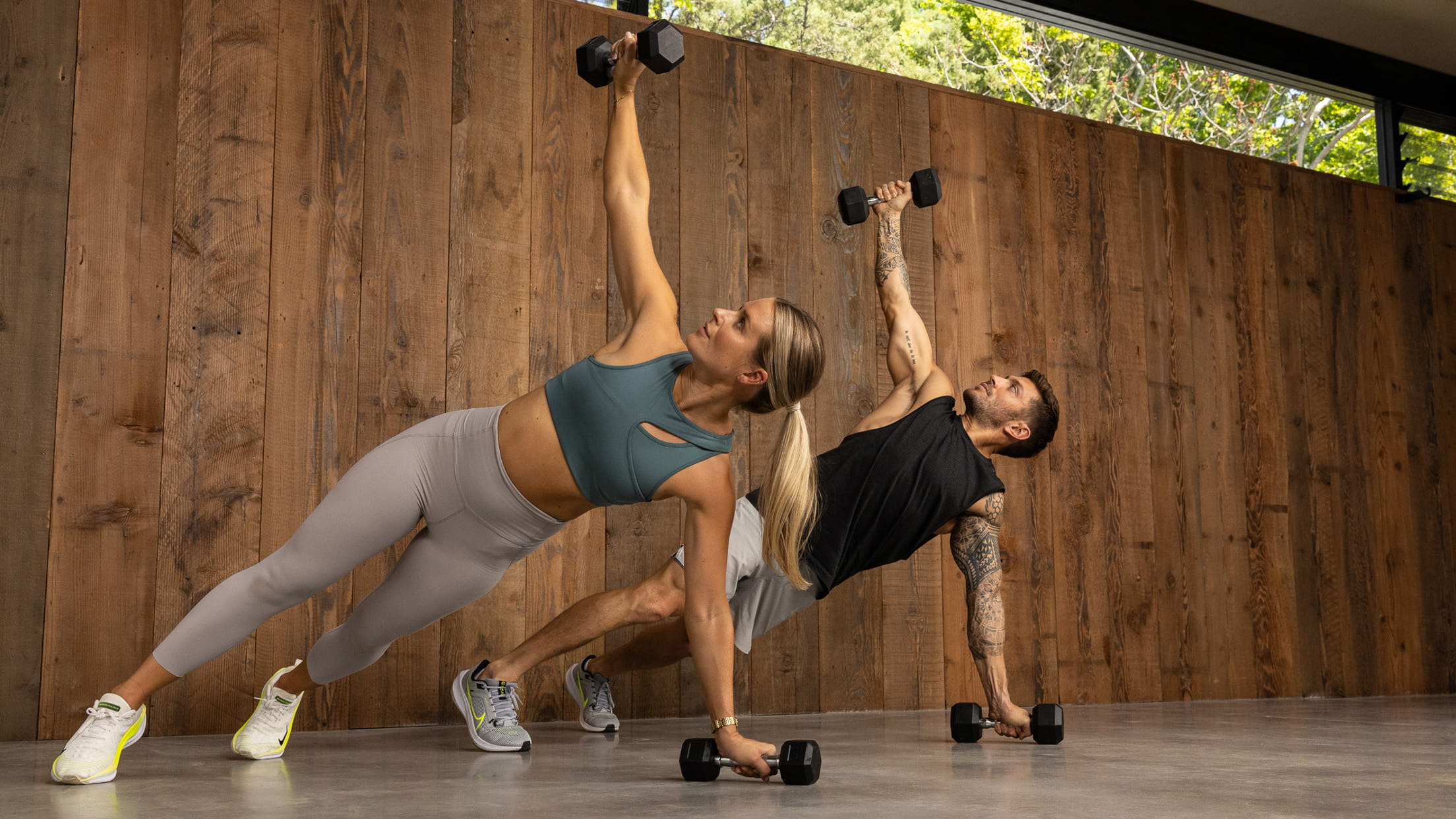

At a certain point, “I don’t have time” stops being an excuse and starts being a calendar fact. Work piles up. A commute stretches. Dinner needs cooking. The laundry is judging you from the corner. And yet your body still wants what it has always wanted: to move, to sweat a little, to feel strong in the most ordinary ways — carrying groceries, climbing stairs, standing tall at the end of a long day.
Circuit training fits neatly into that reality. It’s not glamorous. It doesn’t require a perfect morning routine or a boutique studio membership. It’s simply a smart way to organize effort: you move through a sequence of exercises with limited rest, letting your heart rate rise while your muscles do their work. You get strength and conditioning at once, and you’re done before your life has a chance to rearrange itself around your intentions.
Below are 10 circuits designed to fit into a 30-minute window. Some use only body weight. Others add a dumbbell, a kettlebell, or a resistance band. All of them can be scaled up or down, depending on your fitness level and how you feel that day — because the truth is, no plan survives contact with a bad night of sleep.
A note before you start: If you have an injury, a medical condition, or you’re returning to exercise after a long break, consider checking with a clinician or qualified coach. And if anything sharp, dizzy, or alarming shows up mid-workout, stop. Fitness is supposed to add to your life, not take from it.
How to Make Any Circuit a 30-Minute Workout
A simple structure keeps you honest:
Minute 0–5: Warm-up
Minute 5–27: Circuit work
Minute 27–30: Cool-down / breathing / easy stretching
For the circuits below, you’ll usually do one of two formats:
- Timed stations (e.g., 40 seconds work, 20 seconds rest; repeat 3 rounds)
- Reps-based rounds (e.g., 10–12 reps per move; repeat as many quality rounds as time allows)
Intensity guidance: Aim for a pace where you can speak in short sentences but not sing. Form matters more than speed. You should finish feeling used — not wrecked.
Warm-up (use this for any circuit):
- 30 seconds marching in place or light jog
- 30 seconds jumping jacks (or step jacks)
- 30 seconds hip hinges (hands on hips, push hips back)
- 30 seconds arm circles + shoulder rolls
- 30 seconds bodyweight squats (easy range)
- 30 seconds plank shoulder taps (slow) or dead bugs
Repeat once if you’re stiff or coming from a desk.
Workout 1: The No-Equipment Classic (Full Body)
Best for: Busy days, travel, “I just need something” workouts
Format: 40 seconds work / 20 seconds rest, 5 moves, 4 rounds (20 minutes)
- Bodyweight squats
- Push-ups (knees or incline is fine)
- Reverse lunges (alternate legs)
- Plank (or forearm plank)
- Mountain climbers (slow is harder than you think)
Make it easier: Reduce push-up difficulty, swap mountain climbers for marching.
Make it harder: Add a jump to squats, do strict push-ups, speed up climbers while staying controlled.
Workout 2: Dumbbell “Strong and Sweaty” (Strength-Forward)
Best for: Building muscle while still getting conditioning
Equipment: One or two dumbbells
Format: 10 reps each (per side where needed), 3–4 rounds in ~20–22 minutes
- Dumbbell goblet squat — 10 reps
- One-arm dumbbell row — 10/side
- Dumbbell Romanian deadlift — 10 reps
- Dumbbell floor press (or bench press) — 10 reps
- Suitcase carry (walk) — 30–45 seconds/side
Rest: 45–60 seconds between rounds, or as needed to keep form crisp.
Make it easier: Use lighter weight; reduce reps to 8.
Make it harder: Slow the lowering phase (3 seconds down) on squats and deadlifts.
Workout 3: Kettlebell Power Circuit (Hinge + Core)
Best for: A big bang for your buck with minimal equipment
Equipment: Kettlebell (or dumbbell)
Format: 30 seconds work / 15 seconds rest, 6 moves, 3 rounds (20–21 minutes)
- Kettlebell swings (or deadlifts if you’re new)
- Goblet squat
- Push-ups
- Kettlebell suitcase march (in place) — switch hands halfway
- Plank to downward dog (slow)
- High knees (or fast march)
Make it easier: Replace swings with deadlifts.
Make it harder: Add a clean before the goblet squat, or increase work to 40 seconds.
Workout 4: The “Hotel Room” Circuit (Quiet but Effective)
Best for: Small spaces, apartment walls, late-night workouts
Format: 45 seconds work / 15 seconds rest, 5 moves, 3–4 rounds
- Step-back lunges (soft landing)
- Incline push-ups on bed/chair
- Glute bridge (pause at the top)
- Side plank (switch sides each round)
- Slow climbers (knee to chest, controlled)
Make it easier: Shorten work intervals to 30 seconds.
Make it harder: Add a 2-second pause at the bottom of lunges; elevate feet for push-ups.
Workout 5: Upper-Body and Posture Reset (Desk-Body Antidote)
Best for: Shoulder strength, back work, posture support
Equipment: Resistance band or light dumbbells
Format: 12–15 reps each, 3 rounds
- Band pull-aparts — 15
- Dumbbell or band row — 12–15
- Overhead press — 10–12
- Push-ups (or incline) — 8–12
- Hollow hold (or dead bug) — 30 seconds
Make it easier: Use lighter tension; do wall push-ups.
Make it harder: Add a slow tempo, especially on rows and presses.
Workout 6: Lower-Body Builder (Legs + Glutes)
Best for: Strength, stability, athletic legs
Equipment: Optional dumbbell/kettlebell
Format: Reps-based “quality rounds” for 20 minutes
Do as many rounds as you can in 20 minutes with solid form:
- Split squat — 10/side
- Hip hinge (RDL or good morning) — 12
- Lateral lunge — 8/side
- Calf raises — 15
- Wall sit — 45 seconds
Make it easier: Hold onto a wall for balance; reduce range of motion.
Make it harder: Add weight or extend wall sit to 60 seconds.
Workout 7: The Cardio-Strength Hybrid (Heart Rate Meets Muscle)
Best for: People who want “cardio” without only running
Equipment: None or a light weight
Format: 30 seconds each station, 8 stations, 3 rounds (24 minutes)
- Jump rope (real or imaginary)
- Squat to reach (or squat to press if holding a light dumbbell)
- Alternating step-ups (stairs/bench) or fast bodyweight squats
- Push-ups
- Skater steps (side-to-side)
- Plank shoulder taps
- Reverse lunges
- Burpee (or burpee walk-out)
Make it easier: Step instead of jump, remove burpees.
Make it harder: Add a push-up to burpees; keep transitions tight.
Workout 8: Core That Actually Transfers (Anti-Rotation + Stability)
Best for: Safer strength, better running/lifting posture
Equipment: Band or cable optional
Format: 40 seconds work / 20 seconds rest, 5 moves, 4 rounds
- Dead bug (slow, exhale as you extend)
- Side plank (switch each round)
- Bird dog (pause at extension)
- Glute bridge march
- Pallof press (band) or plank hold if no band
Make it easier: Shorten holds; keep feet on the floor in dead bug.
Make it harder: Add tempo and pauses; increase rounds.
Workout 9: “Every Minute on the Minute” (EMOM) 20
Best for: People who like structure and a clear finish line
Format: 20 minutes total; rotate through 4 minutes, 5 cycles
Set a timer. Each minute, do the work, then rest for the remainder of that minute.
- Minute 1: 12 squats (add weight if you have it)
- Minute 2: 10 push-ups (scale as needed)
- Minute 3: 12 alternating lunges per leg (24 total)
- Minute 4: 30–40 seconds plank (or 20 slow mountain climbers)
Repeat until 20 minutes is up.
Make it easier: Reduce reps and use incline push-ups.
Make it harder: Add weight, raise rep targets slightly, or replace squats with squat jumps.
Workout 10: The “Finish Strong” Ladder (Quick, Mean, Satisfying)
Best for: When you want intensity without a lot of complexity
Equipment: Optional dumbbell
Format: Ladder up then down (about 18–22 minutes depending on pace)
Pick 3 moves:
- Squat (bodyweight or goblet squat)
- Push-up
- Bent-over row (band or dumbbell) or plank shoulder taps if no equipment
Do:
- 2 reps each
- 4 reps each
- 6 reps each
- 8 reps each
- 10 reps each
Then back down: - 8, 6, 4, 2
Rest only as needed to keep form. The ladder turns into a quiet competition with yourself — not to go faster, but to stay clean when you’re tired.
Make it easier: Cap the ladder at 8 reps.
Make it harder: Add a core finisher at the end: 2 minutes of alternating side planks.
Cool Down (3 Minutes That Matter More Than You Think)
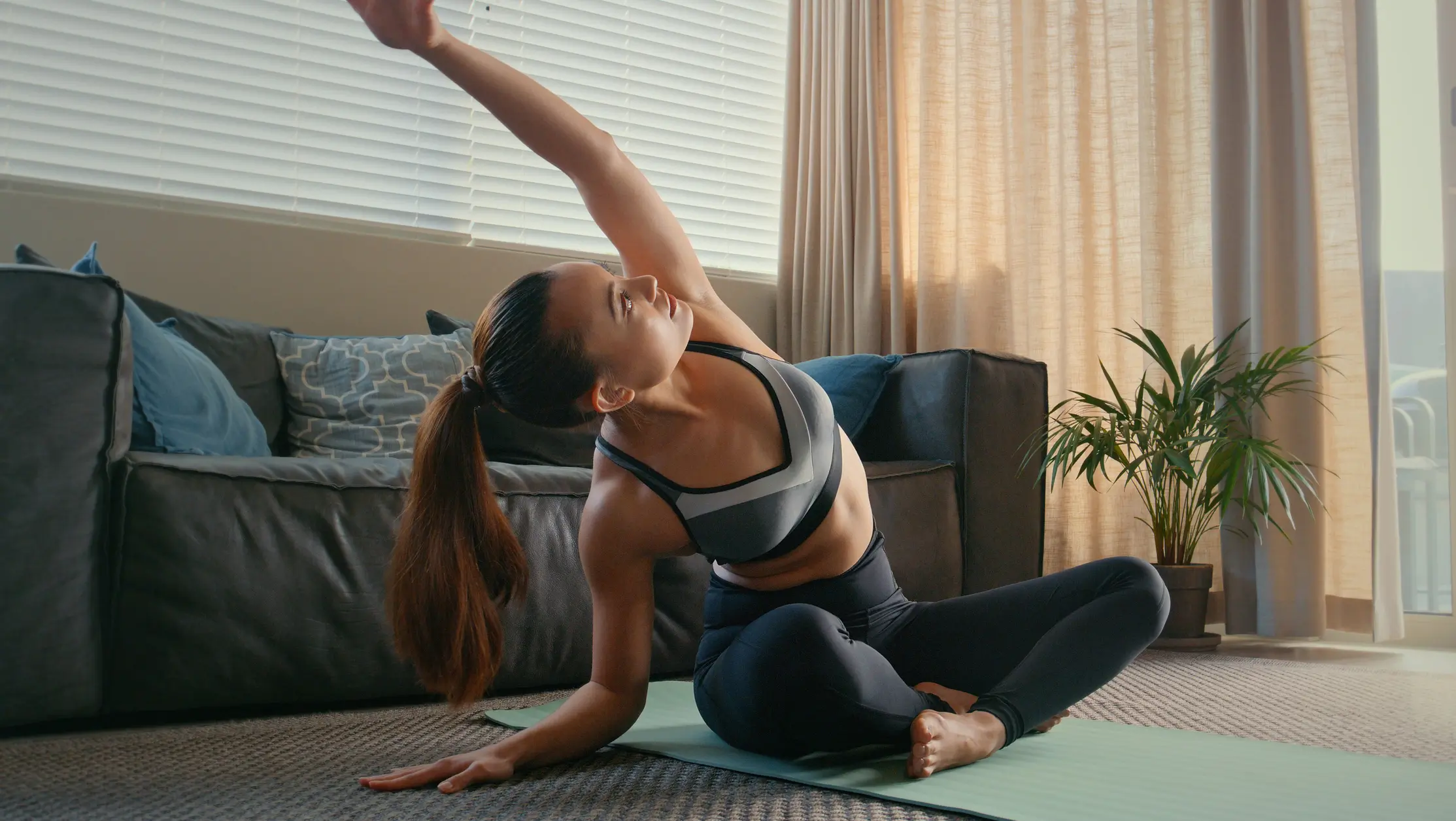
When the timer ends, don’t just slam your laptop shut and rejoin your day like nothing happened. Give your body a small signal that it’s safe to settle.
- 30 seconds slow breathing (inhale 4, exhale 6)
- 30 seconds forward fold or hamstring stretch
- 30 seconds hip flexor stretch each side
- 30 seconds chest opener (hands behind back or doorway stretch)
- 30 seconds child’s pose or easy spinal twist
How to Choose the Right Circuit Today
A good workout plan respects that you are not the same person every day.
- If you’re stressed and tight: try Workout 8 (core stability) or Workout 5 (posture reset).
- If you want to feel powerful: Workout 3 (kettlebell) or Workout 2 (dumbbells).
- If you need sweat + mood lift: Workout 7 (hybrid) or Workout 1 (classic).
- If you want legs that feel “worked”: Workout 6 (lower-body builder).
And for progress: pick two circuits you like and repeat them weekly for a month. Don’t chase novelty. Chase improvement: one extra rep, slightly heavier weight, cleaner form, or fewer breaks. The most underrated training tool is consistency — the kind that looks boring on paper and impressive in real life.
Important notice: this content is educational and does not replace an individual evaluation. If you have a history of eating disorders, diabetes, pregnancy, or a medical condition, consult a healthcare professional before making dietary or exercise changes.










 Sign In